Red light therapy beds went from niche biohacker equipment to mainstream wellness fixtures faster than most product categories manage. Athletes use them after training. MedSpas charge $80-$150 per 15-minute session. Procurement managers who have watched a dozen wellness trends come and go are quietly placing five-figure purchase orders. Something is clearly working.
The short answer is photons. The longer answer involves mitochondria, ATP production, collagen synthesis, and a body of clinical research that holds up better than most wellness technology. Unlike the jade roller era or the infrared sauna craze, red light therapy has real science behind it — and the full-body bed format takes that science and turns it into a commercially viable, high-throughput treatment that fits most wellness business models.
This guide is written for brand owners, distributors, and procurement managers who need more than a product brochure. You’ll find the technical basics, the sourcing criteria that actually separate good suppliers from bad ones, OEM/ODM considerations, and the ROI math that matters when you’re evaluating a capital equipment purchase. No fluff — just what you need to make a confident buying decision.
What Is a Red Light Therapy Bed?
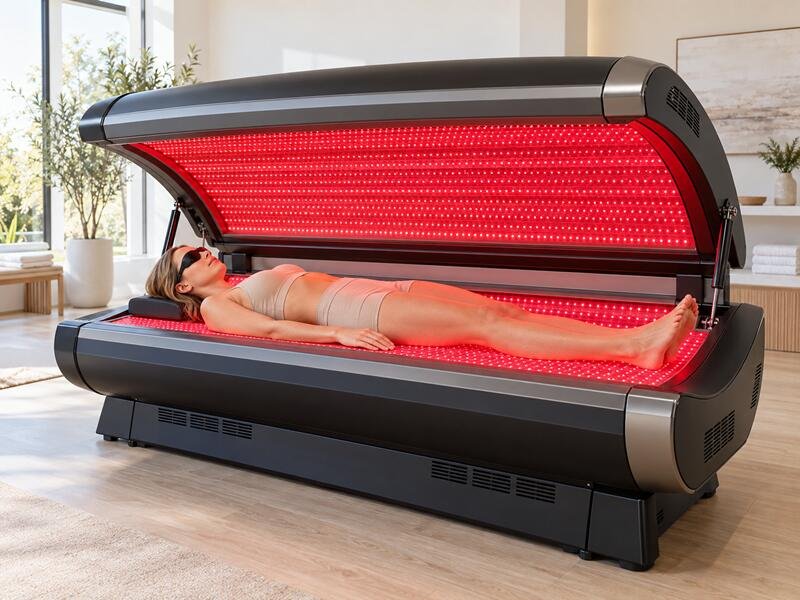
A red light therapy bed — also called a photobiomodulation bed, LED therapy bed, or full-body light therapy pod — is a professional-grade device that delivers concentrated red and near-infrared (NIR) light across the entire body at the same time. Unlike handheld devices or small panels that treat one area at a time, a therapy bed surrounds the client with hundreds — sometimes thousands — of medical-grade LEDs, covering the full body in a single 10-20 minute session.
The form factor looks similar to a tanning bed: a clamshell enclosure with LED arrays on both the upper canopy and the lower base, so light reaches the front and back of the body simultaneously. Premium models include adjustable wavelength combinations, intensity controls, cooling fans, and digital session management.
Buyer’s Note: “Red light therapy bed” is used loosely in the market. Before purchasing, verify the actual wavelength output, LED count, irradiance (mW/cm²), and whether the device includes near-infrared wavelengths — these are the factors that determine whether the device actually performs.
From a procurement standpoint, red light therapy beds sit at the premium end of the photobiomodulation product category — positioned as flagship revenue-generating equipment for wellness centers, MedSpas, fitness recovery studios, and dermatology clinics.
How It Works
Red light therapy beds work through photobiomodulation (PBM) — specific wavelengths of light are absorbed by chromophores inside cells, triggering biological responses without heat damage or UV radiation. The mechanism is well-documented and distinct from heat-based therapies.
Red Light (630-680 nm)
- Penetrates skin surface (1-2 mm)
- Stimulates collagen and elastin production
- Accelerates wound healing and skin repair
- Reduces inflammation at the dermal layer
- Primary wavelength for skin rejuvenation applications
Near-Infrared Light (810-850 nm)
- Reaches deeper tissues (5-10 cm)
- Boosts mitochondrial ATP production
- Supports muscle recovery and reduces soreness
- Promotes joint and nerve tissue repair
- Primary wavelength for pain relief and recovery
What Happens at the Cellular Level
The main cellular target of red and NIR light is cytochrome c oxidase (CCO), an enzyme in the mitochondrial respiratory chain. When photons hit CCO, nitric oxide — which normally inhibits cellular respiration — is displaced. This allows oxygen to bind and increases ATP production, the cell’s primary energy source.
The downstream effects: reduced oxidative stress, modulated inflammation, upregulated growth factors, and faster cellular repair. A full-body bed maximizes the systemic impact of this mechanism by treating all major muscle groups, organ-adjacent tissue, and the entire skin surface in one session.
What End Users Get Out of It
Knowing what your end users are paying for helps you position the device correctly in your market. These are the most clinically supported and commercially relevant benefits:
Skin Rejuvenation
Stimulates collagen production, reduces fine lines, and improves skin tone and texture across the full body.
Muscle Recovery
Reduces delayed onset muscle soreness (DOMS), speeds up post-workout recovery, and supports athletic performance.
Pain Relief
Modulates inflammatory pathways to reduce chronic and acute pain — joint pain, back pain, and neuropathy included.
Fat Loss Support
Triggers adipocyte lipolysis to support body contouring; commonly paired with fitness and weight management programs.
Hair Growth
Stimulates follicle activity and increases scalp circulation; clinically relevant for androgenetic alopecia and thinning hair.
Sleep & Mood
Supports circadian rhythm regulation and melatonin production, contributing to better sleep quality and reduced stress.
Why Full-Body Coverage Changes the Business Case
For business operators, a full-body therapy bed delivers a fundamentally different value proposition than panel devices. One 15-minute session in a bed replaces what would otherwise require multiple targeted panel sessions. That translates directly into higher throughput per treatment slot, better client outcomes, and a stronger justification for premium pricing — all of which support faster ROI on the capital investment.
Where These Devices Are Actually Being Used
Red light therapy beds are deployed across a wide range of professional environments. The verticals you serve will determine which device specs and certifications matter most for your business.
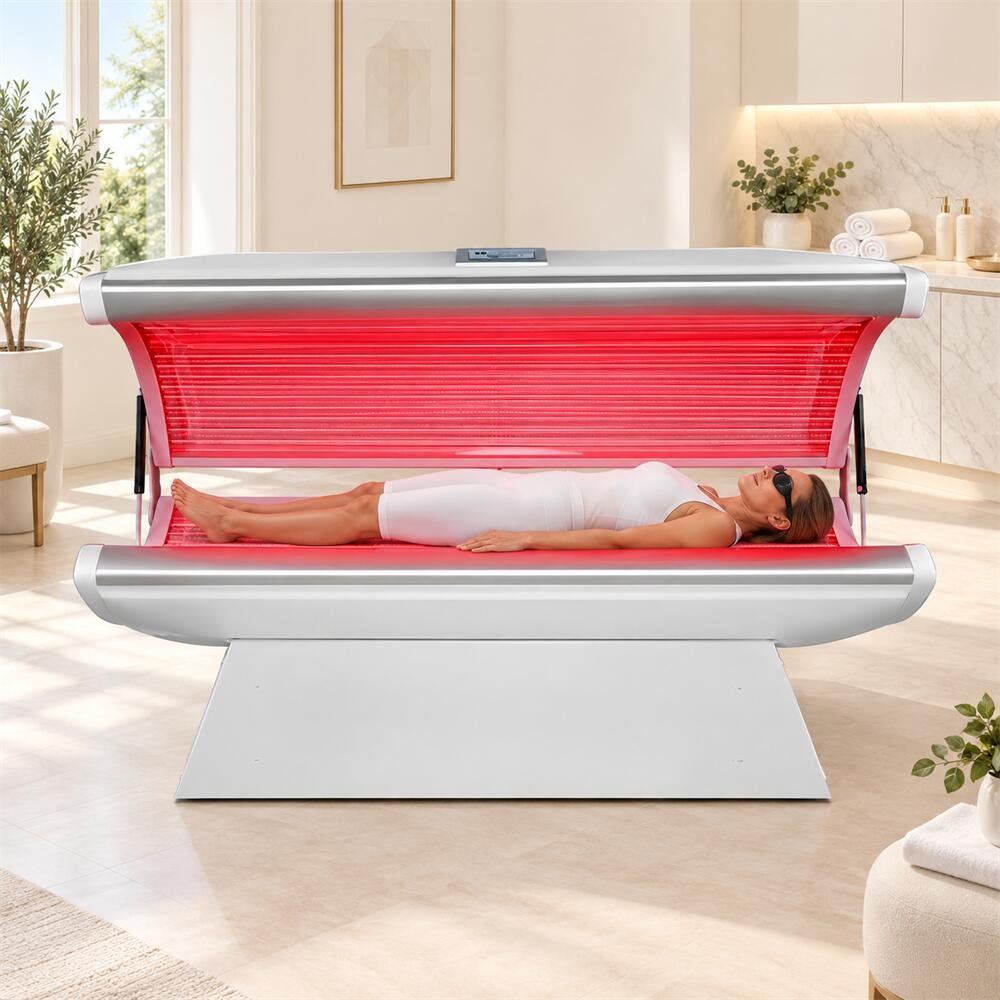
MedSpas & Medical Aesthetics Clinics
Used as a standalone anti-aging and skin rejuvenation service, or as an add-on to injectables, laser treatments, and facials. High-ticket positioning; clients regularly pay $50-$150 per session.
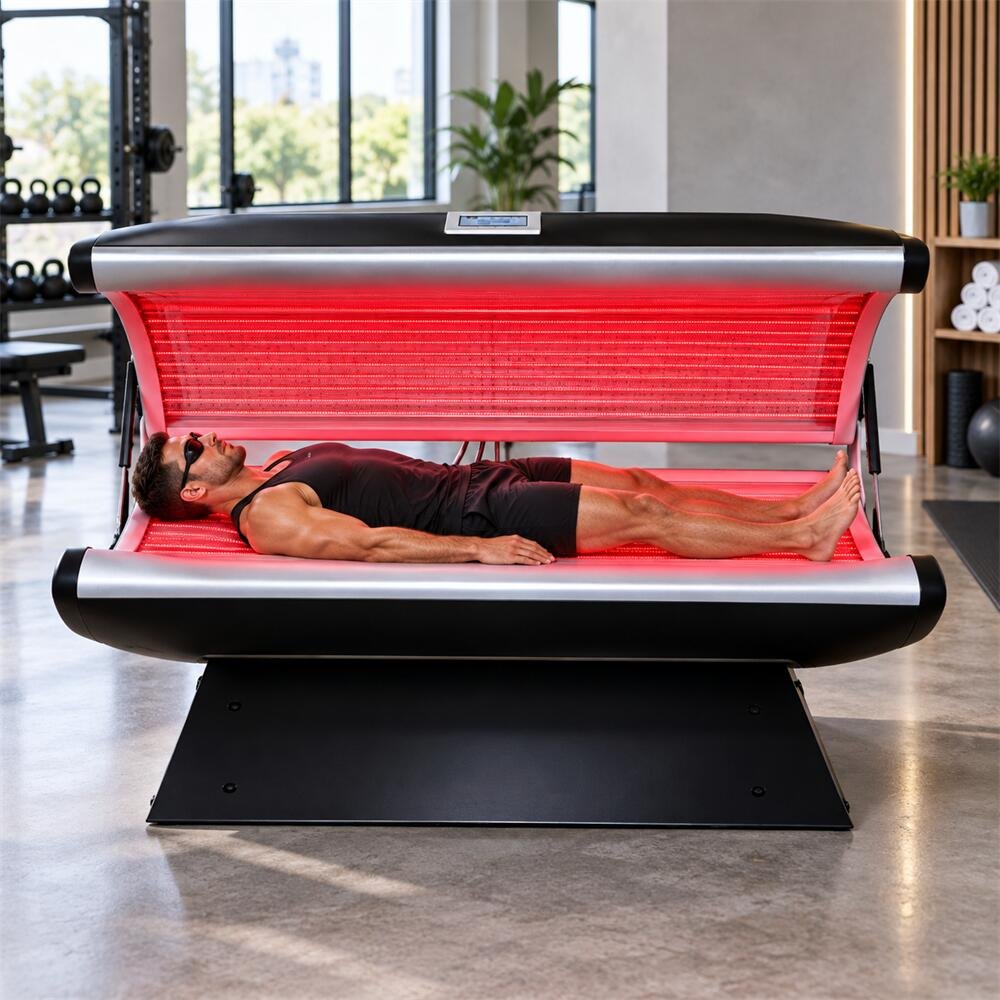
Fitness & Sports Recovery Studios
Post-workout recovery suites in gyms, CrossFit boxes, and elite training facilities. Positioned as a performance service. High session frequency drives fast equipment ROI.
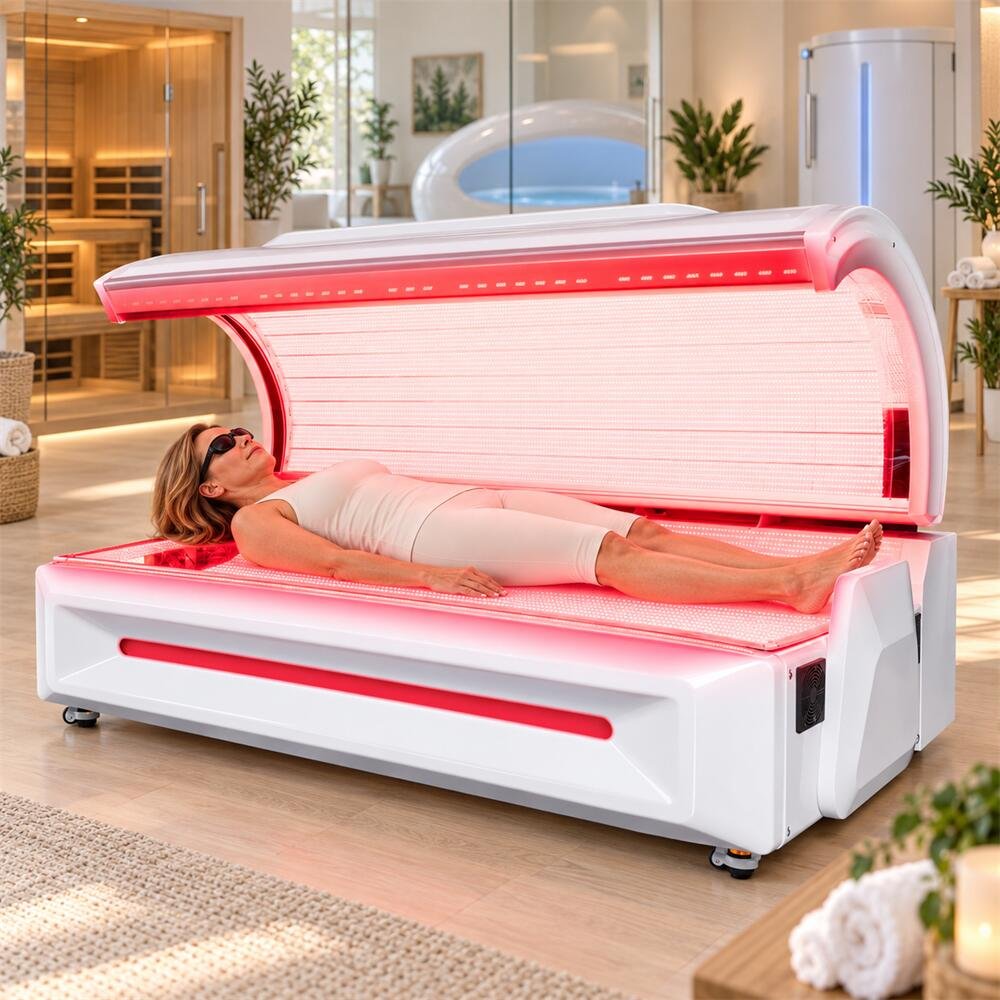
Wellness Centers & Day Spas
Fits naturally alongside infrared saunas, float tanks, and cryotherapy. Broad demographic appeal and strong compatibility with membership-based revenue models.
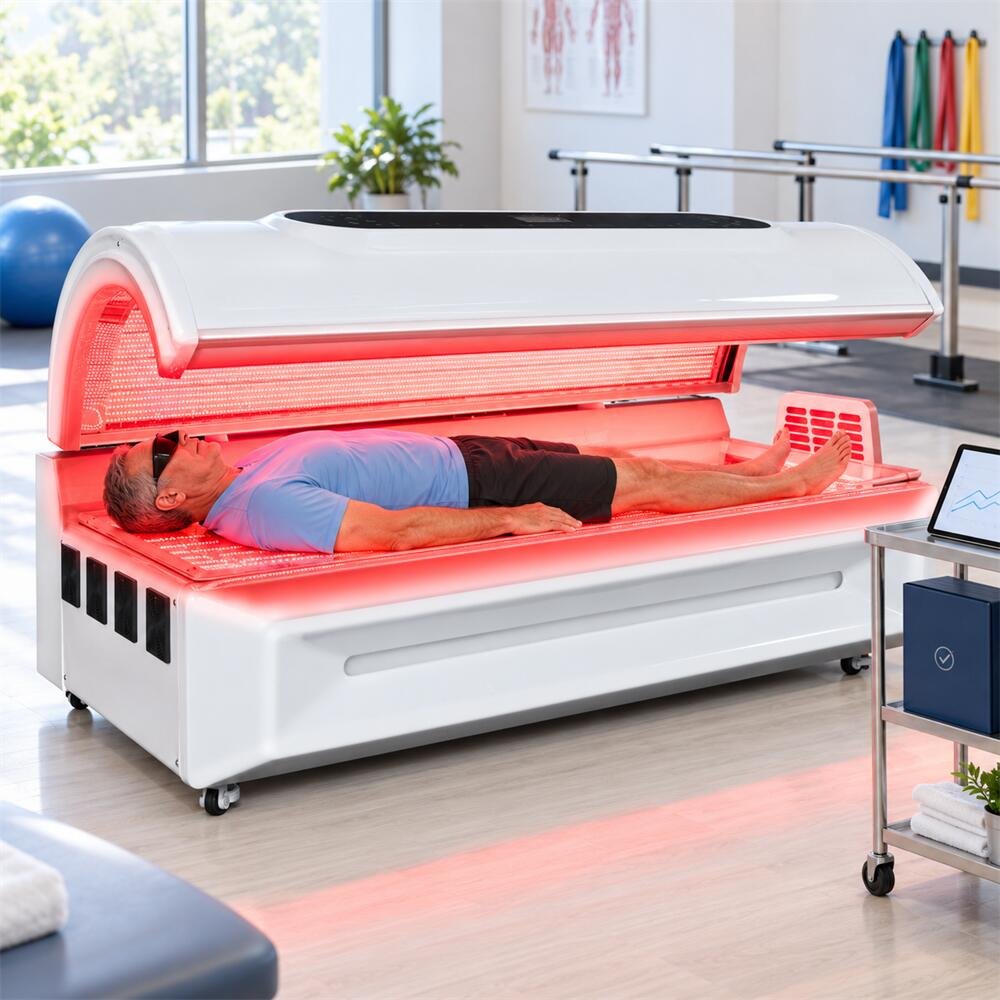
Physical Therapy & Rehabilitation Clinics
Used for accelerating tissue repair, reducing inflammation, and managing chronic pain. These buyers require devices with documented clinical evidence and relevant certifications (CE, FDA clearance).
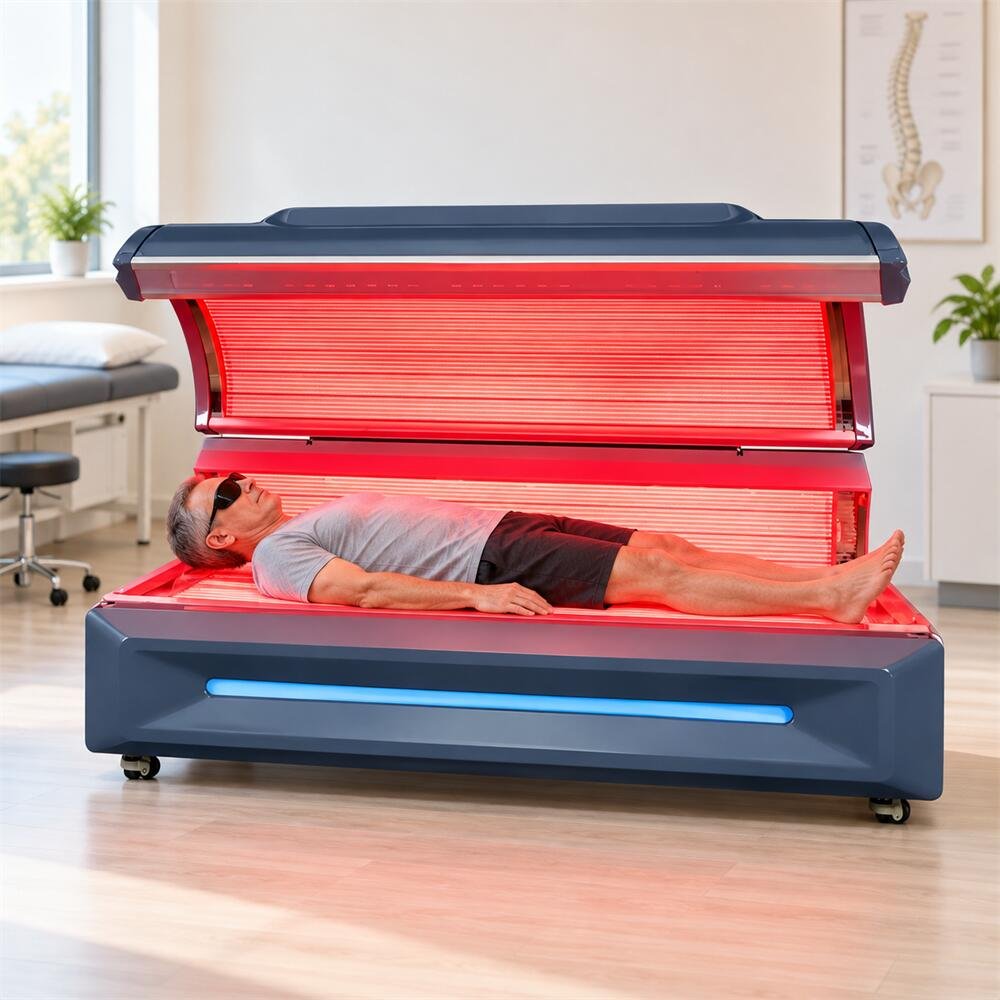
Pain Management Clinics
Complements conventional pain therapies. Growing interest from practitioners looking for non-pharmaceutical options for chronic pain patients.
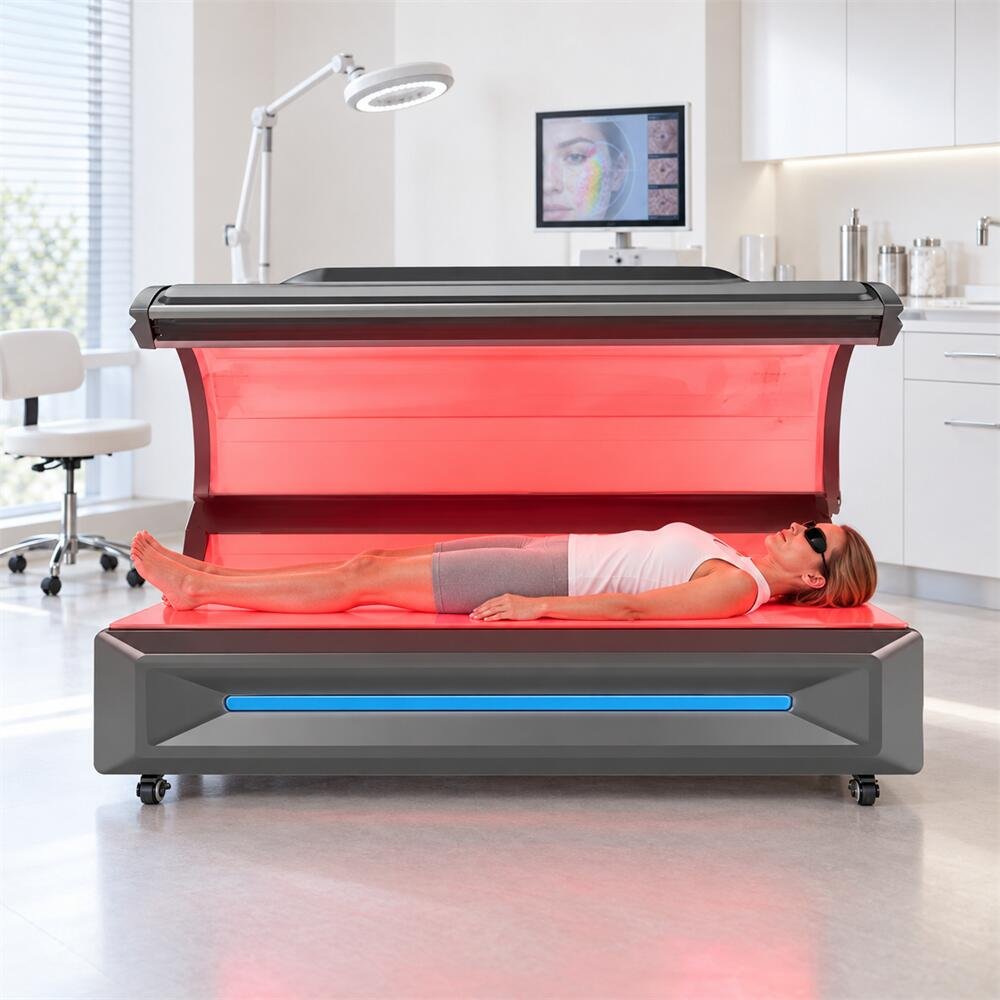
Dermatology Clinics
Used for acne, psoriasis, eczema, and post-procedure healing. Clinical settings demand high irradiance accuracy and medical-grade build quality — no exceptions.
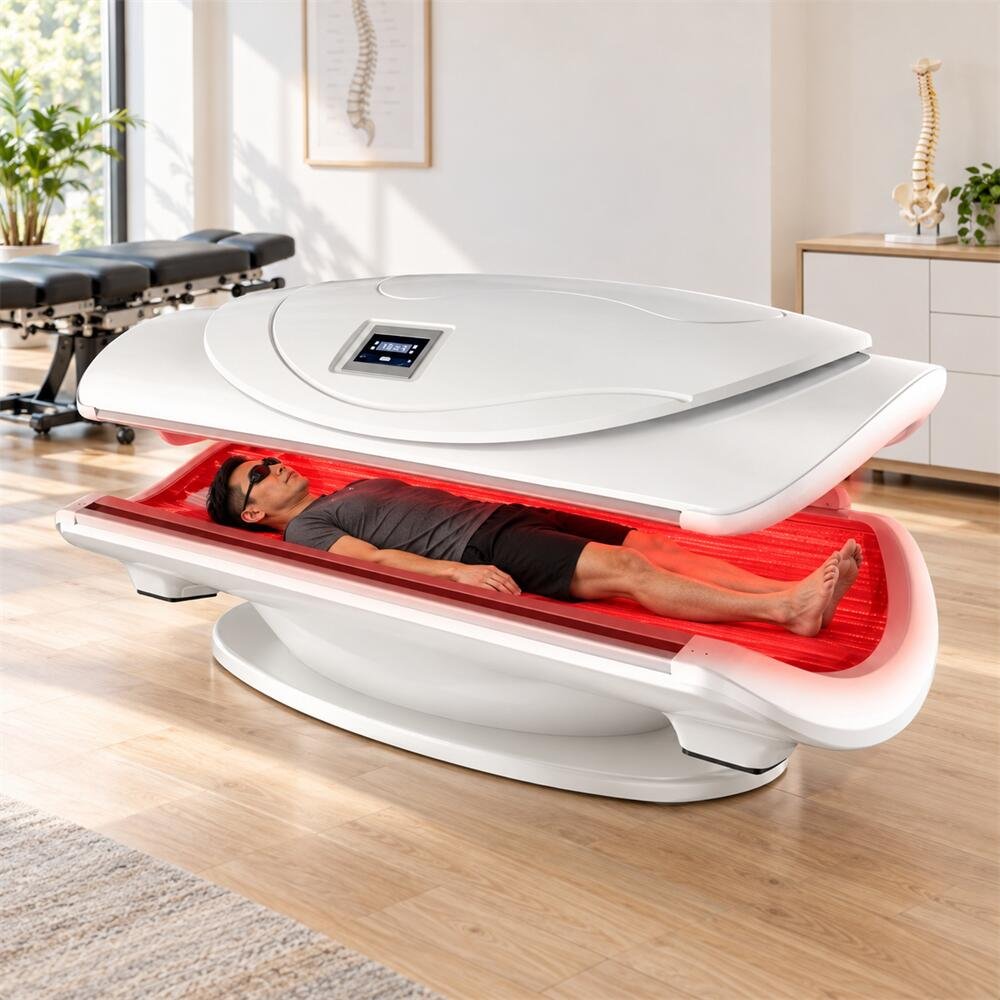
Chiropractic & Integrative Medicine Practices
Increasingly adopted as a complementary modality alongside spinal adjustments and soft tissue therapies. Helps differentiate the practice and adds a recurring revenue stream with minimal staff involvement per session.
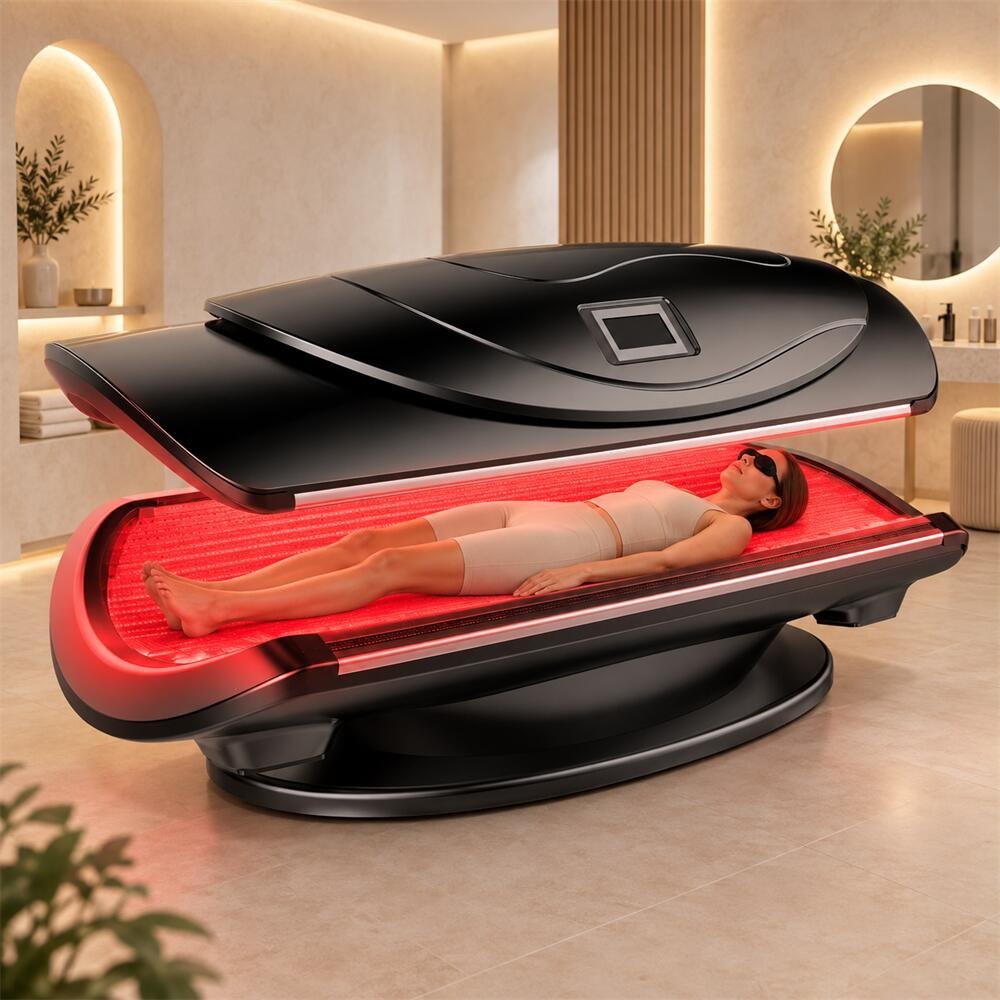
Tanning Salons & Beauty Studios
A natural upsell for existing tanning bed operators looking to diversify into safer, non-UV light therapy services. Shares similar booth infrastructure and appeals to the same body-conscious clientele seeking skin enhancement results.
Product Categories and Price Tiers
Red light therapy beds are not all built to the same standard. Knowing the product tiers helps you match the right device to the right customer segment and price point before you start talking to suppliers.
| Type | Form Factor | Best For | Price Range (FOB) |
|---|---|---|---|
| Entry-Level Clamshell Bed | Standard tanning bed shell, single-zone LEDs | Wellness studios, budget-tier distributors | $1,500-$4,000 |
| Mid-Range Dual-Wavelength Bed | Red + NIR, multi-zone control, cooling system | MedSpas, fitness recovery studios | $4,000-$10,000 |
| Professional Multi-Wavelength Bed | 3-5 wavelengths, touchscreen control, timer, EMF shielding | Clinics, premium wellness brands | $10,000-$25,000 |
| Full-Body Pod / Capsule | 360° enclosed pod, full LED coverage, integrated audio/climate | Luxury MedSpas, flagship wellness centers | $25,000+ |
Sourcing Note: FOB prices above are indicative for OEM/ODM orders. Actual pricing varies significantly based on LED count, chip brand (Epistar, Osram, Seoul Semiconductor), irradiance specs, housing material, and order volume. Always request a detailed BOM (Bill of Materials) and irradiance test report when evaluating suppliers — not just a price sheet.
What to Check Before You Place an Order
Sourcing a red light therapy bed for resale or private labeling is a different exercise than buying one for personal use. These are the criteria that protect your brand, your customers, and your margins.
1. Wavelength Accuracy & Irradiance Output
The most common quality problem in this market is the gap between claimed and actual performance. A device marketed as “850 nm NIR at 100 mW/cm²” may deliver significantly less at the skin surface. This is not a minor spec discrepancy — it directly affects whether your end users see results.
- Request third-party irradiance test reports (measured at 6 inches from the device surface)
- Verify wavelength peaks using spectroradiometer data, not just LED chip spec sheets
- Confirm irradiance uniformity across the full treatment surface
2. Certifications & Regulatory Compliance
The certifications you need depend on your target market and the claims you plan to make. Get this wrong and you’re looking at import delays, product recalls, or liability exposure.
CE Marking (EU)
Required for EU markets. Covers electrical safety (LVD) and EMC. Medical device claims require MDR compliance.
FCC (USA)
Required for electronic devices in the US. Covers electromagnetic interference. FDA 510(k) clearance needed for medical device claims.
ISO 13485
Quality management standard for medical device manufacturers. Indicates the factory runs at medical-grade production standards.
3. LED Quality & Lifespan
LED chips are the core functional component and the main driver of both performance and long-term reliability. Cheap chips degrade faster, deliver inconsistent output, and generate more heat — all of which translate into warranty claims and unhappy customers.
- Rated lifespan: Look for 50,000+ hours (L70 standard — the point at which output drops to 70% of initial)
- Chip brand: Tier-1 chips (Epistar, Osram, Seoul) offer better binning consistency and longevity
- Thermal management: Adequate heat sinking prevents premature LED degradation
- Pulsing capability: Some clinical protocols require pulsed light delivery — verify if the device supports this
4. Build Quality & User Safety
In a commercial setting with 6-10 sessions per day, build quality directly affects maintenance costs and client safety. These are non-negotiable for professional-grade equipment.
- Acrylic filter panels to prevent direct LED contact and UV filtering
- EMF shielding (important for health-conscious clients and clinical environments)
- Auto-shutoff timers and emergency stop mechanisms
- Weight capacity ratings and structural integrity for commercial use
- Cooling fan systems to maintain safe operating temperatures during back-to-back sessions
5. MOQ, Lead Time & Scalability
Supply chain reliability matters as much as product quality when you’re building a distribution business. A supplier who can deliver 20 units but falls apart at 200 is a problem you’ll hit sooner than you expect.
- Clarify minimum order quantities (MOQ) for both stock and OEM/ODM configurations
- Confirm typical production lead times (standard: 30-60 days for OEM runs)
- Ask directly about production capacity — can they fulfill a 500-unit order if your brand grows?
- Check packaging customization options: retail box, foam insert, branded accessories
6. After-Sales Support & Warranty
After-sales costs are easy to overlook during procurement and painful to deal with later. Evaluate these before you sign anything.
- Warranty terms: 1-3 years is standard; read what is and isn’t covered
- Spare parts availability: LED panels, power supplies, and acrylic covers should be stocked
- Technical documentation: User manuals, service guides, and wiring diagrams for local technicians
- Remote troubleshooting support from the manufacturer
OEM & ODM — Building Your Own Product Line
For brand owners who want a proprietary product line, OEM and ODM manufacturing offers a practical path to market differentiation without building your own factory. The two routes serve different needs and timelines.
OEM Route
You provide the design specifications; the manufacturer builds to your requirements. Best for brands with clear technical requirements and an existing product roadmap.
- Custom wavelength configurations
- Branded housing, color, and finish
- Custom control panels and software
- Proprietary accessory integration
ODM Route
The manufacturer provides an existing, tested design that you private-label. Faster time to market with lower development cost. Best for distributors who need to move quickly.
- Existing certified device platform
- Logo and branding customization
- Packaging design and inserts
- Lower MOQ and faster delivery
What a Qualified OEM/ODM Partner Should Provide
Questions Buyers Ask Before Committing
These are the questions that come up most often from buyers evaluating red light therapy beds for the first time.
What is the difference between a red light therapy bed and a tanning bed?
How many sessions does a client need to see results?
What certifications should I require from a supplier before purchasing?
What is a realistic ROI timeline for a wellness business operator?
Can I customize the wavelengths for my specific market or application?
What is the typical minimum order quantity (MOQ) for OEM red light therapy beds?
Are there contraindications or safety concerns I should communicate to end users?
What power output and irradiance should I expect, and why does it matter?
How does a bed treat the full body compared to a panel or handheld device?
What maintenance does a red light therapy bed require in a commercial setting?
What space and electrical infrastructure does a red light therapy bed require?
The Bottom Line
Red light therapy beds are not another wellness trend waiting to be replaced by something involving crystals. The science holds up, the market demand is real, and the ROI math — for the right operator in the right vertical — is genuinely strong. That’s why procurement managers who have seen everything are still placing orders.
The difference between a good sourcing decision and an expensive mistake comes down to asking the right questions before you sign a purchase order. Irradiance test reports, not marketing brochures. Actual certification documents, not logo badges on a website. A supplier who can scale with you, not just sell to you once. None of that is glamorous, but neither is explaining to your clients why their “premium” therapy bed is delivering half the promised output six months after installation.
Whether you’re building a private label from scratch, expanding a distributor portfolio, or equipping a clinic chain, the criteria in this guide give you a solid framework for evaluating suppliers and making a confident buying decision. The technology works — you just need to make sure the device you’re sourcing actually delivers it.