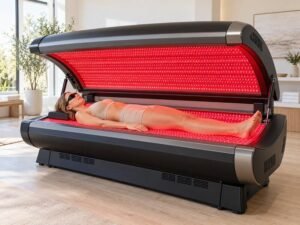
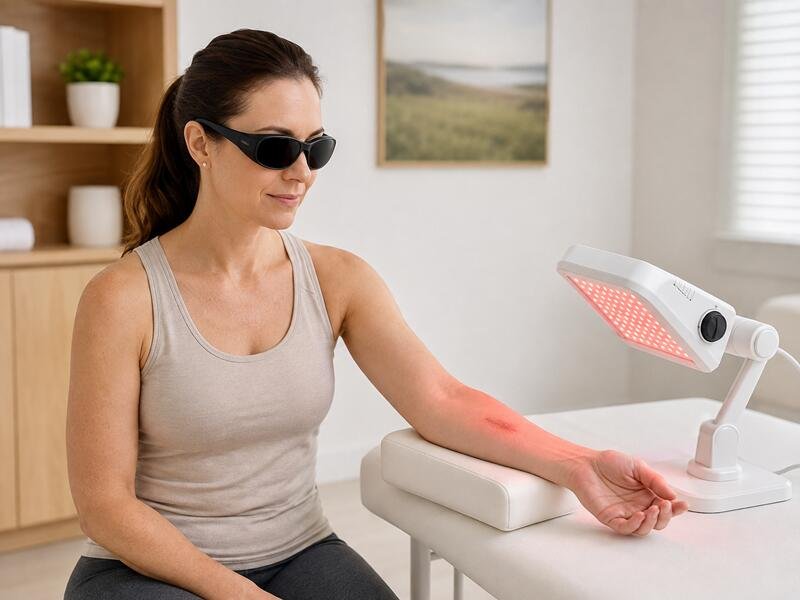
Wounds don’t follow schedules. They don’t care that your client has a product launch next week, a marathon next month, or a very important wedding in six weeks. They heal on their own timeline — unless you give the biology a little help. That’s where red light therapy comes in: a well-researched, non-thermal intervention that has been shown to speed up wound healing across a range of clinical settings, from post-surgical recovery rooms to sports medicine clinics.
If you’re a brand owner, distributor, or procurement manager evaluating the wound-healing market, here’s the practical reality: the technology works — but dosing matters. Too little light delivers insufficient energy to trigger a cellular response. Too much can actually inhibit healing, a well-documented phenomenon called the biphasic dose response. Getting the protocol right — session length, frequency, and total course — is what separates a device that delivers results from one that disappoints.
From post-surgical suites to sports recovery facilities, demand for clinically credible light therapy devices is growing. Whether you’re building a private label or stocking a distribution catalog, understanding the when, how long, and how often of red light therapy for wound healing is directly relevant to what you source, how you spec it, and how confidently your customers can use it.
How Red Light Therapy Supports Wound Healing
Red light therapy (RLT), also referred to as photobiomodulation (PBM) or low-level light therapy (LLLT), uses specific wavelengths of red and near-infrared light — typically between 630 nm and 850 nm — to stimulate biological processes at the cellular level. When applied to wounded tissue, these wavelengths penetrate the skin and interact with mitochondria, the energy-producing organelles in cells.
The primary mechanism involves photon absorption by cytochrome c oxidase, an enzyme in the mitochondrial respiratory chain. This triggers a cascade of effects that are directly relevant to wound healing:
Increased ATP Production
More cellular energy accelerates the metabolic processes required for tissue repair and regeneration.
Enhanced Collagen Synthesis
Stimulates fibroblasts to produce collagen, a critical protein for rebuilding wound structure and reducing scar formation.
Improved Microcirculation
Promotes angiogenesis and blood vessel dilation, improving oxygen and nutrient delivery to the wound site.
Reduced Inflammation
Modulates pro-inflammatory cytokines, helping to transition wounds from the inflammatory phase to the proliferative phase faster.
Antimicrobial Effects
Some studies suggest RLT can help reduce bacterial load, which is particularly relevant for chronic or infected wounds.
Pain Modulation
Reduces pain signaling at the wound site, improving patient comfort and treatment adherence during the healing process.
For buyers sourcing therapy devices, these mechanisms matter because efficacy is highly dose-dependent. Too little light delivers insufficient energy; too much can inhibit the cellular response — a phenomenon known as the biphasic dose response, or the Arndt-Schulz law. This is why session duration and frequency are not arbitrary choices, and why they should be specified clearly in any product documentation you provide to customers.
Key Treatment Parameters You Need to Know
Before getting into specific timing recommendations, it helps to understand the parameters that determine effective dosing. As a buyer evaluating devices or building a protocol guide for your customers, these are the technical specifications that matter most:
| Parameter | Definition | Wound Healing Range |
|---|---|---|
| Wavelength | The specific color/frequency of light emitted | 630-670 nm (red) / 810-850 nm (NIR) |
| Irradiance (Power Density) | Light intensity at the skin surface (mW/cm²) | 20-200 mW/cm² |
| Energy Density (Fluence) | Total light energy delivered per area (J/cm²) | 1-10 J/cm² per session |
| Session Duration | Time of each treatment exposure | 5-20 minutes |
| Treatment Frequency | Number of sessions per week | 3-7 days/week |
| Total Course Length | Overall duration of the treatment program | 2-12 weeks depending on wound type |
| Treatment Distance | Gap between device and skin surface | 0-15 cm (device-dependent) |
Buyer Note: When evaluating devices for your customers, pay close attention to irradiance output at the actual treatment distance. A device with high total wattage but low irradiance at 10 cm will require significantly longer sessions to deliver the same dose. Reputable manufacturers should provide verified irradiance data at multiple distances — not just total wattage figures.
Recommended Session Duration
Session duration is one of the most frequently asked questions from both end users and procurement teams building product usage guides. There is no single fixed answer — it depends on the device’s power output and the target dose. Here is a practical framework based on device category:
5-10 Minutes Per Session
High-Power Devices (100-200 mW/cm²)
Professional-grade panels and clinical devices often emit 100 mW/cm² or more at the treatment distance. At these intensities, therapeutic fluence (3-6 J/cm²) is reached quickly, making 5-10 minute sessions sufficient. Extending treatment time beyond this at high intensity risks crossing into the inhibitory range of the biphasic dose curve.
Typical device types: Full-panel professional devices, clinical-grade LED bed systems
10-20 Minutes Per Session
Mid-Power Devices (30-100 mW/cm²)
The most common range for home-use and semi-professional devices. Handheld units, wearable belts, and mid-range panels typically fall here. A 15-minute session at 50 mW/cm² delivers approximately 4.5 J/cm² — well within the therapeutic window for wound healing.
Typical device types: Handheld devices, wearable therapy belts, tabletop panels
20-30 Minutes Per Session
Low-Power Devices (10-30 mW/cm²)
Entry-level consumer devices and some flexible wrap-style products may fall in this range. Longer sessions are required to accumulate sufficient energy. While functional, buyers should verify that devices in this category actually reach the minimum effective threshold for wound-healing applications at realistic treatment distances — many do not.
Typical device types: Entry-level masks, flexible wraps, small handheld units
Quick Dose Calculation Reference
Use this formula to determine required session time:
Time (seconds) = Target Fluence (J/cm²) ÷ Irradiance (W/cm²)
Example A
4 J/cm² ÷ 0.1 W/cm²
= 40 seconds (~1 min)
100 mW/cm²
Example B
4 J/cm² ÷ 0.05 W/cm²
= 80 seconds (~1.3 min)
50 mW/cm²
Example C
4 J/cm² ÷ 0.02 W/cm²
= 200 seconds (~3.3 min)
20 mW/cm²
Note: In practice, add time to account for distance losses and tissue penetration. The above is a surface-level approximation.
How Often Should Sessions Be Performed?
Frequency recommendations vary based on wound acuity, healing phase, and the patient’s overall health. Here is the general consensus from published research and clinical practice:
Recommended during the acute inflammatory phase. Daily sessions help the body move through inflammation into proliferation more efficiently. Used for fresh post-surgical wounds, burns, and acute injuries.
The most common recommendation for the proliferative and remodeling phases. Provides sufficient stimulation while allowing recovery time between sessions. Suitable for outpatient settings, clinics, and home use.
Appropriate for the later remodeling phase or as a maintenance protocol after primary healing. Also suitable for chronic wound management over extended periods of 8+ weeks.
Can Red Light Therapy Be Used Twice a Day?
Some clinical protocols use twice-daily sessions for acute wounds under professional supervision. If doing so, sessions should be spaced at least 6 hours apart to allow cellular signaling pathways to complete their cycle. For home-use devices, twice-daily use is generally not recommended without clinical guidance, as it increases the risk of exceeding optimal dosing thresholds.
⚠️ The Over-Treatment Risk
One of the most important concepts to communicate to end users is that more sessions are not always better with red light therapy. The biphasic dose-response curve means excessive exposure can inhibit healing rather than accelerate it. This is why accurate irradiance specifications, built-in timers, and clear usage instructions on your devices are critical product features — not optional extras.
Treatment Phases: A Week-by-Week Framework
Wound healing is a multi-phase biological process. An effective red light therapy protocol aligns session parameters with each phase. The framework below is what clinical buyers can adapt for their specific customer segments:
Phase 1
Inflammatory Phase
The body’s immediate response to injury involves vascular changes, immune cell recruitment, and clearance of damaged tissue. RLT during this phase aims to reduce excessive inflammation without suppressing the necessary immune response.
Session Length
5-10 min
Frequency
Daily or 5x/week
Target Dose
2-4 J/cm²
Goal: Modulate inflammation, reduce pain, improve local circulation to the wound bed.
Phase 2
Proliferative Phase
New tissue formation begins. Fibroblasts migrate to the wound, collagen is synthesized, and angiogenesis builds new blood vessels. This is the phase where RLT has the most well-documented impact on wound healing outcomes.
Session Length
10-15 min
Frequency
4-5x/week
Target Dose
4-6 J/cm²
Goal: Stimulate collagen synthesis, promote angiogenesis, accelerate granulation tissue formation.
Phase 3
Remodeling Phase
The longest phase of wound healing, lasting weeks to years depending on wound severity. Collagen fibers reorganize, scar tissue matures, and tensile strength is restored. RLT can significantly improve scar quality and reduce hypertrophic scar formation during this phase.
Session Length
10-20 min
Frequency
3x/week
Target Dose
4-10 J/cm²
Goal: Optimize scar quality, support collagen remodeling, maintain tissue health during long-term recovery.
Phase 4
Maintenance & Prevention (Post-Healing)
For patients with chronic conditions such as diabetic ulcers, venous leg ulcers, or autoimmune-related skin fragility, ongoing maintenance therapy can reduce recurrence risk. This phase is also relevant for aesthetic clinics managing post-treatment skin recovery.
Session Length
10-15 min
Frequency
1-2x/week
Target Dose
3-6 J/cm²
Goal: Maintain skin health, prevent recurrence, support long-term tissue integrity.
Protocols for Different Wound Types
Different wound types have distinct healing dynamics and respond to RLT at different rates. Here is how timing recommendations differ across the most common wound categories your customers are likely to encounter:
Post-Surgical & Incision Wounds
Clinics, MedSpas, aesthetic practices
Typical Timeline
- Week 1-2:Daily 5-10 min sessions, 2-4 J/cm²
- Week 3-6:4-5x/week, 10-15 min, 4-6 J/cm²
- Week 7-12:3x/week, 10-15 min, scar remodeling focus
Key Considerations
- • Begin immediately post-op if approved by the surgeon
- • Avoid direct contact with open suture lines
- • Red (630-670 nm) for superficial sutures; NIR (810-850 nm) for deeper tissue healing
- • Particularly relevant for facial surgery recovery and body contouring post-op
Expected outcome: Studies show 30-50% faster suture healing and significantly reduced scar hypertrophy with consistent post-surgical RLT protocols.
Burns (Superficial & Partial Thickness)
Rehabilitation clinics, wound care centers
Typical Timeline
- Week 1-2:Daily, 5-8 min, low dose 1-3 J/cm²
- Week 3-6:Daily or 5x/week, 10-15 min, 4-6 J/cm²
- Week 7+:3-4x/week, ongoing for scar management
Key Considerations
- • Never apply to deep burns or full-thickness injuries without specialist clearance
- • Non-contact treatment is recommended for early-phase burns
- • Heat management is critical — use only low-heat LED devices, not laser
- • Long-term scar management can extend 12-24 months
Chronic Wounds (Diabetic Ulcers, Venous Ulcers)
Physical therapy clinics, pain management, rehabilitation centers
Typical Timeline
- Initial (Wks 1-4):Daily 10-15 min, 4-6 J/cm²
- Mid (Wks 5-12):4-5x/week, 15-20 min, 6-8 J/cm²
- Ongoing:2-3x/week for prevention and maintenance
Key Considerations
- • Results take longer — set realistic patient expectations of 8-16 weeks
- • NIR wavelengths (810-850 nm) preferred for deeper tissue penetration
- • Must be used alongside standard wound care, not as a replacement
- • Diabetic patients should have medical supervision throughout
Clinical note: Multiple randomized controlled trials (RCTs) have demonstrated significant improvement in diabetic foot ulcer healing rates with consistent PBM therapy versus control groups.
Sports Injuries & Abrasions
Fitness recovery, sports medicine, wellness centers
Typical Timeline
- Days 1-3:Daily 5-10 min, 2-4 J/cm² immediately post-injury
- Days 4-14:Daily or 5x/week, 10-15 min
- Week 3-4:3x/week, maintain until full closure
Key Considerations
- • Fast healing times are typical for this category — a strong use case for RLT
- • Handheld and wearable devices are the most practical form factors
- • Can be used pre- and post-training for broader recovery support
- • Most sports abrasions and lacerations heal within 2-4 weeks with RLT
Post-Aesthetic Procedure Recovery
MedSpas, dermatology clinics, facial care centers
Typical Timeline
- Day 1-3:Gentle 5 min sessions, 2-3 J/cm² for laser/peel recovery
- Days 4-14:Daily 10 min, low-to-moderate dose
- Week 3-8:3-4x/week for collagen and skin tone optimization
Key Considerations
- • Post-laser, post-microneedling, and post-peel recovery are high-demand applications
- • Red light (630-660 nm) preferred for surface skin recovery
- • Masks and panel devices are the most practical form factor
- • Can be positioned as a premium add-on service for existing clinic clients
Device Selection Considerations for Buyers
As a brand owner, distributor, or procurement manager, the devices you source directly determine whether your customers achieve the clinical outcomes described in this article. These are the specifications that matter most when evaluating options:
Verified Wavelength Accuracy
Ensure devices emit the claimed wavelengths. Request spectral data or third-party lab reports. Off-specification LEDs reduce therapeutic efficacy. For wound healing, dual-wavelength devices (red + NIR) offer the most versatile clinical coverage.
Irradiance Specifications
Always ask for irradiance measurements in mW/cm² at specific distances (e.g., 0 cm, 5 cm, 10 cm). A device measured at 0 cm contact will show dramatically lower effective dose at standard treatment distances. This is the most commonly misrepresented specification in the market.
Timer & Dosing Control
Devices with built-in automatic timers and clear dose indicators support protocol compliance and protect users from over-treatment. This is especially important for home-use products where there is no clinical supervision.
Certifications (CE, FDA, FCC)
Market compliance is non-negotiable. CE marking for European markets, FDA clearance or registration for the US, and FCC for electromagnetic compatibility are fundamental requirements. Confirm your manufacturer can provide the documentation you need for market entry and customer confidence.
Form Factor for Application
Match the device form factor to your customer’s wound healing application. Handheld devices for localized wounds; wearable belts for limb wounds; panel devices for body surface wounds; masks for facial recovery. The right form factor affects usability, compliance, and ultimately, outcomes.
OEM Customization Options
For brands building a wound-care or recovery-specific product line, OEM options such as custom wavelength ratios, power settings, packaging, and clinical protocol guides allow you to differentiate in the market and align closely with your target customers’ professional requirements.
Safety, Contraindications & Buyer Responsibility
Red light therapy has a well-established safety profile across decades of research and clinical use. When used correctly, adverse events are rare. That said, as a buyer distributing these devices, you carry responsibility for ensuring your customers are adequately informed about contraindications and proper use.
Generally Safe For
- ✓ Adults with acute and chronic wounds
- ✓ Post-surgical recovery with physician approval
- ✓ Sports injuries and minor burns
- ✓ Patients with healthy skin around the wound site
- ✓ Long-term scar management protocols
- ✓ Use alongside standard wound dressings
Contraindications & Cautions
- ⚠ Active cancer at or near the treatment site
- ⚠ Photosensitive medications or conditions
- ⚠ Pregnancy (insufficient safety data)
- ⚠ Direct eye exposure without protective eyewear
- ⚠ Deep full-thickness burns without specialist care
- ⚠ Active bleeding wounds requiring immediate medical care
- ⚠ Known photosensitivity disorders (e.g., lupus)
What Buyers Should Include in Their Product Package
Clear Usage Instructions
Include session duration, frequency, and distance guidance calibrated to your specific device’s irradiance output.
Safety Warnings
Document all contraindications in the user manual, on packaging, and in any digital onboarding materials.
Clinical Backing
Provide reference materials for professional buyers to share with their clinical teams — including relevant research and evidence-based dosing tables.
Frequently Asked Questions
The following questions address the most common queries from clinicians, brand owners, and end users about red light therapy for wound healing.
How long does it take to see results from red light therapy on a wound?
Results vary depending on wound type, severity, and how consistently the protocol is followed. For acute wounds — minor cuts, abrasions, or post-aesthetic procedure recovery — users often notice reduced redness, swelling, and faster surface closure within 3-7 days of daily treatment. Post-surgical wound improvements are typically visible within 2-3 weeks. Chronic wounds such as diabetic ulcers may require 4-8 weeks of consistent treatment before meaningful closure progress is measurable. The main variable is protocol adherence — underpowered devices or inconsistent use will delay visible outcomes.
Can red light therapy be applied directly to an open wound?
Yes, in most cases red light therapy can be applied to open wounds — this is one of its primary clinical use cases. Unlike some other therapies, RLT is non-thermal and non-invasive, making it suitable for direct application over wound sites. That said, non-contact application (holding the device a few centimeters above the wound) is generally recommended for fresh or heavily exudating wounds to maintain sterility and avoid mechanical disturbance. For wounds with active sutures, avoid pressing the device against the suture line directly. Always follow the device manufacturer’s instructions, and in clinical settings, adhere to the protocols established by the supervising healthcare provider.
What wavelength is most effective for wound healing — red or near-infrared?
Both wavelength ranges are effective, but they work at different tissue depths and suit different wound types. Red light (630-670 nm) penetrates to approximately 2-5 mm depth, making it well-suited for superficial wounds, skin surface recovery, post-aesthetic procedures, and scar remodeling. Near-infrared light (810-850 nm) penetrates significantly deeper — up to 5-10 cm — and is preferred for deeper surgical wounds, chronic ulcers, muscle tissue injuries, and joint-adjacent wounds. For the most versatile wound-healing device, dual-wavelength systems combining both red and NIR LEDs are the practical choice, as they address superficial and deep tissue simultaneously. Many clinical protocols use both wavelengths within the same session.
Is red light therapy safe to use on diabetic wounds?
Red light therapy is considered safe and potentially highly beneficial for diabetic wound management, including diabetic foot ulcers (DFUs) — one of the most clinically challenging chronic wound categories. Multiple randomized controlled trials have demonstrated that photobiomodulation significantly improves closure rates in DFUs compared to standard care alone. The therapy addresses several core challenges in diabetic wound healing: it improves microcirculation in compromised vascular tissue, stimulates fibroblast activity that is typically impaired in diabetic patients, and reduces chronic inflammation. Medical supervision is strongly recommended for diabetic patients, as these wounds carry high risk of infection and complications. RLT should always be used as an adjunct to — not a replacement for — standard diabetic wound care protocols.
Can red light therapy reduce scarring after wound healing?
Yes, scar reduction and improved scar quality are among the well-documented benefits of red light therapy, particularly during the remodeling phase. RLT modulates collagen synthesis and promotes the formation of well-organized collagen fibers rather than the disorganized, cross-linked collagen characteristic of hypertrophic scars and keloids. Clinical studies show that consistent RLT during the remodeling phase (weeks 3 through 12+) can produce flatter, softer, and less pigmented scars compared to untreated controls. For post-surgical patients and burn survivors, this is a meaningful quality-of-life outcome. Red wavelengths (630-660 nm) are particularly effective for surface scar remodeling, while NIR supports deeper dermal restructuring.
How soon after surgery can red light therapy begin?
In many clinical settings, red light therapy can begin immediately post-operatively — sometimes within hours of surgery — provided the surgeon has approved its use. Early application during the inflammatory phase (days 1-5) is particularly valuable for reducing post-surgical swelling, pain, and bruising. Some plastic surgery and aesthetic medicine practices have incorporated RLT as a standard post-operative protocol for this reason. The important caveats are: (1) use non-contact application over fresh incision lines, (2) confirm no contraindications exist (e.g., photosensitive medications prescribed post-surgery), and (3) always obtain the operating surgeon’s clearance before initiating therapy. For home-use devices sold to post-surgical patients, clear instructions about timing and technique are essential product documentation.
Does red light therapy help with infected wounds?
Red light therapy has demonstrated some antimicrobial properties in laboratory and clinical studies, particularly against common wound pathogens such as Staphylococcus aureus and Pseudomonas aeruginosa. However, it is not a replacement for antibiotic treatment in clinically infected wounds. RLT can serve as a useful adjunct in infected wound management by reducing bacterial load, modulating the inflammatory response, and supporting immune cell activity at the wound site. For wounds showing signs of clinical infection (increased redness, warmth, purulent discharge, fever), appropriate medical evaluation and antimicrobial treatment must take priority. Once infection is controlled, RLT can be effective in accelerating subsequent healing. Buyers distributing devices for wound care should communicate this distinction clearly in their product documentation and customer-facing materials.
What is the minimum effective dose for wound healing with red light therapy?
Based on the current body of photobiomodulation research, the minimum effective dose for wound healing is generally cited as 1-2 J/cm² per session at the wound surface. The optimal therapeutic range for most wound healing applications falls between 3-6 J/cm², where the strongest evidence for accelerated healing, collagen stimulation, and anti-inflammatory effects is concentrated. Below 1 J/cm², biological response is typically insufficient to produce measurable clinical benefit. This minimum threshold is why device irradiance specifications matter: a device delivering only 10 mW/cm² at the treatment distance would require over 3 minutes just to reach 2 J/cm² — and many entry-level devices fall short of even this when tested at realistic treatment distances. Always verify irradiance data at the distance your customers will actually use the device.
Can red light therapy be used alongside other wound care treatments?
Yes, red light therapy is designed to function as an adjunctive therapy that complements — rather than replaces — standard wound care. It can be safely combined with moist wound dressings, negative pressure wound therapy (NPWT), compression therapy for venous ulcers, offloading devices for diabetic foot wounds, and topical antimicrobials. The general approach is to apply RLT either before or after dressing changes, not through occlusive dressings (which block light transmission). Some transparent wound dressings allow light to pass through, but this should be verified. RLT also pairs well with other regenerative therapies such as platelet-rich plasma (PRP) and hyperbaric oxygen therapy (HBOT), with some evidence suggesting synergistic effects. For buyers building wound care product lines, positioning RLT devices as part of a comprehensive wound management protocol — rather than a standalone solution — is both clinically accurate and a stronger commercial proposition.
How do I know when to stop red light therapy treatments for a wound?
The decision to stop or reduce sessions depends on the healing phase and the therapeutic goal. For acute wounds, treatment can typically be tapered once the wound has achieved full epithelial closure and primary healing is confirmed — usually transitioning from daily sessions to 3x/week and then stopping active treatment. For scar management, many clinicians continue at reduced frequency (2-3x/week) through the remodeling phase, which can extend to 12 weeks or beyond for significant wounds. Practical indicators for reducing or stopping treatment include: complete wound closure, normalization of surrounding skin color and temperature, absence of pain at the wound site, and satisfactory scar quality. For chronic wound patients, a maintenance protocol (1-2x/week) may continue indefinitely to reduce recurrence risk. Buyers should provide customers with clear criteria for treatment progression and completion in their product guides.
Conclusion
Red light therapy is one of the better-evidenced adjunctive options for wound healing available today. When applied with the right parameters — appropriate wavelengths, sufficient irradiance, correct session duration, and consistent frequency — it can meaningfully accelerate healing across wound types, from post-surgical incisions to chronic diabetic ulcers.
For buyers in the medical aesthetics, wellness, and rehabilitation markets, these clinical parameters are not just background reading — they directly affect product selection, customer satisfaction, and how your brand is positioned against the competition. The difference between a device that delivers results and one that falls short often comes down to verified irradiance output, accurate wavelength specification, and the quality of the clinical guidance you provide alongside it.
When evaluating manufacturers and building your product portfolio, prioritize suppliers who can provide verified technical data, certification support, and flexible OEM customization — so that the devices you bring to market are capable of delivering the outcomes your customers are paying for.
Disclaimer: This article is intended for informational and product-sourcing purposes only. Always advise end users to consult a qualified healthcare professional before beginning any therapeutic protocol.