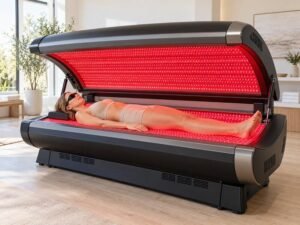
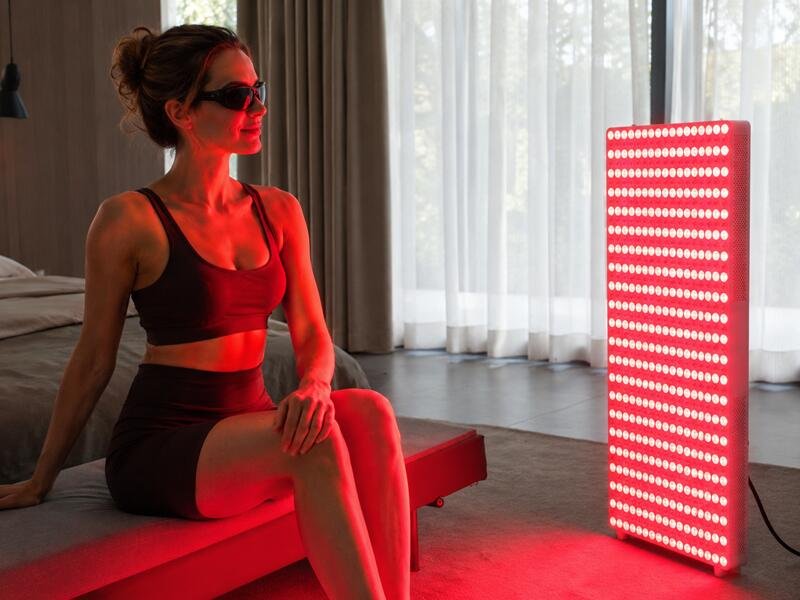
A red light therapy panel may seem simple from the outside.
A metal housing. Rows of LEDs. A control screen. A power cable. A cooling system. Turn it on, and the red and near infrared light start working.
But for a brand owner, distributor, importer, clinic supplier, or wellness product company, a reliable panel is never just a box with lights. Behind every stable product, there is a complete development process: market research, technical planning, structural design, sample making, testing, production, inspection, packaging, and delivery.
This article walks through how a red light therapy panel is born, from the first idea to a finished product ready for the market.
A Product Begins Before The First Drawing
A good red light therapy panel does not start with a drawing. It starts with a market need.
Before engineers design the housing or choose the LED layout, the product team needs to answer a basic question:
Who is this panel made for?
A compact panel for home use is different from a large panel for a wellness center. A device for beauty clinics may require a cleaner appearance and easier operation. A product for fitness recovery may focus more on power output, coverage area, and durability. A model for private label projects may need a balance between performance, cost, packaging, and brand customization.
Different markets lead to different product decisions.
| Key Question | Why It Matters |
|---|---|
| Who will use the panel? | Decides size, structure, and functions |
| Where will it be used? | Affects power, cooling, installation, and noise control |
| What is the brand position? | Influences materials, appearance, and cost level |
| Which market will it enter? | Affects certification, plug type, labeling, and packaging |
| What price range is expected? | Helps balance performance and production cost |
Buyer Tip:
A panel should not be selected only because it has a good photo. The real value is whether the product fits the target market and can remain stable after repeated use.
This early planning stage helps avoid many later problems. If the product direction is unclear, the final device may become difficult to sell, hard to position, or too expensive for the intended market.
Turning A Market Idea Into A Product Brief
Once the product direction is clear, the idea needs to become a technical brief.
This brief works like a roadmap. It connects the market need with engineering work. It may include product size, wavelength combination, LED quantity, power level, control system, cooling design, housing material, mounting method, packaging style, and certification requirements.
For example, a high power panel designed for shorter treatment sessions may need more LEDs, stronger heat dissipation, and a more stable power system. A compact tabletop model may need lighter weight, quiet operation, and a simple stand. A premium private label model may require a better surface finish, customized logo, improved packaging, and a more polished user interface.
The product brief should answer practical questions, not only marketing questions.
| Product Area | Main Decision |
|---|---|
| Wavelength | 660nm, 850nm, or customized combinations |
| LED Layout | Quantity, spacing, lens angle, and light distribution |
| Power System | Output stability and safety margin |
| Cooling Design | Fan, heat sink, airflow, and housing ventilation |
| Control System | Timer, brightness, mode selection, remote, or app control |
| Structure | Wall mounting, door hanging, floor stand, or desktop use |
| Packaging | Retail box, neutral carton, private label carton, or bulk packing |
Factory Note:
A clear product brief saves time. It helps engineers develop the right sample instead of making repeated changes after the first prototype.
Choosing The Core Technical Direction
The technical direction decides how the panel performs.
The most common red light therapy panels use red light and near infrared light, often around 660nm and 850nm. Some brands may request additional wavelengths to create a wider product range or a more differentiated model.
Wavelength is important, but it is only one part of the design. LED quality, irradiance, beam angle, power stability, heat control, and light distribution also affect the final performance.
LED quantity is another common selling point. A higher LED count may improve coverage and energy output, but only when the power supply and cooling system can support it. More LEDs also generate more heat, which means the internal design must be stronger.
Buyer Tip:
More LEDs are useful only when the power system, PCB design, and cooling structure are built to support them. Otherwise, high LED quantity may become a risk instead of an advantage.
Irradiance also needs careful attention. Buyers often compare irradiance data, but the testing distance and testing method must be clear. A number measured at a very short distance may not reflect real use. Practical data at common treatment distances is more helpful for product evaluation.
Giving The Panel Its Shape
After the technical direction is confirmed, the product needs a physical form.
The housing is more than decoration. It protects internal components, supports heat dissipation, affects durability, and shapes the customer’s first impression.
Most red light therapy panels use metal housing. A stronger housing helps protect the product during shipping and daily use. The surface may be finished in matte black, white, silver, or customized colors depending on the brand style.
The structure also needs to match the application.
A small panel may use a tabletop stand. A medium panel may support door hanging or wall mounting. A large panel may need a floor stand or an electric stand for easier adjustment. Some commercial users may need vertical and horizontal positioning.
| Structure Detail | What It Affects |
|---|---|
| Housing thickness | Strength, heat control, and durability |
| Ventilation holes | Airflow and internal temperature |
| Handle design | Daily movement and user convenience |
| Mounting holes | Wall, door, or stand installation |
| Surface finish | Brand image and product grade |
| Fan position | Cooling performance and noise level |
A good structure should be easy to use, easy to assemble, and strong enough for long term operation.
Small details matter. Loose buttons, weak brackets, sharp edges, poor cable position, or noisy fans can make a device feel cheap, even if the light output is acceptable.
The First Sample Is Where Problems Become Visible
Once the design is ready, the first working sample can be built.
This is an important moment. The idea becomes a physical product. The team can touch it, test it, operate it, and see what needs improvement.
The first sample is not expected to be perfect. Its real job is to reveal problems early.
Engineers will check whether the housing fits properly, whether the LEDs are aligned, whether the internal wiring is clean, whether the fan position is suitable, whether the control screen is easy to use, and whether the whole product feels solid.
Factory Note:
A good sample is not the one that hides every problem. A good sample helps the team find problems before the product enters production.
During this stage, many small issues may appear. The screen angle may not be comfortable. The brightness may not be evenly distributed. The fan noise may be higher than expected. The temperature may rise too quickly. The hanging system may need reinforcement.
These are not failures. They are useful signals.
Every adjustment at the sample stage reduces risk later.
Testing Before The Product Reaches The Market
A red light therapy panel should not move to production just because it turns on.
It needs testing.
Testing helps confirm whether the product can perform safely and consistently. It also helps buyers reduce complaints, returns, and after sales pressure.
| Test Item | Main Purpose |
|---|---|
| Wavelength Test | Checks whether the light source matches the design |
| Irradiance Test | Measures energy output at practical distances |
| Temperature Test | Confirms heat control during operation |
| Aging Test | Checks reliability before shipment |
| Function Test | Confirms timer, modes, buttons, screen, and remote control |
| Appearance Check | Reviews housing, finish, logo, and assembly details |
| Packaging Test | Reduces damage risk during international shipping |
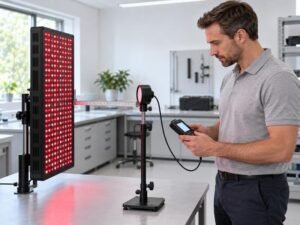
Optical testing checks the wavelength, irradiance, light distribution, and beam angle. Electrical testing checks power stability, insulation, wiring, and basic safety. Temperature testing shows whether the product can work continuously without overheating.
Aging tests are also valuable. The device is powered on for a set period to check LED performance, fan operation, power stability, screen function, and general reliability.
Quality Check:
One good sample is not enough. The real question is whether the factory can repeat the same quality during production.
Testing should also include user experience. The panel should be easy to operate. The screen should be clear. The buttons should make sense. The fan noise should be acceptable. The stand should be stable. The manual should be easy to follow.
A product is judged not only by data, but also by the person using it.
Small Adjustments That Make The Product Better
After testing, the product usually needs adjustment.
This is where the panel becomes more mature.
If the LED layout is not balanced, engineers may adjust the spacing, lens selection, PCB layout, or internal structure. If the temperature is too high, they may change the fan, improve ventilation, adjust the heat sink, or improve the airflow path.
If the control system feels complicated, the interface may be simplified. If the stand is not stable enough, the structure may be strengthened. If the housing feels too heavy or too thin, the material design may be reviewed.
These changes may seem small, but they can strongly affect the final product.
| Problem Found | Possible Adjustment |
|---|---|
| Uneven light distribution | Adjust LED spacing or lens angle |
| High internal temperature | Improve fan, ventilation, or heat sink |
| Noisy operation | Change fan type or airflow design |
| Weak mounting support | Reinforce bracket or screw position |
| Confusing operation | Simplify control logic or screen display |
| Shipping damage risk | Improve foam, carton, or inner protection |
Buyer Tip:
A mature product is usually the result of several rounds of adjustment. Fast development is useful, but skipping testing and refinement often creates bigger costs later.
From Approved Sample To Stable Production
Once the final sample is approved, the factory prepares for production.
This stage is not only about buying materials and arranging workers. It is about making sure the approved sample can be repeated in larger quantities.
Material control is the first point. LEDs, power supplies, PCBs, fans, screens, cables, housings, screws, labels, and packaging materials should follow the approved specifications. Any change in key components may affect performance.
Production also needs clear workflow.
A typical production process may include material inspection, PCB assembly, LED installation, housing preparation, wiring, screen assembly, fan installation, function testing, aging test, cleaning, final inspection, and packing.
Standardization is important. Workers need clear assembly instructions. Wire positions, screw types, label placement, testing methods, and packing details should be consistent.
Factory Note:
Mass production is not the same as making one good sample. Stable production means every unit should follow the same standard.
For private label projects, this stage also includes logo confirmation, carton design, manual printing, label checking, and accessory preparation.
Quality Control Before Packing
Quality control should not happen only at the end. It should be part of the whole production process.
Incoming materials should be checked before assembly. Semi finished products should be checked during production. Finished devices should be tested before packing.
Final inspection usually covers appearance, function, accessories, labels, and packaging.
| Inspection Area | What To Check |
|---|---|
| Appearance | Housing, coating, logo, screen, buttons, screws |
| Function | Power, timer, modes, brightness, fan, remote control |
| Accessories | Power cord, goggles, hook, stand parts, manual |
| Labeling | Model, voltage, plug type, barcode, carton mark |
| Packaging | Foam protection, carton strength, inner layout |
| Documentation | Invoice, packing list, test report, certificates if required |
Quality Check:
A good shipment is not only about the device. Accessories, manuals, labels, and packaging must also be checked carefully.
This is especially important for overseas orders. A missing power cord, wrong plug, damaged carton, or incorrect label can create unnecessary trouble even when the product itself works well.
Good quality control protects both the supplier and the customer.
When The Panel Leaves The Factory
After final inspection and packing, the product is ready for shipment.
Different customers may choose different shipping methods. Samples are often shipped by express. Medium orders may use air freight. Larger orders are usually shipped by sea. Some customers may request door to door service depending on the destination country.
Shipping is also part of the product experience.
Strong packaging reduces damage. Clear documents reduce customs problems. Correct carton marks help warehouse handling. Timely shipment updates help customers plan their sales and distribution.
For international orders, common documents may include commercial invoice, packing list, bill of lading, certification documents, test reports, and customs information.
The work does not end after shipment. Customer feedback is valuable. It may include comments about packaging, product operation, market response, installation, accessories, or user manual details.
Good manufacturers use this feedback to improve the next batch.
What Serious Buyers Can Learn From This Process
The birth of a red light therapy panel shows one important fact:
A reliable product is built through details.
Price is important, but price alone does not decide product value. A very low cost panel may become expensive if it causes complaints, returns, unstable performance, or damage to brand reputation.
When evaluating a red light therapy panel, serious buyers should pay attention to the full development and production process.
Important points include:
- Clear product positioning
- Suitable wavelength combination
- Stable LED performance
- Practical irradiance data
- Good heat dissipation
- Reliable power system
- Strong housing structure
- Easy operation
- Clean assembly
- Repeatable production quality
- Careful inspection
- Safe packaging
- Proper documentation
A red light therapy panel is not born in one day. It goes through planning, design, sampling, testing, adjustment, production, inspection, and delivery.
When every stage is handled carefully, the final product becomes more than a device. It becomes a product that can support a brand, serve a market, and create long term value.
From concept to mass production, every detail matters.