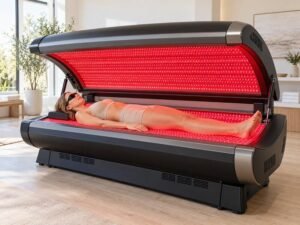
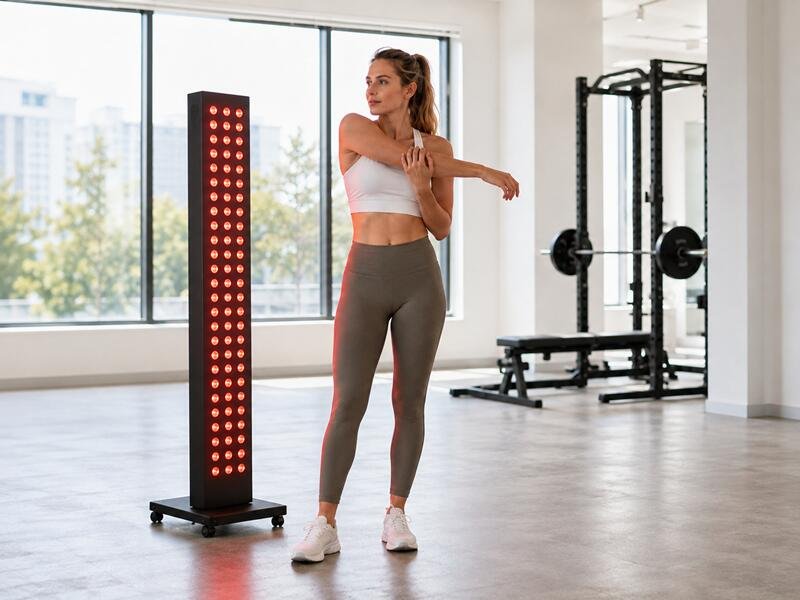
Somewhere between obsessing over pre-workout supplements and arguing about optimal rest periods, a new question has muscled its way into the fitness world: when exactly should I stand in front of a giant glowing red panel?
Before you crush those deadlifts, or after you’ve already destroyed your legs and can barely walk to the parking lot? It sounds like the kind of thing only a biohacker with a spreadsheet and too much free time would care about — but here’s the thing: timing actually matters, and the science behind it is surprisingly compelling. Red light therapy isn’t just wellness-industry window dressing. It interacts with your mitochondria in ways that can meaningfully shift both your performance output and your recovery speed. So before you randomly bathe yourself in photons and hope for the best, let’s break down exactly what the research says — and build you a protocol that actually makes sense.
What Is Red Light Therapy?
Red light therapy (RLT), also known as photobiomodulation (PBM) or low-level laser therapy (LLLT), is a non-invasive treatment that uses specific wavelengths of red (630-700 nm) and near-infrared (NIR) light (700-1100 nm) to penetrate skin and underlying tissue. These wavelengths interact with mitochondria — the energy-producing organelles in your cells — triggering a cascade of biological responses that support healing, performance, and recovery.
Over the past decade, RLT has moved from clinical research settings into mainstream wellness, fitness recovery, and aesthetic medicine. Gyms, sports clinics, medspas, and rehabilitation centers now routinely invest in professional-grade RLT panels and full-body systems to offer this service as a standalone treatment or as a complement to physical training.
Targets surface tissue, skin rejuvenation, collagen
Penetrates muscle, joint, and bone tissue
Deep tissue, inflammation, cellular repair
The Science Behind RLT and Exercise
To understand the best timing for RLT in relation to exercise, it helps to understand what is actually happening at the cellular level when light hits tissue.
The primary mechanism of action is the absorption of red and NIR photons by cytochrome c oxidase (CCO), a key enzyme in the mitochondrial electron transport chain. This absorption leads to:
- Increased ATP production — more cellular energy available for muscle contraction and repair
- Reduced oxidative stress — modulation of reactive oxygen species (ROS) that accumulate during intense exercise
- Enhanced nitric oxide (NO) release — vasodilation improves blood flow and oxygen delivery to working muscles
- Downregulation of pro-inflammatory cytokines — accelerated resolution of exercise-induced inflammation
- Stimulation of muscle stem cells — improved myogenesis and tissue remodeling after micro-damage
Research Note: A 2016 systematic review published in Photomedicine and Laser Surgery analyzed 46 randomized controlled trials and found that photobiomodulation significantly improves muscle performance, reduces delayed onset muscle soreness (DOMS), and accelerates recovery when applied before or after exercise. The key finding: timing matters, but both windows are effective for different goals.
Red Light Therapy Before Workout: Benefits & Evidence
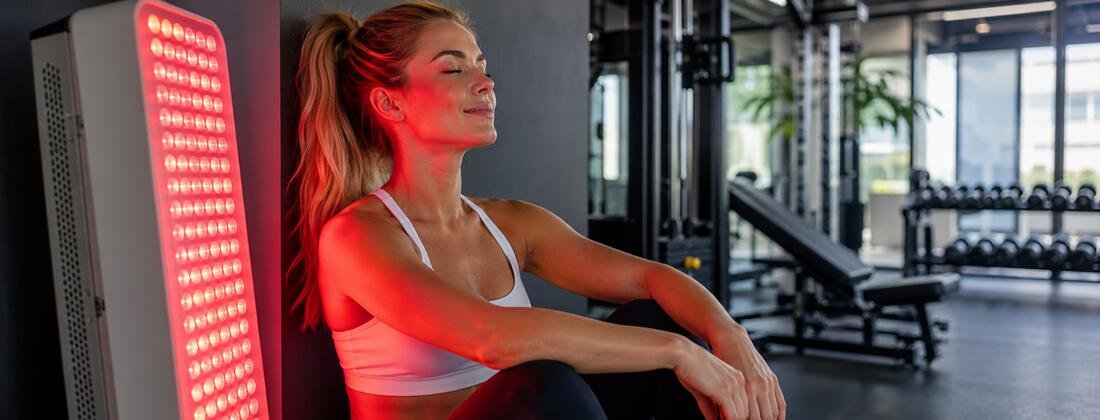
Using red light therapy before exercise functions essentially as a biological warm-up at the cellular level. The primary goal is to prime the muscles, reduce fatigue onset, and enhance the capacity for performance before the session begins.
Key Pre-Workout Benefits
⚡ Enhanced Muscle Performance & Strength Output
Multiple studies have shown that pre-exercise RLT increases peak muscle torque and total work output. A 2011 study in Lasers in Medical Science found that athletes who received low-level laser therapy to the quadriceps before a cycling test demonstrated significantly higher peak torque compared to a placebo group.
💧 Improved Blood Flow and Oxygen Delivery
Pre-workout NIR light stimulates nitric oxide release, causing vasodilation. This means muscles receive more oxygenated blood at the start of exercise — similar to an extended cardiovascular warm-up, but without additional fatigue.
⚡ Increased Mitochondrial ATP Production
Irradiating muscle tissue before activity upregulates mitochondrial function, giving cells a head start on energy production. This can delay the point at which muscles shift to anaerobic metabolism, reducing lactic acid buildup and extending time to fatigue.
🔥 Reduced Muscle Damage During Exercise
Pre-conditioning muscle cells with RLT has been shown to reduce creatine kinase (CK) levels — a biomarker of muscle damage — in post-exercise blood tests. Essentially, the muscle fibers are in a better-prepared state before mechanical stress is applied.
📸 Better Endurance & Fatigue Resistance
Research in endurance athletes suggests pre-RLT can extend performance duration. One study found a 5-10% improvement in time to exhaustion in subjects who received NIR irradiation to major muscle groups before submaximal cycling.
✓ Best Pre-Workout Use Cases
- Strength training sessions targeting maximum output
- Competitive athletic events where peak performance is needed
- High-intensity interval training (HIIT)
- Heavy resistance workouts (powerlifting, CrossFit)
- Endurance events requiring sustained aerobic output
Red Light Therapy After Workout: Benefits & Evidence
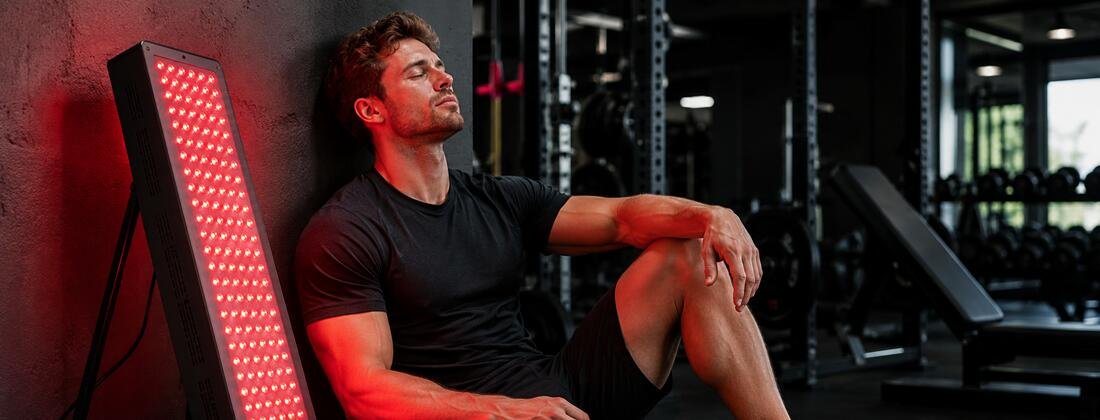
Using red light therapy after exercise targets a completely different phase of the performance cycle: recovery. When you train, you create microscopic damage in muscle fibers, generate metabolic waste, and trigger an acute inflammatory response. Post-workout RLT works to accelerate all of the resolution processes that the body initiates naturally.
Key Post-Workout Benefits
📸 Accelerated DOMS Reduction
Delayed onset muscle soreness (DOMS) is one of the most well-studied targets for post-exercise RLT. A 2014 Cochrane-reviewed meta-analysis confirmed that low-level laser therapy applied after resistance exercise significantly reduces DOMS severity at 24, 48, and 72 hours post-workout.
💦 Faster Clearance of Metabolic Waste
Lactate, hydrogen ions, and other metabolic byproducts accumulate during intense exercise. Post-workout NIR irradiation enhances microcirculation and lymphatic drainage, accelerating clearance of these compounds from muscle tissue.
🤔 Anti-Inflammatory Action
Exercise creates controlled inflammation necessary for adaptation, but excessive or prolonged inflammation impairs recovery. RLT post-workout helps modulate this inflammatory response — reducing IL-6, TNF-alpha, and other pro-inflammatory cytokines while supporting the resolution phase that drives muscle repair and growth.
💪 Faster Muscle Repair and Hypertrophy
Post-exercise, RLT stimulates the activity of satellite cells (muscle stem cells) responsible for repairing damaged myofibers and contributing to muscle hypertrophy. Research in Photomedicine and Laser Surgery shows increased myogenic regulatory factor expression following post-exercise laser therapy.
⚡ Replenishment of Cellular Energy Stores
ATP stores are depleted during hard training. Post-workout RLT stimulates mitochondrial function to help accelerate ATP resynthesis, allowing cells to return to full operational capacity faster — meaning you can train again sooner.
💧 Reduced Joint and Connective Tissue Stress
High-impact and resistance training places mechanical load on joints, tendons, and ligaments. Post-workout NIR therapy has demonstrated positive effects on connective tissue repair and can help manage cumulative joint stress common in high-frequency training programs.
✓ Best Post-Workout Use Cases
- Recovery after heavy resistance or hypertrophy-focused training
- Reducing next-day soreness for high-frequency training athletes
- Injury prevention protocols in high-impact sports
- Post-competition recovery for professional athletes
- Rehabilitation programs combining exercise and recovery therapy
- Fitness clients managing chronic joint discomfort
Before vs. After: Head-to-Head Comparison
Both timing strategies are scientifically validated. The “better” choice depends on your primary goal. The table below summarizes the key differences to help you or your clients make an informed decision.
| Factor | Before Workout | After Workout |
|---|---|---|
| Primary Goal | Performance enhancement | Recovery acceleration |
| ATP Effect | Pre-loads cellular energy | Replenishes depleted stores |
| Muscle Damage | Reduces damage during exercise | Accelerates repair after exercise |
| Inflammation | Pre-conditions tissue | Resolves post-exercise inflammation |
| DOMS Reduction | Moderate effect | Strong, well-documented effect |
| Blood Flow | Maximizes delivery during effort | Clears metabolites after effort |
| Strength Output | Measurable improvement | Indirect (via faster recovery) |
| Hypertrophy Support | Moderate | Strong (satellite cell activation) |
| Ideal For | Athletes, competitive events, strength goals | Recovery, high-frequency training, rehabilitation |
| Evidence Strength | Strong (especially for strength/endurance) | Very strong (most researched application) |
6. Can You Do Both? Pre- and Post-Workout RLT
Yes — and for elite athletes and serious fitness clients, a sandwich protocol (RLT before and after training) may offer the greatest total benefit. This approach combines the performance priming advantages of pre-workout application with the recovery acceleration benefits of post-workout application.
⚠ Important Consideration: Dose Management
Photobiomodulation follows a biphasic dose-response curve (the Arndt-Schulz principle). Too little light produces minimal effect; too much can inhibit the desired response. If using RLT both before and after training on the same day, use shorter sessions (5-8 minutes per session rather than a single 15-minute session) to avoid exceeding the optimal fluence threshold.
Example Sandwich Protocol
20-30 minutes before training
Standard session
Within 30 minutes post-training
Practical Protocols and Timing Recommendations
The following protocols are based on current research consensus and are intended as general guidelines for fitness facilities, recovery clinics, and individual practitioners integrating RLT into training programs.
Protocol A: Pre-Workout Performance Protocol
Protocol B: Post-Workout Recovery Protocol
Protocol C: Sandwich Protocol (Pre + Post)
🕐 Timing Window Summary
Choosing the Right Device for Your Facility
For gym owners, recovery clinic managers, medspa buyers, and distributors, selecting the right RLT device to support both pre- and post-workout applications is a critical business decision. Not all devices are equal in performance, build quality, or certification compliance.
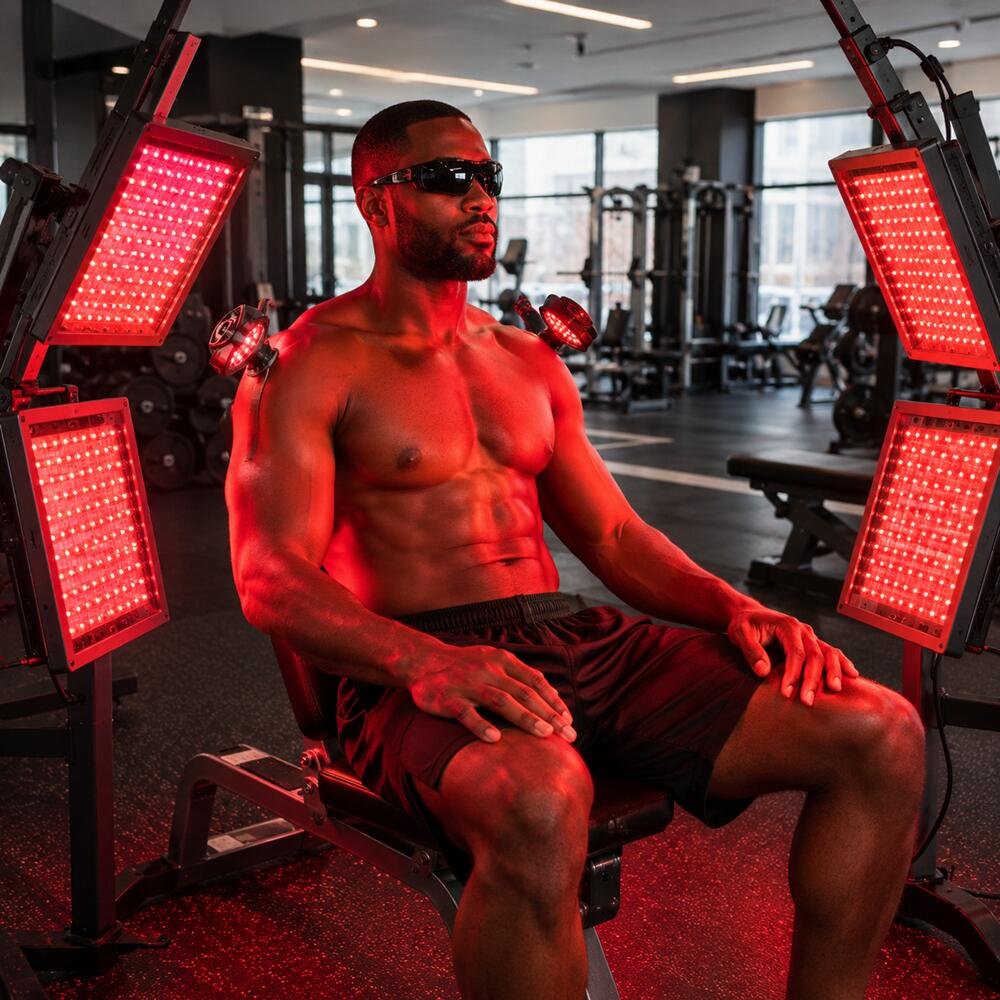
Full-Body Panels & Towers
Ideal for high-throughput environments such as gyms, wellness centers, and performance recovery facilities. Full-body coverage in a single session (10-20 min) makes them highly efficient for both pre- and post-workout protocols.
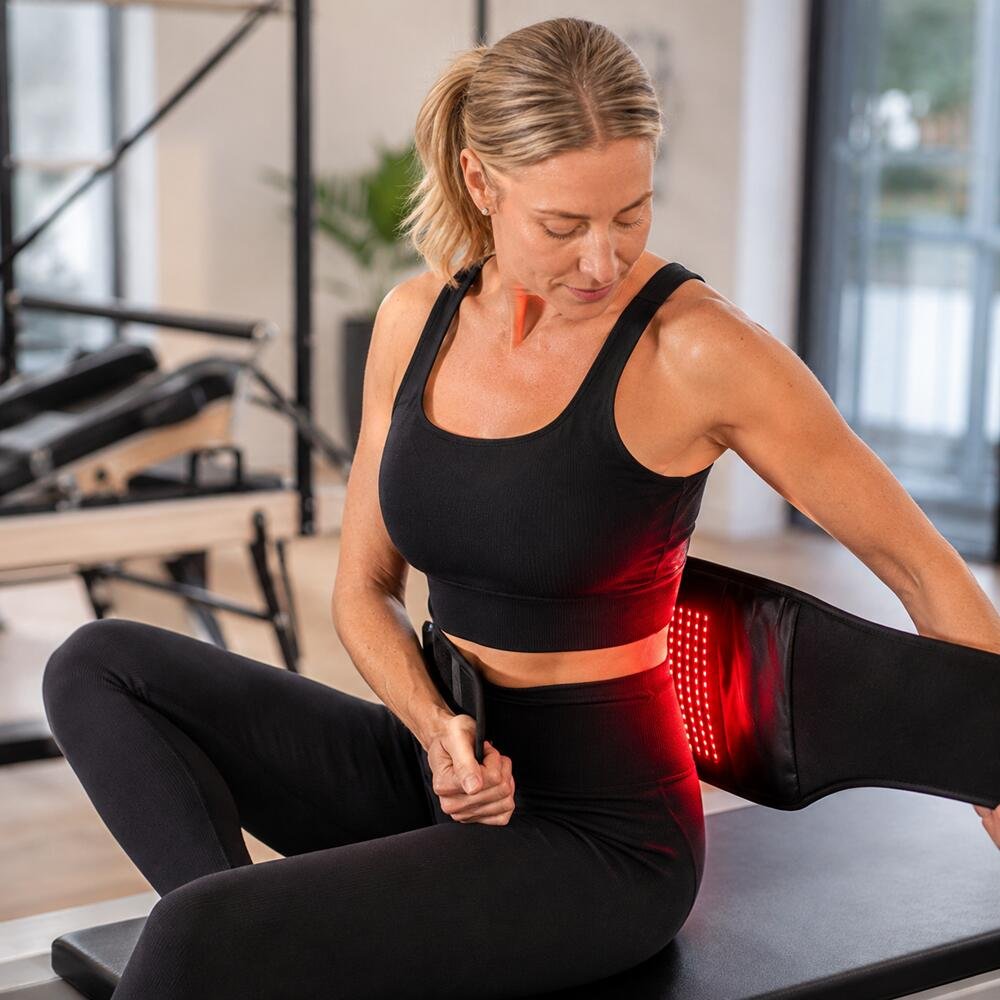
Targeted Wearable Devices
Wearable therapy belts and pads are ideal for sports recovery facilities and physical therapy clinics where site-specific treatment is needed. Clients can wear them during rest periods or post-session without occupying a treatment room.
What to Look for When Sourcing Commercial RLT Equipment
Ensure devices emit both 660 nm red and 850 nm NIR for comprehensive pre- and post-workout coverage. Single-wavelength devices limit clinical versatility.
Verify power density (mW/cm²) at 6-12 inches from the device. Many consumer-grade devices underperform at clinical treatment distances. Request manufacturer test data.
Commercial devices used in clinical or wellness settings must meet regulatory standards. For EU markets, CE marking is mandatory. FCC is required for the US market.
Professional-grade devices minimize electromagnetic interference and use flicker-free drivers — important for clients receiving extended sessions multiple times per week.
For brand owners, the ability to white-label a device with your branding, configure wavelengths per application, and adjust panel size for your space is a significant competitive advantage.
Commercial devices operate for thousands of hours across many clients. Ensure your supplier provides warranty, replacement parts, and technical support — not just the hardware.
Frequently Asked Questions
Does red light therapy replace a warm-up if used before exercise?
Can red light therapy interfere with training adaptations like muscle growth?
How long before benefits are noticeable?
Is there any risk in using RLT too frequently?
Does it matter if I shower before or after RLT?
What if I can only do one session per day — before or after?
How much time before a workout should I apply red light therapy for best results?
Is red light therapy before or after workout better for reducing muscle soreness (DOMS)?
Can I do red light therapy both before and after the same workout?
Does the type of workout (strength vs. cardio) change whether RLT is better before or after?
Final Recommendation
The Evidence-Based Answer
Use RLT before your workout. Apply 15-30 minutes pre-training for peak strength, endurance, and fatigue resistance benefits.
Use RLT after your workout. Apply within 30 minutes post-training for DOMS reduction, muscle repair, and faster readiness for next session.
Use RLT both before and after with adjusted session lengths. This sandwich protocol is ideal for serious athletes and high-frequency training programs.
The timing debate ultimately resolves into a question of goals: performance vs. recovery, or both. The scientific evidence supports effectiveness at both ends of the workout window, with post-workout use carrying the largest body of research — particularly around DOMS reduction, muscle repair, and inflammation management.
For wellness professionals, gym owners, and clinic buyers looking to integrate RLT into service offerings, the most commercially versatile approach is to offer a post-workout recovery protocol as the core product, with pre-workout priming as a premium or performance-focused add-on. Full-body panels that support both applications with dual-wavelength output represent the best return on investment for commercial settings.
Whatever timing protocol you adopt, consistency matters more than perfection. A well-designed 8-week protocol with appropriate device selection will deliver measurable, repeatable outcomes for clients — and that’s what builds a sustainable red light therapy business.
Disclaimer: This article is intended for B2B product strategy and educational purposes only. It does not constitute medical advice, product claims validation, or regulatory guidance. The research referenced represents a summary of available literature as of the time of writing and is subject to ongoing scientific development. Brand owners and distributors are responsible for ensuring their product claims comply with applicable regulations in their target markets. Consult qualified regulatory counsel before finalizing marketing claims for any medical device or wellness product.