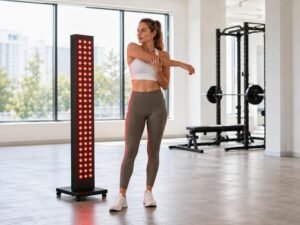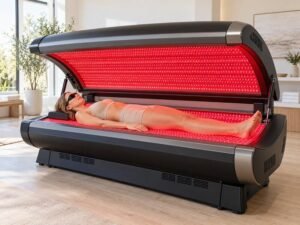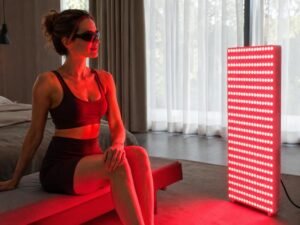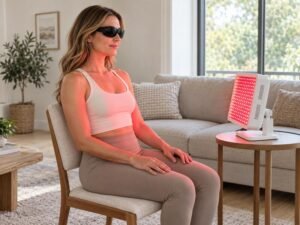
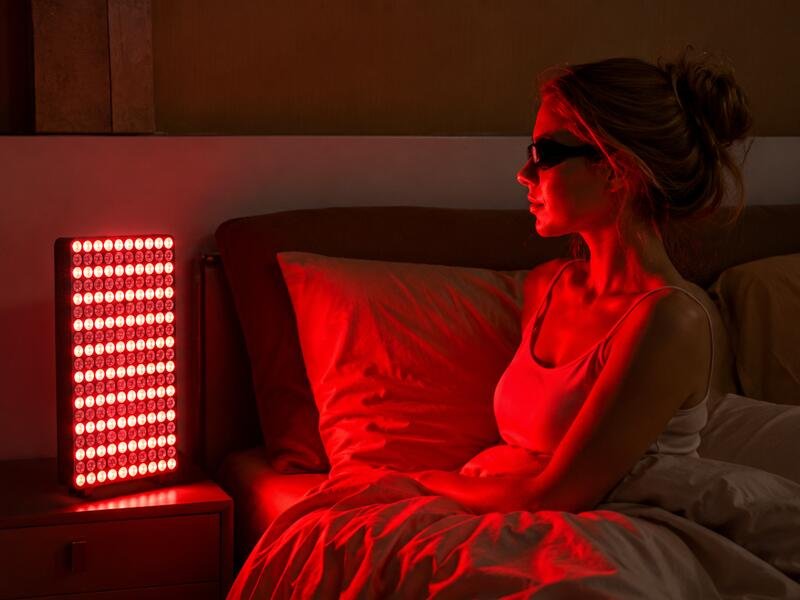
Red light therapy devices are becoming more common in beauty, wellness, recovery, home care, fitness, and pet care markets. A few years ago, many people only knew red light therapy panels. Today, the product range is much wider. We can now see red light therapy masks, belts, mats, blankets, sleeping bags, knee braces, handheld devices, hair caps, pet crates, dog coats, horse pads, and many other designs.
These products may look very different, but the basic idea is similar. They use specific wavelengths of light to support skin care, body relaxation, recovery routines, and general wellness use.
Quick Point:
A good red light therapy device is not only about how bright it is. It is more about wavelength, structure, coverage, comfort, and how the product is used.
For product selection, there are three basic questions:
1. What wavelength does the device use?
Different wavelengths are used for different purposes.
2. Which body area is the device designed for?
A face mask, knee brace, full body mat, and pet crate need different structures.
3. Is the product easy and practical to use?
Good specifications are not enough if the product is uncomfortable, hard to clean, or difficult to operate.
This article explains the main light wavelengths, common red light therapy device types, suitable application fields, and several common pitfalls buyers should avoid.
Main Light Wavelengths Used in Beauty and Wellness Devices
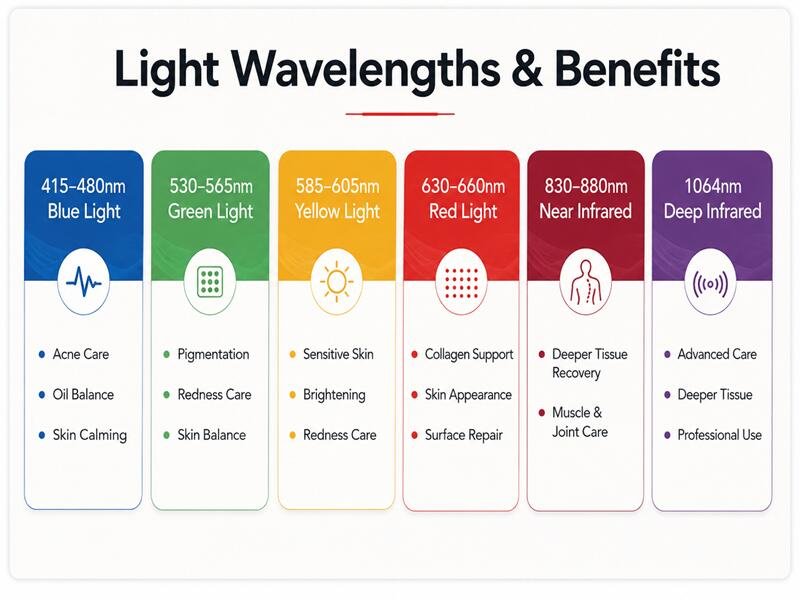
Different light colors have different wavelength ranges. In beauty and wellness devices, each light color is usually linked with a different use direction.
Red light and near infrared light are the most widely used in body wellness and recovery products. Blue, green, and yellow light are more common in facial care and beauty devices. Deep infrared light such as 1064nm is often used in more advanced or professional product lines.
| Light Type | Common Wavelength Range | Common Use Direction |
|---|---|---|
| Blue Light | 415–480nm | Acne care, oil balance, skin calming |
| Green Light | 530–565nm | Pigmentation, redness, skin balance |
| Yellow Light | 585–605nm | Sensitive skin, brightening, redness care |
| Red Light | 630–660nm | Collagen support, skin appearance, repair support |
| Near Infrared Light | 830–880nm | Deeper tissue, recovery, muscle and joint care |
| Deep Infrared Light | 1064nm | Deeper skin and tissue-focused applications |
Buyer Note:
Not every device needs all these wavelengths. More light colors do not always mean a better product. The key is whether the wavelength matches the product application.
Blue Light 415–480nm: Mainly for Facial and Acne Care
Blue light is mainly used in skincare products. It works more on the surface of the skin, so it is often used in facial beauty devices and acne-care products.
Common Use:
-
Acne-prone skin care
-
Oil balance
-
Skin calming
-
Redness care
-
Facial beauty devices
In many LED masks and PDT beauty devices, blue light is used together with red light. Blue light helps support acne-care positioning, while red light helps support skin repair and skin appearance.
For product writing, blue light should be described carefully. It is better to say it supports acne-prone skin care or helps with oil balance. Strong medical claims should be avoided unless the product has proper approval in the target market.
Green Light 530–565nm: For Skin Tone and Balance
Green light is often used for skin tone and pigmentation-related applications. It is softer than blue light and is usually included in multi-color beauty devices.
Common Use:
-
Uneven skin tone
-
Dark spots
-
Redness
-
Sensitive-looking skin
-
Skin balance
Green light is often found in LED face masks, beauty domes, PDT machines, and salon skincare devices. It is not the main wavelength in most body red light therapy products, but it can make a beauty device more complete.
Buyer Note:
Green light is more suitable for beauty products than recovery products. For example, it may make sense in a facial mask, but it may not add much value to a knee brace or therapy mat.
Yellow Light 585–605nm: For Calming and Brightening
Yellow light is also common in beauty devices. It is usually used for sensitive skin, brightness, and redness-related care.
Common Use:
-
Skin brightening
-
Redness care
-
Sensitive skin appearance
-
Dull-looking skin
-
Facial wellness
Yellow light is more suitable for skincare products than body recovery products. It can be used in LED facial masks, PDT facial devices, beauty domes, and spa equipment.
For red light therapy belts, knee braces, mats, or pet devices, yellow light is usually not necessary. These products normally focus more on red and near infrared light.
Red Light 630–660nm: The Core Wavelength for Many Devices
Red light is one of the most important wavelengths in this industry. It is visible to the human eye, so users can clearly see the red glow during use. Common red light wavelengths include 630nm and 660nm.
Common Use:
-
Skin appearance support
-
Collagen-related beauty care
-
Fine line and wrinkle care positioning
-
Skin firmness
-
General surface-level wellness
-
Body care routines
This is why red light is widely used in LED masks, red light therapy panels, beauty devices, therapy belts, body wraps, and mats.
For example, a red light therapy face mask may use 630nm or 660nm for facial skincare. A red light therapy panel may use 660nm for larger body exposure. A red light therapy waist belt may use 660nm for skin tightening and body care positioning.
Among these options, 660nm is one of the most common red light wavelengths. It is widely recognized, easy to explain, and often used together with 850nm near infrared light.
Quick Point:
If a product is designed for skin-facing applications, 630nm or 660nm red light is usually one of the first wavelength options to consider.
Near Infrared Light 830–880nm: For Deeper Body Applications
Near infrared light is often called NIR. It is different from visible red light. Most near infrared light is not clearly visible to the human eye. Because of this, some users may think the NIR LEDs are not working. In fact, this is normal.
Near infrared light is commonly used for deeper body applications.
Common Use:
-
Muscle recovery
-
Joint comfort
-
Back and waist care
-
Knee support
-
Sports recovery
-
Full body wellness
-
Pet wellness devices
The most common wavelength in many commercial products is 850nm. It is often paired with 660nm red light.
This combination is simple and practical:
660nm red light: for surface-level applications.
850nm near infrared light: for deeper body care applications.
This is why many red light therapy belts, knee braces, mats, blankets, sleeping bags, handheld devices, pet products, and full body systems use 660nm and 850nm together.
Deep Infrared Light 1064nm: For Advanced Product Lines
1064nm is a deeper infrared wavelength. It is not as common as 660nm or 850nm in regular home-use devices, but it may appear in some advanced beauty or wellness equipment.
1064nm can be positioned for deeper tissue and premium product applications. It is more suitable for higher-end devices where the buyer wants a stronger technical story.
However, for most normal product lines, 660nm and 850nm are already enough. If 1064nm is used, the product content should be written carefully and should not overpromise results.
Buyer Note:
1064nm may sound advanced, but it is not necessary for every product. For many mainstream products, a stable 660nm + 850nm configuration is easier to explain, easier to sell, and easier for users to understand.
Why 660nm and 850nm Are Often Used Together
Many red light therapy products use 660nm and 850nm together because this pair is easy to understand and suitable for many devices.
660nm red light supports skin-facing and surface-level applications.
850nm near infrared light supports deeper body-area applications.
Together, they make the product more flexible.
For example:
-
A red light therapy panel can be used for general body wellness.
-
A red light therapy belt can be used around the waist, belly, or lower back.
-
A knee brace can focus on local knee care.
-
A full body mat can cover the back, legs, arms, and waist.
-
A pet therapy crate can create a controlled light environment for dogs or cats.
-
A handheld torch can target smaller areas such as the wrist, shoulder, neck, or knee.
So, 660nm + 850nm is not only a technical choice. It is also a practical product choice.
Red Light Therapy Panels
Red light therapy panels are one of the most common device types. They are usually used for larger body areas and can be placed on a stand, wall, table, or treatment room setup.
Common Application Fields:
-
Home wellness
-
Fitness recovery
-
Spa and wellness rooms
-
Beauty salons
-
Recovery centers
-
Full body exposure
Panels can be small tabletop panels, medium-size panels, or large full-body panels. When selecting a panel, buyers should check wavelength, LED quantity, irradiance, beam angle, cooling system, stand options, and safety design.
Buyer Note:
A panel should not only be bright. It should also have stable output, good heat dissipation, practical mounting options, and clear use instructions.
Red Light Therapy Masks
Red light therapy masks are mainly designed for facial skincare. They are common in beauty, skincare, MedSpa, spa, and home-use product lines.
Common Application Fields:
-
Facial care
-
Skin appearance support
-
Anti-aging product lines
-
Acne-prone skin care when blue light is included
-
Face and neck beauty care
For masks, comfort is very important. A good mask should have soft material, even LED layout, proper eye area design, simple charging, and easy cleaning.
Buyer Note:
For facial masks, the user experience is just as important as the wavelength. If the mask feels uncomfortable, users may not continue using it.
Red Light Therapy Belts and Wraps
Belts and wraps are flexible wearable devices. They can be used on the waist, abdomen, lower back, shoulder, knee, elbow, or other local body areas.
Common Application Fields:
-
Waist care
-
Belly and abdomen care
-
Lower back comfort
-
Sports recovery
-
Local body relaxation
-
Skin tightening product positioning
A good belt should be comfortable, adjustable, easy to use, and stable during wearing. Some models also include heating function, pulse mode, cordless battery, or magnetic controller.
Quick Point:
For wearable products, material and fit are very important. A belt with good wavelengths but poor comfort will still create a poor user experience.
Red Light Therapy Knee Braces
Red light therapy knee braces are designed for the knee joint. Compared with flat pads, they can wrap around the knee more naturally.
Common Application Fields:
-
Knee comfort
-
Joint care
-
Sports recovery
-
Elderly wellness
-
Daily knee support
For this product type, fit is very important. The brace should not be too loose or too tight. It should stay in position and still feel comfortable.
Buyer Note:
The knee area is curved and moves often. So the product should have a good strap design, flexible material, and stable light coverage.
Red Light Therapy Mats and Blankets
Mats and blankets are designed for larger body coverage. They are suitable for home wellness, spa rooms, recovery spaces, and full-body relaxation programs.
Common Application Fields:
-
Full body wellness
-
Back and leg care
-
Spa relaxation
-
Fitness recovery
-
Yoga and stretching
-
Home wellness
A full body mat may use hundreds or thousands of LEDs. Buyers should check mat size, LED density, wavelength ratio, controller functions, cleaning surface, foldability, and packaging size.
Buyer Note:
For mats and blankets, LED distribution is very important. If the LEDs are not arranged well, the product may have uneven light coverage.
Red Light Therapy Sleeping Bags
A red light therapy sleeping bag is similar to a full body mat, but it can wrap around more of the body. It creates a more immersive use experience.
Common Application Fields:
-
Full body relaxation
-
Spa services
-
Recovery rooms
-
Home body care
-
Wellness programs
For this product, the zipper, inner surface material, heat control, safety instructions, and cleaning method are very important.
Quick Point:
A full body product needs extra attention to safety and comfort because the user stays inside the device during use.
Handheld Red Light Therapy Devices
Handheld devices are small and portable. They are good for targeted use.
Common Application Fields:
-
Neck care
-
Wrist care
-
Finger and joint areas
-
Knee and shoulder targeting
-
Facial spot care
-
Pet care
These products are easy to carry and simple to demonstrate. Buyers should check wavelength, battery life, output, heat level, and user safety instructions.
Buyer Note:
Handheld devices are usually easier to sell as entry-level products, but the output and treatment area should be explained clearly.
Hair Growth Caps and Helmets
Hair caps and helmets are special devices for scalp care. They are often used by hair care brands, scalp clinics, salons, and home-use wellness brands.
Common Application Fields:
-
Scalp care
-
Hair wellness
-
Hair growth product lines
-
Salon aftercare
-
Home-use hair care devices
Important points include LED or laser quantity, wavelength, scalp coverage, timer, battery design, and comfort.
Buyer Note:
Hair-related products should be handled carefully in marketing. Claims should match the product’s actual compliance status in the target market.
Pet Red Light Therapy Devices
Pet red light therapy is a growing category. It includes dog mats, pet crates, therapy coats, horse pads, leg wraps, and handheld pet devices.
Common Application Fields:
-
Dog wellness
-
Cat wellness
-
Horse recovery support
-
Senior pet care
-
Veterinary wellness products
-
Pet rehabilitation
Pet products need extra care. Animals may move, chew cables, or feel uncomfortable. The product should be easy to clean, safe, comfortable, and simple to use.
Buyer Note:
A pet red light therapy product should not simply copy a human device. It should consider animal behavior, cleaning, ventilation, cable protection, and daily use conditions.
A Simple Product Selection Table
| Application | Suitable Devices | Common Wavelengths |
|---|---|---|
| Facial care | Masks, beauty domes, handheld devices | Red, blue, yellow, NIR |
| Skin beauty | Panels, masks, PDT devices | 630nm, 660nm, blue, yellow |
| Waist and abdomen | Belts, wraps, pads | 660nm + 850nm |
| Knee and joint care | Knee braces, wraps, handheld devices | 660nm + 850nm |
| Full body wellness | Mats, blankets, sleeping bags, panels | 660nm + 850nm |
| Fitness recovery | Panels, mats, belts, knee braces | Red + NIR |
| Hair care | Hair caps, helmets | Red or laser wavelength options |
| Pet wellness | Crates, mats, coats, pads | 660nm + 850nm |
Pitfalls You May Come Across
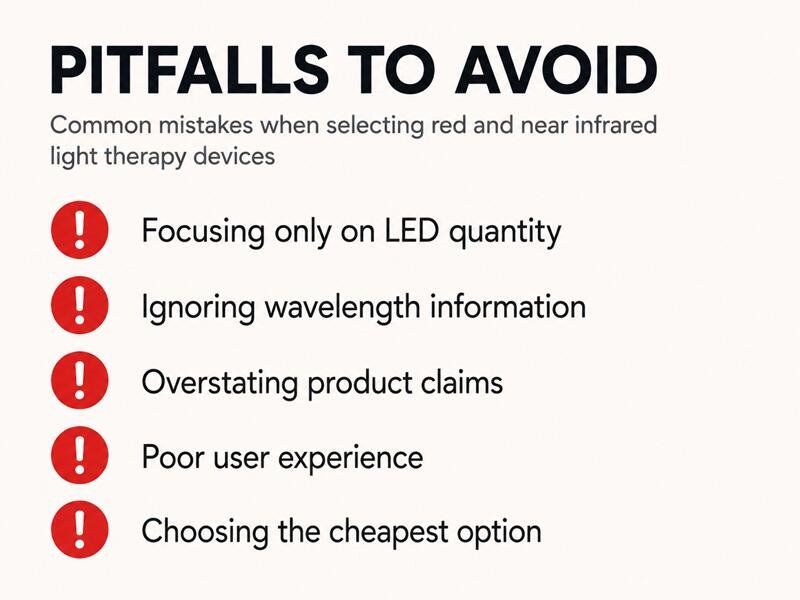
1: Only Comparing LED Quantity
Many buyers first ask, “How many LEDs does this device have?”
LED quantity is important, but it is not everything. A product with more LEDs is not always better. Buyers should also check wavelength, LED layout, irradiance, material, controller, and heat control.
A well-designed 300-LED product may be better than a poorly designed 500-LED product.
Buyer Note:
LED number is easy to compare, but it does not tell the whole story.
2: Ignoring Wavelength
Some products only say “red light therapy” but do not clearly list the wavelength. This is risky.
A professional product should clearly show whether it uses 630nm, 660nm, 810nm, 830nm, 850nm, 880nm, or other wavelengths.
If the wavelength is not clear, the product will be harder to explain and harder to sell.
3: Treating All Devices the Same
A face mask, a knee brace, a panel, and a pet crate are very different products. They should not use the same design logic.
A face mask needs comfort and eye protection.
A knee brace needs good wrapping and joint coverage.
A full body mat needs enough LED density and easy cleaning.
A pet crate needs ventilation, safety, and simple operation.
Each product should be designed around its own application.
4: Overstating Product Claims
This is a common problem in the red light therapy market. Strong medical claims may create compliance risks.
Safer product wording includes:
-
Supports wellness routines
-
Helps with relaxation
-
Designed for body care
-
Suitable for recovery-focused use
-
Supports skin appearance
-
Used for general comfort
Avoid words like “cure” or “treat disease” unless the product has proper approval in the target market.
5: Forgetting User Experience
Some products have good specifications but poor user experience.
Common problems include:
-
Uncomfortable material
-
Complicated controller
-
Weak battery
-
Heavy weight
-
Poor packaging
-
Unclear manual
-
Difficult cleaning
-
Short cable
-
Unstable straps
If users do not enjoy using the product, they will not keep using it.
6: Ignoring Packaging and Manuals
Packaging and manuals are also part of the product.
A good manual should explain:
-
How to use the device
-
How long to use it
-
What each button does
-
How to charge it
-
How to clean it
-
Who should avoid using it
-
What safety points to follow
Poor manuals can increase after-sales problems.
7: Choosing the Cheapest Option Too Quickly
Price is important, but the cheapest option may bring hidden problems.
These problems may include:
-
Higher defect rate
-
Weak battery
-
Poor LED consistency
-
Bad packaging
-
Unclear documentation
-
Customer complaints
-
Shorter product lifespan
A stable product with a slightly higher price is often better for long-term business.
What Makes a Good Red Light Therapy Device?
A good red light therapy device does not need to be the most complicated one. It should be clear, stable, and practical.
A good product usually has:
-
Clear wavelength information
-
Suitable LED layout
-
Comfortable structure
-
Simple controller
-
Stable power supply
-
Reasonable timer settings
-
Good material
-
Clear user manual
-
Clean packaging
-
Realistic product claims
For many buyers, the best product is not the one with the most functions. The best product is the one that fits the target user and can be sold clearly.
Final Thoughts
Red and near infrared light therapy devices are now used in many product categories, including skincare, body care, sports recovery, hair care, full body wellness, and pet wellness.
To choose the right product, start from the application first.
For facial care, masks, beauty domes, and facial panels are more suitable.
For recovery, panels, knee braces, waist belts, mats, and handheld devices are practical options.
For full body use, mats, blankets, sleeping bags, and full body panels are better choices.
For pet care, safety, cleaning, comfort, and animal behavior are more important than only LED quantity.
For most mainstream products, 660nm red light and 850nm near infrared light are still a practical and widely used combination. Other wavelengths such as blue, green, yellow, and 1064nm can be added when the product direction needs them.
In the end, red light therapy product development is not just about making a device shine. It is about making the device useful, easy to understand, comfortable to use, and suitable for the right market.