Red light therapy benefits can look impressive when every possible application appears in one cheerful list. The trouble starts when a buyer must turn that list into a product specification, compliant claim, and repeatable customer experience. I use an application-by-application evidence review to separate credible positioning from expensive wishful thinking.
Red light therapy benefits vary substantially by application. Human evidence is relatively stronger for selected photoaging outcomes, certain musculoskeletal pain protocols, and androgenetic alopecia. Evidence for exercise recovery remains promising but inconsistent, while broad or durable body-contouring claims have insufficient support. Every conclusion still depends on the population, device, dose, schedule, and measured endpoint.

I have seen buyers begin with a wavelength and then work backward toward a benefit claim. I recommend reversing that order. I first define the intended application and target user, review the relevant human evidence, and only then ask whether a proposed device can reasonably match the research conditions.
How Should Red Light Therapy Benefits Be Graded?
A favorable paper can make a product concept feel settled. However, a small trial with weak controls may exaggerate certainty, and a laboratory mechanism cannot predict a commercial user’s result. I therefore set the grading rules before I decide which red light therapy benefits deserve priority.
I grade an application by the quality, consistency, and relevance of human evidence. I review study populations, control groups, sample sizes, objective and subjective endpoints, replication, treatment duration, and follow-up. I then check whether the researched device and protocol resemble the product that a buyer plans to sell or operate.

My three bounded evidence tiers
I use three practical tiers for product evaluation. These tiers do not mean “works” or “does not work.” They show how much confidence a buyer can reasonably place in a defined application under defined conditions.
| Evidence tier | What I expect to see | Appropriate commercial response |
|---|---|---|
| Relatively well supported | Multiple controlled human studies or useful systematic reviews, reasonably consistent direction of effect, and endpoints relevant to the application | Consider primary positioning if the product and protocol match the evidence |
| Promising but limited | Positive human findings, but small samples, mixed results, short follow-up, protocol variation, or limited independent replication | Use narrow language, manage expectations, and consider further testing |
| Insufficient evidence | Mainly mechanistic, laboratory, animal, uncontrolled, or commercially sponsored pilot evidence; inconsistent outcomes; or poor device comparability | Do not make the application a central development or sales claim |
What I check inside each study
I ask several questions before I add a paper to an evidence file:
- Who received the treatment? Healthy adults, athletes, people with knee osteoarthritis, and people with androgenetic alopecia are not interchangeable populations.
- What was the comparator? A credible sham device usually provides more confidence than before-and-after photographs alone.
- How many people completed the study? A small trial may identify a signal, but it rarely settles broad commercial questions.
- What endpoint changed? A statistically significant measurement may not represent a visible, meaningful, or durable benefit.
- How long did treatment continue? Hair density, post-exercise soreness, and skin appearance require different evaluation periods.
- Was the result independently replicated? Repeated findings from unrelated groups carry more weight than one favorable study.
- Did the analysis account for dropouts and multiple outcomes? Selective reporting can make a weak result look stronger.
I also separate biological plausibility from demonstrated human benefit. Photobiomodulation research proposes cellular pathways involving mitochondrial chromophores, nitric oxide, oxidative signaling, and inflammatory responses. Those mechanisms may explain why an effect is possible. They do not prove that a particular commercial panel, mask, belt, or bed produces a meaningful outcome.
In buyer discussions, I treat a mechanism as a reason to investigate—not as permission to print a benefit on the box.
Are Red Light Therapy Benefits for Skin Relatively Well Supported?
Skin rejuvenation is attractive because buyers can picture the outcome immediately. That visibility also creates a problem: lighting, makeup, hydration, image angles, and natural variation can influence photographs. I look for controlled human studies with standardized imaging and measured skin changes rather than dramatic before-and-after marketing.
Red light therapy benefits for photoaged skin are relatively well supported for modest improvements in selected outcomes, such as fine-line appearance, skin roughness, elasticity, or collagen-related measurements. However, trials often use small samples and varied protocols. The evidence does not justify promises to reverse aging, remove deep wrinkles, or reproduce identical results for every user.

Why skin receives this tier
Controlled studies of red and near-infrared photobiomodulation have reported changes in skin texture, wrinkle scores, elasticity, and collagen-related findings. Reviews of light-based facial rejuvenation generally describe encouraging results, but they also note differences in wavelengths, treatment schedules, outcome tools, and study quality.
I place defined photoaging and cosmetic skin endpoints in the relatively well-supported tier because more than one human trial reports a useful direction of effect. I still use the word “relatively.” The evidence base is not as standardized as a procurement manager might assume after reading retail listings.
A skin study may involve:
- A fixed facial treatment area
- Direct and consistent device placement
- Several sessions per week
- Treatment periods of four to twelve weeks
- Controlled photography
- Investigator scoring or instrumental measurements
- Exclusion of people using competing cosmetic treatments
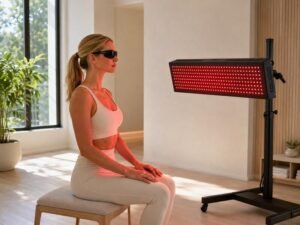
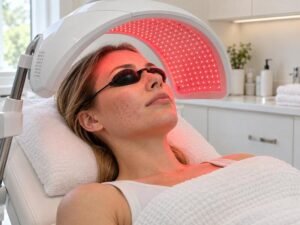
A commercial mask may differ in fit, diode spacing, facial coverage, irradiance, heat management, and user compliance. A full-body panel used at a variable distance creates another exposure pattern. A shared red wavelength does not remove these differences.
What I would ask a face-device supplier
When I evaluate a mask or facial device, I request more than a wavelength label:
- Irradiance measurements across several facial points
- The test distance and measurement method
- Treatment timer accuracy
- Optical uniformity and diode layout
- Eye-area design and user instructions
- Temperature-rise data during a complete session
- Material, cleaning, and skin-contact information
- Sample-to-production consistency
- Relevant electrical and market-access documentation
I once reviewed a face-device concept that quoted a skin study using repeated professional treatments. The planned product had a different wavelength combination, much lower output at the skin, and a shorter schedule. The citation was real, but the product–evidence match was weak. That distinction prevented the team from building its entire launch around an unsupported comparison.
Which Red Light Therapy Benefits Apply to Pain?
Pain is not one application. A sore shoulder after exercise, chronic low-back pain, knee osteoarthritis, and postoperative discomfort involve different populations and protocols. When a supplier claims that one device “relieves all pain,” I treat that phrase as a warning rather than a useful specification.
Red light therapy benefits for pain are relatively well supported only for selected musculoskeletal conditions and short-term endpoints under studied protocols. Research in areas such as knee osteoarthritis and some neck or joint conditions reports pain or function improvements, but results vary. Evidence for one condition should not be transferred to every pain type.

Condition and dose both matter
Systematic reviews have found potentially useful photobiomodulation effects in some musculoskeletal conditions. For example, research on knee osteoarthritis has reported short-term changes in pain and disability when treatment parameters fall within defined ranges. Other reviews have identified substantial heterogeneity between studies.
I therefore place selected musculoskeletal pain applications in the relatively well-supported tier, but I do not place “pain relief” as a universal benefit in that tier.
| Procurement question | Why it changes the evidence fit |
|---|---|
| What condition is being targeted? | Evidence for knee osteoarthritis cannot automatically support neuropathic pain or an acute injury claim |
| Is the endpoint pain, stiffness, or function? | These outcomes can respond differently |
| Where is light applied? | Joint-line application differs from broad exposure over clothing |
| What dose reaches the target area? | Device output, distance, time, and coverage affect delivered energy |
| How many sessions are used? | A single session may not represent a multiweek clinical protocol |
| What other care do participants receive? | Exercise, medication, and physical therapy may affect outcomes |
Product format creates practical differences
A rigid panel may provide broad coverage, but the user must maintain the intended distance and body position. A flexible knee wrap may reduce distance variation, but fabric, curvature, pressure, and diode spacing can change the exposure. A handheld device may allow targeted use, yet its result depends heavily on user technique.
For B2B procurement, I check whether the supplier controls:
- LED wavelength tolerances
- Output variation between production batches
- Timer and controller function
- Flexible circuit durability
- Surface temperature
- Cable and connector life
- Irradiance at the stated use position
- Cleaning and repeated-use requirements
I also recommend a medical and regulatory review before a brand uses terms such as treats arthritis, reduces inflammation, or provides clinical pain relief. Claim classification varies by market and intended use. A CE or FCC document alone does not validate the clinical claim, and buyers should verify the document, issuing body, product model, standards, and scope.
Are Exercise Recovery Benefits Consistent?
Athletes want faster recovery, and brands want a clear story. Unfortunately, exercise studies use many different sports, muscle groups, treatment times, and performance tests. That variation can turn an encouraging research area into an overconfident product promise very quickly.
Photobiomodulation for exercise recovery is promising but limited. Some human studies report reduced muscle soreness, lower biochemical markers of muscle damage, or improved performance and recovery measures. Other studies find smaller or no effects. Timing, dose, training status, muscle coverage, and endpoint selection make the overall evidence difficult to generalize.

Why I keep exercise recovery in the middle tier
Systematic reviews and meta-analyses have reported positive findings for some exercise outcomes. However, the literature includes considerable protocol diversity. Researchers may apply light before exercise, after exercise, or at both times. Some studies treat a few muscle points with a probe or cluster device. A commercial recovery panel may expose a much larger area from a distance.
Those approaches are not necessarily equivalent.
Common research endpoints include:
- Delayed-onset muscle soreness scores
- Creatine kinase or other blood markers
- Repetition count or time to fatigue
- Peak torque and strength recovery
- Sprint or endurance performance
- Perceived fatigue
A favorable result for a blood marker does not automatically mean that users will feel noticeably better. Likewise, a small change in repetition count may be statistically significant without creating a meaningful advantage in a gym, clinic, or recovery center.
What commercial operators should validate
For a recovery business, I would evaluate workflow as well as research:
- Session practicality: Can users follow the required schedule without disrupting training?
- Body coverage: Does the device cover the muscles relevant to the selected application?
- Position repeatability: Can staff maintain a stable distance and treatment angle?
- Throughput: How many sessions can the equipment support each day?
- Cleaning and heat control: Can the system handle repeated commercial use?
- Expectation management: Does the customer-facing language reflect uncertain and variable outcomes?
A buyer once asked me whether a full-body system could cite a study that treated specific quadriceps points before exercise. I explained that the study might support the general product rationale, but it could not establish equivalence. The coverage, irradiance, total exposure, and timing all differed. In that situation, I would position recovery cautiously and consider product-specific user or performance testing.
How Strong Are Red Light Therapy Benefits for Hair and Body Contouring?
Hair-growth and body-contouring products often appear under the same red light category, but their evidence profiles are very different. Buyers can lose that distinction when a supplier presents all applications on one certificate or brochure. I evaluate each population, endpoint, and device form separately.
Red light therapy benefits for androgenetic alopecia are relatively well supported for modest hair-count or density improvement in selected adults using studied devices over several months. Body contouring remains in the insufficient-evidence tier for broad or durable fat-loss claims because many studies are small, short, device-specific, or lack strong independent replication.

Hair and scalp care: relatively well supported, but narrow
Randomized and controlled human studies of low-level light devices have reported improvements in hair counts or density among some men and women with androgenetic alopecia. Meta-analyses have generally found a positive signal, although device design, treatment schedule, study duration, and funding sources require attention.
I keep this placement narrow:
- The population is usually people with androgenetic alopecia, not every form of hair loss.
- Treatment often continues for several months.
- Endpoints may involve hair counts within a defined target area.
- Results do not establish permanent regrowth.
- Evidence for alopecia areata, scarring alopecia, postpartum shedding, or medically unexplained hair loss should be assessed separately.
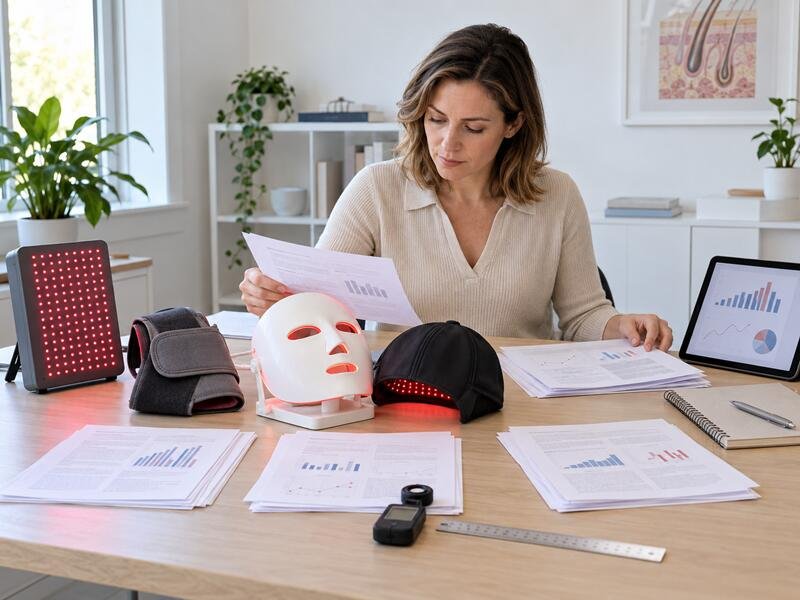
A helmet, cap, comb, and handheld scalp device can deliver very different coverage. Hair itself may block light, and fit can affect the source-to-scalp distance. I therefore ask for diode placement, scalp coverage maps, timer controls, fit ranges, output testing, and durability data.
Body contouring: insufficient for broad positioning
Some low-level laser or light studies report reductions in circumference or changes in body measurements. However, buyers should examine whether the studies used sham controls, controlled diet and activity, measured body composition, reported durable follow-up, and tested the same type of device.
Circumference can change because of posture, measurement technique, hydration, bloating, or short-term fluid movement. It is not automatically evidence of fat loss. A statistically significant difference can also be too small to create a meaningful visible result.
I would not build a product line around phrases such as:
- “Melts fat”
- “Causes permanent weight loss”
- “Replaces exercise”
- “Targets visceral fat”
- “Produces guaranteed inch loss”
The insufficient tier does not prove that every body-contouring device is ineffective. It means that the available evidence does not support broad, durable benefit claims across products and populations. A buyer considering this category should obtain qualified clinical, legal, and regulatory evaluation before finalizing the product concept.
How Should Red Light Therapy Benefits Be Matched to a Device?
A research citation may survive a quick sales meeting but fail during compliance review. I have seen the same wavelength presented as proof for a face mask, knee wrap, panel, and full-body bed. Wavelength matters, but it is only one part of the exposure.
Buyers should match red light therapy benefits to a product by comparing wavelength, irradiance, delivered dose, treatment area, distance, session length, schedule, device form, and use environment. If these conditions materially differ from the research, the buyer should narrow the claim, obtain additional evidence, or choose another positioning direction.

My product–evidence fit check
I use a simple comparison table during requirement clarification and sample review.
| Research condition | Product question |
|---|---|
| Wavelength or wavelength band | Does the production device stay within the specified optical range? |
| Irradiance at the treatment surface | Was output measured at the real use distance rather than directly on the LEDs? |
| Energy dose | Does the stated dose follow from measured irradiance and actual exposure time? |
| Treatment area | Does the device illuminate the same tissue area with reasonable uniformity? |
| Session schedule | Can users realistically reproduce the frequency and duration? |
| Device contact and geometry | Is the product a contact wrap, mask, probe, panel, cap, or bed? |
| Participant population | Does the intended customer resemble the researched group? |
| Endpoint | Does the study measure the exact benefit being communicated? |
| Follow-up | Does the evidence show a short-term change or a durable outcome? |
| Co-interventions | Were medication, exercise, cosmetics, or diet controlled? |
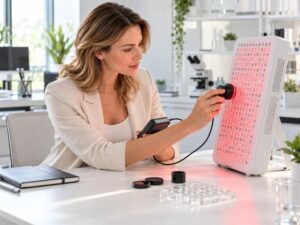
I also check units carefully. Irradiance is commonly stated in mW/cm², while radiant exposure is often stated in J/cm². A basic calculation multiplies irradiance in W/cm² by treatment time in seconds. However, that calculation is useful only when the irradiance value reflects the actual treatment position and a suitable measurement method.
Turning evidence strength into a buying decision
I connect each tier to a commercial action:
- Relatively well supported: I may use the application as a primary product direction if the design, protocol, evidence, and intended market align.
- Promising but limited: I use narrower wording and avoid guaranteed outcomes. I may plan additional product-specific testing.
- Insufficient evidence: I do not let the application anchor tooling, packaging, distributor training, or revenue forecasts.
Certifications require the same care. I treat CE, FCC, FDA-related records, ISO certificates, and test reports as documents to verify, not decorative logos. The relevant path depends on product classification, intended use, claims, target country, and responsible economic operator. FDA clearance, when applicable, is not a blanket endorsement of every benefit associated with a wavelength.
Before publication or market entry, I recommend that buyers rerun searches in sources such as PubMed, the Cochrane Library, and applicable regulator databases. A qualified clinical and regulatory professional should review application-specific claims. My manufacturing role can assess product–evidence fit and communication risk, but it cannot predict an individual outcome or replace clinical judgment.
FAQs About Red Light Therapy Benefits
1. Are all red light therapy benefits scientifically proven?
No. Different applications have different levels of human evidence. Selected photoaging, musculoskeletal, and androgenetic alopecia endpoints have comparatively stronger support. Exercise recovery remains mixed, while broad body-contouring claims require more convincing evidence. Buyers should assess each application rather than rely on one general claim.
2. Does FDA clearance prove that a red light device provides every advertised benefit?
No. FDA clearance generally relates to a specific device, intended use, and regulatory pathway. It does not validate unrelated claims or every product using similar wavelengths. Buyers should verify the listing, applicant, model, product code, indications, and any limitations directly in the relevant database.
3. Is wavelength enough to compare two devices?
No. Two devices can share a 660 nm or 850 nm specification while delivering very different exposures. Buyers should also compare irradiance, dose, treatment distance, area, uniformity, session time, schedule, pulse settings, device geometry, and the method used to measure output.
4. What is the difference between irradiance and dose?
Irradiance describes optical power reaching an area at a given moment, commonly expressed in mW/cm². Dose, or radiant exposure, describes accumulated energy over time, commonly expressed in J/cm². Both values require a stated measurement position and method to support a meaningful comparison.
5. Can animal or laboratory studies support a product claim?
They can support biological plausibility and product-development questions, but they usually cannot establish a consumer or clinical benefit by themselves. I look for controlled human evidence that uses a relevant population, device, treatment protocol, and endpoint before relying on an application in commercial positioning.
6. How much human evidence should a buyer request?
I prefer multiple controlled studies and at least one credible systematic review when available. I also look for independent replication and product comparability. One small positive trial may justify further evaluation, but it rarely supports a broad benefit claim or a major investment by itself.
7. Can a full-body panel use evidence from a handheld device?
Only with substantial caution. A handheld study may use contact placement, concentrated exposure, and treatment of specific points. A full-body panel has different distance, coverage, dose distribution, and user behavior. The study may provide background rationale, but it does not automatically validate the panel.
8. Which application should a new brand prioritize?
I would prioritize an application with stronger human evidence, a clear target population, measurable product requirements, realistic user compliance, and a workable regulatory path. The final choice should also fit the brand’s channel, customer expectations, price point, service model, and ability to manage claims.
9. What evidence should a supplier provide during procurement?
I request optical test data, stated measurement methods, sample specifications, treatment protocols, relevant research references, quality-control criteria, safety reports, and applicable compliance documents. I then verify whether the tested model matches the proposed production unit rather than assuming that one report covers an entire product family.
10. How often should a brand review its evidence and claims?
I recommend a review before product definition, before packaging approval, and whenever specifications, intended use, target markets, or claims change. Brands should also schedule periodic literature and regulatory checks because new studies, standards, enforcement positions, and competitor complaints can alter the risk profile.
Conclusion: Which Red Light Therapy Benefits Should Buyers Prioritize?
Red light therapy benefits should never arrive as one oversized promise wearing a lab coat. I would prioritize defined skin, selected musculoskeletal, or androgenetic alopecia applications when the device closely matches the supporting evidence. I would treat exercise recovery cautiously and avoid building broad body-contouring claims on weak foundations. MedLight can help B2B buyers compare application requirements with product form, optical specifications, sample testing, manufacturing controls, and target-market documentation. Contact our team to discuss an OEM, ODM, or private-label project before committing to tooling or claims.