Anyone who’s dealt with acne scars knows the frustration. Consumers spend hours researching treatments, comparing before-and-after photos, and reading reviews late at night — looking for something that actually delivers. Red light therapy has become one of the most talked-about options, and the good news is that it’s backed by real clinical data, not just marketing hype.
This isn’t a passing trend. It’s a clinically validated, zero-downtime technology sitting right at the intersection of a $12-billion scar treatment market and a growing consumer base that wants results without needles, lasers, or days of “recovery face.” For brand owners and distributors, that combination spells serious opportunity with fewer customer complaints.
In this guide, we’ll walk through how red light therapy works on acne scars, what the published research actually shows, and what to prioritize when sourcing devices — so you end up with products that drive results instead of returns.
Acne Scar Types and Formation
Before we get into whether red light therapy can help, it’s worth getting clear on what acne scars actually are. They form when the skin’s natural repair process after inflammatory acne produces either too much or too little collagen. The texture irregularities that result fall into a few distinct categories — and each type responds differently to treatment.
Atrophic Scars (Depressed)
- ●Ice pick scars — Deep, narrow, pitted scars that extend into the dermis
- ●Boxcar scars — Broad, rectangular depressions with defined edges
- ●Rolling scars — Wide depressions with sloping edges that create a wave-like appearance
Hypertrophic & Keloid Scars (Raised)
- ●Hypertrophic scars — Raised tissue that stays within the original wound boundary
- ●Keloid scars — Overgrown scar tissue that extends beyond the original wound
- ●Post-inflammatory hyperpigmentation (PIH) — Not a true scar, but a common residual discoloration that many consumers want to treat
Why this matters for your business: The global acne scar treatment market is projected to exceed $12 billion by 2030. Consumer demand for non-invasive, at-home options is driving rapid growth in the LED therapy segment — making this one of the highest-potential product categories right now.
Red Light Therapy: Definition and Mechanism
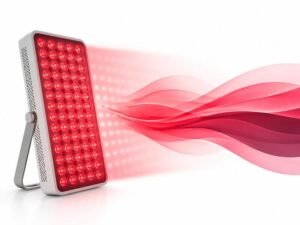
Red light therapy (RLT) — also called photobiomodulation (PBM) or low-level light therapy (LLLT) — uses specific wavelengths of visible red and near-infrared (NIR) light to stimulate cellular processes. Unlike UV light, which damages skin, RLT operates in the therapeutic window of 620-850 nm, penetrating tissue without causing thermal injury.
How It Works at the Cellular Level
- 1
Photon Absorption
Red and NIR photons are absorbed by cytochrome c oxidase (CCO), a chromophore within the mitochondrial electron transport chain.
- 2
ATP Production Increase
Photon absorption dissociates nitric oxide from CCO, restoring oxygen binding and boosting adenosine triphosphate (ATP) synthesis by up to 150%.
- 3
Cellular Signaling Cascade
Increased ATP triggers downstream signaling — including reactive oxygen species (ROS) modulation, NF-κB activation, and growth factor release.
- 4
Tissue Repair & Regeneration
Enhanced collagen synthesis, fibroblast proliferation, angiogenesis, and anti-inflammatory cytokine production accelerate tissue remodeling.
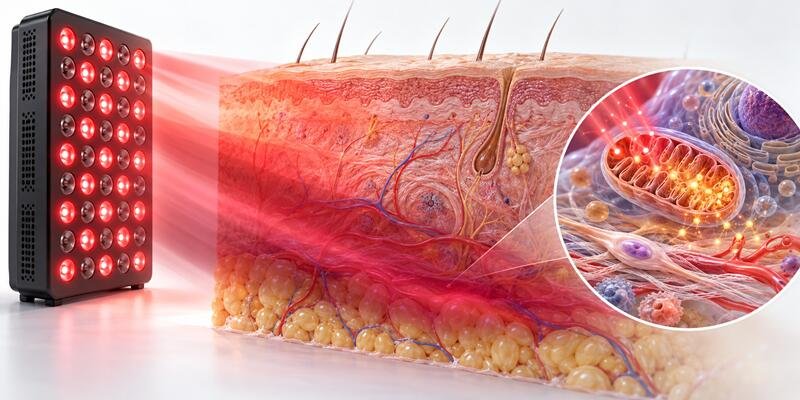
Biological Pathways: How RLT Affects Acne Scars
The short answer to “does red light therapy help with acne scars?” is yes — and the reason comes down to how it interacts with the body’s own repair mechanisms. RLT activates multiple biological pathways at once:
Collagen Remodeling
RLT stimulates fibroblast activity, increasing type I and type III collagen production. This fills atrophic scars from within and reorganizes disordered collagen fibers in hypertrophic scars.
Anti-Inflammatory Action
By modulating pro-inflammatory cytokines (TNF-α, IL-6) and increasing anti-inflammatory mediators (IL-10), RLT reduces the chronic inflammation that keeps scar tissue forming.
Better Blood Flow
RLT promotes angiogenesis and vasodilation via nitric oxide release, improving nutrient and oxygen delivery to scarred tissue — which is essential for the remodeling process.
Matrix Metalloproteinase (MMP) Regulation
RLT helps regulate MMP activity, which is responsible for breaking down and reorganizing the extracellular matrix. Balanced MMP levels are critical for healthy scar remodeling rather than excessive tissue buildup or degradation.
Stem Cell Activation
Emerging research suggests that photobiomodulation can activate mesenchymal stem cells in the dermal layer, potentially accelerating tissue regeneration and improving the overall quality of repaired skin.
Clinical Evidence for RLT on Acne Scars
There’s a growing body of peer-reviewed research supporting red light therapy for acne scar improvement. Here are the key findings that matter most when you’re making product and sourcing decisions:
LED Phototherapy for Acne Scarring (2018)
Journal of Clinical and Aesthetic Dermatology
A randomized controlled trial with 28 participants found that 630 nm red LED therapy applied 3 times per week for 12 weeks produced a statistically significant improvement in acne scar appearance, with a mean 24% reduction in scar depth measured by profilometry.
Combined 633 nm and 830 nm LED for Skin Rejuvenation (2006)
Photomedicine and Laser Surgery
In a study of 36 subjects, the combination of 633 nm red and 830 nm near-infrared LEDs delivered over 9 sessions showed significant improvements in skin texture, fine lines, and scar smoothness. Histological analysis confirmed increased collagen density.
Photobiomodulation for Wound Healing and Scar Prevention (2021)
Lasers in Surgery and Medicine
A systematic review of 30+ studies concluded that photobiomodulation at 630-660 nm and 810-850 nm consistently demonstrated enhanced wound healing, reduced scar formation, and improved cosmetic outcomes across multiple skin types (Fitzpatrick I-VI).
RLT Combined with Microneedling for Acne Scars (2020)
Dermatologic Surgery
A split-face study found that combining microneedling with post-procedure red light therapy produced 36% greater improvement compared to microneedling alone. That’s a strong data point for clinic-focused devices where RLT is positioned as a post-treatment add-on.
Bottom Line on the Evidence
Yes, red light therapy does help with acne scars. The strongest results are seen with rolling and boxcar scars (moderate atrophic scars), post-inflammatory hyperpigmentation, and as a complement to microneedling or fractional lasers. Deep ice pick scars show more modest improvement on their own and typically benefit from a combination approach.
RLT Compared to Other Scar Treatments
Knowing how red light therapy compares to other options helps with product positioning and setting realistic expectations for your customers.
| Treatment | Effectiveness | Pain Level | Downtime | Cost per Session | At-Home Use |
|---|---|---|---|---|---|
| Red Light Therapy | Moderate to Good | None | None | $0-$50 | Yes |
| Chemical Peels | Moderate | Mild to Moderate | 3-7 days | $150-$400 | Limited |
| Microneedling | Good | Moderate | 2-5 days | $200-$700 | Limited |
| Fractional Laser | Excellent | High | 5-14 days | $500-$2,000 | No |
| Dermal Fillers | Good (Temporary) | Mild | 1-2 days | $400-$1,500 | No |
Where RLT wins: Zero downtime, no pain, and safe for daily use. It’s the only treatment on this list that consumers can use every single day, which means results compound over time. For product marketing, that daily-use habit is a powerful story for customer retention and long-term compliance.
Key Specifications for Device Sourcing
Not all red light therapy devices perform the same. The specs below directly affect whether your customers see real results — and whether those devices come back as returns or generate repeat orders.
Device Form Factors for Acne Scar Treatment
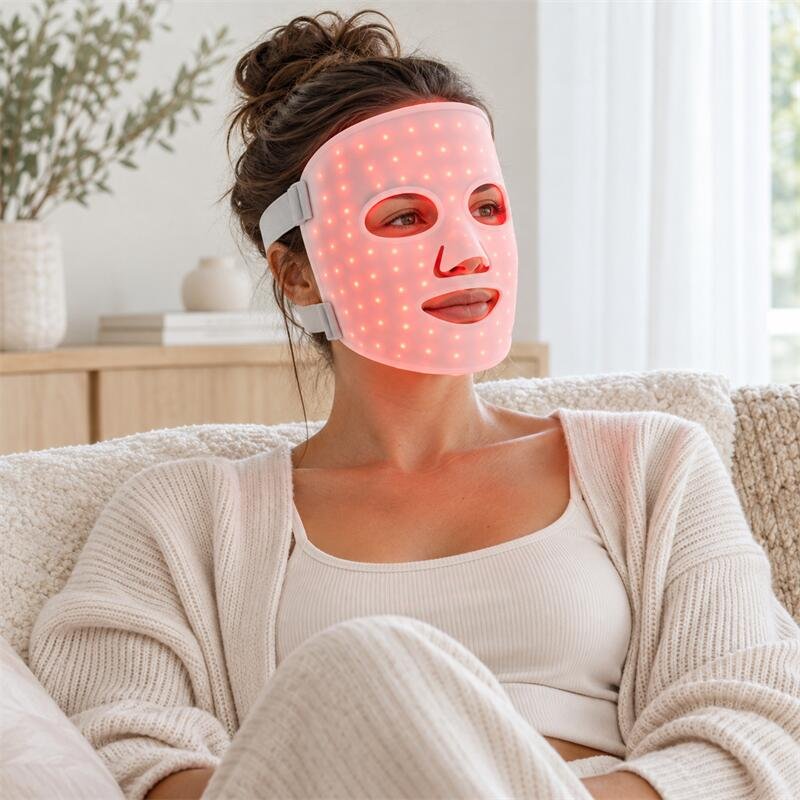
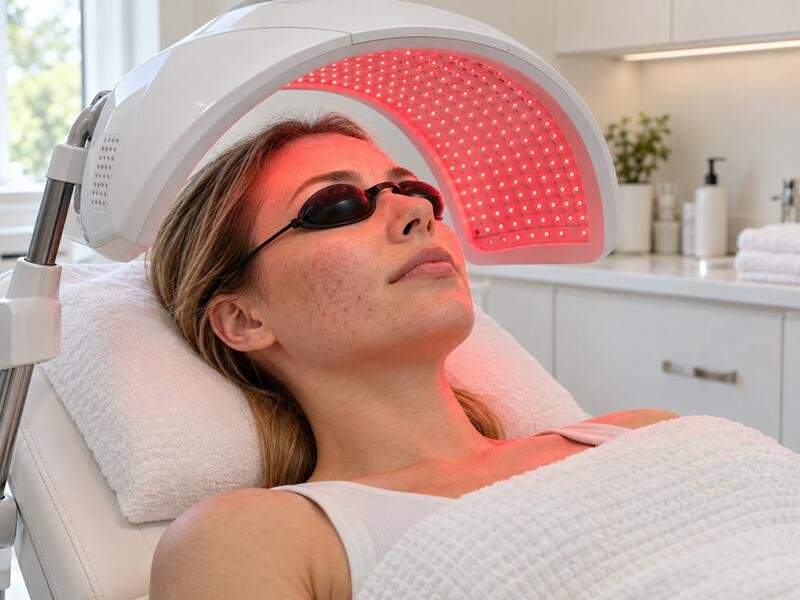
LED Face Masks
Full-face coverage, consumer-friendly design
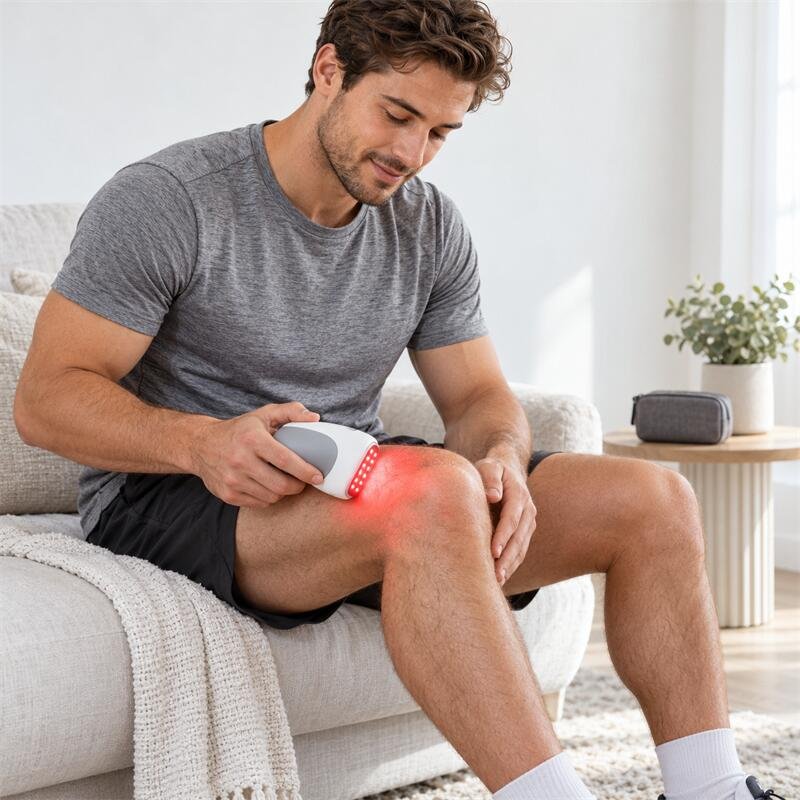
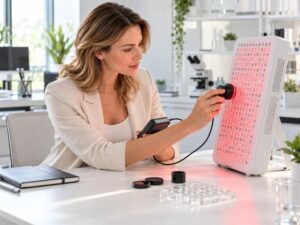
Handheld Devices
Targeted treatment, portable, lower price point
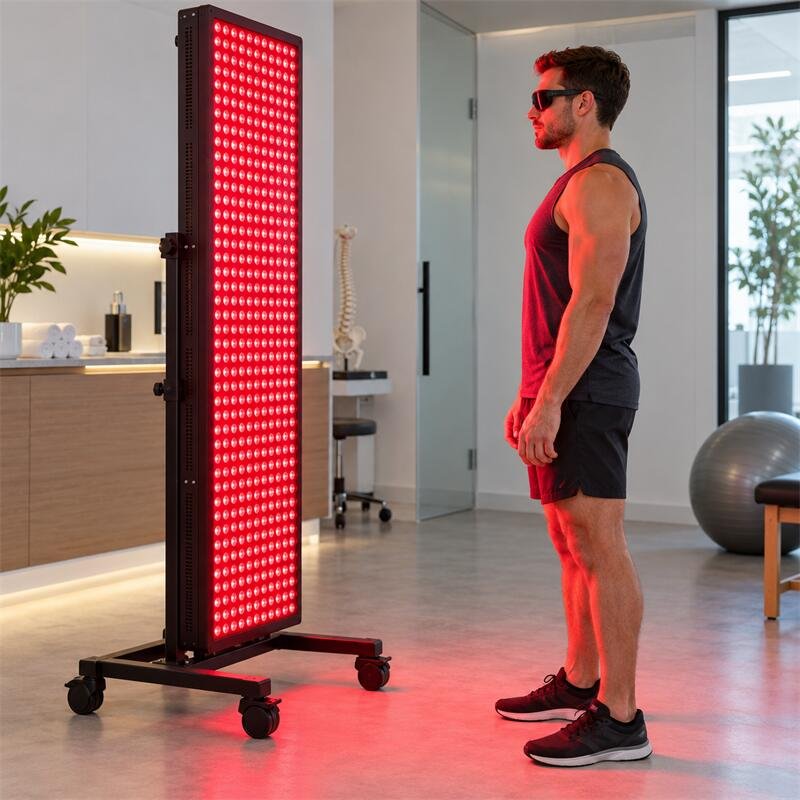
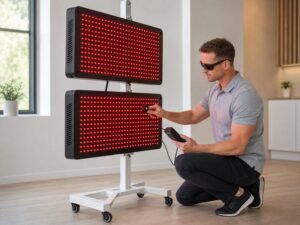
Panels
Professional/clinical grade, higher irradiance
Critical Specifications Checklist
Wavelength Accuracy
±5 nm tolerance from stated wavelength
Irradiance (Power Density)
Minimum 30-100 mW/cm² at treatment distance
Treatment Area Coverage
Uniform beam profile without hotspots
EMF Levels
Below 0.5 µT at treatment distance
Certifications
CE, FCC, FDA registration (as applicable)
Build Quality & Thermal Management
Proper heat dissipation for consistent output
Wavelength and Power Density Reference
How well a device works on acne scars depends heavily on wavelength and dosimetry. Here’s what the research points to as the most effective parameters:
630-660 nm
Visible Red Light
- →Penetration depth: 1-4 mm (epidermis to upper dermis)
- →Best for: superficial scars, PIH, skin texture improvement
- →Stimulates fibroblasts and collagen I/III synthesis
- →Recommended dose: 4-6 J/cm² per session
810-850 nm
Near-Infrared (NIR) Light
- →Penetration depth: 4-10 mm (deep dermis to subcutaneous)
- →Best for: deeper atrophic scars, inflammation reduction
- →Enhanced mitochondrial function and deep tissue repair
- →Recommended dose: 4-8 J/cm² per session
Recommended Treatment Protocol (Based on Published Data)
Market Data for Acne Scar Devices
When consumer demand lines up with solid clinical validation, you get a product category worth paying attention to. Here’s what the numbers look like:
Global LED therapy device market (2024)
Growing at 15.3% CAGR through 2030
Of consumers prefer non-invasive treatments
Over surgical or ablative procedures
Acne scars are the top skin concern
Among 18-35 demographic globally
Who’s Buying These Devices?
Medical Aesthetics Clinics
Professional-grade panels and masks for in-clinic protocols, often paired with microneedling
DTC Skincare Brands
Consumer-friendly masks and handheld devices marketed for acne scar reduction and skin rejuvenation
Wellness & Spa Chains
Full-body systems and facial devices as premium add-on services
Dermatology Practices
Evidence-based devices for post-procedure recovery and maintenance protocols
OEM/ODM Partner Selection Criteria
Your device quality directly determines whether customers get results — and whether your brand builds a reputation worth protecting. Here’s what to evaluate when choosing a manufacturing partner for acne scar-focused devices:
They Should Know Photobiomodulation, Not Just Assembly
A good manufacturer can advise on wavelength selection, beam angle optimization, and dose delivery for your specific application. If they can’t have that conversation, they’re likely just putting LEDs in a box.
Full Product Development — Concept to Shipping
The fewer vendors you need to coordinate, the faster you get to market. Look for partners who handle industrial design, prototyping, tooling, testing, and mass production under one roof.
Regulatory Compliance Support
Devices marketed for skin treatment need to meet regulatory requirements in your target markets. Your manufacturer should support CE, FCC, and FDA registration processes — including documentation, testing reports, and compliance guidance.
Real Customization Flexibility
Custom wavelength combinations, specific form factors, branded packaging, app connectivity — whatever your product requires. The right partner accommodates OEM and ODM needs without unreasonable MOQs or lead times.
Consistent Quality Control
Every unit needs to deliver consistent irradiance, wavelength accuracy, and build quality. Ask about in-line quality testing, spectroradiometer verification, and documented QC processes. If they can’t show you the data, that’s a red flag.
Frequently Asked Questions
Does red light therapy actually remove acne scars?
How long until you can see results?
What wavelength works best for acne scars?
Can red light therapy make acne scars worse?
Is red light therapy safe for all skin types?
Can RLT be combined with other acne scar treatments?
What should I prioritize when sourcing RLT devices?
Which scar types respond best to red light therapy?
What’s the best treatment schedule for acne scars?
How does RLT compare to professional laser treatments for scars?
Summary
So, does red light therapy help with acne scars? Based on the published research — yes, it does. Through collagen remodeling, anti-inflammatory action, and enhanced tissue repair, red and near-infrared light therapy offers a safe, non-invasive, and clinically supported way to improve acne scar appearance across all skin types.
Global demand for non-invasive skincare solutions keeps growing, and red light therapy devices — especially those targeting the acne scar segment — are positioned for strong growth through 2030 and beyond. For brand owners and distributors, that’s a market opportunity worth taking seriously.
The difference between a product that builds your brand and one that generates returns comes down to device quality. Accurate wavelength output, sufficient irradiance, and solid engineering deliver real results for end users — which translates to positive reviews, brand loyalty, and repeat purchases.
And that starts with your manufacturing partner. A capable OEM/ODM partner doesn’t just assemble devices — they bring photobiomodulation expertise, regulatory knowledge, and production scalability that reduces your risk and gets you to market faster.