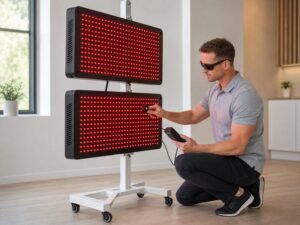

If you’ve spent any time in the red light therapy market, you’ve probably run into this question more than once. Maybe a clinic operator asked your sales rep about it. Maybe a distributor flagged it during a product review. Or maybe you just saw the search volume and thought, “We should probably have a position on this.”
The problem is, the internet is full of two kinds of answers: breathless miracle claims and vague dismissals. Neither is useful when you’re trying to build a product line, write compliant marketing copy, or train a sales team that deals with sophisticated clinical buyers.
So we went through the published research, looked at what the regulatory bodies actually say, and put together the kind of reference we’d want if we were sitting in your chair. No hype, no hedging — just a clear look at what the evidence supports, where the gaps are, and what it all means if you’re sourcing, selling, or building a brand around LED therapy devices.
Red Light Therapy Overview
Red light therapy (RLT) — also called photobiomodulation (PBM) or low-level light therapy (LLLT) — uses specific wavelengths of red (typically 620-700 nm) and near-infrared (NIR, 700-1100 nm) light to trigger cellular responses. Unlike UV light, these wavelengths are non-ionizing and don’t damage DNA.
At the cellular level, the main target is cytochrome c oxidase, a photoacceptor sitting inside the mitochondrial electron transport chain. When red or NIR photons hit this enzyme, the result is increased ATP production, a brief shift in reactive oxygen species (ROS), and a cascade of downstream signaling that affects inflammation, cell proliferation, and tissue repair.
In practice, the established use cases are pain relief, skin rejuvenation, wound healing, muscle recovery, and reducing inflammation. These are well-documented, widely adopted, and represent the bulk of market demand today. That’s the foundation — everything else in this article builds on it.
Why This Question Matters for Your Business
“Can red light therapy shrink tumors?” isn’t just a curiosity — it’s showing up in consumer search queries, in conversations between clinicians and device reps, and in due diligence calls from buyers evaluating new product lines. Here’s why you should care:
Your Customers Are Already Asking
End-users and clinic operators are searching for this information. If you don’t have a clear, grounded answer, someone else will fill that gap — and it probably won’t be accurate.
The Regulatory Risk Is Real
Making unsupported anti-cancer claims — even implied ones — can trigger FDA enforcement, FTC penalties, and serious liability. Knowing exactly where the line is protects your brand and your business.
It Shapes Product Strategy
If the science moves forward, being informed now puts you in a better position to adapt your product line and clinical partnerships before your competitors do.
⚠️ Important Disclaimer
This article is for educational and business intelligence purposes only. Red light therapy devices marketed for wellness applications are not approved for cancer treatment by any major regulatory body. Nothing here constitutes medical advice.
How Photobiomodulation Interacts with Cancer Cells
To make sense of the tumor question, you need to know how PBM works at the cellular level — and why cancer cells don’t necessarily respond the same way healthy cells do.
1. The Mitochondrial Pathway
PBM’s primary target is cytochrome c oxidase (CCO), also called Complex IV of the mitochondrial electron transport chain. When red/NIR photons reach CCO, here’s what happens:
- ●ATP production goes up — more cellular energy is available for repair and metabolic processes.
- ●A brief ROS burst occurs — this transient spike in reactive oxygen species activates transcription factors (NF-κB, AP-1) and downstream signaling pathways.
- ●Nitric oxide (NO) is released — NO dissociates from CCO, which improves mitochondrial respiration and boosts local blood flow.
- ●Gene expression shifts — downstream effects include changes in proliferation, apoptosis, and inflammatory mediator production.
2. Cancer Cells Are a Different Story
Cancer cells have fundamentally altered metabolism. The Warburg effect describes how many tumor cells rely on glycolysis over oxidative phosphorylation, even when oxygen is available. That changes the equation:
Healthy Cells
- ✓ Normal mitochondrial function
- ✓ Balanced ROS levels
- ✓ Intact apoptotic pathways
- ✓ Respond to PBM with enhanced repair
Cancer Cells
- ✗ Dysfunctional mitochondria
- ✗ Already elevated ROS baseline
- ✗ Impaired apoptotic signaling
- ? Response to PBM is dose-dependent & unpredictable
The key question researchers are wrestling with: does PBM’s effect on ROS push cancer cells past a threshold that triggers apoptosis (programmed cell death), or does the energy boost just fuel tumor growth? As we’ll see, the answer depends heavily on dose, wavelength, cell type, and context — and right now, there’s no simple answer.
PDT vs. PBM: Two Very Different Things
This is where a lot of confusion starts. People mix up photodynamic therapy (PDT) with photobiomodulation (PBM) all the time — and that confusion can lead to dangerous product claims. Here’s how they actually compare:
| Parameter | Photodynamic Therapy (PDT) | Photobiomodulation (PBM) |
|---|---|---|
| Photosensitizer | Required — a drug is administered before treatment | Not required — light alone |
| Mechanism | Generates massive cytotoxic ROS to destroy targeted cells | Modulates mitochondrial activity; mild ROS signaling |
| Power Density | High (typically 50-200 mW/cm²) | Low to moderate (1-50 mW/cm²) |
| FDA Status for Cancer | Approved for certain cancers (esophageal, non-small cell lung, actinic keratosis) | Not approved for any cancer indication |
| Clinical Setting | Hospital / oncology clinic | Wellness, aesthetics, rehabilitation |
| Intent | Selective cell destruction | Cellular stimulation & healing |
The Bottom Line
PDT is a real, FDA-approved anti-cancer treatment — but it requires a photosensitizing drug and clinical supervision. The LED panels and wearable devices in the wellness market deliver PBM, not PDT. These are completely different modalities. Mixing them up in your marketing materials isn’t just inaccurate — it’s a compliance problem.
What the Research Actually Shows
The research on PBM and cancer is messy. Studies contradict each other, protocols aren’t standardized, and most of the work is still at the lab bench. Here’s where things stand as of 2025.
1. Lab Studies (Cell Cultures)
Researchers have tested red and NIR light on cancer cell lines in petri dishes. The results go in both directions:
Some Studies Show Anti-Tumor Effects
- • Certain wavelengths (mainly 630-660 nm) at higher energy doses have reduced cancer cell viability and triggered apoptosis in some cell lines — oral squamous cell carcinoma, melanoma, and breast cancer cells among them.
- • A 2019 study in Lasers in Medical Science found that 660 nm light at 150 J/cm² reduced viability in oral cancer cells while leaving normal fibroblasts largely unaffected.
- • Some glioblastoma cell research showed NIR light (808 nm) could slow proliferation at specific dose parameters.
Other Studies Show the Opposite
- • Multiple studies show that PBM at lower doses can stimulate cancer cell growth — exactly what you don’t want.
- • A widely cited 2012 review in Photomedicine and Laser Surgery noted that low-dose PBM enhanced growth in several tumor cell lines.
- • The pattern follows a biphasic curve: stimulatory at low doses, inhibitory or cytotoxic at higher doses.
And a Lot of Results Are Inconclusive
- • Outcomes vary dramatically depending on wavelength, fluence, irradiance, exposure time, cell type, and lab conditions.
- • There’s no standardized protocol for PBM in cancer research, which makes comparing studies almost impossible.
- • Many studies are small and haven’t been independently replicated.
2. Animal Studies
The animal data is just as mixed:
- ●Some rodent studies found that PBM didn’t accelerate tumor growth in animals with implanted tumors — which at least suggests it may not be harmful in those models.
- ●A small number of animal studies report tumor growth inhibition with specific high-dose protocols, but these typically use parameters well beyond what any wellness device delivers.
- ●Other studies showed tumors grew faster with PBM exposure, particularly at lower fluences.
- ●The most promising results involve PBM combined with chemotherapy or immunotherapy, where light seems to boost the primary treatment’s effectiveness.
3. Human Clinical Evidence
Here’s Where We Stand
As of mid-2025, there are zero published randomized controlled trials showing that PBM alone can shrink tumors in humans. What we do have clinical evidence for:
- ✓ Oral mucositis management — PBM is well-supported for reducing the severity of mucositis caused by chemo/radiation. This is supportive care, not anti-tumor treatment.
- ✓ Lymphedema management — some evidence for post-mastectomy lymphedema reduction.
- ✓ Pain management — helping cancer patients cope during treatment.
- ✓ Wound healing — post-surgical recovery in cancer patients.
- ✗ Direct tumor shrinkage — no human clinical evidence supports this for PBM alone.
Worth noting: the Multinational Association for Supportive Care in Cancer (MASCC) and the International Society of Oral Oncology (ISOO) have published guidelines recommending PBM for oral mucositis prevention. That’s a meaningful endorsement for supportive care — but it’s a very different thing from saying PBM fights tumors.
The Biphasic Dose Response — Why Dosing Is Everything
If there’s one concept you take away from this article, it should be the biphasic dose response. It’s central to every conversation about RLT safety, especially when cancer comes up.
The Arndt-Schulz Principle in PBM
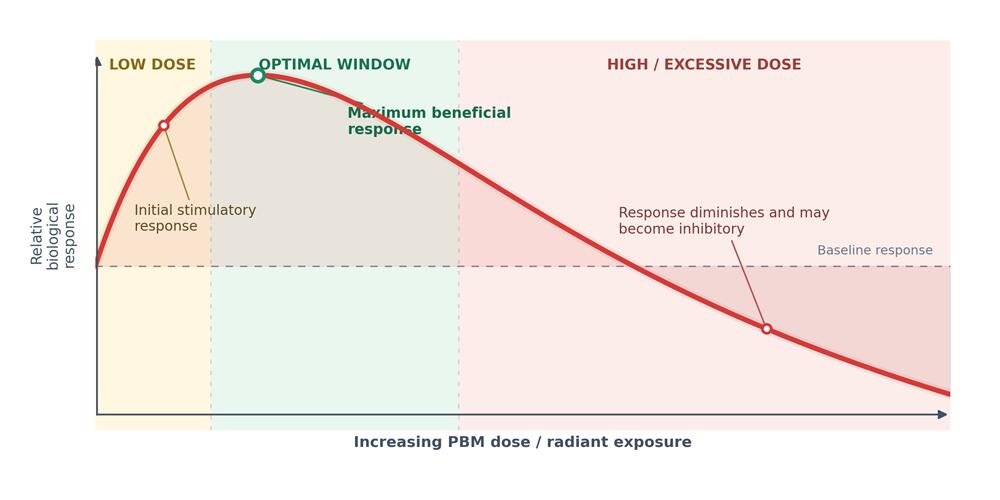
Here’s the practical implication: the same device at different settings could theoretically produce opposite effects on abnormal cells. Most commercial wellness devices are tuned for the therapeutic window that helps healthy tissue — and that happens to be the dose range where some lab studies suggest cancer cells might actually be stimulated.
That’s exactly why sweeping claims in either direction — “red light cures cancer” or “red light causes cancer” — are both wrong. The reality is more nuanced, and the nuance matters when you’re making product decisions.
Safety and Contraindications
If you’re building a product line or writing training materials, the safety picture around RLT and cancer is something you need to get right. Here’s the breakdown:
✓What the Evidence Supports as Safe
- • RLT at standard wellness parameters has an excellent safety profile for healthy people.
- • Thousands of published studies confirm minimal adverse effects when used as directed.
- • PBM for oral mucositis in cancer patients undergoing chemo/radiation is backed by clinical guidelines.
- • No evidence that normal RLT use causes cancer in healthy tissue.
✗Where Caution Is Needed
- • Using RLT directly over known tumors or cancerous lesions is contraindicated by most device manufacturers and clinical guidelines.
- • The theoretical risk of stimulating existing cancer cell growth at standard doses hasn’t been ruled out.
- • Patients with active malignancies should talk to their oncologist before using any RLT device.
- • Photosensitizing medications can change the risk profile.
Standard Contraindications for RLT Devices
Any reputable manufacturer should include these in their product documentation. If your OEM/ODM partner doesn’t, that’s a red flag:
- 1.Active cancer or malignant lesions in the treatment area
- 2.History of melanoma or other skin cancers (in treatment zone)
- 3.Use of photosensitizing drugs
- 4.Pregnancy (abdominal area — precautionary)
- 5.Epilepsy or seizure disorders (for pulsed devices)
- 6.Direct eye exposure without appropriate protection
- 7.Active hemorrhaging areas
Regulatory and Marketing Compliance
This is the part that has the most direct impact on your day-to-day business. The rules around health claims are specific, and the consequences of getting them wrong are expensive.
🇺🇸 United States (FDA / FTC)
- • RLT devices are typically Class II medical devices (if making medical claims) or general wellness devices.
- • Anti-cancer claims are off-limits without going through the FDA’s Premarket Approval (PMA) pathway — and no PBM device has done that.
- • The FTC actively goes after companies making unsubstantiated health claims, including anything cancer-related for light therapy.
- • Even subtle implications (e.g., “supports cellular health in ways that may affect abnormal cell growth”) can trigger enforcement action.
🇪🇺 European Union (MDR / CE)
- • Under the Medical Device Regulation (MDR 2017/745), anti-cancer claims would require Class III classification and extensive clinical evidence.
- • CE marking for wellness-positioned devices doesn’t cover oncological claims.
- • Your marketing materials need to match the device’s intended purpose as stated in the CE technical file — no exceptions.
🌏 Other Markets
- • Australia (TGA), Canada (Health Canada), and most regulated markets have similar rules against unsubstantiated cancer claims.
- • Some less-regulated markets may have looser enforcement, but taking advantage of that creates long-term brand risk and potential liability when you enter stricter markets.
✅ Claims You Can Make
• “Supports cellular energy production and mitochondrial function”
• “Promotes natural recovery and tissue repair”
• “Used in clinical settings for managing treatment side effects such as oral mucositis” (with proper citations)
• “Ongoing research is being conducted on additional applications”
🚫 Claims That Will Get You in Trouble
• “Red light therapy can shrink tumors”
• “Our device fights cancer cells”
• “Clinically proven to reduce tumor size”
• “Alternative cancer treatment” or “cancer therapy device”
• Any claim implying diagnosis, treatment, cure, or prevention of cancer
What This Means for Your Business
All of this is interesting, but the question you’re probably asking is: “What do I actually do with this information?” Here’s how it breaks down across four areas that matter most.
Product Documentation
- → Make sure every product manual includes cancer-related contraindications.
- → State the device’s intended use clearly — wellness, pain relief, skin health. Not oncology.
- → Include a straightforward disclaimer advising users with active cancer to check with their doctor.
- → Keep a paper trail linking every clinical claim to published, peer-reviewed evidence.
Marketing Strategy
- → Stick to evidence-based applications: pain, inflammation, skin, recovery, wound healing.
- → Being scientifically careful isn’t a weakness — it’s what builds trust with clinical buyers.
- → Create educational content that addresses the cancer question head-on with facts (like this article).
- → Keep an eye on downstream resellers and correct any unauthorized claims they make.
R&D Awareness
- → Keep tabs on PBM + oncology research — this field is moving, and early awareness matters.
- → Consider devices with adjustable parameters (wavelength, fluence, pulsing) so you have flexibility if the science evolves.
- → Build relationships with clinical research partners who can validate new applications down the line.
- → Watch for regulatory guidance updates from FDA, CE, and other relevant bodies.
Customer Education
- → Give your sales team clear talking points for cancer-related questions — accurate, calm, and grounded.
- → Provide FAQ documents for end-users and clinic operators.
- → Be clear that PBM is a supportive wellness tool, not a replacement for medical treatment.
- → The brands that stand out in this market are the ones that don’t oversell.
What to Look for in a Device Manufacturer
Whether you’re sourcing RLT devices for wellness clinics, medical aesthetics practices, or retail distribution, the cancer question highlights something broader: you need a manufacturing partner who actually knows what they’re doing — technically and from a compliance standpoint.
Key Evaluation Criteria
Wavelength Precision & Verification
Ask for spectral output data verified by independent testing. Wavelength accuracy matters for both efficacy and safety. You want ±5 nm tolerance on stated wavelengths — anything less precise should raise questions.
Irradiance & Fluence Documentation
Your manufacturer should provide clear irradiance maps (mW/cm² at specified distances) and recommended treatment protocols with fluence calculations. You’ll need this for safety documentation and for answering questions from clinical buyers.
Regulatory Compliance Support
A good OEM partner should be able to support CE, FCC, and FDA registration processes. They should know the difference between wellness device and medical device classifications and help you navigate the right path for your market.
Safety Documentation & Contraindication Lists
Comprehensive safety docs — including contraindications, warnings, and proper use instructions with cancer-related precautions — should come standard. If you have to ask for these, that tells you something about the manufacturer.
OEM/ODM Flexibility
As the science evolves, you may need to adjust wavelength combinations, power outputs, or pulsing protocols. Work with a manufacturer that has the engineering depth to customize and iterate — not one that only offers fixed SKUs.
Quality Management Systems
ISO 13485 (medical devices) or ISO 9001 certification is the baseline. Consistent manufacturing quality isn’t optional for devices people use on their bodies.
Why Your Manufacturing Partner Matters More Than You Think
When your customers are asking tough questions about cancer and light therapy, your manufacturer’s technical knowledge and compliance support become part of your competitive advantage. A manufacturer that actually understands the science can help you:
Frequently Asked Questions
Can red light therapy shrink tumors?▾
Is red light therapy safe for cancer patients?▾
Can red light therapy cause cancer or make it worse?▾
Can I market my RLT devices for cancer treatment?▾
What wavelengths are being studied for anti-tumor effects?▾
How should I handle customer questions about RLT and cancer?▾
What’s the difference between PDT and the red light therapy devices I’m sourcing?▾
How does red light therapy help with back pain?▾
What are the best red light therapy devices for back pain relief?▾
How long and how often should red light therapy be used for back pain?▾
Conclusion
What It All Comes Down To
1
No clinical evidence exists that standard PBM/RLT devices can shrink tumors in humans. Lab studies are mixed and highly dependent on dosing parameters and cell types.
2
PDT and PBM are not the same thing. Photodynamic therapy is an FDA-approved cancer treatment requiring photosensitizing drugs. The LED devices in the wellness market deliver PBM — a completely different modality.
3
The biphasic dose response means standard wellness-level RLT could theoretically stimulate cancer cell growth. That’s why direct application over known tumors is a clear contraindication.
4
PBM does have legitimate oncology support applications — especially oral mucositis management — backed by clinical guidelines. That’s a real market opportunity.
5
Anti-cancer claims are illegal without regulatory approval. The legal and reputational risk is not worth it.
6
Being straight about the science builds brand value. In a market full of overclaiming, the brands that stick to what the evidence actually supports are the ones that earn lasting trust from clinical and professional buyers.
The red light therapy market is growing fast, and the growth is driven by solid evidence for pain management, skin health, wound healing, and recovery. Your edge isn’t going to come from making the boldest claims — it’s going to come from making the most accurate ones, backed by real data, proper documentation, and a manufacturing partner that gets both the technology and the regulatory landscape.
The cancer question isn’t going away. New research will keep coming. By staying current, maintaining strict compliance standards, and working with a capable OEM/ODM manufacturer, you put your brand in a position to respond to whatever the science produces next — instead of scrambling to catch up.