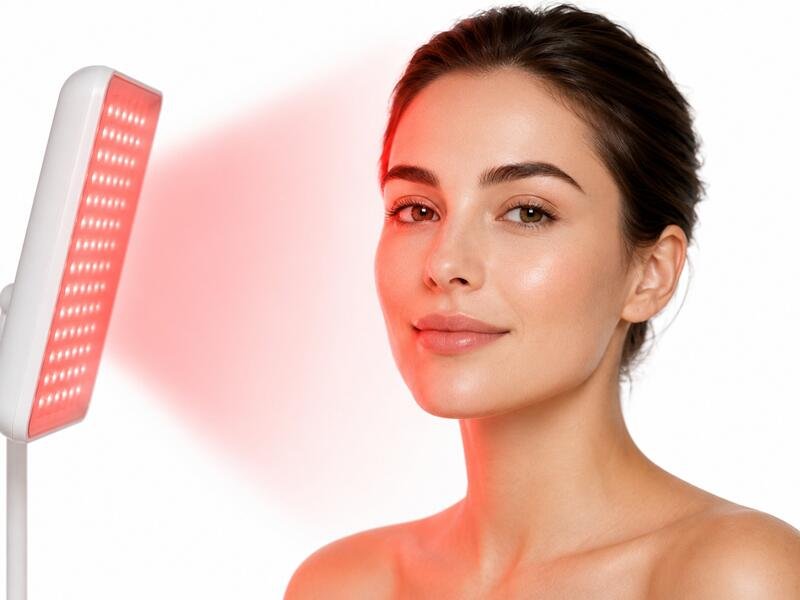
Is red light therapy right for your skin?
That depends on your skin — and let’s be honest, skin can be a little dramatic. One day it looks calm and glowing; the next day it reacts to a new serum like it just read bad news.
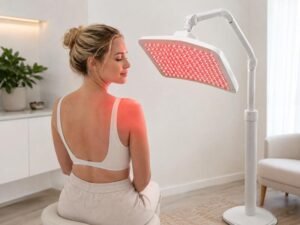
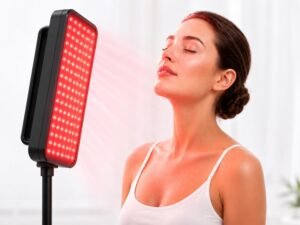
Red light therapy has become popular because it offers a gentle, non-invasive way to support healthier-looking skin. It may help with fine lines, uneven texture, redness, acne-prone skin, post-treatment recovery, and long-term collagen care. But it is not a magic lamp, and your bathroom mirror will not suddenly start applauding after one session.
The real question is not simply “Does red light therapy work?” A better question is: Does it fit your skin type, your skin concerns, and the way you plan to use it?
In this guide, we will look at how red and near-infrared light interact with the skin, which skin types may benefit most, who should be cautious, and how to use light therapy safely for better results.
How Red Light Therapy Works on the Skin
Red light therapy (RLT), also known as photobiomodulation (PBM), uses specific wavelengths of red and near-infrared light — typically between 630-850 nanometers — to penetrate the skin and stimulate biological processes at the cellular level.
Unlike UV light, which can damage skin cells, red and near-infrared wavelengths are non-ionizing and non-thermal. They are absorbed by mitochondrial chromophores, particularly cytochrome c oxidase, triggering a cascade of cellular responses.
The result is increased ATP (adenosine triphosphate) production — the energy currency of cells — which accelerates natural repair processes, reduces oxidative stress, and promotes collagen synthesis.
ATP Energy Boost
Mitochondria absorb photons and produce more cellular energy, accelerating tissue repair and regeneration.

Collagen Stimulation
Fibroblast activity increases, promoting new collagen and elastin fiber formation for firmer, more youthful skin.
Reduced Inflammation
Pro-inflammatory cytokine levels decrease while anti-inflammatory markers increase, calming reactive and sensitive skin.
Enhanced Circulation
Nitric oxide release dilates blood vessels, improving micro-circulation and nutrient delivery to skin cells.
Key Wavelengths & Penetration Depth
Proven Skin Benefits Backed by Research
Decades of peer-reviewed research and clinical studies support the following skin-specific benefits of red and near-infrared light therapy:
Anti-Aging & Wrinkle Reduction
Stimulates collagen and elastin synthesis, visibly reducing fine lines, wrinkles, and skin laxity over consistent treatment.
Improved Skin Tone & Texture
Accelerates cellular turnover, evens out pigmentation, and smooths rough texture for a more radiant complexion.
Acne Reduction
Reduces sebum production and kills acne-causing bacteria while calming post-inflammatory redness and scarring.
Wound Healing & Recovery
Accelerates post-procedure healing after laser treatments, chemical peels, and microneedling by boosting tissue repair.

Scar & Stretch Mark Fading
Remodels scar tissue by reorganizing collagen fibers, reducing the visibility of scars and stretch marks over time.

Hair Growth Stimulation
Energizes hair follicle cells in the anagen phase, supporting new hair growth in cases of androgenetic alopecia.
Which Skin Types Benefit Most
One of red light therapy’s greatest advantages is its universal compatibility. Unlike many cosmetic treatments, it is generally safe across all Fitzpatrick skin types. Here’s how different skin profiles respond:
I-II
Fair to Light Skin (Fitzpatrick I-II)
Highly responsive to red light due to lower melanin levels allowing greater photon absorption. Excellent for anti-aging, redness reduction, and post-sun damage repair. Highly recommended.
III-IV
Medium to Olive Skin (Fitzpatrick III-IV)
Responds very well to red light therapy. Particularly effective for hyperpigmentation, melasma, and acne scarring common in these skin types. Strongly recommended.
V-VI
Dark to Deep Skin (Fitzpatrick V-VI)
Safe and effective. Higher melanin absorbs some light energy, so slightly longer sessions or higher-powered devices may optimize results. Particularly beneficial for keloid management and post-inflammatory hyperpigmentation. Recommended with adjusted parameters.
Sensitive & Reactive Skin
Red light’s anti-inflammatory properties make it especially suitable for rosacea, eczema-prone, and reactive skin. Start with shorter sessions (5-10 min) and lower irradiance to assess tolerance. Recommended with gradual introduction.
Skin Conditions It May Help
Clinical evidence supports red light therapy as a complementary treatment for a range of dermatological conditions. Results vary by individual and treatment consistency.
Strong Clinical Evidence
- ✦
Acne Vulgaris
Multiple RCTs confirm reduction in inflammatory lesions and sebum production.
- ✦
Photoaged Skin
Measurable improvements in wrinkle depth, skin roughness, and firmness documented in clinical studies.
- ✦
Wound & Post-Procedure Healing
Faster epithelialization and reduced downtime after ablative procedures.
- ✦
Androgenetic Alopecia
FDA-cleared devices demonstrate increased hair count and thickness.
Emerging & Promising Evidence
- ✦
Rosacea & Facial Redness
Anti-inflammatory effects reduce flushing and visible redness in preliminary studies.
- ✦
Psoriasis & Eczema
Calms immune-mediated inflammation; may reduce plaque severity as adjunct therapy.
- ✦
Hyperpigmentation & Melasma
Modulates melanin production; results are promising but require careful protocol design.
- ✦
Stretch Marks (Striae)
Early evidence shows collagen remodeling effects that reduce appearance over multiple sessions.
Who Should Exercise Caution
Red light therapy has an excellent safety profile and no known serious side effects when used as directed. However, certain individuals should consult a qualified healthcare professional before starting treatment.
1. Photosensitive Skin Conditions
Individuals with lupus, porphyria, or other photosensitivity disorders should seek medical guidance before use.
2. Photosensitizing Medications
Certain antibiotics (tetracyclines), retinoids, and diuretics can increase light sensitivity. Consult your prescriber.
3. Active Skin Cancer or Suspicious Lesions
Avoid direct light application over undiagnosed or active malignant skin lesions until evaluated by a dermatologist.
4. Pregnancy
Insufficient clinical data exists for use during pregnancy. Avoid abdominal exposure and consult an OB/GYN before use.
5. Recent Isotretinoin Use
Patients who have recently completed isotretinoin (Accutane) therapy should wait at least 6 months before starting light therapy treatments.
6. Epilepsy
Individuals with photosensitive epilepsy should avoid pulsed light modes and consult a neurologist before beginning treatment.
Recommendations & Best Practices
Achieving optimal results with red light therapy depends on device quality, treatment consistency, and proper protocol adherence. Follow these evidence-informed guidelines:
Recommended Treatment Protocol — Skin Rejuvenation
Cleanse Before Treatment
Remove all makeup, sunscreen, and skincare products. Clean skin maximizes light penetration and therapeutic benefit.
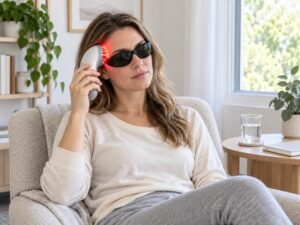
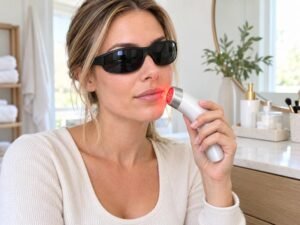
Protect Your Eyes
Always wear appropriate protective eyewear during facial treatments, even though red light is non-UV and generally safe for eyes.
Consistency Over Intensity
Regular, shorter sessions outperform infrequent longer ones. Photobiomodulation benefits accumulate over time with consistent exposure.
Hydrate After Sessions
Apply a hydrating serum or moisturizer immediately after treatment. Skin is in an optimal state to absorb active ingredients post-therapy.
Use Clinical-Grade Devices
Ensure your device delivers clinically relevant irradiance (≥20 mW/cm²) at the target wavelength. Consumer devices vary widely in actual output.
Track Progress with Photos
Take standardized photos every 4 weeks under consistent lighting to objectively assess skin improvements and adjust protocols.
Frequently Asked Questions
Common questions about using red light therapy for skin health, answered with evidence-based guidance.
1. How long does it take to see visible skin improvements from red light therapy?
Most people begin noticing improvements in skin radiance and texture within 4-6 weeks of consistent use (3-5 sessions per week). Collagen remodeling and measurable anti-aging benefits — such as reduced fine lines and improved firmness — typically become visible after 8-12 weeks. Acne and redness improvements often appear sooner, within 2-4 weeks. Results depend on device irradiance, session consistency, and individual skin biology.
2. Is red light therapy safe for all skin tones and Fitzpatrick types?
Yes. Unlike UV-based treatments or certain laser therapies, red light therapy does not rely on melanin absorption and carries no risk of UV-induced pigmentation changes. It is considered safe across all Fitzpatrick skin types (I-VI). Individuals with darker skin tones (Fitzpatrick V-VI) may benefit from slightly longer sessions or higher-powered devices to compensate for greater melanin competition for photon absorption, but there is no increased risk of burns, hyperpigmentation, or adverse reactions.
3. Can red light therapy help reduce acne and prevent future breakouts?
Red light therapy addresses acne through multiple mechanisms. It reduces sebum (oil) production by modulating sebaceous gland activity, decreases pro-inflammatory cytokines that drive cystic breakouts, and accelerates healing of existing lesions. When combined with blue light (415-450nm), which directly targets and kills Cutibacterium acnes bacteria, the combined protocol is one of the most well-supported non-pharmacological acne treatments available. Multiple randomized controlled trials confirm significant reductions in inflammatory lesion counts after 4-8 weeks of regular treatment.
4. Does red light therapy actually stimulate collagen production?
Yes, and this is one of the most consistently documented effects of red and near-infrared light therapy on skin. Photons absorbed by mitochondria in dermal fibroblasts stimulate increased ATP production, which directly activates fibroblast proliferation and upregulates the expression of procollagen type I and type III. Clinical studies using skin biopsies and objective measurement tools (such as cutometers and high-frequency ultrasound) have confirmed measurable increases in collagen density, improved skin elasticity, and reduced wrinkle depth following consistent red light therapy protocols over 8-12 weeks.
5. Can I use red light therapy on my face every day?
Daily facial use is generally well-tolerated and safe for most people. However, research on photobiomodulation suggests that allowing 24-48 hours between sessions may optimize cellular response, as mitochondria need time to fully process the stimulated ATP production cycle. For most users, 3-5 sessions per week produces excellent results without diminishing returns. If you have sensitive or reactive skin, starting with every-other-day sessions and gradually increasing frequency is the recommended approach. There is no evidence that daily use at appropriate irradiance levels causes harm.
6. Will red light therapy help with hyperpigmentation, dark spots, or melasma?
Red light therapy can support gradual improvement in hyperpigmentation and post-inflammatory dark spots by accelerating cellular turnover and modulating melanin synthesis pathways. It does not cause UV-related darkening and is not a photosensitizer. For melasma specifically, results are promising but protocol design is important — some practitioners combine red light with topical brightening agents for synergistic effect. It is worth noting that red light therapy is not a standalone replacement for dedicated depigmentation treatments, but serves as a valuable complementary modality, particularly for reducing inflammation-driven pigmentation.
7. Is red light therapy effective for rosacea and facial redness?
Red light therapy is particularly well-suited for rosacea and chronic facial redness due to its strong anti-inflammatory effects. It downregulates pro-inflammatory cytokines (including TNF-α and IL-6), reduces vascular reactivity, and calms the immune-mediated responses that drive rosacea flares. Preliminary clinical studies report reductions in erythema severity, flushing frequency, and overall skin sensitivity following regular treatment. Because red light does not generate significant heat and contains no UV, it avoids the common triggers that worsen rosacea. Starting with lower irradiance and shorter sessions (5-8 minutes) is recommended for highly reactive skin.
8. Can red light therapy be used after cosmetic procedures like microneedling or chemical peels?
Yes, and this is one of the most clinically valuable applications of red light therapy in aesthetic practice. Applying red or near-infrared light immediately after or within 24 hours of microneedling, chemical peels, laser resurfacing, or other ablative procedures significantly accelerates wound healing, reduces post-procedure redness and swelling, and shortens downtime. The increased cellular energy (ATP) produced by photobiomodulation directly supports the epithelialization and collagen remodeling processes triggered by the procedure. Many medspas and dermatology clinics now integrate post-procedure LED therapy as a standard protocol step to enhance outcomes and improve client comfort.
9. What wavelength of red light is best for skin rejuvenation?
For skin rejuvenation, the most clinically validated wavelengths are 630-660nm (visible red) and 810-850nm (near-infrared). Visible red light at 630-660nm penetrates the epidermis and upper dermis, making it ideal for surface-level concerns including acne, fine lines, and uneven tone. Near-infrared at 810-850nm penetrates deeper into the dermis and subcutaneous tissue, driving more significant collagen synthesis, inflammation reduction, and structural skin improvements. Most clinical-grade devices designed for skin rejuvenation combine both wavelengths to address both superficial and deeper skin layers simultaneously, producing more comprehensive results than single-wavelength devices.
10. Are there any skincare ingredients I should avoid using before or after red light therapy?
Before your session, cleanse the skin thoroughly and remove all products — including makeup, sunscreen, serums, and oils — as these can block light penetration or cause uneven absorption. Avoid applying retinol, AHAs (glycolic, lactic acid), BHAs (salicylic acid), and benzoyl peroxide immediately before treatment, as these can increase skin sensitivity and may cause mild irritation when combined with light exposure. After your session, skin is in a highly receptive state: this is the ideal time to apply hydrating serums, vitamin C, hyaluronic acid, or peptide-based products to amplify results. Avoid heavy occlusive products immediately post-treatment to allow skin to breathe during the initial recovery window.
So, is red light therapy right for your skin?
For many people, it can be a practical addition to a skincare routine — especially when the goal is healthier-looking skin, better texture, calmer redness, acne support, or long-term collagen care. But skin is not a spreadsheet. It has moods, habits, sensitivities, and sometimes a strong opinion about products you were very excited to try.
That is why the best approach is not to chase the strongest device or the longest session. Start with the right wavelength, reasonable timing, proper eye protection, clean skin, and steady use. Let your skin respond before turning the routine into a full-time job.
For brands, clinics, spas, and product teams, the same rule applies: good results start with good device design. Wavelength selection, irradiance, comfort, safety instructions, and real user experience all matter.
If you are developing red light therapy devices for skincare, MedLight can help with panels, masks, wearable designs, OEM/ODM customization, packaging, and technical support.
Your skin deserves more than guesswork. Let’s give it a better light.