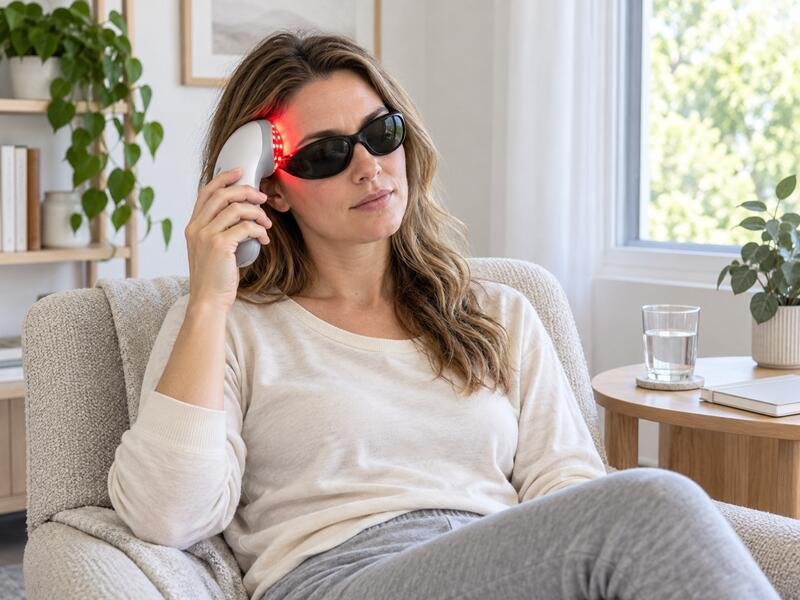
Nobody enjoys migraines. Over a billion people deal with them regularly, and a lot of those people have tried everything — triptans, beta-blockers, Botox, you name it. Many are still looking for something that works without the side effects. That’s the gap we’re talking about here.
Red light therapy — or photobiomodulation, if you want the technical term — has been quietly building a solid evidence base while the wellness industry was focused on trendier things. It doesn’t require a subscription, it doesn’t vibrate, and it’s not going to be obsolete next season. It works at the cellular level, and the research backing it up is getting harder to ignore.
If you’ve been wondering whether migraine-focused RLT devices belong in your product lineup, you’re asking the right question at the right time. Let’s walk through the science, the market opportunity, and the practical details you need to make a solid sourcing decision.
Migraine Prevalence and Market Opportunity
Migraines aren’t just bad headaches. They’re a complex neurological condition — intense throbbing pain, usually on one side of the head, often with nausea, vomiting, and extreme sensitivity to light and sound. An episode can last anywhere from four hours to three days. People who get them regularly lose workdays, cancel plans, and spend a lot of money trying to manage them.
1B+
People affected globally
$36B
Annual healthcare costs in the U.S. alone
75%
Of sufferers are women aged 18-55
Standard treatments — triptans, beta-blockers, anti-seizure medications, Botox injections — often come with side effects, don’t work for everyone, or cost a lot. That’s created real demand for non-pharmaceutical, non-invasive options. For brand owners, distributors, and procurement managers in the wellness and medical aesthetics space, migraine relief is a category with genuine consumer pull and room to grow.
Red light therapy (RLT), also called photobiomodulation (PBM), has become one of the more promising non-invasive approaches for migraine management. Knowing the evidence and understanding the product implications will help you make better sourcing and portfolio decisions.
Red Light Therapy Overview
Red light therapy uses specific wavelengths of light — mainly red (620-700 nm) and near-infrared (NIR, 700-1100 nm) — to stimulate cellular processes. Unlike ultraviolet light, these wavelengths don’t damage tissue. They penetrate the skin and reach deeper structures, where they interact with mitochondria — the parts of your cells that produce energy.
Key Wavelengths in Red Light Therapy
630-670 nm (Red Light)
Penetrates superficial tissues (1-3 mm). Good for skin-level inflammation, surface blood flow, and localized pain relief. This is the wavelength range you’ll find in most facial masks and handheld devices.
810-850 nm (Near-Infrared)
Goes much deeper (3-5 cm), reaching muscles, nerves, and even brain tissue through the skull. This is the wavelength range that matters most for migraine applications because it can actually reach neural tissue.
Here’s the basic mechanism: photons from the light are absorbed by an enzyme called cytochrome c oxidase (CCO) in the mitochondrial electron transport chain. This boosts ATP production, reduces oxidative stress, and dials down inflammatory signaling. For migraines specifically, NIR wavelengths — especially around 810 nm — are the most relevant because they can penetrate the skull and directly affect neural tissue.
Mechanisms of RLT in Migraine Pathways
Migraines involve a chain of neurological events: cortical spreading depression (a wave of neural excitation followed by suppression), activation of the trigeminovascular system, neurogenic inflammation, and shifts in cerebral blood flow. Red light therapy appears to address several of these pathways at the same time.
Mitochondrial Dysfunction and Energy Deficit
Multiple studies have shown that people who get migraines have impaired mitochondrial function in their brain cells. When neurons don’t have enough energy, they become more vulnerable to the triggers that set off a migraine. NIR light therapy boosts cytochrome c oxidase activity and ATP production, which helps restore that energy balance and raises the bar for what it takes to trigger an episode.
Neuroinflammation Reduction
During a migraine, the trigeminal nerve releases pro-inflammatory neuropeptides — including CGRP (calcitonin gene-related peptide) and substance P — that cause blood vessels to dilate and trigger neurogenic inflammation. Red and NIR light have been shown to suppress NF-κB signaling, reduce pro-inflammatory cytokines (TNF-α, IL-1β, IL-6), and modulate CGRP release. Worth noting: the newest class of migraine drugs (CGRP inhibitors) targets this exact same pathway, which lends real credibility to this mechanism.
Nitric Oxide Modulation
Nitric oxide (NO) plays a complicated role in migraines. Too much of it contributes to vasodilation and pain signaling, but controlled amounts support healthy blood flow. Photobiomodulation separates NO from cytochrome c oxidase, releasing small amounts that improve microcirculation while also restoring the enzyme’s ability to produce ATP efficiently. The net effect is a rebalancing of cerebral blood flow patterns that get disrupted during migraine episodes.
Serotonin and Neurotransmitter Regulation
Serotonin imbalance is a well-known factor in migraine pathophysiology. Early-stage studies suggest that transcranial photobiomodulation can influence serotonergic pathways, potentially stabilizing the neurotransmitter fluctuations that kick off migraine cascades. This area of research is still developing, but it adds another layer to the biological case for RLT in migraine management.
Clinical Evidence for RLT and Migraines
The clinical research on red and near-infrared light therapy for headaches and migraines has been growing steadily. Here are the key studies that are most relevant if you’re making sourcing or product development decisions:
RCT
Transcranial Photobiomodulation for Chronic Migraine (2021)
A randomized, double-blind, placebo-controlled trial published in Photobiomodulation, Photomedicine, and Laser Surgery tested 810 nm NIR light applied through the skull in chronic migraine patients. The treatment group saw a 50%+ reduction in monthly migraine days, along with lower pain intensity and less medication use compared to the sham group over 8 weeks.
Relevance: Strong validation for 810 nm as the go-to wavelength for migraine-targeted devices.
Clinical
Intranasal Photobiomodulation for Acute Migraine (2019)
Published in Lasers in Medical Science, this study found that delivering 655 nm red light through the nose during active migraine attacks reduced pain scores by roughly 65% within 30 minutes. The intranasal route gets the light close to the sphenopalatine ganglion — a key node in migraine pain signaling.
Relevance: Points to product opportunities for compact, intranasal delivery devices.
Review
Systematic Review: PBM for Headache Disorders (2022)
This systematic review covered 12 studies and over 400 participants. The conclusion: photobiomodulation shows “consistent and clinically meaningful benefits” for both episodic and chronic migraine, with the best results coming from NIR wavelengths (800-850 nm) applied to the forehead, temples, and back of the head. Side effects across all studies were minimal.
Relevance: Backs up safety and efficacy messaging when paired with proper regulatory disclaimers.
Pilot
Green Light Therapy Comparison Study (2020)
A Harvard Medical School study looked at narrow-band green light (525 nm) for migraine reduction and found a roughly 60% drop in headache days over 10 weeks. Different wavelength, but it reinforces the broader point: targeted light therapy can modulate migraine pathways. It also opens the door for multi-wavelength device development.
Relevance: Multi-wavelength devices combining red, NIR, and green LEDs could be a differentiated product category.
A Note on Regulatory Status
The evidence is promising and growing, but red light therapy for migraines is still considered an emerging application. Most regulatory bodies classify these devices as general wellness products, not medical devices for migraine treatment. Any marketing claims you make should be reviewed by your regulatory and legal teams to make sure they hold up in your target markets.
RLT Mechanisms Relevant to Migraines
Knowing the biology behind these devices helps you evaluate product claims and figure out which configurations actually make sense for migraine applications.
ATP Energy Restoration
NIR light at 810-850 nm passes through the skull and stimulates cytochrome c oxidase in neural mitochondria, increasing ATP production. This addresses the energy deficit found in migraine-prone brains and raises the threshold for cortical spreading depression — the neural event that starts many migraines.
Anti-Inflammatory Cascade
RLT suppresses NF-κB activation, which reduces the production of pro-inflammatory cytokines and modulates CGRP release from trigeminal nerve endings. This directly targets the neurogenic inflammation that drives migraine pain and the symptoms that come with it.
Cerebral Blood Flow Regulation
Through controlled nitric oxide release and vascular smooth muscle relaxation, PBM helps normalize cerebral blood flow. This matters most during the aura phase of migraines, when abnormal vasoconstriction and vasodilation are happening.
Oxidative Stress Reduction
PBM ramps up the body’s own antioxidant enzymes (SOD, catalase, glutathione peroxidase), clearing out reactive oxygen species in neural tissue. Since oxidative stress both triggers and worsens migraine episodes, this creates a protective effect on two fronts.
Device Categories for Migraine Applications
Not every RLT device is equally suited for migraine applications. Here’s a breakdown of the form factors that matter most, so you can focus your sourcing and product development conversations.
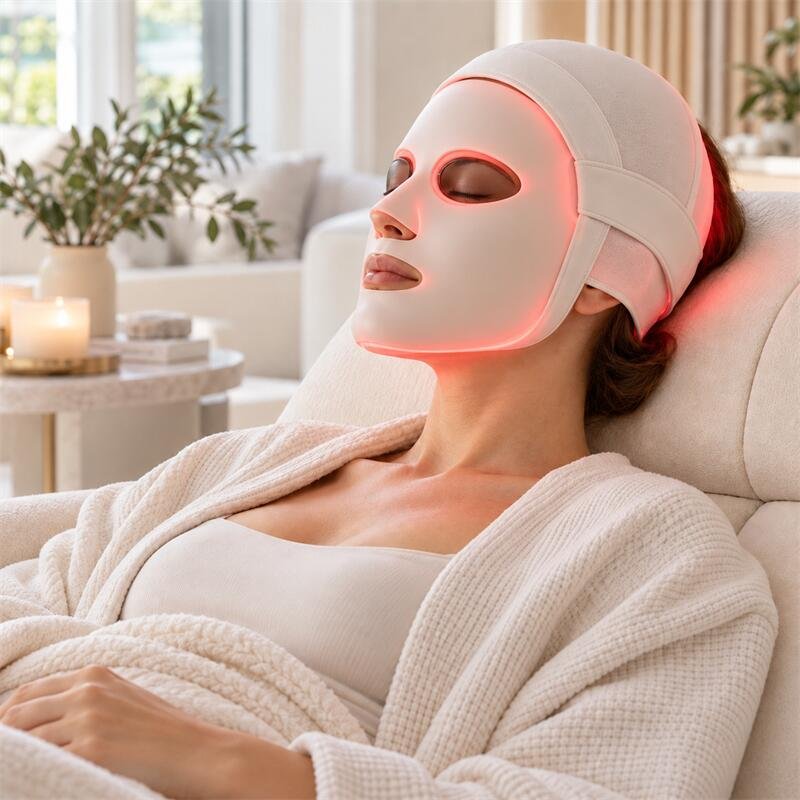
LED Face & Head Masks
Most directly relevant for migraine applications
Full-face and head-coverage LED masks with NIR LEDs targeting the forehead, temples, and occipital region are the best fit for this category. Devices that let users switch between wavelengths (660 nm red and 810-850 nm NIR) give you a dual-use product: skincare and migraine management in one device.
- •Covers the key migraine trigger zones (forehead, temples, occipital ridge)
- •Hands-free — users can rest during treatment
- •Dual positioning: beauty + wellness/migraine relief
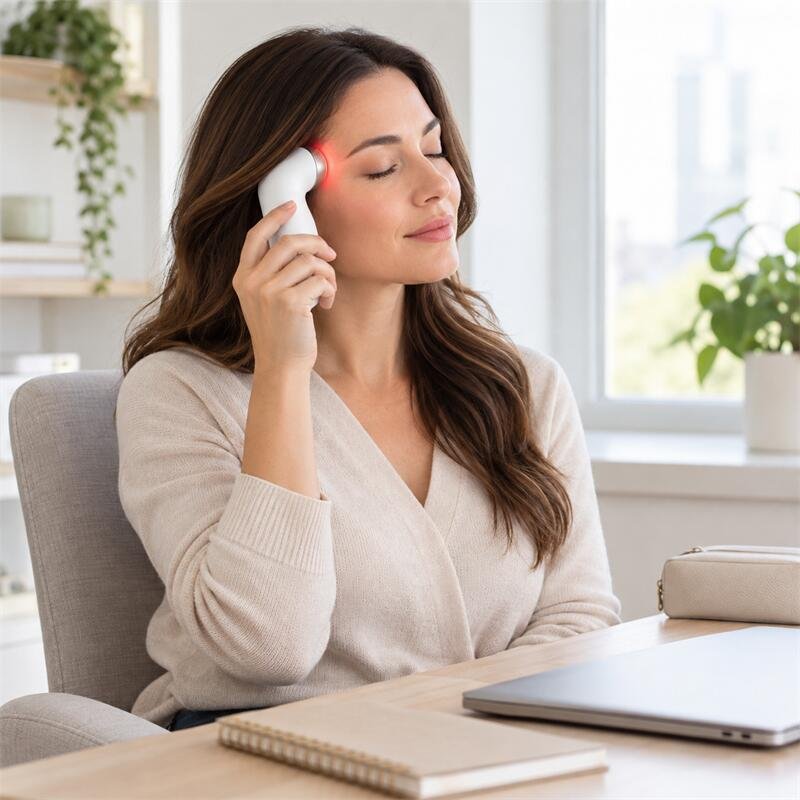
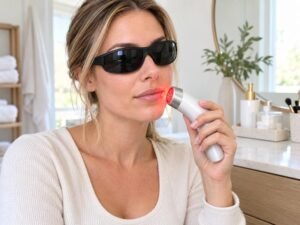
Handheld & Portable Devices
Strong fit — on-the-go migraine relief
Compact handheld devices with focused NIR output let users target specific pain points — temples, behind the ears, base of the skull — when a migraine hits. These appeal to people who need something they can use at work, while traveling, or whenever an episode starts.
- •Portable — fits in a bag for travel and workplace use
- •Targeted application to specific trigger points
- •Lower price point — good for entry-level market positioning
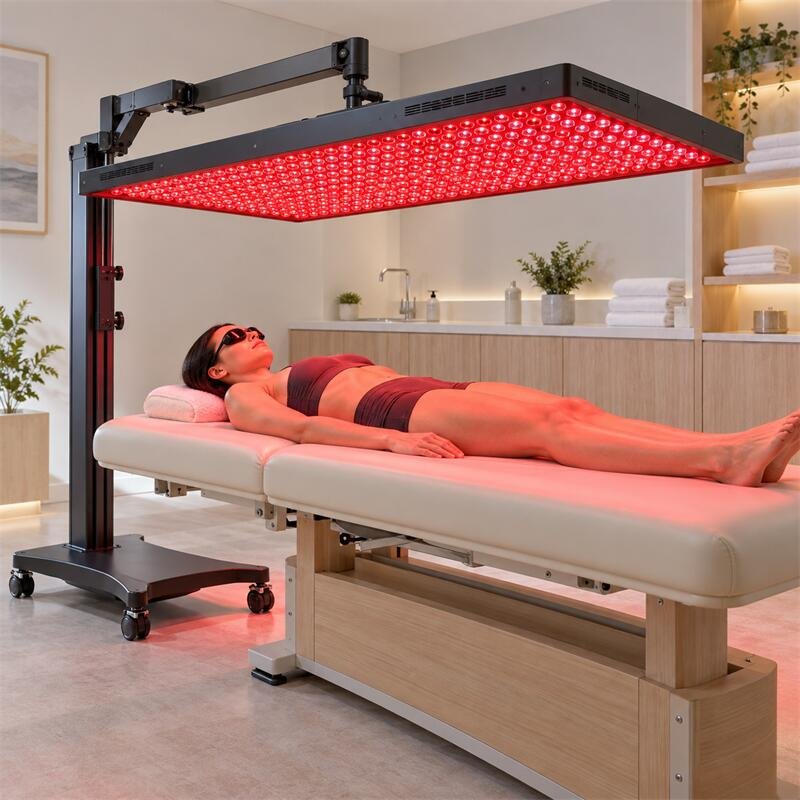
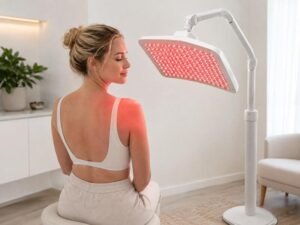
Panel Systems for Clinical Settings
Good fit — professional wellness environments
Larger panel systems used in wellness centers, spas, and clinics can include migraine management as part of a broader treatment protocol. They’re not migraine-specific, but they serve the professional market where practitioners combine RLT with other modalities for whole-body recovery sessions.
- •Multi-purpose — serves multiple treatment categories for clinics
- •Higher irradiance for shorter treatment sessions
- •Revenue-generating equipment for service-based businesses
Sourcing Specs for Migraine-Focused Devices
When you’re evaluating manufacturers and products for the migraine relief category, these are the technical and commercial specs that should be on your checklist:
| Parameter | Optimal Specification | Why It Matters |
|---|---|---|
| Primary Wavelength | 810-850 nm (NIR) | Deepest tissue penetration — actually reaches neural tissue through the skull |
| Secondary Wavelength | 630-660 nm (Red) | Surface-level anti-inflammatory effects; lets you position the device for skincare too |
| Irradiance | 30-60 mW/cm² at skin surface | Delivers a therapeutic dose within practical treatment times (10-20 min) |
| Treatment Coverage | Forehead, temples, occipital | Targets trigeminal and occipital nerve distributions — the zones that matter |
| Pulsing Capability | 10 Hz and 40 Hz options | Pulsed delivery may enhance neural effects; 40 Hz has been linked to neuroprotection |
| Safety Features | Auto-shutoff, eye protection, thermal management | Non-negotiable for consumer safety and regulatory compliance |
| Certifications | CE, FCC, FDA registration | Required for market access; builds trust with consumers and retail partners |
| OEM/ODM Flexibility | Custom wavelength, branding, packaging | Lets you build a differentiated private-label product for your specific market |
Practical Sourcing Tip
When you’re getting quotes from manufacturers, ask specifically about LED bin specifications (wavelength tolerance ±5 nm), third-party irradiance testing reports, and whether they can provide clinical protocol documentation that your end customers — clinics, spas, wellness centers — can actually use to implement the devices. A manufacturer with real engineering depth will be able to support these requests and offer prototyping before you commit to a large order.
Market Trends and Consumer Demand
Several trends are converging right now that make migraine-focused red light therapy devices a strong category to be in:
People Want Drug-Free Options
This isn’t a niche preference anymore. A 2023 survey found that 68% of migraine sufferers have tried or want to try non-drug therapies. Red light therapy fits this demand perfectly — it’s technology-driven, can be used at home, and has minimal side effects.
At-Home Devices Are Booming
The global at-home medical device market is expected to pass $60 billion by 2027. Consumers are increasingly comfortable buying professional-grade wellness technology for personal use, especially for chronic conditions like migraines where they need ongoing management.
Beauty and Wellness Are Merging
LED face masks are already mainstream in the beauty market. Adding migraine-relief functionality through NIR wavelengths turns a single-purpose beauty device into a dual-purpose product. That justifies premium pricing and opens the door to a much larger audience — migraine sufferers, not just skincare enthusiasts.
Professional Channels Are Looking for New Modalities
Medical aesthetics clinics, wellness centers, spas, and physical therapy practices all want new ways to differentiate their services. A migraine-management protocol using red light therapy gives them an additional revenue stream and a reason for patients to keep coming back.
Search Interest Is Climbing Fast
Search volume for “red light therapy migraine” and related terms has grown over 200% in the past three years. Consumer awareness is building quickly. Brands that establish themselves in this niche now will be well-positioned as the category matures.
Safety, Compliance, and Regulations
Safety Profile
Red light therapy has a strong safety track record across published research. The side effects that do come up are mild and temporary:
- ✓Temporary warmth at the treatment site
- ✓Mild headache during the first few sessions (usually goes away with dose adjustment)
- ✓Brief visual brightness after treating near the eyes (with proper eye protection in place)
- ✓No serious adverse events reported in clinical studies
Contraindications to Include in Product Documentation
Your product documentation and user guides need to clearly state these contraindications:
- ✗Active cancer or history of photosensitive cancers
- ✗Photosensitizing medications (certain antibiotics, retinoids)
- ✗Pregnancy (not enough data for transcranial application)
- ✗Epilepsy or seizure disorders (especially with pulsed modes)
- ✗Direct eye exposure without appropriate protection
Regulatory Considerations by Market
United States
The FDA classifies most LED therapy devices as Class II general wellness devices. If you want to make migraine-specific claims, you may need 510(k) clearance. Work with your manufacturer to understand where the line falls between “general wellness” and “medical device” classification.
European Union
CE marking under MDR (Medical Device Regulation) 2017/745 is required. How the device is classified depends on your intended use claims. Positioning it as general wellness keeps compliance simpler; making therapeutic migraine claims raises the classification bar.
Australia
TGA registration requirements vary based on intended purpose. Low-risk LED devices may qualify for exemption or inclusion in the ARTG through simplified pathways.
General Best Practice
Work with manufacturers who have been through the CE, FCC, and FDA process before. Make sure your supplier can provide the technical documentation, test reports, and compliance certificates you’ll need for your target markets.
Frequently Asked Questions
Does red light therapy actually help migraines?
What wavelength is best for migraine relief?
How long does a treatment session take?
Can red light therapy be used during an active migraine?
How should brands position migraine-relief RLT products?
What MOQ and lead times should buyers expect?
Are there any risks of using red light therapy for migraines?
What is red light therapy and how does it work?
What are the main applications of red light therapy?
What certifications are required for red light therapy devices?
Category Outlook
So, does red light therapy help migraines? Based on the current evidence: yes, and the data is getting stronger. Near-infrared light therapy at 810-850 nm works on multiple migraine pathways at once — mitochondrial dysfunction, neuroinflammation, cerebral blood flow issues, and oxidative stress — through well-documented biological mechanisms.
For buyers, this adds up to a real market opportunity sitting at the intersection of medical wellness and consumer technology. Here’s what the migraine relief category offers:
- A massive addressable market — over 1 billion migraine sufferers globally, many of whom are willing to spend on relief
- Real consumer demand — search interest is climbing fast and people are actively looking for drug-free alternatives
- Multi-use product positioning — one device can serve both the beauty/skincare and migraine-relief markets
- Multiple sales channels — clinics, spas, wellness centers, and direct-to-consumer retail
- Strong safety profile — minimal side effects and low liability risk when you have proper documentation in place
Getting this right comes down to your manufacturing partner. You need a manufacturer that brings engineering depth, regulatory experience, and flexible OEM/ODM capabilities to the table. The right partner should be able to support the full product lifecycle — from concept validation and prototyping through mass production, certification, and packaging — so you get consistent quality and a faster path to market.
Thinking About Adding Migraine-Relief Devices to Your Lineup?
Whether you want to add NIR-capable face masks to an existing beauty line, develop a dedicated migraine-relief handheld device, or source professional-grade panels for clinic distribution, the starting point is the same: find a manufacturer who knows both the science and the market.
Look for partners who offer full OEM and ODM services, can handle CE and FCC certification, will provide prototypes before you commit to production, and have a track record across the full range of LED therapy devices — from wearable masks and handhelds to full-body systems and specialized wellness products.
References & Further Reading
- Hamblin, M.R. (2016). “Photobiomodulation or low-level laser therapy.” Journal of Biophotonics, 9(11-12), 1122-1124.
- Naeser, M.A., et al. (2014). “Significant improvements in cognitive performance post-transcranial, red/near-infrared light-emitting diode treatments in chronic, mild traumatic brain injury.” Archives of Physical Medicine and Rehabilitation, 95(3), 546-555.
- Cassano, P., et al. (2019). “Transcranial photobiomodulation for the treatment of major depressive disorder.” Photomedicine and Laser Surgery, 37(6), 305-312.
- Noseda, R., et al. (2016). “Migraine photophobia originating in cone-driven retinal pathways.” Brain, 139(7), 1971-1986.
- Martin, L.F., et al. (2021). “Evaluation of green light exposure on headache frequency and quality of life in migraine patients.” Cephalalgia, 41(2), 135-147.
- Ailioaie, L.M., & Litscher, G. (2021). “Photobiomodulation and sports: Results of a narrative review.” Life, 11(12), 1339.
- Saltmarche, A.E., et al. (2017). “Significant improvement in cognition in patients with dementia: Results of a pilot study.” Alzheimer’s & Dementia: Translational Research & Clinical Interventions, 3(3), 348-353.
Disclaimer
This article is written for industry professionals and is not medical advice. The red light therapy devices discussed here are general wellness products unless specifically cleared by regulatory authorities for medical use. Always consult healthcare professionals for migraine diagnosis and treatment. Any product claims should be reviewed by qualified regulatory counsel before being used in marketing materials for specific markets.