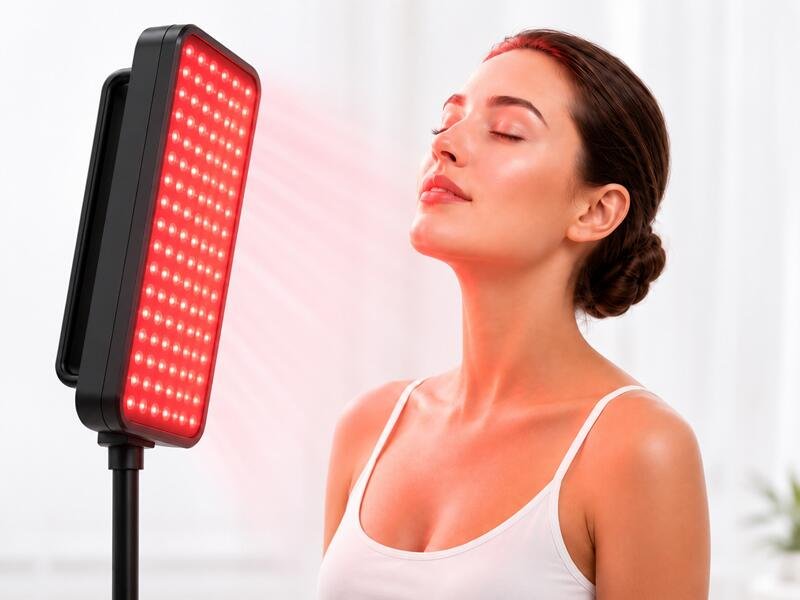
Is red light therapy good for skin?
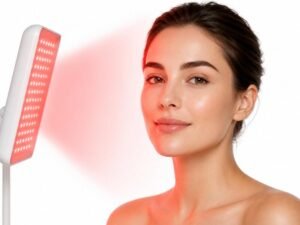
The answer is yes—but not because red light is a magic switch that turns back the clock overnight. Red light therapy uses specific wavelengths of red and near-infrared light to support cellular energy production. This process may help stimulate collagen, improve skin texture, calm visible redness, and support the skin’s natural repair process.
That is why red light therapy has become increasingly popular in skincare routines, beauty clinics, wellness centers, and home-use devices. Still, good results depend on more than simply standing in front of a glowing panel. Wavelengths, irradiance, treatment distance, session time, device quality, and consistency all matter.
In this article, we will take a practical journey beneath the surface of the skin—without lab coats, complicated biology textbooks, or unrealistic promises. We will explore how red light therapy works, what benefits it may offer, how long results may take, and how to use it safely.
Your skin has already packed its bags. Let’s begin the journey.
What Is Red Light Therapy?
Red light therapy, also known as photobiomodulation (PBM) or low-level laser/light therapy (LLLT), is a non-invasive treatment that delivers specific wavelengths of red and near-infrared (NIR) light to the skin and underlying tissue. Unlike UV light, which can damage DNA and accelerate skin aging, red and NIR light operate within a therapeutic window that triggers beneficial biological responses without thermal damage.
The technology was originally developed by NASA in the 1990s to support plant growth experiments and wound healing in astronauts. Since then, it has been extensively studied in clinical settings and is now widely used in dermatology clinics, medical spas, wellness centers, and increasingly in consumer devices.
Primarily absorbed by skin surface layers. Targets fibroblasts for collagen synthesis, reduces fine lines, and improves overall skin tone and luminosity.
Penetrates deeper into dermis and subcutaneous tissue. Reduces inflammation, accelerates healing, supports mitochondrial function and cellular repair.
How Does Red Light Therapy Work on Skin?
The primary mechanism of action involves the absorption of photons by mitochondrial chromophores — most notably cytochrome c oxidase (CCO), an enzyme in the mitochondrial respiratory chain. When CCO absorbs red or NIR light, it triggers a cascade of intracellular events:
- Increased ATP production — Cells produce more energy, accelerating metabolic and repair processes.
- Release of nitric oxide (NO) — Improves microcirculation and vasodilation, delivering more oxygen and nutrients to skin cells.
- Reactive oxygen species (ROS) modulation — At therapeutic doses, ROS act as signaling molecules that upregulate antioxidant defenses and growth factors.
- Fibroblast activation — Stimulates production of collagen type I and III, elastin, and hyaluronic acid.
- Anti-inflammatory signaling — Downregulates pro-inflammatory cytokines such as IL-1β, IL-6, and TNF-α.
This multi-pathway response is why red light therapy can address a broad range of skin concerns simultaneously — it works at the cellular level rather than targeting a single symptom.
“Photobiomodulation therapy has demonstrated consistent efficacy in stimulating collagen synthesis and reducing inflammation across multiple randomized controlled trials, making it one of the most evidence-supported non-invasive skin interventions available.”
Evidence-Based Skin Benefits
1. Anti-Aging & Collagen Stimulation
Collagen loss is the primary driver of visible skin aging — wrinkles, sagging, and loss of firmness. Red light therapy directly addresses this by activating dermal fibroblasts, the cells responsible for collagen and elastin production.
A landmark study published in Photomedicine and Laser Surgery found that participants receiving twice-weekly RLT treatments for 30 sessions showed significant improvements in skin complexion, skin tone, skin smoothness, and collagen density as measured by ultrasonographic imaging. Notably, 91% of participants experienced improvement in skin tone and 82% showed reduced wrinkle severity.
- Increases collagen type I and III synthesis
- Reduces depth and visibility of fine lines and wrinkles
- Improves skin elasticity and firmness
- Enhances skin luminosity and even tone
2. Acne Reduction
Red light therapy reduces acne through two complementary mechanisms: anti-inflammatory action that calms active breakouts, and regulation of sebaceous gland activity. When combined with blue light (415 nm), the effect is amplified — blue light targets Cutibacterium acnes bacteria while red light resolves the resulting inflammation.
- Reduces inflammatory acne lesions (papules, pustules, nodules)
- Decreases sebum overproduction
- Accelerates post-acne healing and reduces scarring risk
- Safe for sensitive skin types without the drying effects of topical treatments
3. Wound Healing & Scar Reduction
One of the earliest and most well-established applications of photobiomodulation is wound healing. Red and NIR light accelerate all three phases of wound healing — inflammation, proliferation, and remodeling — by enhancing cellular energy, promoting angiogenesis, and stimulating growth factor release.
- Accelerates closure of surgical wounds and abrasions
- Reduces hypertrophic scar formation
- Improves appearance of existing scars through collagen remodeling
- Particularly effective post-procedure (after laser resurfacing, microneedling, or chemical peels)
4. Rosacea & Inflammatory Skin Conditions
The anti-inflammatory properties of red light therapy make it well-suited for managing chronic inflammatory skin conditions. By modulating cytokine production and reducing vascular reactivity, RLT can calm persistent redness and improve skin barrier function.
- Reduces facial redness and flushing associated with rosacea
- Supports management of psoriasis plaques
- Calms eczema flares and improves barrier integrity
- Reduces perioral dermatitis and seborrheic dermatitis symptoms
5. Hyperpigmentation & Skin Tone Evenness
While red light therapy does not bleach melanin directly, it reduces hyperpigmentation through anti-inflammatory pathways that downregulate post-inflammatory melanin production, and by improving overall cell turnover and skin renewal cycles.
- Fades post-inflammatory hyperpigmentation (PIH)
- Reduces appearance of sunspots and age spots over time
- Improves overall skin clarity and radiance
Clinical Evidence at a Glance
Who Can Benefit Most?
Red light therapy is safe for virtually all skin types (Fitzpatrick I-VI) and is one of the few skin treatments with no meaningful contraindications for pigmented skin. It is particularly well-suited for:
- Individuals aged 30+ experiencing early signs of skin aging such as fine lines, loss of firmness, or dull complexion
- Acne-prone individuals seeking a non-antibiotic, non-drying treatment approach
- Post-procedure patients recovering from laser treatments, microneedling, or aesthetic surgery
- Clients with inflammatory skin conditions such as rosacea, eczema, or psoriasis
- Anyone seeking preventive skin maintenance without pharmaceutical intervention
Treatment Protocols: What Works
Efficacy depends heavily on delivering the correct parameters. The following protocol guidelines are based on clinical literature and practical application in professional settings:
| Parameter | Recommended Range | Notes |
|---|---|---|
| Wavelength | 630-660 nm / 810-850 nm | Combination preferred for full-depth coverage |
| Power Density | 20-100 mW/cm² | Higher for clinical panels; lower for masks |
| Session Duration | 10-20 minutes | Avoid over-dosing; more is not always better |
| Frequency | 3-5× per week | Daily use acceptable for low-power home devices |
| Treatment Course | 4-12 weeks | Results typically visible from week 4 |
| Distance to Skin | 5-15 cm (panels) | Masks are contact or near-contact |
Safety Profile & Contraindications
Red light therapy has an excellent safety record across thousands of clinical studies. It is non-ionizing, non-thermal at therapeutic doses, and does not cause DNA damage. The most commonly reported side effects are mild and transient:
- Temporary mild warmth or tingling at the treatment site
- Mild headache if eyes are exposed without protection (eye protection recommended)
- Rare: temporary skin sensitivity in individuals with photosensitive conditions
Relative contraindications to discuss with a healthcare provider:
- Active use of photosensitizing medications (e.g., certain antibiotics, retinoids, NSAIDs)
- History of skin cancer or active malignancy in the treatment area
- Pregnancy (limited safety data, not contraindicated but precautionary)
- Epilepsy triggered by flashing lights (use steady-mode devices)
Choosing the Right Device
The device category significantly impacts outcomes. Professional-grade panels used in clinical settings deliver substantially higher irradiance than consumer masks or handheld units — which affects treatment time and depth of penetration, but not necessarily suitability for the indication.
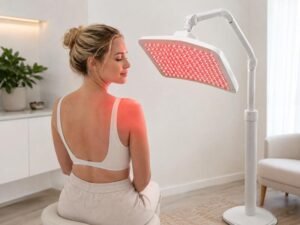
Full-Body Panels
High irradiance (50-100 mW/cm²). Best for clinical and professional use. Full-skin coverage in 10-15 min sessions. Ideal for spas, clinics, and wellness centers.
LED Face Masks
Targeted facial coverage. Lower irradiance, longer sessions needed. Excellent for home use, retail brands, and beauty clinic add-ons.
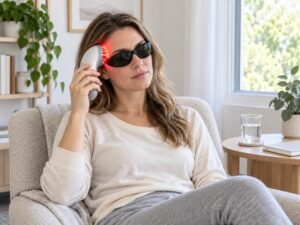
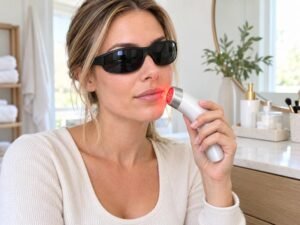
Handheld Devices
Portable and targeted. Suitable for spot treatment of specific areas. Lower output requires more frequent, longer sessions.
Frequently Asked Questions
1. How long before I see results from red light therapy on my skin?
Most users notice initial improvements in skin texture and tone within 2-4 weeks of consistent treatment (3-5 sessions per week). More significant changes in collagen density, wrinkle reduction, and skin firmness typically become apparent at 8-12 weeks. Acne improvements may be visible sooner, often within 1-2 weeks.
2. Can red light therapy help reduce wrinkles and fine lines?
Yes. Red light therapy at 630-660 nm directly stimulates dermal fibroblasts to produce collagen type I and III and elastin — the structural proteins responsible for skin firmness and smoothness. Clinical studies have shown up to 82% reduction in wrinkle severity after a consistent course of treatments. Results improve progressively with continued use and are maintained with a regular maintenance protocol.
3. Is red light therapy effective for treating acne?
Red light therapy reduces acne primarily through its anti-inflammatory action, calming active papules, pustules, and nodules by downregulating pro-inflammatory cytokines such as IL-1β and TNF-α. It also helps regulate sebaceous gland activity to reduce excess oil production. When combined with blue light (415 nm), which targets <em>Cutibacterium acnes</em> bacteria directly, the effect is significantly amplified. Unlike topical antibiotics or retinoids, RLT causes no dryness or systemic side effects.
4. Can red light therapy be used on all skin tones and Fitzpatrick types?
Yes. Unlike UV-based treatments or ablative laser therapies, red and near-infrared light do not interact with melanin in a damaging way. RLT is safe and effective across all Fitzpatrick skin types I-VI. This makes it particularly valuable for darker skin tones that carry a higher risk of post-inflammatory hyperpigmentation (PIH) from more aggressive treatments such as IPL or chemical peels.
5. Does red light therapy help with hyperpigmentation and uneven skin tone?
Red light therapy does not bleach melanin directly, but it reduces hyperpigmentation through two key mechanisms: first, by suppressing the post-inflammatory signaling pathways that trigger excess melanin production; and second, by accelerating skin cell turnover and renewal cycles. Over a consistent treatment course, users typically see improvement in post-inflammatory hyperpigmentation (PIH), age spots, and overall skin radiance. Results are gradual and most pronounced after 8-12 weeks.
6. Can red light therapy help with rosacea and skin redness?
Yes. The anti-inflammatory properties of red light therapy make it well-suited for managing rosacea and chronic facial redness. By modulating cytokine production and reducing vascular reactivity in the superficial dermis, RLT can calm persistent flushing, reduce visible redness, and improve skin barrier integrity over time. It is a gentle option for rosacea-prone skin that cannot tolerate more aggressive treatments. Regular sessions — typically 3-4 times per week — are recommended for sustained improvement.
7. How does red light therapy support wound healing and scar reduction?
Red and near-infrared light accelerate all three phases of wound healing — inflammation, proliferation, and remodeling — by boosting cellular ATP production, promoting angiogenesis, and stimulating growth factor release. This makes RLT highly effective for shortening recovery time after aesthetic procedures such as microneedling, laser resurfacing, and chemical peels. For existing scars, regular treatment encourages collagen remodeling that gradually softens and flattens hypertrophic scar tissue over several months.
8. Can I use red light therapy alongside other skincare treatments and topicals?
Generally yes. RLT is frequently used as a complementary treatment and pairs well with most skincare routines. It is particularly effective as a post-procedure recovery tool following microneedling, chemical peels, or laser resurfacing, accelerating healing and reducing downtime. One important precaution: avoid applying photosensitizing topicals — such as high-concentration retinoids (tretinoin), AHAs (glycolic acid), or certain antibiotics — immediately before a session, as these can increase skin sensitivity to light and cause irritation.
9. Does red light therapy help with skin hydration and barrier function?
Yes. Red light therapy stimulates fibroblasts to produce not only collagen and elastin but also hyaluronic acid — a key molecule responsible for skin moisture retention. Additionally, by reducing chronic low-grade inflammation in the dermis, RLT supports the integrity of the skin barrier, helping to prevent transepidermal water loss (TEWL). Users with dry, dehydrated, or compromised skin (including those with eczema or sensitive skin) often report improved plumpness and reduced tightness after a consistent treatment course.
10. How often should red light therapy be used for optimal skin results?
For optimal skin results, 3-5 sessions per week during an initial treatment course of 8-12 weeks is recommended by clinical protocols. Each session should last 10-20 minutes at the appropriate distance and irradiance for the device being used. After achieving desired results, a maintenance protocol of 1-2 sessions per week is typically sufficient to preserve gains. Consistency is the most important factor — regular shorter sessions outperform infrequent marathon sessions, as photobiomodulation relies on cumulative cellular stimulation over time.
Conclusion
The evidence supporting red light therapy for skin health is substantial, consistent, and growing. From collagen stimulation and anti-aging to acne management and post-procedure recovery, RLT addresses a broad spectrum of skin concerns through a single, safe, non-invasive mechanism.
For clinics, medical spas, and wellness brands, integrating red light therapy into service offerings represents a scientifically credible, client-friendly treatment modality with excellent safety margins and high satisfaction rates. For procurement managers and brand owners, the key to delivering results lies in device quality — specifically, verified wavelength output, consistent irradiance, and robust construction designed for clinical throughput.
MedLight manufactures professional-grade red and near-infrared light therapy panels and devices purpose-built for these applications, with OEM and ODM capabilities to support brand development from concept to commercialization.
Ready to Source Professional-Grade RLT Devices?
To provide more tailored advice, let me know: What specific skin concerns (like wrinkles, acne, or redness) are you hoping to address, and are you considering an at-home device or professional clinic sessions? Check out the Mad Light Series to to learn more about the most advanced red light therapy panels on the consumer market.