Somewhere between the cold plunge influencers and the raw-liver enthusiasts, a quieter revolution has been happening — one involving red light, Leydig cells, and the kind of biology class you wished you had paid more attention to. Testosterone optimization has gone from locker-room whisper to billion-dollar wellness category, and red light therapy just walked in wearing a lab coat. Before you dismiss it as another biohacker fever dream, consider this: the mechanism is real, the early data is surprisingly solid, and your competitors are already Googling the same thing you are right now. The question is not whether this category is going to be big — it already is. The question is whether your brand is going to be the one holding the device when the mainstream consumer finally arrives. Spoiler: they are almost here. Let us make sure you are ready.
The Biological Mechanism: How Red Light May Influence Testosterone
Understanding the underlying biology is not merely academic — it is the foundation of credible product positioning. Red light therapy (RLT), also referred to as photobiomodulation (PBM) or low-level laser/light therapy (LLLT), operates by delivering photons at specific wavelengths — primarily 630-660 nm (red) and 810-850 nm (near-infrared) — into biological tissue.
At the cellular level, these wavelengths are absorbed by cytochrome c oxidase, a key enzyme in the mitochondrial electron transport chain. This absorption triggers a cascade of downstream effects:
Increased ATP Production
Enhanced mitochondrial activity leads to greater cellular energy output, which is critical for steroidogenic (hormone-producing) cells in the testes known as Leydig cells.
Reduced Oxidative Stress
Leydig cell function is particularly sensitive to reactive oxygen species (ROS). RLT’s antioxidant signaling effect may create a more favorable environment for testosterone synthesis.
Improved Local Circulation
Near-infrared wavelengths penetrate deeper into tissue and promote nitric oxide release, improving blood flow to target areas and supporting nutrient and hormone precursor delivery.
Modulation of the HPG Axis
Some research suggests systemic photobiomodulation may influence the hypothalamic-pituitary-gonadal axis, the hormonal signaling pathway that controls testosterone production.
The testes — where approximately 95% of testosterone is produced — are relatively superficial organs. This anatomical accessibility makes localized red and near-infrared light application a theoretically sound approach, a factor that distinguishes this application from more speculative wellness claims.
What the Research Actually Shows
For procurement managers and brand owners building product claims, it is essential to separate robust evidence from preliminary findings. Here is an honest assessment of the current scientific landscape.
Animal Studies: Strong Signal
Multiple peer-reviewed studies in rodent models have demonstrated statistically significant increases in serum testosterone following localized red and near-infrared light application to the testicular area. A frequently cited study published in Lasers in Surgery and Medicine showed that rats exposed to 670 nm light for brief daily sessions exhibited elevated testosterone levels and increased Leydig cell activity compared to controls.
Buyer note: Animal studies provide mechanistic plausibility but cannot be used as direct human efficacy claims in regulated markets.
Human Studies: Early but Promising
Human clinical evidence remains limited in scale but directionally positive. A small-scale study conducted in collaboration with Forza Clinic (often referenced in men’s health literature) reported a significant increase in testosterone levels in male participants following a two-week protocol of red light exposure to the testicular region. Participants reported improvements in energy and libido alongside measurable hormonal changes.
Additionally, broader whole-body red light therapy protocols — including sauna-style full-body panels — have been associated in observational reports with improvements in markers related to metabolic health, sleep quality, and cortisol regulation. Since elevated cortisol is a well-established suppressor of testosterone, systemic stress reduction via RLT may offer an indirect pathway to hormonal optimization.
Buyer note: Human studies are small-scale and not yet at the level of large RCTs. Responsible claims should reflect this while emphasizing the mechanistic basis and emerging evidence trend.
| Evidence Type | Strength | Key Finding | Commercial Usability |
|---|---|---|---|
| Rodent / Animal Models | Strong | Significant testosterone increase with localized RLT | Mechanistic support only |
| Small Human Trials | Emerging | Positive hormonal and subjective outcomes | Use with qualified language |
| Mitochondrial / Cellular Mechanism | Strong | RLT increases ATP, reduces ROS in steroidogenic cells | Strong educational content basis |
| Indirect Pathway (Cortisol / Sleep) | Plausible | Systemic wellness improvements may support hormonal balance | Suitable for holistic messaging |
| Large-Scale Human RCTs | Lacking | Not yet conducted at scale | Do not make definitive medical claims |
Key Device Parameters That Drive Results
For procurement managers evaluating suppliers or engineers specifying product configurations, these are the critical technical parameters that determine whether a device will deliver meaningful photobiomodulation for testosterone-related applications.

Wavelength: 630-660 nm + 810-850 nm Dual-Band
Research points to both red (surface and skin-level) and near-infrared (deeper tissue penetration) wavelengths contributing to optimal outcomes. Dual-band panels or targeted devices offer the most comprehensive coverage and are preferred for clinical-grade positioning.

Irradiance: 50-200 mW/cm² at Treatment Distance
Irradiance — the power density delivered to tissue — must be sufficient to drive photobiomodulation without causing thermal damage. Devices must be tested and rated at the intended treatment distance (typically 5-30 cm). Require spectral irradiance data from suppliers.

Dose / Energy Density: 3-60 J/cm² per Session
The biphasic dose-response is well established in photobiomodulation: too little light is ineffective; too much can inhibit. Research protocols for testosterone applications typically fall in the 10-40 J/cm² range. Session duration should be configurable, with timer controls for end-user safety.

Form Factor: Targeted vs. Full-Body Panel
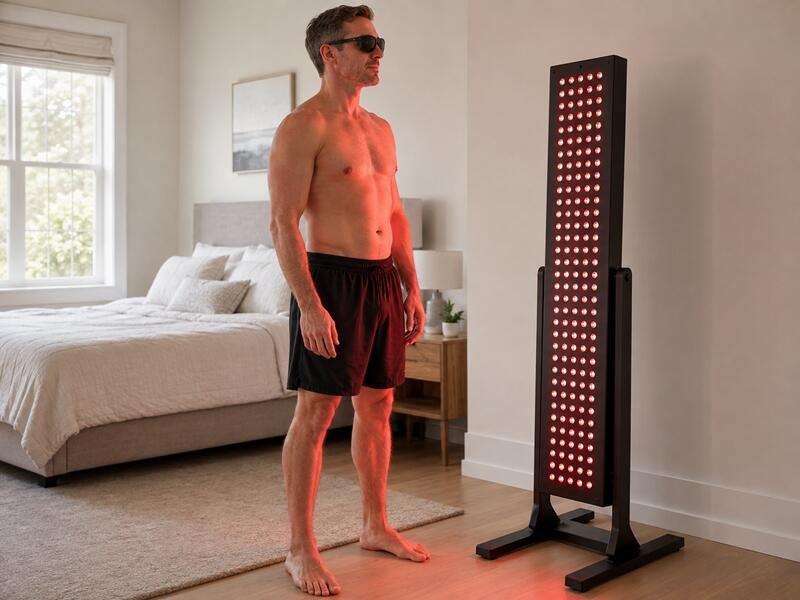
For targeted testosterone applications, compact handheld or wearable belt designs allow localized delivery. For broader men’s wellness positioning (recovery, performance, systemic hormonal health), full-body panels or modular panel systems serve multiple use cases and command higher price points.

LED Quality and Thermal Management
LED degradation directly impacts long-term efficacy. Specify devices using medical-grade LEDs from reputable manufacturers (e.g., Epistar, Osram, Samsung), and verify that heat dissipation systems (heatsinks, cooling fans) maintain stable output over thousands of hours of operation.
Market Opportunity: Who Is Buying and Why
The men’s health and hormonal optimization market is experiencing significant growth, driven by increased consumer awareness of testosterone’s role in energy, performance, body composition, and longevity. Red light therapy sits at a compelling intersection of multiple high-growth market segments.
Driven by pain management, recovery, aesthetics, and expanding men’s wellness applications.
A large addressable consumer base actively seeking non-pharmaceutical approaches to hormonal health.
Consumer demand is outpacing product supply, creating a significant opportunity for first-mover brands.
Most Relevant Customer Segments for This Application
Men’s Health & Performance Clinics
TRT clinics, functional medicine practices, and men’s wellness centers are actively adding non-invasive hormonal support modalities. Red light therapy offers a defensible, evidence-backed addition to their protocol stack.
Fitness Recovery Studios and High-Performance Gyms
Athletes and serious fitness consumers are receptive to testosterone optimization messaging. Recovery-focused facilities can bundle RLT with performance outcome narratives — recovery speed, muscle maintenance, energy levels.
Luxury Spas and Longevity Centers
The longevity and biohacking consumer segment is maturing rapidly. High-net-worth male clients seeking whole-body optimization are a strong target for premium, science-forward product lines.
D2C Men’s Wellness Brands
E-commerce brands in the men’s health space — supplements, wearables, performance devices — represent a significant distribution channel. An OEM red light device fits naturally into a multi-SKU men’s wellness product line.
Product Strategy for Distributors and Brand Owners
The testosterone angle is not a single product play — it is an application layer that can be positioned across multiple form factors depending on your distribution channel and customer base.
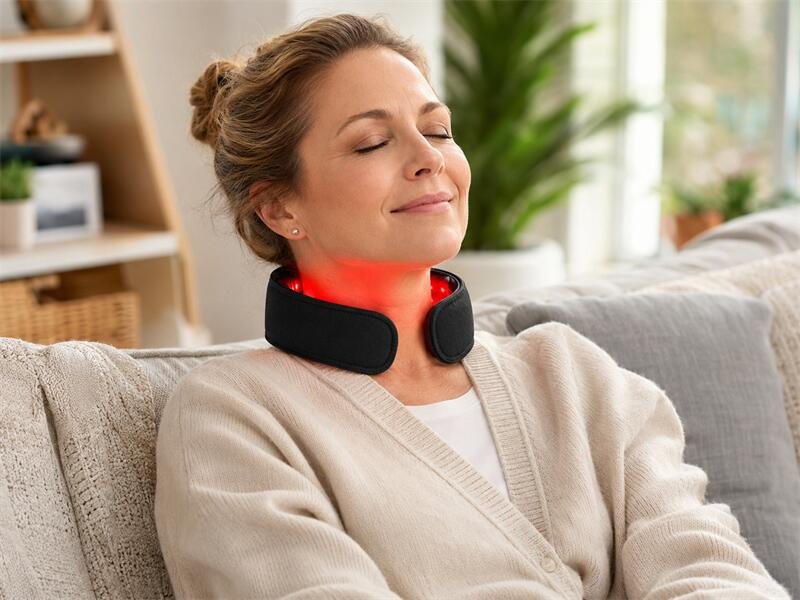
Targeted Application
Wearable Belts & Handheld Devices
Ideal for direct-to-consumer brands and clinical environments where targeted application protocols are part of a defined treatment program. Lower price point, higher accessibility, strong D2C margin potential.
- →Retail price range: $150-$600
- →Best for: D2C, supplement brand cross-sell, clinic add-on
- →Certification: CE, FCC, RoHS
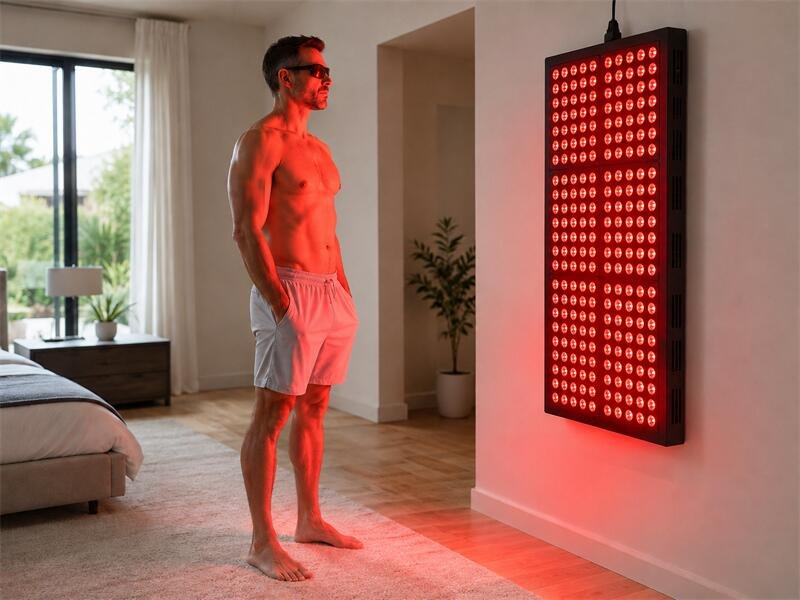
Full-Body & Panel Systems
Modular Panels & Full-Body Chambers
Positioned for professional settings — gyms, spas, recovery studios — where full-body wellness protocols justify premium pricing and drive per-session revenue for facility operators.
- →Retail price range: $1,500-$8,000+
- →Best for: B2B equipment supply, wellness facilities, distributor channels
- →Certification: CE, FCC, ETL, ISO 13485
Recommended Positioning Angles by Channel
Lead with outcomes: “Natural testosterone support,” “Cellular energy for male performance,” “Science-backed men’s wellness.” Combine with educational content marketing leveraging the mechanistic evidence base.
Emphasize photobiomodulation terminology, reference clinical research, and position within hormonal optimization protocols. Clinical staff appreciate mechanistic explanations over outcome-only claims.
Connect testosterone support to performance outcomes: energy, muscle recovery, drive, and body composition. Fitness consumers respond to performance narratives backed by credible science references.
Claims Compliance and Regulatory Considerations
Critical Compliance Notice for Brand Owners
Marketing a red light therapy device with direct claims such as “increases testosterone” or “treats low testosterone” in the United States and EU will likely trigger medical device classification and require FDA 510(k) clearance or CE medical device marking. Always work with a regulatory specialist before finalizing claim language.
Understanding the claims landscape is as commercially important as understanding the science. Here is a practical framework for navigating this.
| ❌ Avoid (Medical Device Claim) | ✅ Use Instead (Wellness / Structure-Function) |
|---|---|
| “Increases testosterone levels” | “Supports natural testosterone production” / “Designed to support male hormonal wellness” |
| “Treats low testosterone / hypogonadism” | “Supports men’s energy, vitality, and performance through photobiomodulation” |
| “Clinically proven to raise testosterone by X%” | “Based on emerging research into red light and Leydig cell function” (with citation) |
| “FDA approved for testosterone therapy” | “FDA-registered facility manufacturing” or “CE-certified device” |
Note: In most markets, wellness positioning (structure/function claims) for general population devices falls outside medical device regulation, provided no disease diagnosis or treatment language is used. Consult qualified regulatory counsel for your specific markets and device classification.
Sourcing and OEM Considerations
For brand owners and distributors planning to launch or expand a red light product line with testosterone or men’s wellness positioning, choosing the right manufacturing partner is a critical risk management decision.
What to Require from Your OEM Partner
- Spectral irradiance testing reports — wavelength and power density verified by third-party lab or calibrated in-house equipment at defined treatment distances.
- CE and FCC certification documentation — mandatory for EU and North American distribution. Verify certificates are in-scope for your product category.
- LED component traceability — request documentation on LED origin. Tier-1 LED suppliers (Samsung, Epistar) indicate quality commitment vs. anonymous commodity components.
- Aging / lumen maintenance data — confirm the device maintains ≥70% output (L70) at the specified rated operating hours. Relevant to your warranty period and clinical efficacy over time.
- OEM/ODM flexibility — ensure the manufacturer can support custom wavelength configurations, branding, packaging, and instruction documentation in compliance with your target markets.
Key Questions for Supplier Evaluation
Why Manufacturing Origin Matters for This Category
China-based manufacturers — particularly those with established photobiomodulation production lines — can offer 40-65% cost advantages over equivalent Western-manufactured devices while meeting identical optical and electrical specifications. However, not all Chinese manufacturers operate at the same quality tier. For a category where device efficacy directly underpins consumer trust and repeat purchase, partner with manufacturers who can demonstrate verifiable quality infrastructure: calibrated production testing, ISO-aligned quality management, and transparent component sourcing. This is particularly important when testosterone and hormonal health are part of your brand narrative — the science equity built through credible claims can be rapidly undermined by devices that do not perform consistently.
Buyer’s Verdict
Does Red Light Therapy Increase Testosterone?
The honest answer for a commercially-minded buyer: the evidence is credible, directional, and commercially actionable — but not yet definitive at scale. Animal model data is robust. Cellular mechanisms are well-characterized. Early human data is encouraging. Large-scale double-blind RCTs in human subjects have not yet been completed.
For brand owners and distributors, this is not a limitation — it is a market timing advantage. You are building in a category where the scientific narrative is strengthening, consumer demand is accelerating, and the competitive landscape has not yet consolidated around a dominant player. Brands that build credible, science-informed positioning now will have a significant advantage as clinical evidence matures and the category moves mainstream.