Dark circles are the aesthetic industry’s most reliable cash cow. Patients arrive convinced they look like they haven’t slept since 2019 — and frankly, some of them haven’t. Concealer can only do so much, injectables come with commitment anxiety, and “drink more water” is advice nobody pays a clinic consultation fee to hear. Red light therapy sounds like something a sci-fi villain would use, but it has the peer-reviewed evidence to back it up.
For brand owners, distributors, and procurement managers, this isn’t just a feel-good wellness story. It’s a commercially serious opportunity sitting at the intersection of consumer demand, clinical credibility, and strong margin potential. The global periorbital aesthetics market is growing, your medspa clients are actively looking for non-invasive add-on treatments, and LED devices have the enviable quality of not requiring a medical degree to operate.
This guide cuts through the marketing noise and gives you what you actually need: the mechanism of action, the clinical evidence, the right wavelength specifications, device format options, regulatory checkpoints, and a clear-eyed view of the ROI. Whether you’re launching a private label or expanding a clinical device portfolio, this is the right starting point.
What Are Dark Circles — And Why Do They Resist Treatment?
Before evaluating any device or treatment modality, it’s essential to understand the underlying pathophysiology. Dark circles — clinically termed periorbital hyperpigmentation (POH) — are not a single condition. They represent at least four distinct mechanisms, and effective treatment depends entirely on identifying the correct root cause.
Vascular Dark Circles
Caused by dilated or prominent superficial blood vessels beneath the thin periorbital skin. Often appear blue or purple. Very common and responds well to treatments targeting circulation and vessel integrity.
Pigmented Dark Circles
Result from excess melanin deposition in the dermis or epidermis. More prevalent in darker skin phototypes (Fitzpatrick III-VI). Appears brownish and requires melanin-targeting approaches.
Structural / Shadow Dark Circles
Caused by volume loss, skin laxity, and tear trough formation creating shadowing effects. These are anatomical rather than pigmentary and may require volumizing approaches alongside energy-based treatments.
Mixed-Type Dark Circles
The most common presentation in clinical settings. Involves two or more of the above mechanisms simultaneously, requiring multi-modal treatment protocols for meaningful results.
For buyers, understanding these subtypes is commercially important: a device that effectively addresses vascular and structural dark circles through collagen stimulation and circulation improvement has broad applicability, while a treatment only addressing pigmentation limits your addressable patient base.
How Red Light Therapy Works at the Cellular Level
Red light therapy (RLT), also called photobiomodulation (PBM), uses specific wavelengths of light — primarily in the 630-680 nm (red) and 810-850 nm (near-infrared) ranges — to trigger biological responses in skin cells without generating heat or causing tissue damage.
The primary target is cytochrome c oxidase (CCO) within mitochondria. When photons at these wavelengths are absorbed by CCO, a cascade of cellular events is triggered:
↑ ATP Production
Increased cellular energy (adenosine triphosphate) accelerates the natural repair and regeneration cycle of skin cells, including fibroblasts responsible for collagen synthesis.
↑ Collagen and Elastin Synthesis
Fibroblast activation leads to measurable increases in Type I and Type III collagen production, directly addressing skin thinning and structural laxity — a primary driver of shadowing dark circles.
↑ Microcirculation and Lymphatic Drainage
RLT improves local blood flow and lymphatic clearance, reducing venous pooling under the eyes — the core mechanism behind vascular-type dark circles.
↓ Inflammatory Mediators
Reduction in pro-inflammatory cytokines (IL-1β, TNF-α) decreases chronic periorbital inflammation that contributes to persistent discoloration.
↓ Melanin Overproduction (Indirect)
By reducing oxidative stress and inflammation — two key triggers of abnormal melanogenesis — RLT may indirectly modulate pigment-type dark circles over time.
Buyer Insight: Because RLT addresses both vascular and structural mechanisms simultaneously, it represents a compelling multi-indication device capable of serving a broad patient demographic across your clinic network or distribution territory.
Clinical Evidence: What the Research Actually Says
Buyers in regulated markets (EU, US, UK, ANZ) increasingly demand evidence-based product claims. Below is a summary of the current research landscape:
| Study / Reference | Wavelength Used | Key Finding | Relevance |
|---|---|---|---|
| Barolet et al. (2009) J Invest Dermatol |
660 nm | Significant collagen remodeling and periorbital wrinkle reduction after 12 weeks; improved skin tone uniformity | High |
| Ablon (2018) J Clin Aesthet Dermatol |
633 nm + 830 nm | Dual-wavelength protocol resulted in improved periorbital skin texture, reduced discoloration, and patient-reported satisfaction >85% | High |
| Wunsch & Matuschka (2014) Photomed Laser Surg |
633 nm + 830 nm | RCT showing meaningful improvement in skin complexion, skin tone, and reduction in hyperpigmentation versus control | High |
| Avci et al. (2013) Semin Cutan Med Surg |
Various (600-1000 nm) | Comprehensive review confirming anti-aging, anti-inflammatory, and collagen-stimulating effects; supports periorbital applications | Moderate |
| Meesters et al. (2020) Lasers Med Sci |
850 nm NIR | NIR penetration improves subdermal circulation, lymphatic drainage; relevant for vascular-type dark circles | High |
Overall Evidence Grade: The current body of evidence supports RLT as an effective adjunctive or standalone intervention for vascular and structural dark circles, with emerging evidence for pigment-type cases. Multiple randomized controlled trials and systematic reviews now support this application at the moderate-to-strong evidence level.
⚠️ Important for Claims: Evidence is strongest for skin rejuvenation, collagen induction, and circulation improvement. If your brand will make specific “dark circle treatment” claims, work with your regulatory advisor to ensure claims are appropriately substantiated in your target market.
Which Wavelengths Work Best for Dark Circles?
Not all red and near-infrared wavelengths are equivalent. When sourcing devices, wavelength selection is one of the most critical specifications to evaluate. Below is a breakdown of the most clinically supported options for periorbital applications:
Red Light (630-660 nm) — Superficial Tissue Focus
Penetrates approximately 2-4mm; optimally stimulates fibroblasts in the papillary and upper reticular dermis. Effective for collagen induction, melanin modulation, and surface-level skin tone improvement.
Best for: Pigmented dark circles, surface skin texture, skin brightening
Near-Infrared Light (810-850 nm) — Deep Tissue Focus
Penetrates 5-10mm, reaching deeper dermal layers and subdermal structures. Stimulates mitochondrial activity deeper in the tissue, improves microcirculation, and promotes lymphatic drainage — addressing the vascular component of dark circles.
Best for: Vascular dark circles, puffiness, structural skin laxity, lymphatic congestion
Dual-Wavelength Protocol (630+850) — Recommended
Combining 630-660 nm and 830-850 nm wavelengths in a single treatment addresses both superficial and deep tissue mechanisms simultaneously. Most clinical studies on periorbital outcomes use dual-wavelength protocols, and results are consistently superior to single-wavelength approaches.
Best for: Mixed-type dark circles, comprehensive periorbital rejuvenation, clinic-grade results
When reviewing manufacturer specifications, verify the actual emitter wavelengths (not just “red light” marketing language), irradiance values at treatment distance, and beam angle. These parameters directly impact treatment efficacy and your ability to make substantiated claims.
Product Formats Suitable for Periorbital Treatment
The periorbital area presents unique device design constraints. Understanding which formats are clinically appropriate — and commercially viable — helps you match product specifications to your business model and target channel.
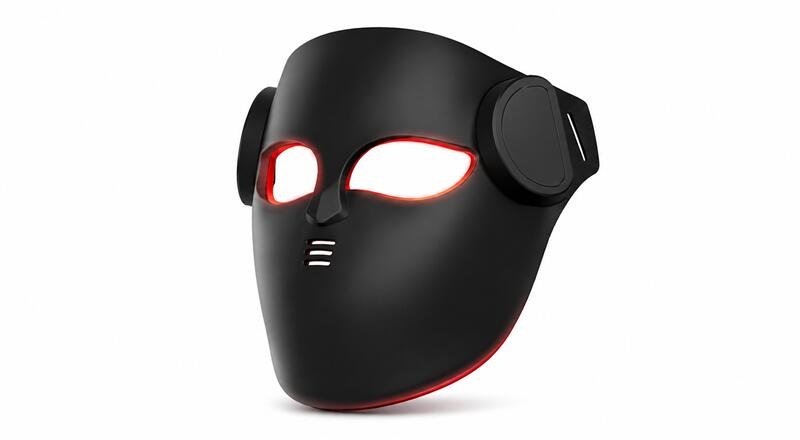
LED Face Masks
Full-face coverage with dedicated periorbital zones. Suitable for at-home or spa use. High consumer appeal and strong retail potential. OEM customization available for branding.
Channel fit: D2C, retail, medspa
Price tier: $$-$$$
Certification need: FDA, CE, FCC
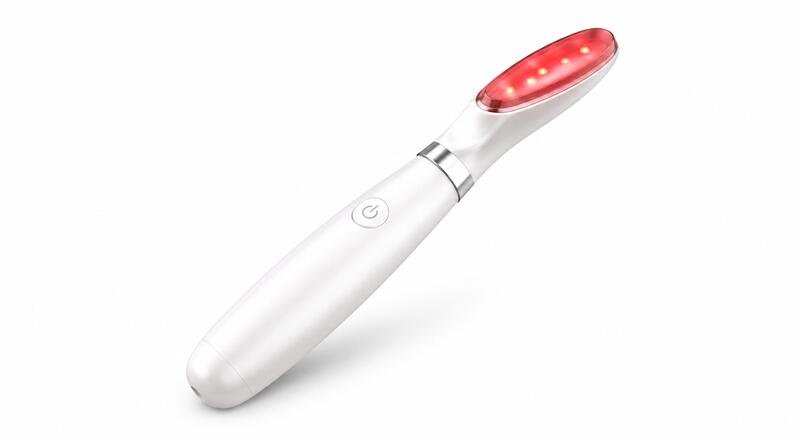
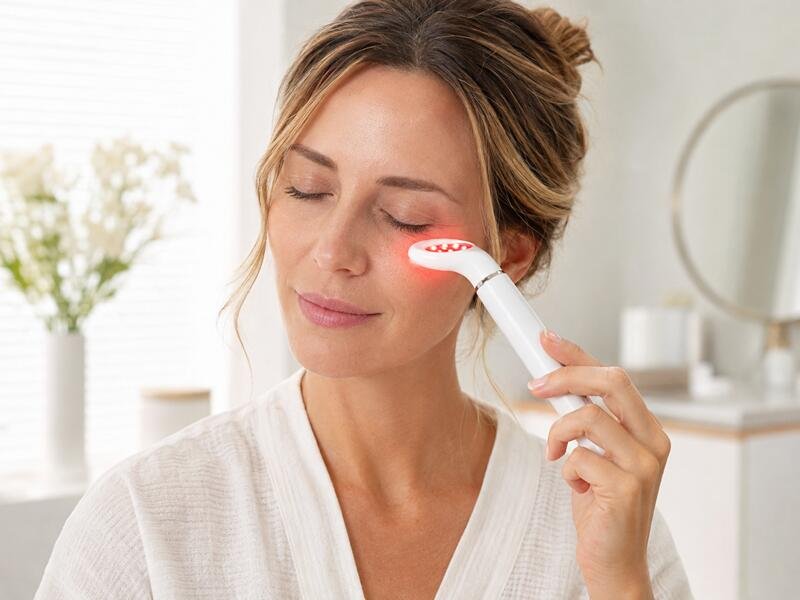
Handheld Eye Wands / Devices
Targeted, precision application to the periorbital area. Compact, travel-friendly format ideal for premium retail, subscription boxes, and gifting channels. Lower entry cost for consumers.
Channel fit: Retail, e-commerce, gifting
Price tier: $-$$
Certification need: CE, FCC
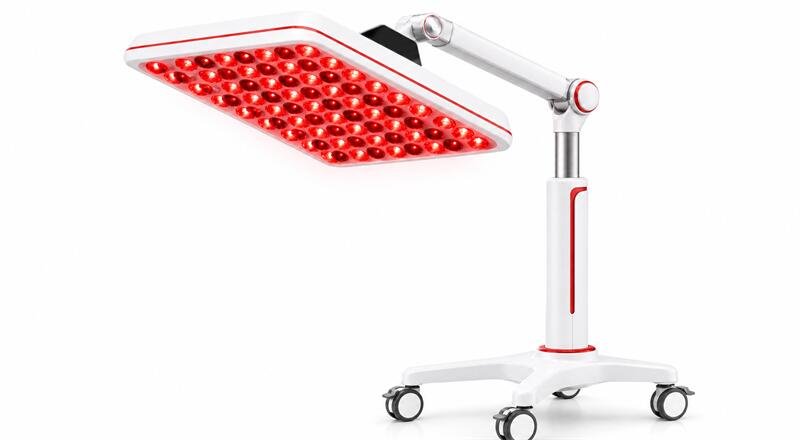
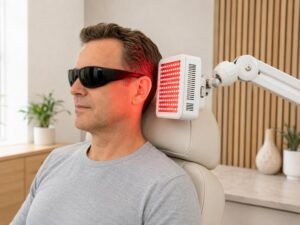
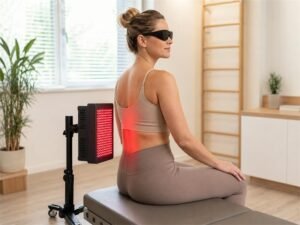
Professional Clinic Panels
High-irradiance desktop or overhead panels for clinic use. Faster treatment times and superior irradiance levels. Best for medspa, dermatology, and aesthetic clinic channels where per-session billing applies.
Channel fit: Clinics, medspa, physio
Price tier: $$$$
Certification need: CE, FDA 510(k), ISO 13485
OEM Note: MedLight supports custom product development across all three format categories. Whether you need a branded at-home eye wand or a clinic-grade multi-application panel, we can develop products tailored to your target channel’s requirements and price point expectations.
Buyer Considerations: What to Check Before Sourcing
As a procurement manager or brand owner evaluating RLT devices for dark circle applications, the following due-diligence checklist covers the key criteria for identifying high-quality, commercially viable products:
Verify Actual Wavelength Specifications
Confirm Irradiance at Treatment Distance
Evaluate LED Chip Quality and Lifespan
Assess Flicker Rate (Critical for Eye-Area Devices)
Review Thermal Management Design
Request Clinical Protocol Documentation
Regulatory and Safety Considerations
The regulatory pathway for RLT devices varies significantly by market and by intended use classification. Buyers must understand these differences to avoid costly compliance failures post-launch.
United States (FDA)
- ·Wellness/cosmetic claims: General Wellness Policy may apply
- ·Medical device claims: Requires 510(k) clearance (Class II)
- ·FCC Part 15 required for electronic devices
- ·IEC 62471 for photobiological safety near eyes
European Union (CE)
- ·CE marking required for market entry
- ·MDR 2017/745 if classified as medical device
- ·EMC Directive 2014/30/EU for electromagnetic compatibility
- ·IEC 60601-1 for electrical medical devices
Other Key Markets
- ·UK: UKCA marking post-Brexit
- ·Australia/NZ: TGA registration for therapeutic devices
- ·Canada: Health Canada Medical Device License
- ·ISO 13485 QMS a strong differentiator globally
Ocular Safety — Non-Negotiable
- ·All periorbital devices must meet IEC 62471 photobiological safety
- ·Protective eyewear should be provided or required
- ·Risk Group classification must be documented
- ·User instructions must include contraindications
MedLight Support: We assist clients with CE and FCC certification preparation for all device categories. Our engineering team can adapt product specifications and documentation to meet your target market’s regulatory requirements, reducing your time-to-compliance and market entry timeline.
Market Opportunity and ROI Outlook
Dark circles rank among the highest-demand aesthetic concerns globally, and demand is growing — driven by aging demographics, post-pandemic screen fatigue, and increased consumer awareness of non-invasive skincare options. Here’s why this is a strategically valuable product category for your portfolio:
$1.4B+
Estimated global market size for periorbital aesthetics treatments by 2026 (including devices and injectables)
62%
Of medspa clients report dark circles as a top-3 skin concern they would pay to address, per industry surveys
8-12×
Typical per-session revenue return on clinic-grade LED devices when offered as a standalone add-on service
Revenue Model Options by Channel
| Channel | Revenue Model | Avg. Margin | Key Driver |
|---|---|---|---|
| Medspa / Clinic | Device sale + per-session treatment revenue | 60-75% | Recurring patient visits, package upsell |
| D2C E-commerce | Private label device + consumables | 50-65% | Brand loyalty, repeat purchase, reviews |
| Retail / Wholesale | Volume distribution to resellers | 30-45% | Scale, shelf placement, trade programs |
| Wellness Centers / Spas | Package inclusion or add-on service | 55-70% | Membership programs, seasonal promotions |
Frequently Asked Questions
Common RFQ questions from brand owners, distributors, and procurement managers sourcing red light therapy devices for dark circle applications.
What is the minimum order quantity (MOQ) for OEM red light therapy eye devices?
Which wavelengths should I specify for a dark circle treatment device RFQ?
What certifications are required to sell RLT eye devices in the US and EU markets?
How long does it take from RFQ to first production sample for a custom eye LED device?
Timeline depends on the level of customization required:
- ·Standard OEM (existing platform, logo/packaging customization): 3-6 weeks to first sample
- ·Modified ODM (adjusted wavelengths, form factor tweaks): 6-10 weeks to first sample
- ·Fully custom design (new tooling, unique enclosure): 10-16 weeks to first sample
Mass production typically begins 4-8 weeks after sample approval, depending on order volume and component lead times.
Can you provide clinical evidence or white papers to support our product’s dark circle claims?
What is the difference between OEM and ODM for red light therapy eye devices, and which is right for my business?
OEM (Original Equipment Manufacturer) means you source an existing, proven device platform and apply your brand identity — logo, packaging, color, and user manual. Lower development cost and faster time-to-market. Best suited for brands entering the category or distributors seeking a proven product with private label branding.
ODM (Original Design Manufacturer) means MedLight designs and manufactures a product to your specific requirements — custom form factor, proprietary feature set, exclusive wavelength configuration. Higher upfront investment but results in a differentiated product you own. Best for established brands seeking a defensible product moat or unique clinical positioning. Most clients begin with OEM and transition to ODM after validating market demand.
How do I verify that an LED eye device is safe for periorbital use before placing an order?
Request the following documentation before committing to any periorbital LED device supplier:
- ·IEC 62471 photobiological safety test report (specifies Risk Group classification)
- ·Irradiance measurements at 5 cm, 10 cm, and 20 cm from the emitter surface
- ·Flicker percentage report (IEEE 1789 compliance preferred)
- ·Maximum surface temperature data under 20-minute sustained operation
- ·Third-party spectral measurement confirming actual emitted wavelengths
A credible manufacturer will provide all of these without hesitation. Absence of any item should be treated as a red flag.
What product formats are available for OEM dark circle RLT devices, and which sells best in medspa channels?
How many sessions does red light therapy typically require to show visible results on dark circles, and how does this affect device specification?
Does MedLight offer exclusivity agreements, and can I protect my OEM product design from being sold to competitors?
Yes. MedLight offers several levels of exclusivity depending on your order commitment and product configuration:
- ·Branding exclusivity: Your logo, packaging, and color scheme are not shared with other clients. Available on all OEM orders.
- ·Market exclusivity: MedLight agrees not to sell the same platform configuration to direct competitors in your defined territory. Requires minimum annual volume commitments.
- ·Full design exclusivity (ODM): Custom tooling and proprietary design owned by your brand. The product cannot be sold to any other party. Requires tooling cost investment and volume commitment.
All exclusivity terms are formalized in a written manufacturing agreement with NDA provisions. Discuss your requirements during initial RFQ to identify the most appropriate protection level for your business model.
Conclusion and Sourcing Recommendation
The Bottom Line for Buyers
Yes — red light therapy demonstrably helps with dark circles, particularly the vascular and structural subtypes that represent the majority of clinical presentations. The evidence is robust enough to support credible product positioning, and the mechanism of action is well understood and scientifically defensible.
For brand owners and distributors, this is not a fringe wellness trend — it is an established photobiomodulation application with a growing body of peer-reviewed evidence, strong consumer demand, and meaningful commercial margins across multiple distribution channels.
The key to success lies in product specification rigor (correct wavelengths, verified irradiance, safety certifications), regulatory alignment with your target markets, and positioning that accurately reflects the mechanism and expected outcomes.
Next Steps
Define Your Application and Channel
Identify whether you’re targeting at-home consumers, spa professionals, or clinic buyers. This determines the device format, power level, and regulatory pathway you’ll need.
Request Samples and Technical Documentation
Before committing to a production run, validate wavelength accuracy, irradiance, and build quality through third-party testing. A quality manufacturer will welcome this scrutiny.
Plan Your Regulatory Strategy Early
Certification timelines can be 3-9 months. Factor this into your product launch roadmap and work with your OEM partner on documentation from the prototype stage.
Align Claims with Evidence
Build your marketing around defensible claims: collagen stimulation, circulation improvement, skin rejuvenation. Reserve broader therapeutic claims for markets where you hold appropriate regulatory clearance.