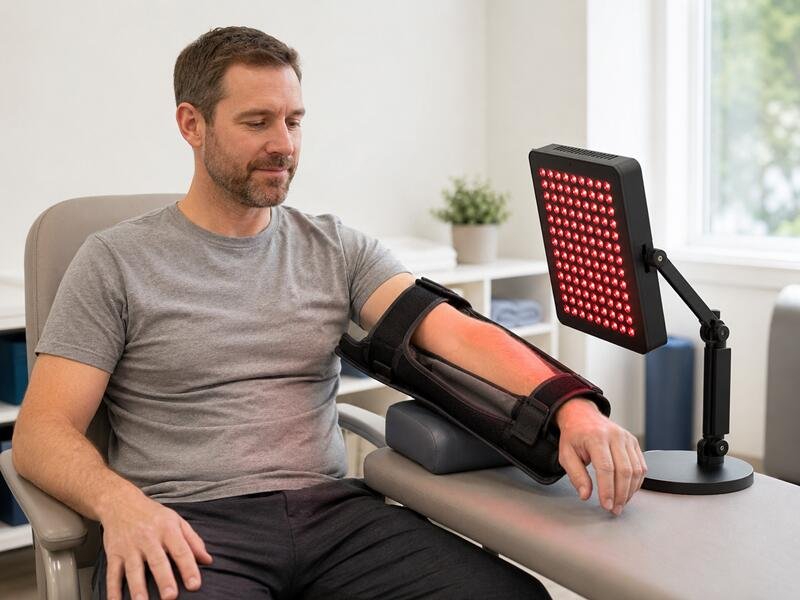
This article breaks down everything you need to know — from the underlying biology to the clinical data, device parameters, and the commercial implications for your product line.
What Is Red Light Therapy?
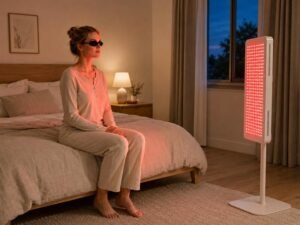
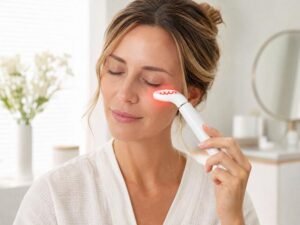
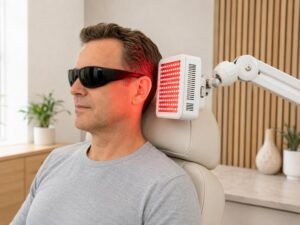
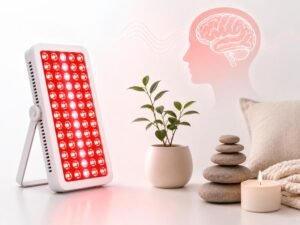
Red light therapy (RLT), also referred to as photobiomodulation (PBM) or low-level laser/light therapy (LLLT), involves exposing the body to specific wavelengths of red and near-infrared (NIR) light. Unlike UV light, these wavelengths are non-ionizing and non-thermal at therapeutic doses — meaning they penetrate tissue without causing heat damage.
Red Light (630-700 nm)
- Primarily affects surface tissue and skin
- Stimulates collagen synthesis
- Supports wound healing and inflammation reduction
- Effective for dermal and epidermal applications
Near-Infrared Light (700-1100 nm)
- Penetrates deeper — into muscle, joint, and bone tissue
- Stimulates mitochondrial activity in deeper cells
- Reduces oxidative stress in bone-adjacent tissue
- Critical for musculoskeletal and bone applications
The primary cellular target is cytochrome c oxidase (CCO), a photoreceptor enzyme in the mitochondrial respiratory chain. When stimulated by the right wavelengths, CCO triggers a cascade of cellular responses — increased ATP production, reduced reactive oxygen species (ROS), enhanced cellular proliferation, and modulated inflammatory signaling. These are exactly the mechanisms relevant to bone repair.
How Bones Heal: A Quick Overview
To understand how red light therapy might accelerate bone healing, it helps to understand the natural repair process. Bone healing occurs in four overlapping phases:
Hematoma Formation (Days 1-5)
Blood clot forms at the fracture site. Inflammatory signals recruit repair cells. Vascular disruption triggers healing cascade.
Fibrocartilaginous Callus (Days 5-11)
Fibroblasts and chondrocytes form a soft callus bridging the fracture. Collagen matrix is laid down. Angiogenesis begins.
Bony Callus Formation (Weeks 2-8)
Osteoblasts replace the soft callus with woven bone. Mineralization increases. The fracture site becomes progressively more rigid.
Bone Remodeling (Months to Years)
Osteoclasts and osteoblasts remodel the callus into lamellar bone. Bone regains its original strength and architecture.
Red light therapy has the potential to positively influence phases 1 through 3 — the most critical window for accelerating recovery and reducing complications.
The Science: Does Red Light Therapy Actually Help Broken Bones?
The short answer: Yes — with meaningful caveats.
Multiple preclinical studies (animal models) and a growing body of human clinical trials suggest that photobiomodulation can accelerate fracture healing, reduce pain, and improve functional recovery. However, outcomes depend heavily on wavelength, dosage, treatment timing, and fracture type.
Important for Buyers and Brand Owners
The evidence base is strong enough to support marketing claims for pain relief and recovery support — but claims about direct fracture healing acceleration should be framed carefully and in line with local regulatory guidelines (FDA, CE, etc.). Always work with your regulatory consultant when positioning devices in medical or quasi-medical markets.
The most compelling evidence comes from studies using NIR wavelengths in the 780-950 nm range, applied at doses of 1-4 J/cm², multiple times per week, beginning within the first week of fracture. This is a practical, achievable protocol for most professional-grade devices on the market today.
Clinical Evidence and Research Highlights
Here is a summary of key research findings that are relevant when evaluating the viability of red light therapy for bone healing applications:
Animal Model Studies (Rodents)
Strong Evidence
Multiple studies using rat and rabbit fracture models have demonstrated that PBM at 780-830 nm significantly accelerates callus formation, increases bone mineral density at the fracture site, and reduces healing time by up to 30-40% compared to controls.
Key studies: Bayat et al. (2001), Luger et al. (1998), Garavello-Freitas et al. (2003)
Human Clinical Trials — Tibial Stress Fractures
Moderate Evidence
A randomized controlled trial published in the Journal of Orthopaedic Research found that athletes with tibial stress fractures treated with 820 nm laser therapy returned to full activity significantly faster than the placebo group, with a mean reduction in recovery time of approximately 1.5-2 weeks.
Relevant for: Sports recovery facilities, rehabilitation clinics
Mandibular Fracture Recovery (Oral Surgery)
Strong Evidence
Studies in oral and maxillofacial surgery have shown that low-level laser therapy applied post-operatively to mandibular fractures significantly reduces swelling, pain, and promotes earlier bone consolidation, with histological evidence of enhanced osteoblast activity.
Relevant for: Dental and oral surgery recovery devices
Osteoporotic Fracture Models
Emerging Evidence
Research in osteoporotic bone models suggests PBM may be particularly beneficial where natural healing is compromised. Studies show improved osteoblast-to-osteoclast ratios and enhanced bone matrix quality — relevant for aging populations served by wellness and rehabilitation centers.
Relevant for: Senior wellness, rehabilitation, and pain management clinics
Research Consensus at a Glance
30-40%
Reduction in healing time reported in preclinical models
780-950nm
Most effective NIR wavelength range for bone-adjacent tissue
1-4 J/cm²
Optimal dose range for musculoskeletal photobiomodulation
Key Biological Mechanisms Behind Bone Repair
Understanding the mechanisms helps you communicate the value of your devices more accurately to clinic buyers, distributors, and end users. Here are the primary pathways through which red and NIR light influences bone healing:
Mitochondrial ATP Production
NIR light stimulates CCO in mitochondria, increasing ATP output — providing osteoblasts with the energy needed for active bone matrix synthesis.
Anti-Inflammatory Signaling
PBM modulates NF-κB and cytokine pathways, reducing excessive inflammation at the fracture site — which, if uncontrolled, can delay callus formation.
Osteoblast Proliferation
Light therapy promotes osteoblast differentiation and proliferation, accelerating the production of new bone matrix and increasing callus density.
Angiogenesis Enhancement
PBM upregulates VEGF expression, promoting new blood vessel formation at the fracture site — critical for delivering nutrients and repair cells to healing bone.
Collagen Synthesis
Increased collagen type I production provides the structural scaffold for mineralization, improving the quality and tensile strength of the healing callus.
Nitric Oxide Release
PBM stimulates localized nitric oxide production, improving microcirculation and reducing ischemic stress in the periosteum and surrounding soft tissue.
Device Specifications That Matter for Bone Applications
Not all red light therapy devices are equal. If you’re sourcing or developing a device specifically positioned for fracture recovery, rehabilitation, or musculoskeletal applications, these are the technical parameters you must evaluate:
| Parameter | Recommended Range | Why It Matters |
|---|---|---|
| Wavelength | 810 nm, 830 nm, 850 nm (NIR) | Deep tissue penetration required to reach bone and periosteum |
| Power Density (Irradiance) | 50-150 mW/cm² | Sufficient irradiance to deliver therapeutic dose within practical session times |
| Energy Dose (Fluence) | 1-4 J/cm² per session | Optimal therapeutic window — too low is ineffective, too high may inhibit healing |
| Treatment Frequency | 3-5 sessions per week | Consistent stimulation needed during active healing phases (weeks 1-6) |
| Beam Coverage | Targeted (wearable belt or panel) | Precise delivery over fracture site; wearable designs improve compliance |
| LED vs. Laser | LED (for commercial devices) | LEDs are safer, scalable, and cost-effective for OEM/ODM production |
| Pulsing Mode | Continuous or 10-40 Hz pulsed | Some research suggests pulsed delivery enhances cellular response in bone tissue |
⚠ The Biphasic Dose Response (Arndt-Schulz Law)
A critical concept for buyers and product developers: red light therapy follows a biphasic dose-response curve. Low doses stimulate; high doses inhibit. This means your device must be configurable to deliver the correct therapeutic dose — not simply “more power.” When evaluating or specifying devices, ensure irradiance and session time are independently adjustable, and that the device documentation includes dose calculation guidance.
Buyer Perspective: What This Means for Your Business
As a brand owner, distributor, or procurement manager, the question isn’t just “does it work?” — it’s “how do I build a credible, compliant, and commercially viable product around this application?” Here’s how to think about it:
Market Positioning
Bone healing acceleration is a high-value claim that differentiates your product in rehabilitation and sports medicine markets. However, in most markets, direct medical claims require clinical substantiation and regulatory approval. The safer and equally compelling positioning is: “supports recovery,” “reduces downtime,” “aids musculoskeletal healing,” and “accelerates return to activity” — all of which are supported by the evidence base.
Regulatory Compliance
Devices marketed for fracture healing may require Class II medical device registration (FDA 510(k) in the US, CE Class IIa or IIb in Europe). If you’re targeting professional clinic markets, ensure your OEM partner can support the technical file documentation required for certification. MedLight supports CE and FCC certification processes as part of our OEM/ODM service.
Product Format Selection
For bone healing applications, the most effective product formats are wearable therapy belts (for limb fractures and back injuries), targeted panel devices (for clinic use), and handheld applicators (for smaller fracture sites). Wearable formats offer the highest patient compliance for at-home recovery protocols — a growing market segment for post-surgical and sports injury recovery.
Differentiation Through Protocol Documentation
Many buyers overlook this: the device alone doesn’t sell. What sells is the complete solution — device + clinical protocol + training materials. Providing your clinic customers with evidence-based treatment protocols (dosing, frequency, duration, contraindications) dramatically increases perceived value and reduces after-sales issues.
Practical Use Cases by Facility Type
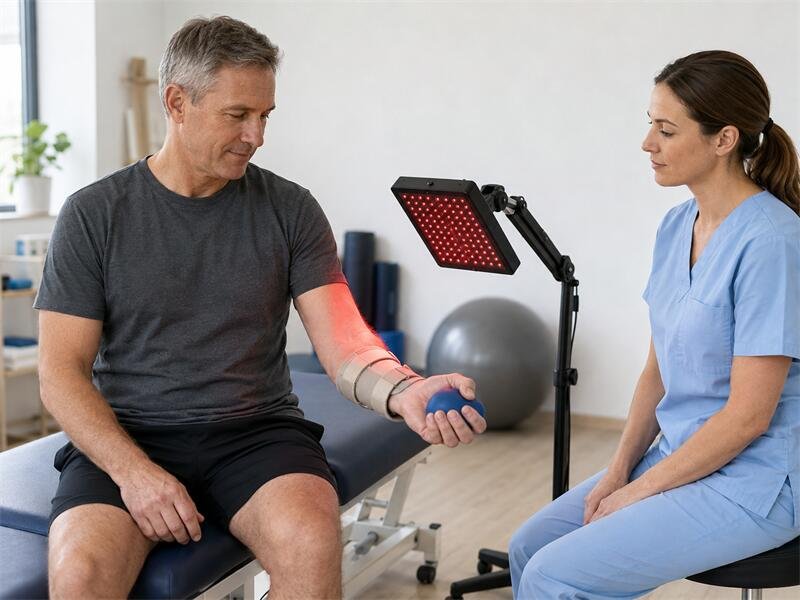
Physical Therapy Clinics
Post-fracture rehabilitation protocols, reducing recovery time for patients with limb, rib, and vertebral fractures. Complement to physiotherapy exercises.
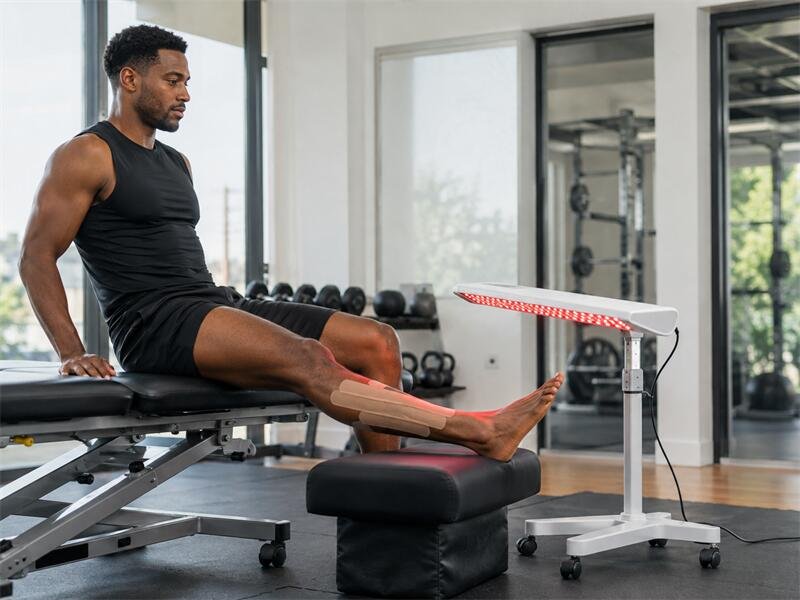
Sports Recovery Facilities
Stress fracture recovery for athletes. Accelerating return-to-play timelines. Preventive bone density support for high-impact sport athletes.
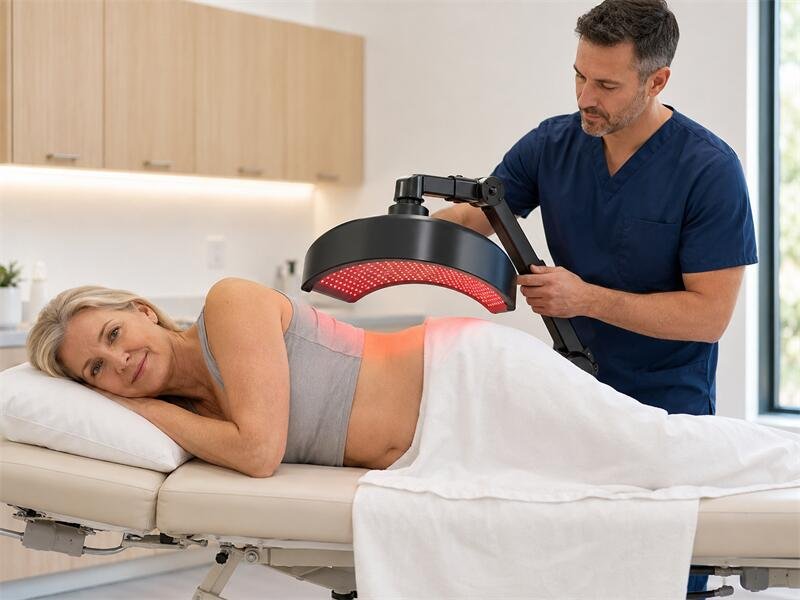
Pain Management Clinics
Non-pharmacological pain relief for fracture patients. Reducing NSAID dependency during healing. Adjunct to standard orthopedic care.
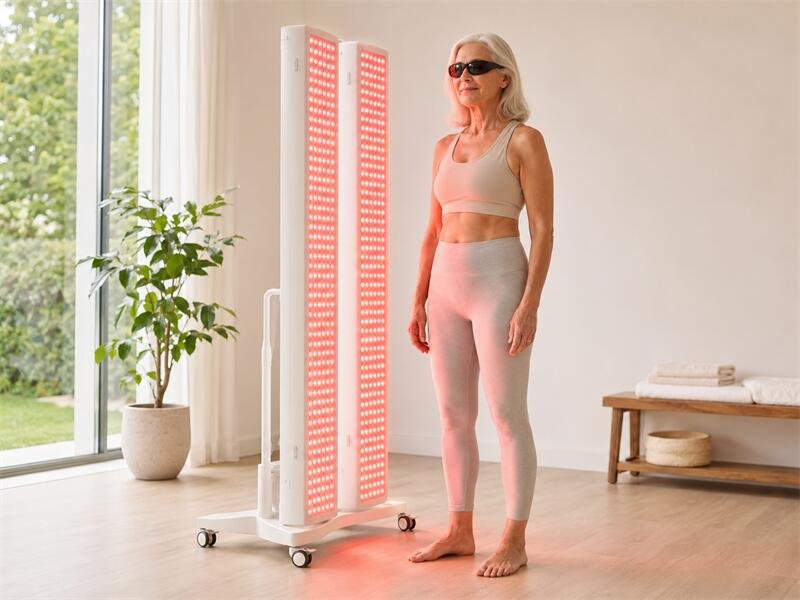
Wellness Centers
Bone health maintenance for aging clients. Complementary therapy for osteoporosis management. Positioned as proactive skeletal wellness.
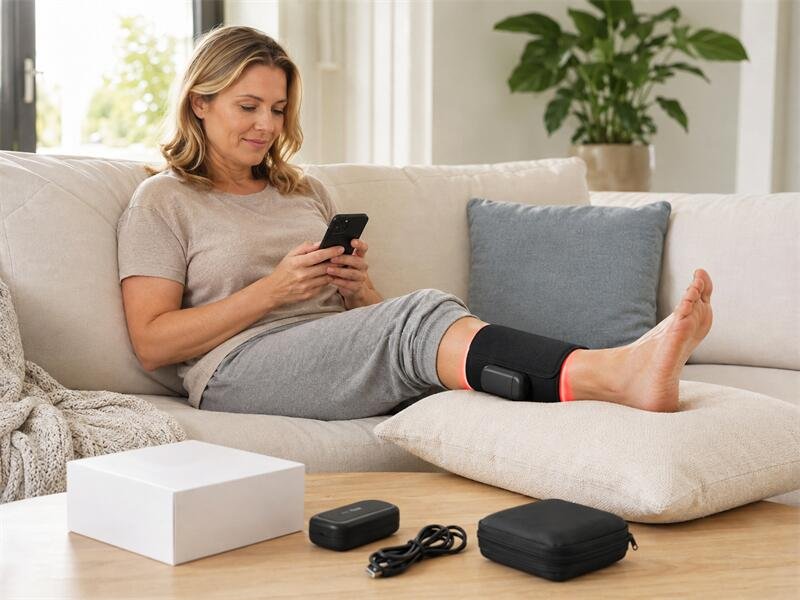
Home Recovery (DTC Brands)
Wearable devices for patients discharged post-fracture surgery. Subscription-based recovery programs. High growth segment for direct-to-consumer brands.
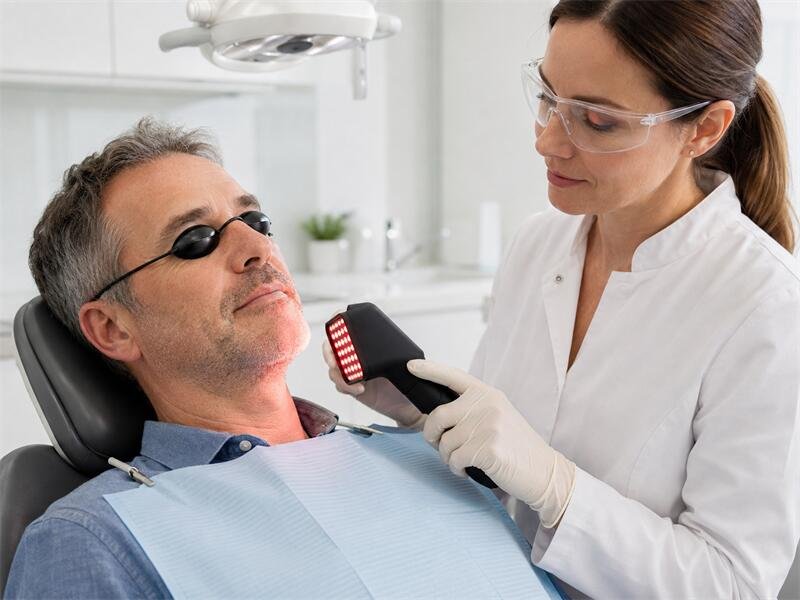
Post-Surgical Clinics
Orthopedic post-op recovery support. Dental implant and oral surgery bone integration. Accelerated healing following reconstructive procedures.
Frequently Asked Questions
How long does it take to see results with red light therapy for a broken bone?
Clinical studies suggest measurable improvements in pain and swelling within the first 1-2 weeks of consistent treatment. Radiological evidence of accelerated callus formation typically appears at 4-6 weeks. Full benefits are most pronounced when treatment begins within the first week of fracture and continues through the active healing phase (approximately 6-8 weeks).
Is red light therapy safe to use over a cast or orthopedic hardware?
Plaster casts significantly attenuate NIR light penetration and are generally not suitable for treatment through. Fiberglass casts allow some light transmission. Treatment is most effective when applied directly to skin adjacent to or over the fracture site. Metallic orthopedic implants do not contraindicate treatment — NIR light does not interact adversely with titanium or stainless steel hardware. Always advise end users to consult their orthopedic physician before beginning therapy.
Can red light therapy replace conventional fracture treatment?
No. Red light therapy is an adjunctive (complementary) therapy, not a replacement for immobilization, surgical fixation, or standard orthopedic care. Its role is to accelerate and optimize the natural healing process — not to substitute for it. All marketing and product documentation should clearly position the device as a supplementary tool used alongside conventional medical treatment.
What is the difference between red light and near-infrared for bone healing?
For bone healing specifically, near-infrared (NIR) light in the 810-850 nm range is significantly more effective than visible red light (630-680 nm) due to its superior tissue penetration depth (4-6 cm vs. 1-2 cm). Visible red light primarily benefits the overlying soft tissue and skin, while NIR reaches the periosteum and cortical bone. The most effective devices for bone applications combine both wavelengths to address the full tissue stack from surface to bone.
What device format works best for bone healing applications?
Wearable therapy belts or wraps are the most practical format for limb and joint fractures, as they maintain consistent contact and dose delivery over the treatment area. For clinic use, targeted panel devices with adjustable positioning are preferred for their versatility. Handheld devices are suitable for smaller fracture sites (e.g., wrist, ankle, hand). For spinal fractures, full-body or large panel systems allow treatment of the affected vertebral region.
Can red light therapy help with osteoporosis-related bone density loss?
Emerging preclinical and early clinical research suggests that red light and NIR therapy may stimulate osteoblast activity and support bone mineral density maintenance in osteoporotic bone. Animal models have demonstrated increased trabecular bone volume and improved bone microarchitecture following PBMT (photobiomodulation therapy) protocols. While not a standalone treatment for osteoporosis, it may serve as a useful adjunct to pharmacological therapy, calcium supplementation, and weight-bearing exercise. Larger randomized controlled trials in human subjects are still needed to establish definitive clinical guidelines.
How does red light therapy promote bone healing at the cellular level?
At the cellular level, red and near-infrared light photons are absorbed by cytochrome c oxidase (CCO) in the mitochondrial respiratory chain, triggering a cascade of biological responses. This includes upregulated ATP production, increased nitric oxide (NO) release, modulation of reactive oxygen species (ROS), and activation of transcription factors such as NF-κB. For bone tissue specifically, these mechanisms translate into enhanced osteoblast proliferation and differentiation, increased collagen synthesis, accelerated angiogenesis at the fracture site, and suppression of osteoclast-mediated bone resorption — all of which contribute to faster and stronger bone repair.
How many sessions of red light therapy are recommended per week for bone healing?
Based on published clinical and preclinical research, the most commonly studied protocols for bone healing involve daily sessions (5-7 days per week) of 10-20 minutes per treatment area, delivering a fluence of 4-10 J/cm² per session. Consistent daily application during the acute and subacute healing phases (weeks 1-6 post-fracture) yields superior outcomes compared to intermittent use. Some protocols use twice-daily sessions in the initial inflammatory phase. It is important to note that more is not always better — exceeding recommended energy doses (biphasic dose-response effect) can inhibit rather than promote cellular activity.
Is red light therapy effective for stress fractures in athletes?
Red light and NIR therapy show promising results for stress fracture recovery in athletic populations. Stress fractures — caused by repetitive mechanical loading rather than acute trauma — involve microdamage accumulation in cortical bone that the body struggles to repair fast enough. PBMT supports this repair process by stimulating osteoblast activity and local microcirculation, potentially shortening return-to-play timelines. Sports medicine clinics increasingly incorporate targeted NIR panels or wearable devices into rehabilitation protocols for tibial, metatarsal, and navicular stress fractures. Athletes should continue relative rest and load management as the primary intervention, with red light therapy used to accelerate the biological healing response.
Are there any contraindications for using red light therapy on bone injuries?
Red light therapy is generally considered safe with a well-established safety profile, but several contraindications and precautions apply in the context of bone injuries. Treatment should be avoided directly over active malignancies or metastatic bone lesions, as photobiomodulation may theoretically stimulate tumor cell proliferation. Caution is advised in patients with active infections at the fracture site, open wounds with active bleeding, or photosensitivity disorders. Direct eye exposure should always be prevented. Pregnant patients should avoid treatment over the abdomen and lumbar spine. Patients on photosensitizing medications (e.g., certain antibiotics, NSAIDs, retinoids) should consult their prescribing physician before beginning therapy. Product B2B documentation should include a comprehensive contraindications section to ensure end-user compliance and regulatory adherence.
Conclusion
So here’s the short version: bones like light. Not in a “leave me by the window” houseplant kind of way, but in a deeply cellular, mitochondria-firing, collagen-synthesizing kind of way. The evidence behind near-infrared photobiomodulation for fracture healing is credible, growing, and — dare we say it — pretty hard to ignore. Multiple biological mechanisms confirmed, preclinical results consistently positive, and human clinical data increasingly on board. Your skeleton, it turns out, has been waiting for this conversation.
For brand owners, distributors, and procurement managers, this isn’t just interesting science — it’s a genuine market opportunity hiding in plain sight. Rehabilitation, sports medicine, senior wellness: these are categories where “helps bones heal faster” is not a hard sell. The trick is getting the wavelengths right, the dosing dialed in, and the regulatory positioning airtight. Details matter. Shortcuts don’t.
That’s exactly where MedLight comes in — minus the lab coat, plus a very capable engineering team. We help brand owners and distributors develop OEM and ODM light therapy devices built for specific clinical applications, including musculoskeletal and bone recovery. From NIR wavelength selection and power density calibration to CE certification support and private label packaging, we handle the hard parts so you can focus on the fun part: building a product people actually trust.