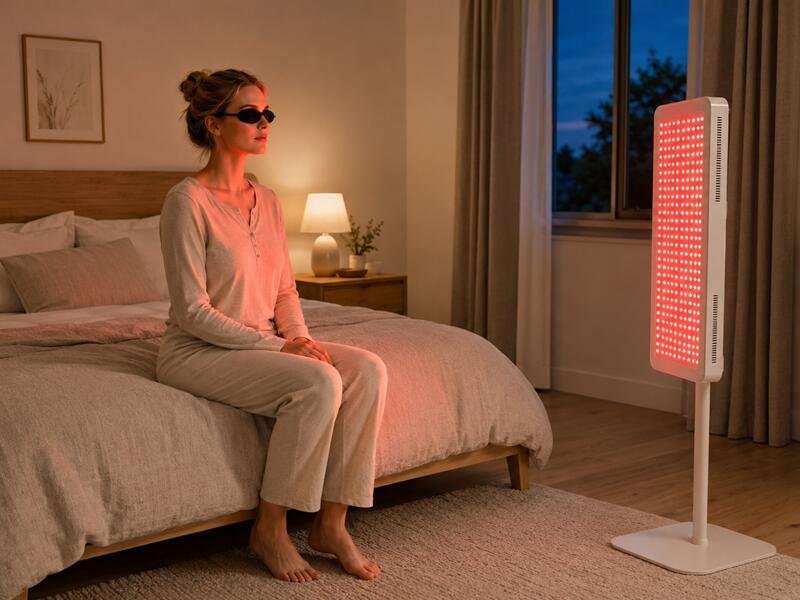
Sleep disorders affect an estimated 1 in 3 adults globally. Insomnia, poor sleep quality, and disrupted circadian rhythms are no longer niche medical concerns — they are mainstream wellness priorities driving billion-dollar market demand. For brand owners, distributors, and wellness equipment procurement managers, the question is not just whether red light therapy helps with sleep. The real question is: how credible is the science, how real is the demand, and how do you source the right device?
This guide answers all three questions. We cover the biology, the clinical data, the device specifications, and the sourcing considerations that matter when building or expanding a sleep-focused product portfolio. Whether you are running a wellness spa, managing a distributor network, or developing your own branded therapeutic device line, this article gives you a clear-eyed view of the opportunity.
How Red Light Therapy Affects Sleep Biology
Red light therapy — also called photobiomodulation (PBM) or low-level laser/light therapy (LLLT) — uses specific wavelengths of light, typically in the 630-700 nm (red) and 800-1100 nm (near-infrared, or NIR) ranges, to interact with biological tissue at the cellular level.
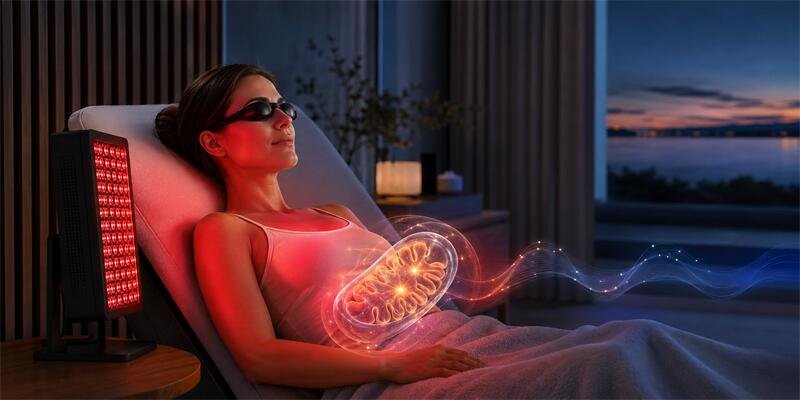
Unlike blue light (400-490 nm), which suppresses melatonin and disrupts the circadian clock, red and near-infrared light wavelengths interact differently with human photoreceptors and cellular machinery. The primary interaction happens at the mitochondrial level, specifically through a photoacceptor enzyme called cytochrome c oxidase (CCO), which absorbs red and NIR wavelengths and uses that energy to increase ATP (adenosine triphosphate) production.
Key Biological Pathways Linked to Sleep
- Melatonin modulation: Red light does not suppress melatonin the way blue light does. Evening exposure to red wavelengths avoids the melatonin-inhibiting signal, potentially supporting the body’s natural sleep onset.
- Mitochondrial energy production: Enhanced ATP synthesis supports cellular repair processes that predominantly occur during deep sleep — creating a bi-directional relationship between PBM and sleep quality.
- Cortisol regulation: Chronic stress elevates cortisol and delays sleep onset. Early evidence suggests PBM may help downregulate stress markers, supporting the body’s transition into rest states.
- Nitric oxide release: Red light stimulates nitric oxide production, which has vasodilatory and relaxation effects that may contribute to pre-sleep physical calm.
Clinical Evidence Worth Sharing with Buyers
Understanding the state of clinical evidence is essential — both for making informed purchasing decisions and for communicating benefits to downstream customers.
Athlete Sleep Quality (2012, CJSM)
A randomized controlled trial on Chinese female basketball players showed that 14 nights of whole-body red light therapy (660 nm, 30 min/session) significantly improved sleep quality scores and increased serum melatonin levels compared to controls.
Insomnia & Circadian Disruption
Multiple pilot studies indicate that red light exposure in the evening — as opposed to blue-spectrum screens — preserves natural melatonin onset timing, reducing sleep latency (time to fall asleep) in participants with mild insomnia.
Pain-Related Sleep Disruption
A well-documented secondary benefit: patients using PBM for chronic pain often report improved sleep as a downstream outcome. Reduced pain burden removes one of the most common barriers to restorative sleep.
Mood, Anxiety & Sleep
Photobiomodulation applied to the brain (transcranial PBM) shows early promise in reducing anxiety and depressive symptoms — both major contributors to sleep disturbance. Consumer-facing devices in this category are gaining regulatory attention.
Buyer Note: The body of evidence is growing but not yet at the scale of pharmaceutical-grade clinical trials. The existing studies are generally small to medium in sample size. This is typical for medical device categories at this stage of market development. The scientific basis is solid; the commercial messaging should be calibrated accordingly — focusing on “supports sleep quality” and “promotes recovery” language rather than disease treatment claims.
Melatonin, Mitochondria & Circadian Rhythm
Understanding the specific mechanisms allows you to craft credible educational content and evaluate whether a manufacturer’s product specifications actually deliver the intended biological effect.
Melatonin Preservation
The pineal gland releases melatonin in response to darkness. Blue light (from screens and LEDs) suppresses this release by activating melanopsin-containing retinal ganglion cells. Red light wavelengths (630-700 nm) do not significantly activate melanopsin, meaning evening exposure to red light allows melatonin production to proceed normally. This is foundational to why evening red light therapy sessions may accelerate sleep onset without pharmaceutical intervention.
Mitochondrial ATP Production
Cytochrome c oxidase absorbs red and NIR photons, triggering an increase in mitochondrial membrane potential and electron transport chain activity. This results in higher ATP output. During deep, slow-wave sleep, the body performs its most intensive cellular repair and memory consolidation. Higher cellular energy availability means the body can execute these processes more efficiently, resulting in more restorative sleep cycles.
Circadian Rhythm Entrainment
Circadian rhythms are regulated by the suprachiasmatic nucleus (SCN) in the hypothalamus, which responds to light signals to synchronize the body’s 24-hour internal clock. Consistent morning red light exposure can serve as a positive zeitgeber (time cue), reinforcing the body’s natural wake-dark cycle. This is especially valuable for shift workers, frequent travelers, and anyone experiencing circadian misalignment.
Inflammation Reduction
Systemic inflammation is a well-established disruptor of sleep architecture. Elevated pro-inflammatory cytokines (IL-6, TNF-α) are correlated with poorer sleep quality and increased wakefulness. PBM has demonstrated anti-inflammatory effects in multiple tissue types. By reducing systemic and local inflammation, red light therapy may remove a biochemical barrier to restorative sleep — particularly relevant for athletes, post-surgical patients, and aging adults.
Red Light vs. Blue Light: What the Wavelength Gap Means
One of the most important educational messages for your customers — and a key differentiator for your product — is the contrast between red/NIR light and the blue-spectrum light that dominates modern living environments.
| Factor | Red / NIR Light (630-1100 nm) | Blue Light (400-490 nm) |
|---|---|---|
| Melatonin Impact | Does not suppress melatonin | Significantly suppresses melatonin production |
| Circadian Effect | Supports natural rhythm entrainment | Delays circadian phase (pushes sleep onset later) |
| Cellular Effect | Stimulates mitochondrial energy production (ATP) | Primarily retinal/visual system stimulation |
| Evening Use | Compatible with pre-sleep routines | Should be avoided in the 2-3 hours before sleep |
| Skin Penetration | Deep tissue penetration (NIR up to several cm) | Superficial (epidermis only) |
| Therapeutic Use | Pain, recovery, sleep, skin, hair growth | Acne treatment, mood (seasonal, morning use only) |
Strategic Insight for Brand Owners: The red-vs-blue contrast is one of the most intuitive and compelling marketing narratives available in the light therapy space. Consumers understand “blue light bad for sleep” from screens. Positioning your red light therapy product as the antidote — biologically grounded, not just a wellness trend — creates a differentiated value proposition that resonates across wellness, fitness, and clinical channels.
Device Specs That Actually Drive Sleep Benefits
Not all red light therapy devices are created equal. These are the technical parameters that determine whether a device delivers real physiological benefit or merely provides a placebo aesthetic experience.
The most studied wavelength for surface-level photobiomodulation. Optimally absorbed by cytochrome c oxidase in skin and superficial tissue. Ideal for relaxation and pre-sleep applications.
Penetrates deeper into muscle, joint, and neural tissue. Supports systemic recovery and anti-inflammatory effects that contribute indirectly to sleep quality. Often combined with 660 nm in dual-wavelength panels.
The therapeutic window for most PBM applications. Below 10 mW/cm² may produce insufficient effect. Above 100 mW/cm² risks photoinhibition. For sleep applications, moderate irradiance (20-60 mW/cm²) with longer sessions is commonly used.
Typical protocol for sleep-related applications. Shorter than wound-healing or pain applications. Devices should include session timers and auto-shutoff for consumer safety and ease of use.
Continuous wave (CW) is standard. Some protocols use pulsed modes (10-40 Hz) for neurological applications including sleep. If your target market includes clinical or advanced wellness buyers, pulsed mode adds significant value.
Full-body panels produce systemic effects including broad anti-inflammatory response and whole-body cellular stimulation. For sleep applications, larger treatment areas are associated with stronger melatonin and cortisol modulation outcomes.
Procurement Checklist: Sleep Device Minimum Specs
- Dual wavelength: 660 nm + 850 nm
- Irradiance: ≥ 20 mW/cm² at treatment distance
- Third-party irradiance test report
- Session timer with auto-shutoff
- EMF shielding certification
- CE and/or FCC compliance documentation
- No significant UV output (UV filter or LED-only design)
- Flicker-free (low ripple) power supply
Who’s Buying Sleep-Focused Light Therapy
The global sleep economy was valued at over $585 billion in 2023 and continues to grow. Within this, non-pharmaceutical sleep interventions are among the fastest-growing categories. Red light therapy sits at the intersection of multiple high-value buyer segments.
Wellness Spas & Saunas
Increasingly adding light therapy rooms as premium service offerings. Sleep improvement is a key selling point for high-ticket evening wellness programs and membership packages.
High Volume Potential
Fitness & Sports Recovery
Elite athletes and performance-focused gym members understand the relationship between sleep and recovery. Red light therapy fits naturally into post-workout recovery protocols and sleep optimization stacks.
Premium Pricing Accepted
Medical Aesthetics & MedSpas
Sleep quality directly impacts skin health and treatment outcomes. Medspa clients investing in anti-aging treatments are prime candidates for sleep-enhancing red light protocols as an add-on or standalone service.
High Lifetime Value Clients
Physical Therapy & Rehabilitation
Chronic pain patients with sleep disturbance represent a significant underserved population. Red light therapy addresses both conditions simultaneously — making it a clinically compelling and economically efficient solution.
Insurance Trend to Watch
Direct-to-Consumer Brands
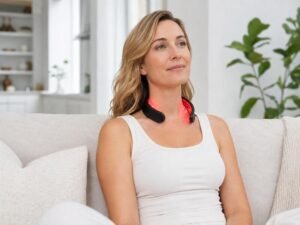
Home-use devices positioned around sleep health are a high-growth e-commerce category. Portable panels, wearable belts, and compact tabletop units with sleep-focused positioning drive strong repeat purchase rates.
Scale Quickly via DTC
Corporate Wellness Programs
Forward-thinking employers are investing in employee sleep health as a productivity and retention strategy. Bulk procurement of sleep-focused wellness devices for on-site wellness rooms is an emerging B2B channel.
Emerging B2B Channel
Building a Sleep Product Line: OEM Considerations
For those looking to develop or white-label a sleep-focused red light therapy product, here are the critical OEM/ODM considerations that determine product success in market.
Recommended Product Types by Channel
| Product Type | Best Channel Fit | Key Features for Sleep | MOQ Range |
|---|---|---|---|
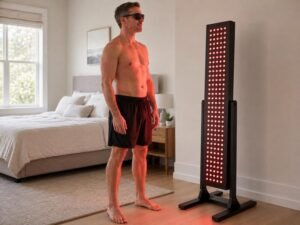
| Full-Body Panel | Spas, clinics, gyms | 660+850 nm, 1000W+, timer, stand | 10-50 units |
| Tabletop Panel (Mid-size) | DTC, wellness brands | 660+850 nm, 300-500W, compact design | 50-200 units |
| Wearable Sleep Mask / Belt | DTC, sleep brands | NIR dominant, soft materials, flexible LEDs | 100-500 units |
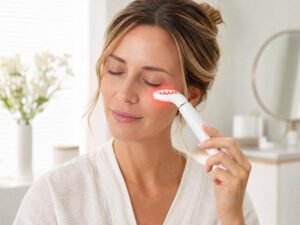
| Handheld / Spot Device | Retail, pain + sleep combo | Dual-wavelength, portable, rechargeable | 200-1000 units |
What to Specify with Your OEM Manufacturer
Wavelength Configuration
Specify whether you need single (660 nm or 850 nm), dual (660+850 nm), or multi-wavelength configurations. For sleep-specific positioning, dual-wavelength devices offer the strongest evidence base and marketing story.
UI/UX for Sleep Protocols
Request pre-programmed sleep protocols (session length, mode selection) on device firmware. Consider low-brightness UI displays and warm-toned indicator lights — bright blue LEDs on a sleep device undermine the product’s core purpose.
Safety & Compliance Documentation
For US distribution: FCC certification. For EU/UK: CE marking (LVD + EMC). For medical channel positioning: ISO 13485 manufacturing certification. Ensure your OEM can provide all relevant documentation before you finalize purchase orders.
Private Label & Packaging
Work with your OEM to develop sleep-themed packaging that communicates the science accessibly. Include QR codes linking to usage protocols, clinical references, and brand support content. This reduces post-sale support burden and increases perceived value.
Third-Party Testing
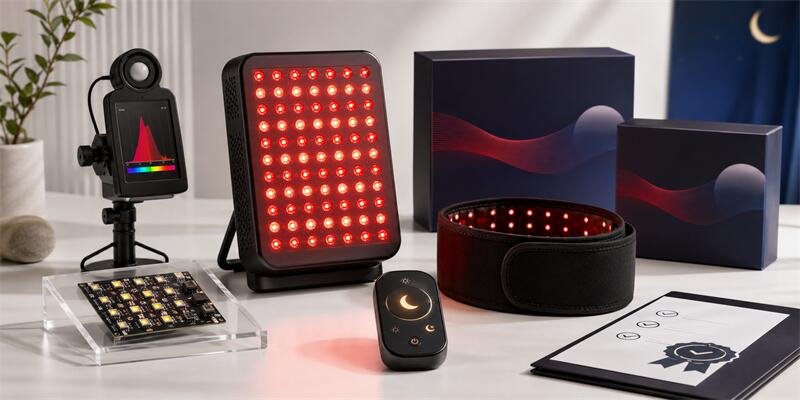
Request independent irradiance measurement reports at specified treatment distances (typically 6 inches and 12 inches). Verify LED chip quality (Epistar, OSRAM, or equivalent). Flicker measurement (to verify low-ripple power supply) is critical for devices marketed for therapeutic use.
Claims, Compliance & Regulatory Watch-Outs
This is arguably the most important section for anyone new to the light therapy category. Getting this wrong can result in product seizure, market withdrawal, or significant legal liability.
Safe Claims to Make
- “Supports healthy sleep patterns”
- “Promotes relaxation and recovery”
- “Supports the body’s natural circadian rhythm”
- “May help improve sleep quality as part of a wellness routine”
- “Used by athletes for post-workout recovery and sleep”
- “Non-pharmaceutical approach to sleep support”
Claims to Avoid
- “Treats insomnia” (disease claim)
- “Cures sleep disorders”
- “FDA-approved for sleep treatment” (unless true)
- “Clinically proven to eliminate sleep problems”
- “Replaces sleep medication” or “drug-free insomnia cure”
- Specific melatonin increase percentage claims without citing study
Regulatory Framework Summary
- United States (FDA): Most consumer red light therapy devices are regulated as Class II medical devices under 21 CFR Part 880. General wellness claims (not disease-specific) typically do not require FDA clearance. Verify with your regulatory counsel.
- European Union (CE): Devices must comply with the Medical Device Regulation (MDR 2017/745) if making health claims, or Low Voltage Directive (LVD) / EMC Directive for general consumer electronics.
- United Kingdom: Post-Brexit, UKCA marking required for UK market distribution.
Common Questions, Answered
How long does it take to see sleep improvements from red light therapy?
Most users and study participants report noticeable changes within 2-4 weeks of consistent nightly use. The 14-day athlete study showed statistically significant improvements in sleep quality scores at the end of the protocol period. Individual results vary based on baseline sleep health, session consistency, device specifications, and protocol adherence.
Should red light therapy be used in the morning or evening for sleep benefits?
Both timing approaches have merit. Morning use helps entrain the circadian clock — acting as a consistent light-based wake signal that, in turn, sets up a more reliable sleep onset 14-16 hours later. Evening use (1-2 hours before bed) takes advantage of melatonin preservation — red light does not suppress melatonin the way blue-spectrum light does, allowing the body’s natural sleep hormone to rise undisturbed. Many protocols recommend evening use specifically for sleep-onset difficulties.
Can red light therapy help with sleep apnea?
There is currently insufficient clinical evidence to support red light therapy as a direct treatment for obstructive sleep apnea. Sleep apnea is a structural and neurological condition that typically requires CPAP therapy, oral appliances, or surgical intervention. Red light therapy may support overall sleep quality and reduce inflammation in affected tissue, but brands should not make sleep apnea treatment claims. Refer customers with suspected sleep apnea to a qualified sleep specialist.
Is red light therapy safe to use every night?
Yes, within recommended parameters. Red light therapy has a strong safety profile when used as directed. Daily use at appropriate irradiance levels (20-100 mW/cm²) for 10-20 minute sessions is generally considered safe for healthy adults. The therapy does not carry the risks associated with UV exposure. Eye protection is recommended for facial or near-face applications. Individuals with photosensitive medical conditions or taking photosensitizing medications should consult a physician before use.
What is the minimum order quantity for a private-label sleep device?
Minimum order quantities vary by product type and manufacturer. For full-body clinic panels, MOQs typically start at 10-50 units for private label. Consumer-grade tabletop devices typically start at 50-200 units. Wearable and handheld devices often have higher MOQs (100-500 units) due to component complexity. Working with an experienced OEM/ODM partner who can support low-volume initial runs with scalability options is strongly recommended for brands entering the category.
What wavelengths of red light are most effective for improving sleep?
Research points to wavelengths in the 630-660 nm (red) and 810-850 nm (near-infrared) ranges as the most clinically relevant for sleep-related benefits. Red wavelengths (630-660 nm) are particularly associated with melatonin preservation and circadian entrainment because they do not activate the melanopsin photoreceptors responsible for suppressing melatonin production. Near-infrared wavelengths (810-850 nm) penetrate deeper into tissue, supporting mitochondrial energy production and systemic recovery that may indirectly improve sleep quality. Devices combining both spectra are commonly used in sleep-focused protocols.
Does red light therapy increase melatonin levels naturally?
Red light therapy does not directly stimulate melatonin synthesis, but it supports higher melatonin levels by avoiding the suppression caused by blue and white light exposure. The key mechanism is the absence of short-wavelength light: because red and near-infrared wavelengths do not activate the ipRGC (intrinsically photosensitive retinal ganglion cell) pathway, the pineal gland is free to ramp up melatonin production in the evening without interference. Some studies have also observed elevated serum melatonin following whole-body red light exposure, suggesting a possible stimulatory effect, though this pathway requires further investigation. Replacing evening screen and overhead lighting with red light sources is a practical application of this principle.
Can red light therapy improve deep sleep and REM sleep stages?
Emerging evidence suggests red light therapy may positively influence sleep architecture, including slow-wave (deep) sleep and REM duration. The proposed mechanisms include enhanced melatonin availability, reduced systemic inflammation, and improved mitochondrial function — all of which contribute to the hormonal and neurological conditions that support restorative sleep stages. The 2012 study on elite female basketball players noted improvements in sleep quality scores and serum melatonin that are consistent with deeper, more consolidated sleep. However, polysomnographic data specifically tracking stage-by-stage changes from red light therapy remains limited, and more controlled trials are needed before definitive claims about deep sleep or REM enhancement can be made.
How does red light therapy fit into a broader sleep hygiene routine?
Red light therapy works best as a complementary tool within a comprehensive sleep hygiene strategy rather than a standalone solution. It pairs naturally with practices such as maintaining a consistent sleep-wake schedule, limiting blue light exposure from screens in the evening, keeping the bedroom cool and dark, and avoiding caffeine after mid-afternoon. A recommended integration approach: use a red light panel for 10-20 minutes in the evening as part of a wind-down routine, ideally 60-90 minutes before bed, while simultaneously dimming overhead lights and reducing screen time. This combined approach leverages both the melatonin-preserving properties of red light and the behavioral cues that signal the brain to prepare for sleep, producing a synergistic effect that neither strategy achieves as effectively in isolation.
Sourcing Checklist & Next Steps
The answer to “does red light therapy help with sleep?” is a qualified but compelling yes. The underlying science is credible, the clinical evidence is encouraging and growing, and the market demand is substantial and accelerating. The opportunity is clear: sleep-focused red light therapy is a high-growth, science-backed category with strong consumer resonance and multiple viable channels.
The key to success in this category lies in sourcing devices with the right technical specifications, working with a manufacturer who can support compliance and customization requirements, and communicating the science responsibly. Brands that do this well will benefit from strong repeat purchase rates, high perceived value, and durable competitive differentiation.