Anxiety has a strange talent for turning a perfectly ordinary Tuesday into an emergency meeting inside your head, complete with imaginary deadlines, worst-case scenarios, and no clear agenda. When that happens, the idea of sitting in front of a red light for a few minutes and feeling calmer can sound either wonderfully simple or suspiciously convenient.
So, does red light therapy actually work for anxiety?
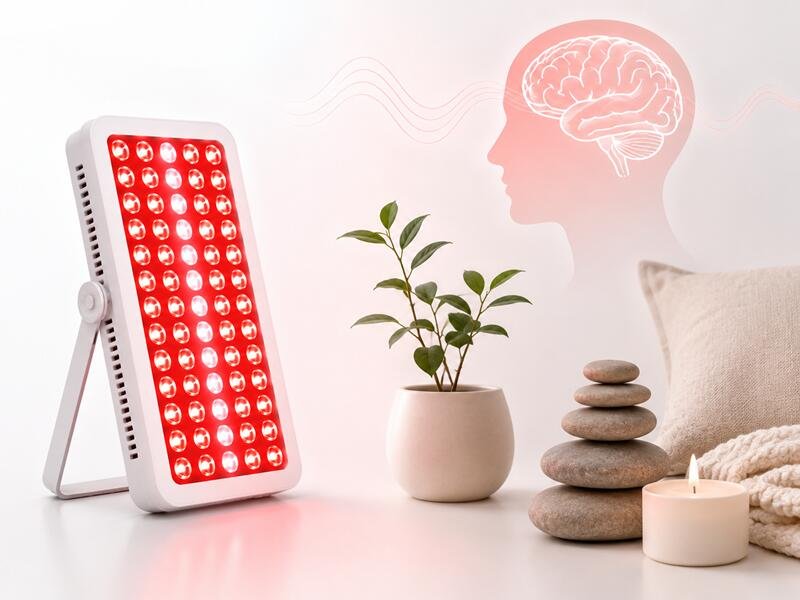
The honest answer is more interesting than a quick yes or no. Red and near-infrared light may influence cellular energy production, circulation, inflammation, sleep, and stress-related signaling, all of which can affect how the brain and body respond to pressure. Early studies of photobiomodulation, particularly transcranial near-infrared light, have reported encouraging changes in mood and anxiety measures. However, the research is still developing, and red light therapy is not an established replacement for psychotherapy, medication, or professional mental health care.
In the sections below, we will separate promising science from ambitious marketing, examine what the research really shows, and explore where red light therapy may fit within a broader anxiety-management routine.
What Is Anxiety and Why It Matters
Anxiety is one of the most prevalent mental health conditions worldwide. According to the World Health Organization, over 300 million people globally live with an anxiety disorder — making it the most common mental health condition on earth. It manifests as persistent worry, tension, restlessness, and physical symptoms including elevated heart rate, disrupted sleep, and muscle tension.
While anxiety is a normal, adaptive response to perceived threats, chronic anxiety dysregulates the nervous system, impairs cognitive function, and significantly reduces quality of life. Conventional treatments include cognitive behavioral therapy (CBT), pharmacotherapy (SSRIs, benzodiazepines), and lifestyle interventions. Yet many individuals seek complementary approaches due to side effects, cost, or limited access to care.
This growing demand has sparked scientific interest in non-pharmacological interventions — among them, photobiomodulation (PBM), commonly known as red light therapy (RLT).
What Is Red Light Therapy?
Red light therapy (RLT), also called photobiomodulation (PBM) or low-level laser therapy (LLLT), uses specific wavelengths of light — typically in the red (630-700 nm) and near-infrared (700-1100 nm) ranges — to stimulate biological processes within cells.
Key Wavelength Ranges
630-700 nm
Primarily affects skin surface and superficial tissue
700-1100 nm
Penetrates deeper — reaching muscle, bone, and neural tissue
Unlike UV light, which damages DNA, or high-powered lasers that heat tissue, RLT operates at non-thermal, non-damaging intensities. The light penetrates the skin and is absorbed by mitochondria (powerhouse), the energy-producing organelles within cells.
Primary Target: Mitochondria
Cytochrome c oxidase (CCO), a key enzyme in the mitochondrial electron transport chain, is the primary photoacceptor. When activated, it boosts ATP production — the cell’s fundamental energy currency.
This absorption triggers a cascade of cellular events that researchers believe may have wide-ranging therapeutic effects — from wound healing and inflammation reduction to potential neurological benefits including mood regulation and anxiety relief.
Biological Mechanisms: How RLT May Affect the Brain
Understanding how red light therapy interacts with the nervous system requires examining several interconnected biological pathways.
ATP Synthesis & Cellular Energy
RLT stimulates cytochrome c oxidase, increasing mitochondrial ATP production. Neurons are among the most energy-demanding cells in the body. Enhanced ATP availability supports neuronal function, neurotransmitter synthesis, and synaptic plasticity — all critical for emotional regulation.
Nitric Oxide Release
Photobiomodulation displaces nitric oxide (NO) from cytochrome c oxidase. Released NO acts as a vasodilator and signaling molecule in the brain, improving cerebral blood flow and potentially modulating the hypothalamic-pituitary-adrenal (HPA) axis — the central stress response system.
Serotonin & Neurotransmitter Modulation
Preclinical studies suggest PBM may upregulate serotonin production and receptor sensitivity. Serotonin is a key neurotransmitter in mood regulation, and its deficiency is strongly associated with anxiety and depression. RLT may also influence dopaminergic pathways linked to reward and motivation.
Neuroinflammation Reduction
Chronic anxiety is increasingly linked to neuroinflammation — elevated pro-inflammatory cytokines in the brain. RLT has demonstrated anti-inflammatory effects by reducing NF-κB signaling and lowering inflammatory markers such as IL-6 and TNF-α, potentially creating a less anxious neurological environment.
The Cascade: From Light to Calm
Clinical Evidence and Research
The body of evidence is growing, though still emerging. Here is what current research tells us.
Animal Study · Preclinical Evidence
Transcranial PBM and Anxiety-Like Behavior in Rodents
Multiple rodent studies using transcranial near-infrared light (810 nm) have demonstrated significant reductions in anxiety-like behaviors in standardized tests such as the elevated plus maze and open field test. Treated animals showed increased exploration and reduced freezing behaviors, alongside measurable changes in prefrontal cortex activity.
Human Study · Pilot Trial
Transcranial NIR in Major Depressive Disorder with Anxiety
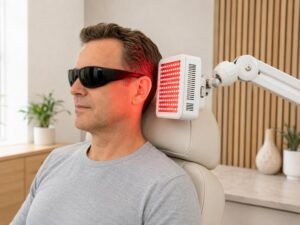
A pilot study published in Behavioral and Brain Functions applied transcranial NIR (810 nm) to the forehead of patients with major depressive disorder. Participants reported significant reductions in anxiety scores (Hamilton Anxiety Rating Scale) after 4 weeks of treatment, with effects persisting at 2-week follow-up. No adverse effects were reported.
Systematic Review · Meta-Analysis
PBM for Neurological and Psychiatric Conditions
A 2021 systematic review in Photobiomodulation, Photomedicine, and Laser Surgery analyzed 14 studies on PBM for neuropsychiatric conditions. The review found consistent evidence for mood improvement and anxiety reduction across diverse populations, though it noted the need for larger randomized controlled trials to establish standardized protocols.
Clinical Trial · PTSD & Anxiety
RLT in Veterans with PTSD-Related Anxiety
Research conducted at the Veterans Affairs Boston Healthcare System explored transcranial PBM in veterans with PTSD. Results showed improvements in PTSD symptom clusters including hyperarousal and anxiety, along with improved sleep quality — a key mediating factor in anxiety management. Cognitive function also improved in treated participants.
A Note on Evidence Quality
While the existing evidence is promising, most human studies involve small sample sizes and lack rigorous double-blind, placebo-controlled designs. Red light therapy for anxiety should be considered a complementary approach, not a replacement for established treatments. Consult a healthcare professional before starting any new therapeutic regimen.
Red Light Therapy, Cortisol & the Stress Response
Cortisol — often called the “stress hormone” — is central to the anxiety experience. Produced by the adrenal glands in response to HPA axis activation, elevated cortisol levels are associated with heightened anxiety, poor sleep, impaired immune function, and accelerated cellular aging.
The HPA Axis & Anxiety Cycle
Emerging research suggests that red and near-infrared light may help modulate the HPA axis, potentially reducing the cortisol response to stress. Animal studies have shown that PBM applied to the adrenal glands or systemically can reduce cortisol output in chronically stressed subjects.
Additionally, RLT’s anti-inflammatory effects may reduce the inflammatory signaling that perpetuates HPA axis hyperactivation — creating a more balanced stress response over time.
“Photobiomodulation appears to exert regulatory effects on the HPA axis, potentially normalizing the cortisol awakening response in chronically stressed individuals.”
— Emerging consensus in PBM research literature
Sleep, Anxiety, and the Light Connection
The relationship between sleep and anxiety is bidirectional and deeply intertwined. Poor sleep amplifies anxiety, and anxiety disrupts sleep — creating a vicious cycle that many sufferers know all too well. Addressing sleep quality is therefore a critical component of anxiety management.
Sleep Benefits Linked to RLT
- Improved sleep onset latency
- Enhanced melatonin production
- Deeper, more restorative sleep
- Reduced nighttime cortisol
- Better mood upon waking
Red light therapy, particularly when used in the evening, has shown promising effects on sleep quality. Unlike blue light from screens which suppresses melatonin production, red and near-infrared wavelengths do not significantly impact the circadian clock. Some research suggests that evening RLT may actually support melatonin synthesis and improve sleep onset latency.
A 2012 study in the Journal of Athletic Training found that 14 days of whole-body red light treatment significantly improved sleep quality and melatonin levels in female basketball players. Improved sleep quality was accompanied by reduced fatigue and enhanced mood — both relevant to anxiety management.
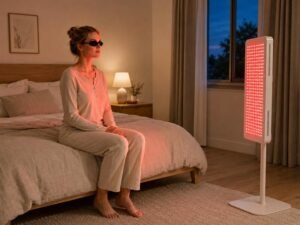
Evening Use Tip: Using RLT 30-60 minutes before bed may support melatonin production and improve sleep quality without disrupting circadian rhythms.
Practical Guidance: How to Use RLT for Anxiety
If you’re considering red light therapy as part of an anxiety management strategy, here is evidence-informed guidance on protocols, devices, and best practices.
Recommended Protocol Parameters
| Parameter | Recommendation | Notes |
| Wavelength | 630-670 nm (red) + 810-850 nm (NIR) | Combination most studied |
| Session Duration | 10-20 minutes | Start at 10 min, increase gradually |
| Frequency | 4-5 sessions per week | Consistency is key |
| Target Area | Forehead / full body | Transcranial or systemic |
| Distance | 15-30 cm from device | Follow device specifications |
| Time of Day | Morning or early evening | Avoid late night for some |
| Duration of Course | 4-12 weeks minimum | Effects accumulate over time |
Panel Devices
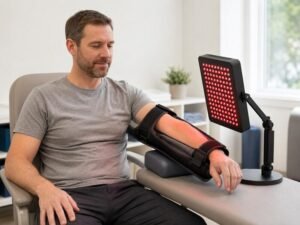
Full-body or targeted panels. Ideal for home use. Covers large surface area for systemic effects.
Face Masks
Wearable LED masks targeting facial and forehead tissue. Convenient for transcranial application.
Handheld Devices
Portable and targeted. Good for specific application areas. Easy to use during travel.
Best Practices for Anxiety-Focused RLT
- Combine with relaxation practices: Use RLT alongside meditation, deep breathing, or yoga for synergistic effects on the nervous system.
- Track your mood consistently: Use a simple daily anxiety scale (1-10) to monitor progress over your treatment course.
- Protect your eyes: Always use appropriate eye protection, especially with high-powered panels or NIR devices.
- Consult your healthcare provider: Especially important if you are on medication or have a diagnosed anxiety disorder.
Frequently Asked Questions
Answers to the most common questions about red light therapy and anxiety.
1. How quickly can I expect to feel results for anxiety?
Results vary by individual. Some users report improved mood and reduced tension after just a few sessions. However, for meaningful and sustained anxiety relief, most research protocols run for 4-12 weeks of consistent use. Think of it like exercise — cumulative, consistent application yields the best outcomes. Track your mood weekly rather than daily to observe trends.
2. Is red light therapy safe to use if I’m taking anxiety medication?
Red light therapy is generally considered safe and non-pharmacological, with no known direct drug interactions. However, some medications increase photosensitivity (e.g., certain antibiotics, retinoids, and NSAIDs). Always consult your prescribing physician before starting RLT, particularly if you are on SSRIs, benzodiazepines, or other psychiatric medications. RLT is best used as a complement to, not a replacement for, prescribed treatment.
3. What wavelength is best for anxiety and mood?
Most research on mood and anxiety uses near-infrared wavelengths in the 810-850 nm range for transcranial application, as these penetrate deeper into neural tissue. Red wavelengths (630-670 nm) are more superficial but still contribute to systemic anti-inflammatory and serotonin-modulating effects. Many high-quality devices combine both wavelengths for comprehensive benefit. For anxiety specifically, 810 nm NIR targeting the prefrontal cortex has the strongest preliminary evidence.
4. Can I use red light therapy for panic attacks?
RLT is not a treatment for acute panic attacks — it is not fast-acting in the way that breathing techniques or medications can be. However, regular use may reduce the baseline anxiety levels and nervous system hyperreactivity that contribute to panic attack frequency and severity. Think of it as a long-term nervous system regulation tool rather than an acute intervention. For panic disorder, professional psychological treatment remains essential.
5. Are there any side effects of RLT for anxiety?
Red light therapy has an excellent safety profile. At appropriate intensities and durations, side effects are rare and typically mild — including temporary skin warmth, mild headache (with transcranial use), or eye strain if proper protection is not used. Overuse or excessive irradiance can paradoxically reduce efficacy (the biphasic dose-response phenomenon). There are no reports of RLT worsening anxiety. However, individuals with photosensitivity conditions, active skin conditions, or those taking photosensitizing medications should exercise caution.
6. How does red light therapy compare to other complementary anxiety treatments?
Compared to exercise (strong evidence), mindfulness meditation (strong evidence), and acupuncture (moderate evidence), RLT for anxiety has emerging but still limited evidence. Its advantage lies in its passive nature — requiring minimal effort during sessions — and its multi-system benefits (sleep, inflammation, energy, mood). It is best positioned as a complementary tool within a broader anxiety management strategy that includes therapy, lifestyle optimization, and where appropriate, medication.
7. Can red light therapy help with cortisol?
Yes, red light therapy can help manage and reduce cortisol levels. By exposing your body to specific wavelengths of red and near-infrared light, the therapy stimulates cellular energy (ATP) production, lowers inflammation, and activates the parasympathetic (“rest and digest”) nervous system.
8. Where to put red light for anxiety?
For anxiety, position your red light or near-infrared (NIR) device 6 to 12 inches away from your forehead (or the back of your neck). Aim for sessions lasting 10 to 20 minutes, and use protective eyewear if the manufacturer recommends it.
Conclusion: The Verdict on RLT and Anxiety
The question “Does red light therapy help anxiety?” does not yet have a definitive clinical answer — but the evidence trajectory is encouraging. From the cellular mechanisms of mitochondrial stimulation and nitric oxide signaling, to the modulation of the HPA axis and serotonergic pathways, there are credible biological reasons why RLT may exert anxiolytic effects.
Preclinical animal studies consistently demonstrate anxiety-reducing effects. Human pilot trials show promising results in mood and anxiety scores. Systematic reviews call for larger, more rigorous trials — but note a consistent signal of benefit across existing studies.
For individuals seeking a safe, non-pharmacological tool to complement their anxiety management strategy, red light therapy represents a reasonable option — particularly when combined with adequate sleep hygiene, regular exercise, and evidence-based psychological interventions.
As with all wellness interventions, quality matters. The effectiveness of RLT depends significantly on device quality, wavelength accuracy, irradiance levels, and consistency of use. Choosing a well-engineered, clinically-informed device from a reputable manufacturer is essential to achieving meaningful results.
Key Takeaways
✦
RLT operates through multiple biological mechanisms relevant to anxiety: ATP synthesis, nitric oxide, serotonin modulation, and anti-inflammation.
✦
Emerging human research shows anxiety score reductions with consistent transcranial NIR application over 4+ weeks.
✦
RLT may help regulate cortisol and improve sleep quality — two critical factors in anxiety management.
✦
It is best used as a complementary tool alongside established therapies, not as a standalone treatment.
✦
Device quality, wavelength accuracy, and protocol consistency are critical for efficacy.
✦
Always consult a healthcare professional, especially if you have a diagnosed anxiety disorder or are on medication.
Medical Disclaimer: The information provided in this article is for educational purposes only and is not intended as medical advice. Red light therapy is not a substitute for professional medical diagnosis, treatment, or advice. Always consult a qualified healthcare provider before beginning any new therapeutic intervention, especially if you have a diagnosed mental health condition or are taking medication. The statements in this article have not been evaluated by the FDA.