As the wellness and medical aesthetics equipment market grows, red light therapy is attracting serious interest from buyers in rehabilitation, spas, and clinical settings. Lymphedema–a chronic condition affecting millions–is emerging as one of the most compelling clinical applications. Here’s what every brand owner, distributor, and procurement manager needs to know before adding these devices to their portfolio.
What Is Lymphedema and Why Does It Matter for Your Market?
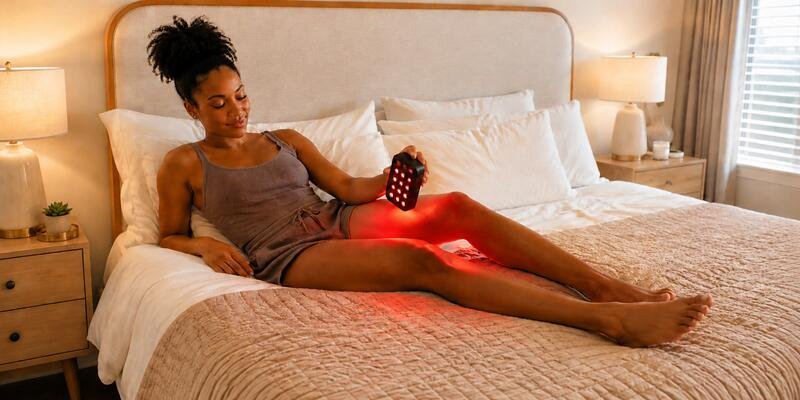
Lymphedema is a chronic condition caused by damage or blockage in the lymphatic system, leading to abnormal accumulation of lymph fluid–primarily in the arms or legs–resulting in swelling, discomfort, reduced mobility, and increased infection risk.
There are two primary types:
- Primary lymphedema: Caused by congenital abnormalities in the lymphatic system.
- Secondary lymphedema: The most common form, typically resulting from cancer treatment (especially surgery or radiation for breast cancer), infection, or trauma.
According to the World Health Organization, lymphedema affects over 250 million people globally. In North America and Europe alone, an estimated 3-5 million people live with cancer treatment-related lymphedema. For buyers in the wellness, rehabilitation, and medical aesthetics industries, this represents a significant and underserved patient and client population.
250M+
People globally affected by lymphedema
30-40%
Breast cancer survivors who develop lymphedema
$4.2B
Projected lymphedema treatment market by 2030
Traditional management includes compression garments, manual lymphatic drainage (MLD), and complete decongestive therapy (CDT). However, these approaches are time-intensive, costly, and often inadequate for long-term management. This is where non-invasive photobiomodulation therapies–including red and near-infrared (NIR) light therapy–are gaining traction.
How Red Light Therapy Works on the Lymphatic System
Red light therapy (RLT), also referred to as photobiomodulation (PBM) or low-level laser/light therapy (LLLT), uses specific wavelengths of red (630-700 nm) and near-infrared (800-1100 nm) light to penetrate tissue and stimulate cellular repair processes.
For lymphedema specifically, the proposed mechanisms of action include:

Lymphatic Vessel Regeneration
PBM stimulates lymphangiogenesis–the formation of new lymphatic vessels–helping restore drainage pathways damaged by surgery or radiation.

Anti-Inflammatory Action
Light therapy reduces pro-inflammatory cytokines and oxidative stress in affected tissues, helping to manage chronic inflammation associated with fluid buildup.

Improved Microcirculation
NIR wavelengths penetrate deep enough to enhance local blood and lymph circulation, supporting fluid movement away from congested areas.

Light energy is absorbed by cytochrome c oxidase in mitochondria, boosting ATP production and accelerating cellular repair in compromised lymphatic endothelial cells.

Fibrosis Reduction
PBM helps reduce fibrotic tissue changes in chronic lymphedema, softening hardened tissue and improving limb pliability over time.

Pain and Discomfort Reduction
Beyond fluid management, PBM has demonstrated analgesic effects, improving quality of life for patients experiencing lymphedema-related pain and heaviness.
Clinical Evidence: What the Research Actually Shows
Most published research has focused on breast cancer-related upper-limb lymphedema and has primarily used low-level laser devices. The findings are promising, but evidence for other forms of lymphedema and standard consumer LED devices remains more limited.
As a buyer, you need to be able to distinguish between strong clinical evidence and early-stage research–both for your own risk assessment and for credibly communicating product value to your customers.
| Study / Source | Population | Intervention | Key Outcome | Evidence Level |
|---|---|---|---|---|
| Carati et al. (2003) Cancer Journal |
64 women with breast cancer-related lymphedema | 904 nm PBM, 3 sessions/week × 3 weeks | Significant reduction in arm volume; softening of affected tissue | RCT |
| Kaviani et al. (2006) Photomedicine & Laser Surgery |
Postmastectomy lymphedema patients | 890 nm LLLT combined with standard therapy | Reduced limb circumference and improved skin texture compared to control | RCT |
| Omar et al. (2012) Lasers in Medical Science |
Upper limb lymphedema post-breast cancer treatment | Infrared laser 904 nm | Meaningful reduction in limb volume; improvement in pain scores | RCT |
| Lau & Cheing (2009) Photomedicine & Laser Surgery |
Post-breast surgery lymphedema | 1000 mW, 830 nm diode laser | Improved lymphatic transport, reduced fluid accumulation | Controlled |
| Systematic Review Cochrane-style, 2018 |
Multiple lymphedema etiologies | Various PBM modalities | Moderate evidence for volume reduction; calls for standardized protocols | Systematic Review |
What the Evidence Supports
- Reduction in limb volume, particularly in breast cancer-related lymphedema
- Softening of fibrotic tissue in chronic cases
- Pain and heaviness reduction in affected limbs
- Safe and non-invasive adjunct to standard lymphedema management
- No significant adverse effects reported across studies
Current Limitations to Know
- Variability in wavelengths, dosing, and treatment protocols across studies
- Most RCTs focus on post-mastectomy lymphedema; other etiologies need more data
- Long-term maintenance outcomes require more research
- Not yet a standalone first-line treatment–best positioned as adjunct therapy
Device Requirements for Lymphedema Applications
Not all red light therapy devices are suitable for lymphedema applications. As a buyer sourcing OEM or ODM products, you need to understand the technical specifications that matter for clinical effectiveness and safety.
Wavelength Requirements
NIR wavelengths penetrate 3-5 cm deep–sufficient to reach lymphatic vessels in limbs. Dual-wavelength devices (red + NIR) offer versatility for broader product lines.
Power Density & Dosing
Devices must allow precise, reproducible dosing. Buyer requirement: ask your manufacturer for verified irradiance measurements at treatment distance.
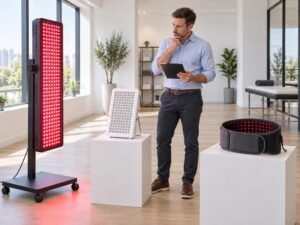
Recommended Form Factors
- Wearable wraps/belts: Ideal for conforming to affected limbs (arms or legs); enables hands-free treatment and home use protocols
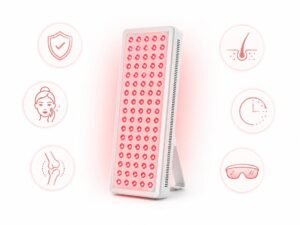
- Targeted panels: For clinic-based treatment of specific limb regions; higher power output for faster dosing
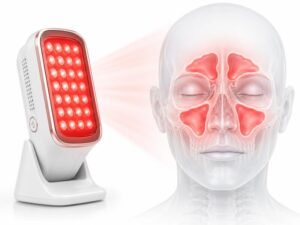
- Handheld devices: For localized spot treatment, especially in early or mild cases
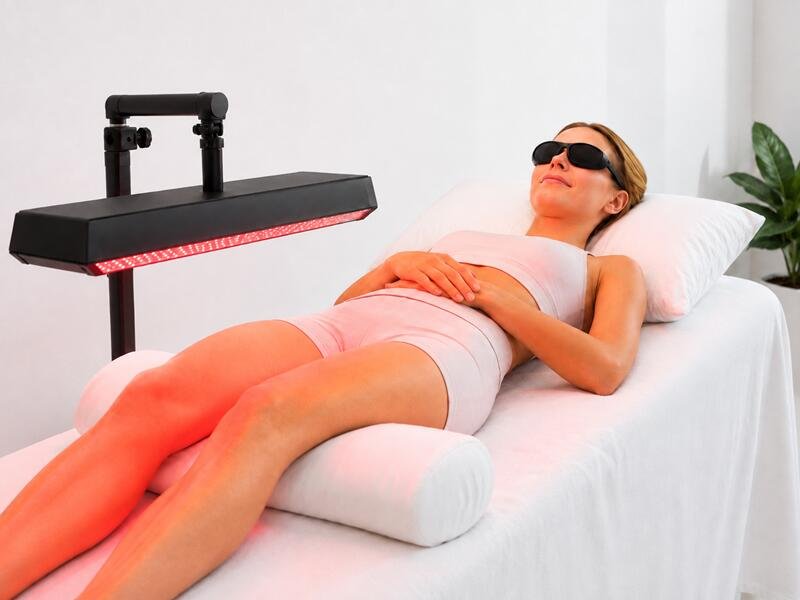
- Full-body systems: For multi-area treatment or general wellness positioning alongside lymphedema benefits
Technical Specs to Request from Your OEM
- Third-party verified irradiance data (mW/cm²)
- LED chip quality (optical efficiency, longevity ≥50,000 hours)
- Thermal management system (safe surface temperature during use)
- Timer controls and programmable treatment modes
- Materials: hypoallergenic, skin-safe for wearable devices
- IP rating for easy disinfection in clinical environments
Market Opportunity: Customer Segments and Use Cases
For brand owners and distributors, understanding which customer segments represent the strongest near-term opportunity for lymphedema-focused light therapy devices is essential for product positioning and sales strategy.
Physical Therapy & Rehabilitation Clinics
Why they buy
Looking for evidence-based, non-invasive adjunct modalities to CDT protocols. Seeking to differentiate their service offering and improve patient outcomes.
Device preference
Professional-grade panels and wearable wraps. High power output, clinical aesthetics, CE/FDA compliance required.
Volume potential
Medium to high. Multi-device purchases per clinic common as treatment rooms scale.
Oncology Support & Post-Cancer Wellness Centers
Why they buy
Breast cancer survivorship programs are actively seeking non-pharmaceutical approaches to post-treatment lymphedema. Strong patient demand and referral networks.
Device preference
Wearable devices for in-clinic and home use, combined treatment protocols. Medical-grade materials preferred.
Volume potential
High and growing. Underserved segment with strong willingness to pay for clinically positioned solutions.
Medical Spas & Aesthetic Clinics
Why they buy
Lymphatic drainage is a trending wellness treatment. Adding light therapy as an enhancement service or post-treatment protocol adds revenue and differentiation.
Device preference
Premium design aesthetics matter. Multi-functional devices (skin + lymphatic benefits) preferred. White-label branding important.
Volume potential
High for OEM/private label. Med spas often roll out across multiple locations.
Wellness & Recovery Brands (Direct-to-Consumer)
Why they buy
Growing consumer self-treatment trend. At-home lymphatic health devices are gaining search volume and media attention post-pandemic.
Device preference
Compact, wearable, simple UX. App connectivity a plus. Strong packaging and branding for online retail channels (Amazon, DTC).
Volume potential
Very high volume at lower per-unit ASP. Ideal for established e-commerce brands with existing audiences.
OEM/ODM Sourcing Checklist for Buyers
Before committing to a supplier for lymphedema-focused red light therapy devices, use this checklist to evaluate technical capability, quality systems, and commercial readiness.
Technical Capability
- Dual-wavelength LED configuration available (660 nm + 850 nm)
- Third-party verified irradiance specifications provided
- Wearable form factor engineering capability (flexible PCB, soft housing)
- Programmable timer and intensity controls
- Thermal management tested; safe operating surface temperature confirmed
Quality & Compliance
- ISO 13485 or equivalent quality management certification
- CE marking and technical file documentation available
- FCC certification for North American market entry
- In-line production QC process with inspection reports available
- Skin-safe materials testing (biocompatibility if wearable)
OEM/ODM Capability
- Private label branding on housing, packaging, and documentation
- MOQ aligned with your initial purchase plan
- Prototyping and sample evaluation process offered
- Customization of wavelength, power, and UX per your specifications
Commercial & Logistics
- Lead time for production and delivery confirmed in writing
- International shipping and customs documentation support
- Warranty terms and after-sale support policy defined
- NDA and IP protection agreement available before design sharing
Compliance and Regulatory Considerations
Regulatory positioning is one of the most important–and often overlooked–factors when sourcing red light therapy devices for lymphedema applications. The claims you make determine how your device is classified, and classification determines your certification path, liability, and market access.
United States
Devices making lymphedema treatment claims may be classified as Class II medical devices requiring 510(k) clearance. Wellness-positioned devices (non-medical claims) have a more accessible pathway.
Key action: Align your intended use statement with your regulatory strategy before finalizing product design with your OEM.
European Union (MDR 2017/745)
Medical device classification under EU MDR. Most red light therapy devices fall into Class IIa, requiring Notified Body involvement. Ensure your OEM can provide a compliant Technical File and Declaration of Conformity.
Key action: Confirm your OEM has existing CE-certified device lineups and experience with EU Notified Bodies.
Quality & Safety Standards
ISO 13485 (quality management), IEC 60601-1 (electrical medical equipment safety), and IEC 62471 (photobiological safety) are the most relevant standards for light therapy devices.
Key action: Request copies of relevant test reports and certificates before production commitment.
Critical Regulatory Guidance for Buyers
- Do not make specific disease treatment claims (e.g., “treats lymphedema”) without appropriate regulatory clearance in your target market.
- Wellness and general well-being claims (e.g., “supports lymphatic circulation”) typically carry a lighter regulatory burden but still require substantiation.
- Your OEM can support the technical documentation; the clinical and marketing claims strategy is your responsibility as the brand owner.
- Consult a regulatory affairs specialist in your target market before finalizing product labeling and marketing copy.
Buyer FAQ
Is red light therapy clinically proven to treat lymphedema?
Multiple randomized controlled trials and systematic reviews support the use of photobiomodulation (PBM) for reducing limb volume and improving quality of life in breast cancer-related lymphedema specifically. Evidence for other types is emerging but less robust. For buyers, the key distinction is that RLT is well-positioned as an adjunct or complementary therapy rather than a standalone treatment–which is both clinically accurate and commercially defensible.
How does red light therapy actually help with lymphedema at a physiological level?
Photobiomodulation at near-infrared wavelengths stimulates mitochondrial activity in lymphatic endothelial cells, promotes lymphangiogenesis (formation of new lymphatic vessels), reduces local inflammation, and enhances lymphatic contractility. These combined effects support improved lymphatic drainage and fluid clearance from the interstitial tissue. Understanding these mechanisms helps buyers communicate product value accurately to clinician buyers and wellness professionals without overstating outcomes.
What wavelength should I specify for lymphedema applications?
Near-infrared wavelengths in the 830-904 nm range have the strongest research support for lymphedema. For product versatility and broader market appeal, a dual-wavelength device combining 660 nm (red) and 850 nm (NIR) is widely recommended. This positions your product for both lymphatic and surface-level skin and tissue applications, expanding the addressable use case without adding significant production cost.
Which device form factor is best for a lymphedema-focused product line?
Wearable wraps and belts are the most purpose-built form factor for lymphedema because they conform to affected limbs, enable consistent LED contact with treatment areas, and support extended treatment durations. For clinic-based settings, targeted panels offer higher power output. For DTC brands, compact wearables with simple controls optimize the home-use experience. Many buyers choose to offer both a professional and consumer version under the same brand.
What irradiance and dose parameters should the device deliver for lymphedema?
Clinical studies for lymphedema typically use irradiance values between 10-100 mW/cm² at the treatment site, with energy doses ranging from 1-4 J/cm² per session. Session durations commonly range from 10 to 30 minutes depending on irradiance. For wearable devices with close skin contact, lower irradiance over longer durations is practical and comfortable. When briefing your manufacturer, specify the intended treatment distance and required surface irradiance so LED count, power, and optical design can be engineered accordingly.
Can I market this device directly as a lymphedema treatment device?
This depends entirely on your target market and the regulatory classification you pursue. Making explicit treatment claims (diagnosing, treating, or curing lymphedema) in the US, EU, and other regulated markets will typically trigger medical device classification, requiring corresponding clearance or approval. Many brands successfully position these devices under wellness and circulation support claims, which carry lower regulatory burden while still reaching the target audience. Always work with a local regulatory consultant before making final claims decisions.
Can red light therapy be combined with other lymphedema management methods?
Yes, and this is one of the strongest positioning angles for buyer-facing marketing. RLT is commonly used alongside complete decongestive therapy (CDT), manual lymphatic drainage (MLD), compression garments, and exercise protocols. Several studies show synergistic outcomes when PBM is integrated into a broader lymphedema management program. For brands targeting lymphedema clinics and physical therapy centers, positioning your device as a complement to existing treatment protocols–rather than a replacement–tends to resonate well with clinical buyers and lowers adoption resistance.
Are there any contraindications buyers should communicate to end users?
Yes. Standard contraindications for red light therapy that should be included in device documentation include: active cancer at the treatment site, pregnancy over the abdomen or pelvis, photosensitive medications or conditions, open wounds, and direct eye exposure. For lymphedema specifically, patients with active infections in the affected limb such as cellulitis should consult their physician before using light therapy. These contraindications should be clearly documented in user manuals and provided by your OEM as part of the product documentation package.
What is a typical production timeline for a custom OEM lymphedema device?
For a new OEM product based on an existing platform, expect 8-16 weeks from design confirmation to first production batch, depending on customization complexity. For a fully custom ODM project with a new form factor and custom enclosure tooling, allow 16-28 weeks. Certification processes such as CE and FCC should be factored in separately and can add 8-20 weeks depending on the regulatory pathway. Starting with a certified base platform and applying OEM branding significantly compresses time to market.
What minimum order quantities and pricing models should I expect for a lymphedema RLT device?
Minimum order quantities for OEM lymphedema devices typically start at 50-200 units for wearable products based on existing platforms, and 200-500 units for fully custom ODM projects where tooling investment is involved. Unit pricing scales significantly with volume–buyers ordering 500+ units commonly see 25-40% lower unit costs compared to initial sample pricing. For distributors entering the market, it is advisable to negotiate a tiered pricing structure upfront that reflects scaling commitments, and to clarify whether tooling costs are amortized into unit price or billed separately as a one-time development fee.
The Bottom Line (No Jargon, We Promise)
So, does red light therapy help lymphedema? The short answer: yes, with an asterisk the size of a CE technical file. The research is genuinely promising–not “we-found-one-study-on-three-mice” promising, but actual randomized controlled trials promising.
For buyers, the real opportunity isn’t just selling a device that glows attractively. It’s entering a $4.2 billion market where millions of patients are still stuck squeezing into compression garments and hoping for the best. Your wearable wrap with 850 nm NIR LEDs is, frankly, a more exciting option.
The checklist is long, the regulatory landscape is thrilling in the way that tax season is thrilling, and yes–you will need a good OEM partner. But the buyers who move now, source smart, and position thoughtfully will own a category that’s only just getting started.
The light is on. The question is whether your brand is in the room.