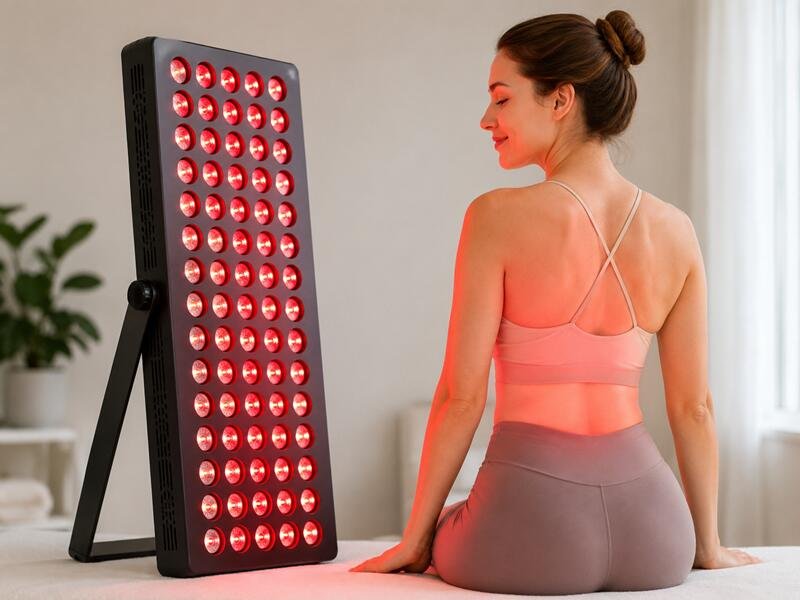
Back pain: the great equalizer. It doesn’t care if you’re a marathon runner, a medspa owner, or someone who simply looked at a heavy box the wrong way. With roughly 80% of adults destined to experience it at some point, it’s practically a universal human rite of passage — right up there with taxes and regretting that second cup of coffee. The good news? While the world has spent decades offering ibuprofen, awkward foam rollers, and unsolicited posture advice, a rather more photogenic solution has been quietly stealing the spotlight: red light therapy. No needles. No pharmaceuticals. Just targeted wavelengths of light doing the cellular equivalent of a deep-tissue massage. For brand owners, distributors, and procurement managers, this isn’t just good news for humanity’s aching lumbar region — it’s a commercially validated, fast-growing market opportunity with your name written all over it. Let’s get into it.
What Is Red Light Therapy?
Red light therapy (RLT) — also known as photobiomodulation (PBM) or low-level laser/light therapy (LLLT) — is a non-invasive treatment that uses specific wavelengths of red and near-infrared (NIR) light to stimulate cellular function. Unlike UV light, RLT does not damage skin or tissue. Instead, it penetrates the skin and underlying structures to trigger a cascade of biological responses at the mitochondrial level.
Clinically relevant wavelengths typically fall in two ranges:
Red Light
630-680 nm — primarily targets superficial tissue, skin, and surface-level inflammation.
Near-Infrared Light
800-880 nm — penetrates deeper into muscle, joint, and nerve tissue, making it especially relevant for back pain.
For back pain applications, near-infrared wavelengths — particularly 808 nm and 850 nm — are considered most therapeutically significant due to their ability to reach deeper musculoskeletal structures.
The Science Behind RLT and Back Pain
Understanding the mechanism of action is critical for buyers who need to justify product claims to their end customers, clinics, or regulatory bodies. Here is how red light therapy works at a biological level to address back pain:
Mitochondrial Activation
Photons are absorbed by cytochrome c oxidase in mitochondria, increasing ATP (adenosine triphosphate) production. More cellular energy accelerates tissue repair and reduces pain signaling.
Reduction of Inflammation
RLT modulates inflammatory cytokines (TNF-α, IL-6, IL-1β), reducing chronic inflammation — a primary driver of lower back pain, especially in disc-related or muscular conditions.
Improved Circulation
Nitric oxide release triggered by RLT dilates blood vessels, improving microcirculation to ischemic or inflamed back tissue and accelerating nutrient and oxygen delivery.
Nerve Modulation and Pain Relief
RLT has been shown to reduce nerve conduction velocity in pain fibers and modulate substance P, a neuropeptide associated with pain transmission — providing direct analgesic effects.
Collagen Synthesis and Tissue Repair
Stimulation of fibroblasts increases collagen production, supporting repair of spinal ligaments, tendons, and soft tissue structures commonly damaged in chronic back conditions.
What Human Studies Actually Show
For procurement managers and brand owners, clinical backing is non-negotiable. It underpins product credibility, supports marketing claims, and reduces liability. Here is a summary of the most relevant published research:
Chronic Low Back Pain — Randomized Controlled Trial
RCT
A 2015 randomized controlled trial published in Lasers in Medical Science found that patients receiving LLLT for chronic low back pain reported significantly lower pain scores (VAS) and improved functional disability compared to placebo groups after 4 weeks of treatment.
Systematic Review — Photobiomodulation for Musculoskeletal Pain
Meta-Analysis
A Cochrane-affiliated systematic review analyzing 30+ trials concluded that low-level laser therapy provides clinically meaningful pain reduction and functional improvement for non-specific low back pain with minimal adverse effects.
Disc Herniation and Radiculopathy
Clinical Study
Research published in Photomedicine and Laser Surgery demonstrated that NIR photobiomodulation significantly reduced pain and improved mobility in patients with lumbar disc herniation and sciatic nerve involvement when applied at 808-850 nm over 10 sessions.
Sports-Related Back Muscle Recovery
Sports Science
Multiple sports medicine studies confirm that pre- and post-exercise RLT application to the lumbar region reduces delayed onset muscle soreness (DOMS), accelerates recovery, and improves subsequent performance metrics in athletes.
⚠️ Buyer’s Note on Claims
While evidence is strong, regulatory bodies (FDA, CE) distinguish between wellness devices and medical devices. Ensure your product claims align with the regulatory classification of the devices you source. Always work with suppliers who can provide documentation supporting compliant marketing language.
Back Pain Conditions Studied With Photobiomodulation
Understanding the specific back pain conditions your target customers face helps you select the right device specifications and position your product accurately in the market.
Muscle Tension & Spasms
Extremely common among desk workers and athletes. RLT relaxes muscle fiber tension and reduces localized inflammation, with fast symptomatic relief — ideal for wellness and fitness recovery positioning.
Chronic Non-Specific Low Back Pain
The most prevalent form of back pain globally. RLT’s anti-inflammatory and analgesic mechanisms are well-documented for this condition, making it the primary indication for most back pain devices.
Lumbar Disc Herniation
NIR wavelengths can reach disc and nerve root tissue. RLT is used as an adjunct therapy in rehabilitation clinics to reduce nerve inflammation and accelerate recovery alongside physical therapy.
Sciatica
RLT applied along the lumbar spine and sciatic nerve pathway has shown measurable pain reduction. Wearable belt devices are particularly well-suited for targeted sciatica relief.
Osteoarthritis of the Spine
Degenerative joint conditions respond to RLT’s ability to reduce synovial inflammation and improve joint mobility. Relevant for aging demographics in wellness spa and pain clinic markets.
Post-Surgical Recovery
Used in rehabilitation settings to accelerate healing after spinal surgery. Requires medical-grade devices with appropriate regulatory clearance — important consideration for clinical buyers.
Product Categories for Back Pain Applications
Choosing the right product format is one of the most consequential decisions for buyers. Each device type serves different use cases, customer segments, and price points.
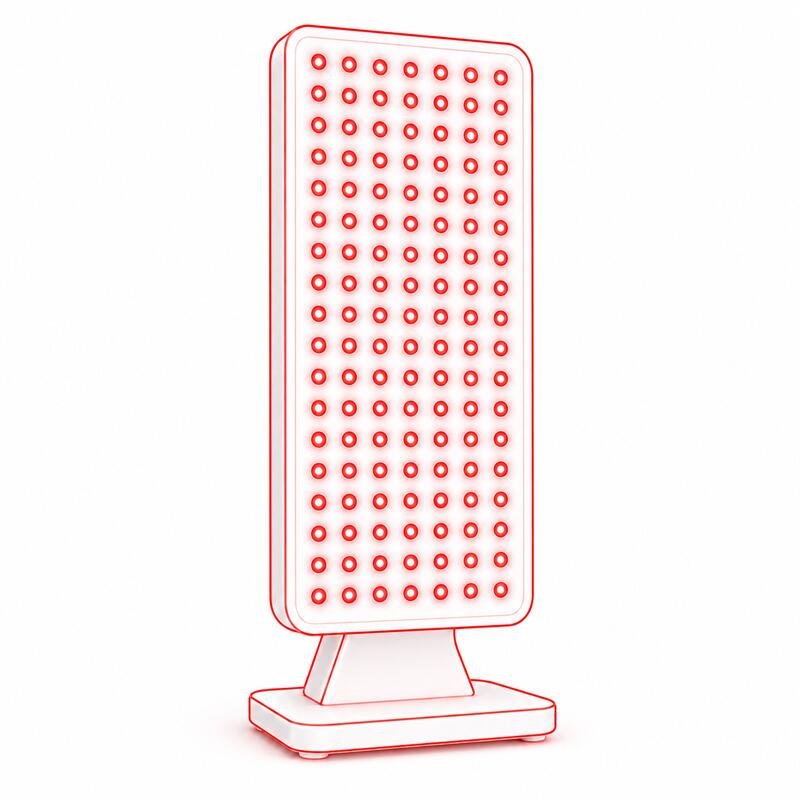
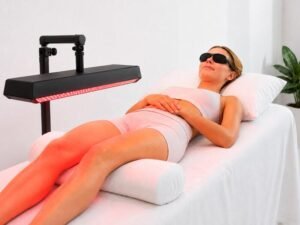
Full-Body & Large Panel Devices
Clinic / Spa
Large LED panels (typically 300W-1500W) covering the full back or full body. Ideal for clinics, wellness centers, and spas where multiple clients are treated daily. High irradiance output ensures clinical-level dosing.
Best For
Physical therapy clinics, MedSpas, wellness centers
Key Specs to Check
Irradiance (≥100 mW/cm²), wavelength mix, cooling system
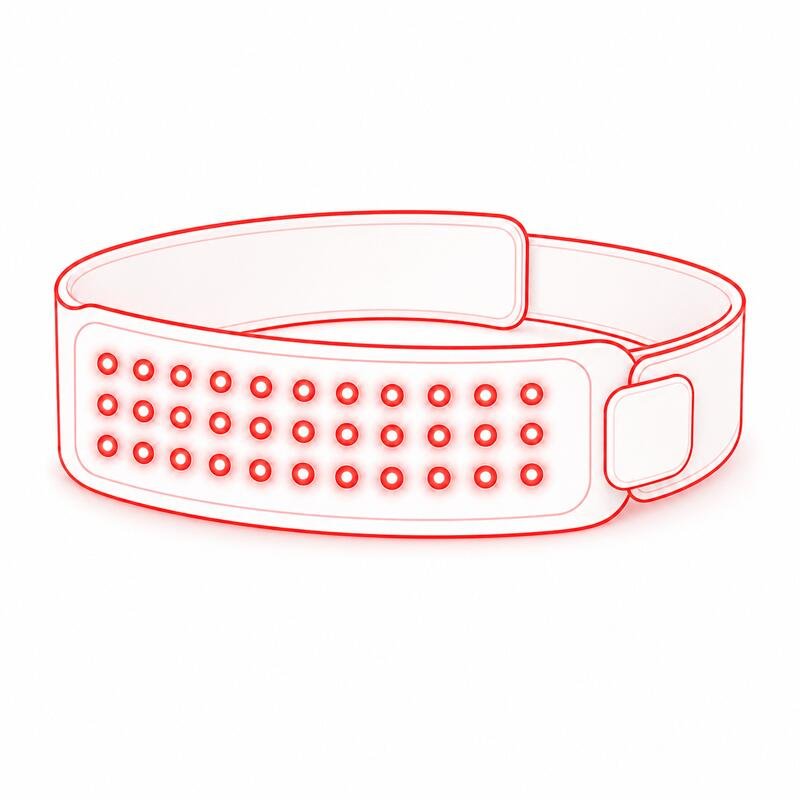
Wearable Therapy Belts
Home / Consumer
Flexible, body-conforming LED pads or belts worn directly on the lower back. Hands-free operation enables treatment during daily activity. High consumer demand and strong repeat-purchase potential for brand owners targeting home users.
Best For
Consumer brands, e-commerce, distributors targeting home users
Key Specs to Check
Flexibility, battery life, LED density, heat management
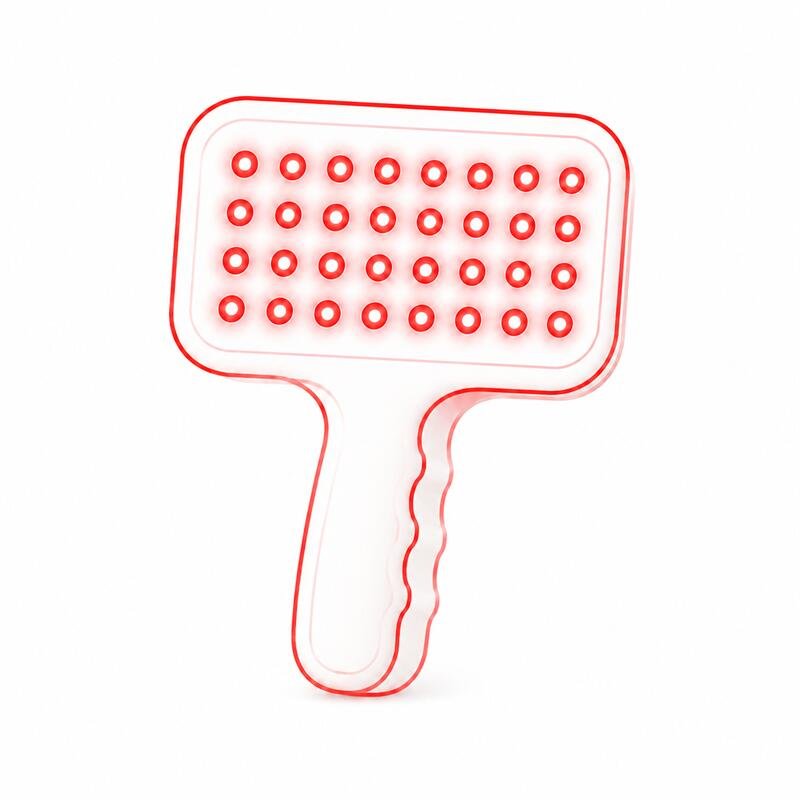
Handheld Devices
Versatile
Portable, targeted devices for spot treatment of specific back pain areas. Lower treatment area coverage but highly portable. Popular as entry-level consumer products and professional add-on tools in clinical settings.
Best For
Retail, gifting, entry-level wellness brands
Key Specs to Check
Spot size, irradiance, ergonomics, battery capacity
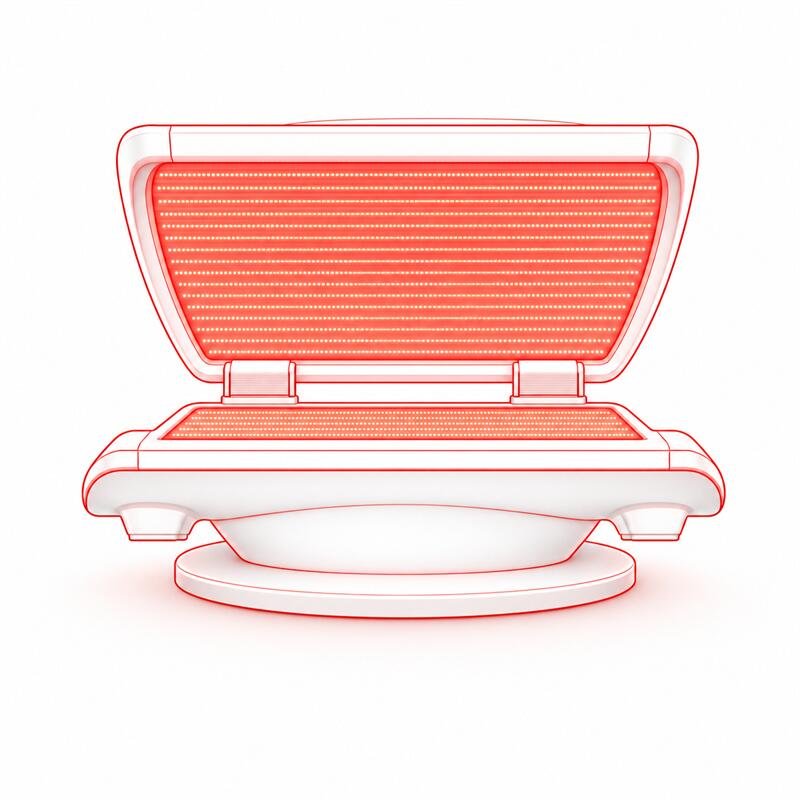
Full-Body Systems (Pods / Beds)
Premium
360-degree full-body light therapy systems. Premium positioning for luxury spas, high-end fitness clubs, and longevity clinics. Addresses back pain as part of a comprehensive recovery and wellness protocol.
Best For
Luxury wellness brands, high-volume clinic operators
Key Specs to Check
Total wattage, session timer, safety interlocks, EMF levels
Key Buying Criteria for Procurement Managers
When evaluating red light therapy devices for back pain applications, procurement managers should assess suppliers and products against the following criteria:
Wavelength Accuracy and Combination
For back pain, the optimal therapeutic window is 630-680 nm (red) and 800-880 nm (NIR). Devices offering dual-wavelength output — particularly 660 nm + 850 nm — provide the broadest therapeutic coverage for both superficial and deep tissue.
Irradiance (Power Density)
Irradiance, measured in mW/cm², determines how quickly a therapeutic dose is delivered. For back pain treatment, a minimum of 50-100 mW/cm² at the treatment distance is generally required for effective results within a 10-20 minute session.
LED Chip Quality and Lifespan
LED chip quality directly affects device longevity and consistent output. High-quality LEDs (e.g., Epistar, OSRAM, or equivalent) should maintain ≥70% output after 50,000+ hours. For professional clinic devices, LED degradation affects treatment consistency and brand reputation.
Regulatory Certifications
Certifications are non-negotiable for market entry. The required certifications depend on your target market and intended use (wellness vs. medical).
CE Mark
Required for EU market entry. Covers electrical safety and electromagnetic compatibility.
FCC
Required for US market. Covers electromagnetic interference standards.
FDA 510(k) / Class II
Required if making medical claims in the US. Significantly higher compliance burden.
Thermal Management and Safety
For wearable back pain devices in direct skin contact, thermal management is a critical safety factor. Devices must maintain surface temperature below 43°C to prevent thermal injury. Verify the cooling mechanism (passive heat sink, active fan, or thermal regulation circuit) and request thermal test reports.
OEM/ODM Customization Capability
Brand owners require suppliers who can support private labeling, custom enclosure design, app connectivity, and protocol programming. Verify the supplier’s design and engineering team capabilities, minimum order quantities, and lead times for custom tooling.
Market Opportunity and Customer Segments
Back pain is the world’s leading cause of disability. For distributors and brand owners, this translates into a large, underserved, and highly motivated buyer base across multiple verticals.
80%
of adults experience back pain at some point in their lifetime
$134B
global back pain treatment market projected by 2030
12%+
annual growth rate for photobiomodulation therapy devices
High-Opportunity Customer Segments
| Customer Segment | Primary Need | Recommended Device | Buying Volume |
|---|---|---|---|
| Physical Therapy Clinics | Adjunct pain relief, faster recovery | Large panels, targeted pads | High |
| Sports Recovery Facilities | Muscle recovery, DOMS reduction | Panels, full-body systems | High |
| Wellness & Spa Centers | Premium wellness services, upsell | Full-body pods, large panels | Medium-High |
| Pain Management Clinics | Non-pharmacological pain relief | Medical-grade panels, belts | Medium-High |
| Consumer / Home Users | Convenient daily home treatment | Wearable belts, handheld | Volume |
| Chiropractic Offices | Complement spinal adjustments | Targeted pads, handheld | Medium |
OEM/ODM Considerations for Brand Owners
For brand owners looking to launch or expand a red light therapy product line focused on back pain, the OEM/ODM route offers the fastest path to market with controlled quality and cost. Here is what to evaluate when selecting a manufacturing partner.
✓ What to Look for in a Supplier
- ✓In-house R&D and optical engineering team
- ✓Ability to support CE, FCC, and FDA documentation
- ✓Prototype and testing before mass production
- ✓Scalable production capacity
- ✓Custom packaging and branding support
- ✓Quality control processes with documented inspection reports
- ✓International shipping and logistics support
⚠ Common Sourcing Risks to Avoid
- ✗Suppliers who cannot provide third-party test reports
- ✗Overstated irradiance or wavelength specifications
- ✗No thermal safety validation for wearable devices
- ✗MOQ requirements that prevent market testing
- ✗Lack of traceability in component sourcing
- ✗No post-sale technical support or warranty program
- ✗Certification claims without verifiable documentation
Typical OEM Product Development Timeline
Requirements & Specification Alignment
1-2 weeks — Define wavelengths, form factor, certifications, target markets, and branding requirements.
Design & Engineering
3-6 weeks — Industrial design, PCB engineering, LED array layout, and thermal modeling.
Prototype & Testing
4-6 weeks — Functional prototype production, irradiance testing, thermal safety validation, and client review.
Certification
6-12 weeks — CE, FCC, or other required certifications. Timeline varies by market and device class.
Mass Production & Delivery
4-8 weeks — Tooling, production run, QC inspection, custom packaging, and international shipping.
Frequently Asked Questions
Questions commonly asked by procurement managers and brand owners evaluating red light therapy for back pain product lines.
How long does it take to see results for back pain with RLT?
Is red light therapy safe for back pain treatment?
What is the difference between red light and near-infrared for back pain?
Can we make medical claims when marketing these devices?
What minimum order quantities should I expect for OEM back pain devices?
How do I verify that a supplier’s irradiance claims are accurate?
What information should I include in an RFQ for a red light back therapy device?
How long does the RFQ and sampling process typically take for a back therapy device?
Can I request a custom wavelength combination for my back therapy product line?
What certifications are typically required for selling a red light back therapy device in the US and EU?
Conclusion
The evidence supporting red light therapy for back pain is substantial, the market demand is large and growing, and the product category is mature enough to offer reliable OEM/ODM pathways for brand owners and distributors ready to enter or expand in this space.
For procurement managers, the key to successful sourcing lies in technical diligence: verifying wavelength accuracy, irradiance performance, LED quality, and certification documentation before committing to production. For brand owners, selecting a manufacturing partner with genuine engineering capability — not just assembly capacity — is the difference between a product that performs and one that generates returns and complaints.
Back pain represents one of the most compelling and commercially validated applications in the red light therapy device category. Buyers who enter this market with well-specified, properly certified products are positioned to capture significant share across clinic, spa, fitness, and consumer channels.