A blocked nose is annoying. Sinus pressure sitting behind your cheeks, forehead, or eyes is worse—especially when sprays, tablets, steam, and “just drink more water” have already joined the meeting.
So, does red light therapy help with sinuses?
The honest answer is that it may help some people, but it is not a guaranteed cure and should not replace proper medical care. Red and near-infrared light are being studied for their ability to support local circulation, calm inflammatory activity, reduce swelling, and help irritated sinus tissue recover. Early research involving chronic rhinosinusitis and allergic rhinitis is encouraging, although study sizes and treatment protocols still vary.
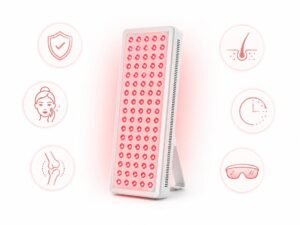
The practical details matter just as much as the science. Wavelength, irradiance, treatment distance, session time, eye protection, and device shape can all affect the result. A facial panel, LED mask, handheld device, and intranasal probe do not deliver light in the same way.
In this guide, we will look at what the research suggests, how red and near-infrared light may interact with the sinus area, which device formats make sense, and what buyers should check before choosing a sinus-focused light therapy product.
Why Sinus Relief Is Gaining Attention in Wellness Markets
Sinus conditions — including chronic sinusitis, allergic rhinitis, and post-viral sinus inflammation — affect hundreds of millions of people globally. For wellness centers, MedSpas, and rehabilitation clinics, sinus-related complaints represent a significant unmet need that conventional pharmacological approaches often fail to address satisfactorily over the long term.
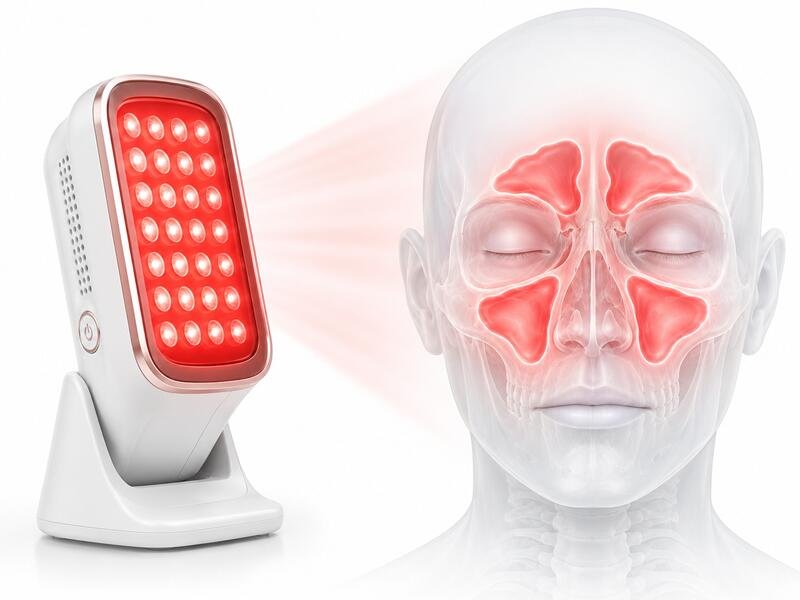
As a procurement manager or brand owner evaluating red light therapy (RLT) devices, understanding the anatomy of the problem is the first step. The paranasal sinuses are air-filled cavities in the skull — frontal, maxillary, ethmoid, and sphenoid — lined with mucous membranes. When these membranes become inflamed, swollen, or infected, the result is pain, pressure, congestion, and reduced quality of life.
Standard treatments such as nasal corticosteroids, antihistamines, and antibiotics carry side effects and compliance challenges. This has opened a growing market for non-pharmacological adjunct therapies — and red light therapy has emerged as one of the most scientifically credible options in this space.
Market Signal for Buyers
The global sinusitis treatment market is projected to exceed $4.5 billion by 2030. Clinics and wellness brands that add non-invasive photobiomodulation services position themselves ahead of a demand curve driven by patient preference for drug-free options.
How Red and Near-Infrared Light May Support Sinus Relief
Red light therapy — also called photobiomodulation (PBM) or low-level laser/light therapy (LLLT) — uses specific wavelengths of light to penetrate biological tissue and trigger cellular responses. For sinus applications, the relevant wavelength ranges are:
Visible Red Light: 630-680nm
Penetrates 2-5mm into tissue. Highly effective for superficial mucosal inflammation, surface-level swelling, and skin-adjacent sinus cavities like the maxillary sinuses.
Near-Infrared (NIR): 810-850nm
Penetrates 5-10mm or deeper. Reaches deeper tissue layers, cartilage, and bone-adjacent cavities. Critical for frontal and sphenoid sinus applications.
The primary cellular target is cytochrome c oxidase (CCO), a photoreceptor protein in the mitochondrial electron transport chain. When photons at the correct wavelengths are absorbed by CCO, the enzyme activity increases, leading to elevated ATP production, reduced reactive oxygen species (ROS), and modulation of the inflammatory signaling cascade.
For sinus tissue specifically, this translates to reduced prostaglandin synthesis, lower histamine response, improved mucociliary clearance, and — critically — reduced edema of the sinus mucosa. The result is less congestion and pressure, improved drainage, and faster resolution of acute episodes.
What Does the Research Say About Red Light Therapy for Sinuses?
The research base for photobiomodulation in ENT and sinus applications has grown substantially over the past decade. Here is what current peer-reviewed evidence supports:
Chronic Rhinosinusitis (CRS)
Multiple randomized controlled trials have demonstrated that PBM applied to the nasal and periorbital region significantly reduces symptom scores (SNOT-22) in patients with CRS. Reductions in mucosal thickness measured by CT imaging have been reported in 8-12 week treatment courses.
Allergic Rhinitis
Intranasal red light therapy (using small LED probes inserted into the nasal cavity) has been evaluated in several studies for seasonal and perennial allergic rhinitis. Results show significant improvements in nasal obstruction, sneezing, and itching scores compared to sham treatment, with effects persisting beyond the treatment period.
Post-Viral & COVID-Related Sinusitis
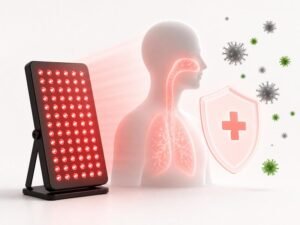
Emerging research from post-COVID rehabilitation protocols has highlighted PBM’s role in managing persistent upper respiratory inflammation. Several case series and pilot trials report reduced sinus pressure, improved smell function, and decreased inflammatory markers following structured PBM treatment.
Anti-Microbial Effects
In vitro and in vivo studies suggest that specific red and near-infrared wavelengths exhibit bacteriostatic effects on common sinus pathogens including S. aureus and H. influenzae, potentially reducing the bacterial load in chronically infected sinuses.
Clinical Note: While the evidence is promising, most studies use small sample sizes. Red light therapy should be positioned as a complementary approach alongside standard medical care, not a replacement. Ensure your marketing and clinical protocols reflect this accurately for regulatory compliance.
How May Red Light Therapy Ease Sinus Pressure and Congestion?
Understanding the specific biological pathways helps buyers evaluate device claims and design credible treatment protocols. Here are the four primary mechanisms relevant to sinus applications:
Anti-Inflammatory Modulation
Downregulates pro-inflammatory cytokines (TNF-α, IL-1β, IL-6) while upregulating anti-inflammatory mediators. Directly reduces mucosal swelling and sinus ostia obstruction.
Enhanced Mucociliary Clearance
Stimulates ciliary beat frequency in the nasal epithelium, improving the body’s natural drainage mechanism and reducing mucus stagnation that contributes to infection.
Immune Regulation
Modulates mast cell degranulation and histamine release, particularly relevant for allergic rhinosinusitis. Reduces the hypersensitivity response that drives symptom severity in allergy-driven cases.
Tissue Regeneration
Accelerates repair of damaged mucosal epithelium. Particularly valuable in post-surgical sinus cases (post-FESS) where faster mucosal healing reduces complication rates and recovery time.
What to Look for in a Sinus Red Light Therapy Device
Not all red light therapy devices are created equal for sinus applications. When evaluating products for your clinic, MedSpa, or private label brand, these are the critical specifications to assess:
| Specification | Recommended for Sinuses | Why It Matters |
|---|---|---|
| Wavelength | 630-680nm (red) + 810-850nm (NIR) | Dual-wavelength ensures both superficial mucosal and deeper tissue penetration |
| Power Density | 30-100 mW/cm² at treatment distance | Sufficient irradiance to deliver therapeutic dose without tissue heating |
| Treatment Area | Targeted panel or facial mask format | Allows precise coverage of frontal, maxillary, and ethmoid sinus regions |
| Dose (Fluence) | 4-20 J/cm² per session | Evidence-based therapeutic window; too low is ineffective, too high inhibitory |
| Pulsing Mode | Continuous + optional pulse (10-40Hz) | Pulsed modes may enhance anti-inflammatory effects in some protocols |
| Certifications | CE, FCC; FDA 510(k) for clinical use | Required for clinical deployment and insurance/regulatory compliance |
Device Form Factors for Sinus Applications
The form factor of the device significantly affects clinical workflow, patient compliance, and the types of protocols you can offer:
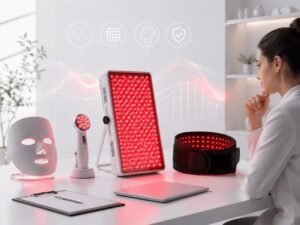
- Facial LED Panels (e.g., EL300, EL560): Best for clinic use. Patients sit at a set distance while the panel treats the entire facial region including all major sinus areas. Suitable for multi-patient throughput and staff-assisted protocols.
- LED Facial Masks: Hands-free, wearable format ideal for consistent treatment geometry. Excellent for home-use programs and patient compliance outside the clinic setting.
- Handheld Targeted Devices: Allow precise spot treatment over specific sinus regions. Useful as an adjunct to panel treatment or for portable/travel applications.
- Intranasal Probes: Small LED devices inserted into the nasal cavity for direct mucosal irradiation. Highest tissue-level dose delivery; primarily used in clinical and research settings.
How to Use Red Light Therapy for Sinuses: Time, Distance & Frequency
For buyers designing clinical protocols or patient-facing programs, the following framework is based on current literature and clinical practice guidelines for PBM in ENT applications:
Initial Assessment & Positioning
Position the device 5-15cm from the face, centered on the sinus regions of concern. For maxillary sinuses (cheekbones), ensure coverage of the infraorbital area. For frontal sinuses, direct light at the forehead above the brow ridge.
Session Duration & Frequency
Acute sinusitis: 10-15 minutes per session, once or twice daily for 5-7 days. Chronic sinusitis maintenance: 15-20 minutes per session, 3-5 times per week for 8-12 weeks. Allergic rhinitis: 10 minutes daily during allergy season.
Eye Protection
Always provide appropriate optical density eye protection. Although red/NIR light is not classified as high-risk for the eye at therapeutic intensities, eye protection is standard clinical practice and required for regulatory compliance in most markets.
Combination Approach
Best results are observed when RLT is combined with saline irrigation (nasal rinse) performed immediately before treatment. This clears mucus, improves light penetration to the mucosal surface, and enhances the biological response.
Outcome Tracking
Use validated patient-reported outcome measures such as SNOT-22 (Sino-Nasal Outcome Test) at baseline, 4 weeks, and 8 weeks. Track symptom subscores (nasal, ear/facial, sleep, emotional) to demonstrate treatment efficacy and support patient retention.
Is Sinus Red Light Therapy a Good Fit for Your Product Line?
For procurement managers and brand owners evaluating whether to add red light therapy for sinus applications to their product or service portfolio, here are the strategic considerations:
Business Case: Opportunities
- ✓Large addressable patient population with chronic, recurring need
- ✓Recurring treatment model drives session-based revenue
- ✓Growing patient preference for drug-free alternatives
- ✓Low consumable costs after device acquisition
- ✓Complements existing facial aesthetics and wellness services
- ✓Home-use device sales opportunity for patient continuity
Due Diligence Points
- !Verify device certifications match your target market (CE for EU, FCC for US)
- !Review manufacturer’s clinical data and wavelength accuracy claims
- !Confirm power density specs are measured at actual treatment distance
- !Assess staff training requirements and protocol documentation
- !Check contraindication list for your patient demographic
- !Understand warranty, spare parts, and after-sales support terms
OEM & Private Label: Accelerating Time to Market
For brands looking to launch their own sinus-focused RLT product line, OEM manufacturing offers a faster, lower-risk path than in-house development. Key advantages include access to proven device architectures, existing certification documentation, and manufacturing scale that reduces per-unit costs.
When briefing an OEM manufacturer for a sinus-specific device, include the following in your specification:
- Target application area (facial panel vs. targeted handheld vs. mask format)
- Required wavelengths and power density at specified treatment distances
- Target market and required certifications (CE, FCC, FDA, TGA, etc.)
- Packaging, branding, and user documentation requirements
- Expected order volumes for MOQ and unit cost negotiation
Frequently Asked Questions
1. How quickly can patients expect results for sinus symptoms?
For acute sinusitis, many patients report noticeable symptom relief (reduced pressure, improved breathing) within 2-5 sessions. Chronic sinusitis typically requires 3-6 weeks of consistent treatment before significant objective improvement is measurable. Allergic rhinitis often shows faster response, sometimes within the first 1-2 weeks of daily use.
2. Is red light therapy safe to use near the eyes and face?
Red and near-infrared light at therapeutic intensities is considered safe for facial use when proper eye protection is worn. Devices should be CE or FDA cleared for facial application. Contraindications include active photosensitizing medications, recent facial surgery, and certain skin conditions. Always provide patients with appropriate optical density goggles and follow device-specific safety guidelines.
3. Can the same device be used for sinus treatment and facial aesthetics?
Yes — this is one of the key commercial advantages of facial LED panels. A device with dual 660nm/850nm wavelengths can address sinus inflammation, skin rejuvenation, acne reduction, and collagen stimulation within the same treatment session or as separate protocols. This multi-indication capability significantly improves the ROI per device for clinics and MedSpas.
4. What certifications should I require from my device manufacturer?
At minimum, require CE marking (EU) and FCC certification (US) for any device sold in those markets. For clinical-grade devices used in medical settings, FDA 510(k) clearance or Class II medical device registration may be required depending on the claims made. ISO 13485 quality management certification from the manufacturer is a strong indicator of production consistency and regulatory readiness.
5. What is the minimum order quantity for OEM sinus therapy devices?
MOQ varies by device type and customization level. For standard OEM (existing design, custom branding), MOQs typically start at 50-100 units. For ODM (custom design development), initial production runs are usually 200-500 units after prototype approval. Contact MedLight directly for specific MOQ and pricing based on your requirements.
6. Are there any contraindications buyers should be aware of for sinus RLT?
Key contraindications include: active malignancy in the treatment area, use of photosensitizing drugs (certain antibiotics, NSAIDs, diuretics), pregnancy (precautionary), active herpes simplex outbreak on the face, and epilepsy (for pulsed light modes). Buyers should ensure their clinical protocols include a patient screening checklist and that staff are trained on contraindication assessment.
7. How long does the OEM/ODM development process typically take from concept to delivery?
For standard OEM orders with custom branding on an existing platform, lead times are typically 4-8 weeks from order confirmation to shipment. Full ODM projects — involving custom industrial design, new tooling, and prototype validation — generally require 12-20 weeks before mass production begins. Certification testing (CE, FCC) adds 4-8 weeks if not pre-certified. MedLight provides a project timeline at the proposal stage so buyers can plan their product launch accordingly.
8. Can MedLight support private label packaging and brand identity for our product line?
Yes. MedLight provides full private label support including custom logo placement on the device housing, branded retail packaging (box design, inserts, and labels), custom user manuals with your brand identity, and firmware UI customization where applicable. Artwork files in AI or PDF format are required. Our in-house design team can assist with packaging artwork adaptation at no additional charge for qualifying order volumes.
9. What wavelength and irradiance specifications are recommended for clinical sinus therapy devices?
Clinical evidence for sinus and nasal cavity photobiomodulation most commonly references 630-660nm (red) and 810-850nm (near-infrared) wavelengths. Irradiance at the tissue surface of 10-50 mW/cm² is typical for intranasal probes, while facial panel devices targeting the sinus cavities transcutaneously may use 50-150 mW/cm². Dosimetry (total energy in J/cm²) per session is a key parameter — most published protocols target 2-10 J/cm². MedLight engineers can configure wavelength combinations and power output to match your target clinical application.
10. What quality control measures does MedLight apply during production?
MedLight operates under ISO 13485-aligned quality management processes. Production QC includes incoming material inspection for LEDs and electronic components, in-process assembly checks, optical output verification (irradiance and wavelength accuracy) on 100% of units, electrical safety testing (hi-pot, leakage current), and final function burn-in testing. Pre-shipment inspection reports are available upon request, and third-party factory audits can be arranged for buyers with compliance requirements. Defect rate targets and warranty terms are defined in the supply agreement.
Conclusion
Red light therapy is not a tiny vacuum cleaner for your sinuses, and one glowing session will not make every blocked nose disappear by lunchtime. But the research suggests that carefully delivered red and near-infrared light may have a useful supporting role in sinus wellness, particularly where inflammation, swelling, congestion, or slow tissue recovery are involved.
The important word is carefully. Results depend on suitable wavelengths, measured irradiance, realistic dosing, correct positioning, eye protection, and a device format that can reach the intended facial area. It should also be presented as a complementary option, not as a replacement for medical diagnosis, prescribed medication, or treatment for serious or persistent sinus problems.
For clinics, wellness centers, distributors, and brands, that means looking beyond a bright product photo. Ask for wavelength data, irradiance measured at the working distance, safety documentation, treatment guidance, certification support, and clear contraindications.
If you are considering a facial panel, mask, handheld device, or custom sinus-focused light therapy product, MedLight can help review the specifications, application, packaging, and OEM/ODM requirements.
Because “it has red LEDs” is a description—not a product strategy.