Ten years ago, if someone told you that shining a red light on your face could reduce wrinkles, you’d probably have lumped it in with late-night infomercial gadgets. Fair enough. But here we are in 2025, and red light therapy has grown into a billion-dollar industry with hundreds of peer-reviewed studies behind it. The science caught up.
The problem? For every well-built device that actually delivers photobiomodulation, there’s a cheap knockoff on a marketplace that glows red and does about as much for your cells as a lava lamp. If you’re buying or distributing these products, that gap between “therapeutic” and “decorative” is exactly where your reputation — and your customers’ trust — is on the line.
That’s why we put this guide together. No buzzwords, no fluff — just the science, the specs that matter when you’re evaluating a supplier, and a clear look at what separates devices that deliver results from devices that merely light up. If you’ve got a coffee handy, now’s the time.
Short Answer: Yes — With Caveats
The Bottom Line
At-home red light therapy works when the device hits the right wavelengths (typically 630-660 nm red and 810-850 nm near-infrared), puts out enough power density (irradiance), and the user sticks with it over time. The underlying mechanism — photobiomodulation — is well-documented in peer-reviewed research. But not every consumer device on the market meets these thresholds, and that’s exactly where your sourcing decisions make or break the product.
The real question isn’t “does red light therapy work?” — it’s “does the specific device I’m putting my brand name on deliver enough therapeutic energy to produce real results?” That distinction is what separates products people recommend to their friends from products that end up in a closet after two weeks.
How Red Light Therapy Works
The Basics of Photobiomodulation (PBM)
Red light therapy — technically called photobiomodulation (PBM) or low-level light therapy (LLLT) — works at the cellular level. When red and near-infrared (NIR) light at the right wavelengths hits your skin, it gets absorbed by cytochrome c oxidase, an enzyme sitting inside your mitochondria. Think of mitochondria as the power plants in every cell. When they absorb this light, a few things happen:
More ATP Production
Light energy kicks mitochondria into higher gear, producing more adenosine triphosphate (ATP) — basically the fuel your cells run on. More ATP means cells repair faster and function better.
Less Inflammation
PBM helps regulate reactive oxygen species (ROS) and triggers anti-inflammatory pathways. That matters for everything from joint pain to skin aging — both driven by chronic, low-grade inflammation.
Better Blood Flow
Red and NIR light trigger nitric oxide (NO) release, which opens up blood vessels. More blood flow means more oxygen and nutrients reaching the tissue, which speeds up healing.
Collagen Production
PBM ramps up fibroblast activity and collagen synthesis. This is the mechanism behind skin rejuvenation, wound healing, and the anti-aging results that drive so much consumer demand.
The Therapeutic Window
Not all light does this. Your cells only respond to specific wavelength ranges — what researchers call the “optical window” for photobiomodulation:
| Wavelength Range | Type | Penetration Depth | Primary Applications |
|---|---|---|---|
| 630-660 nm | Red light | 1-4 mm (skin level) | Skin rejuvenation, collagen production, wound healing, acne |
| 810-850 nm | Near-infrared | 5-40+ mm (deep tissue) | Muscle recovery, joint pain, inflammation, bone healing |
| Combined 660 + 850 nm | Dual wavelength | Surface to deep tissue | Full-spectrum benefits; most versatile for consumer products |
What this means for sourcing: If a device uses wavelengths outside this range — or the manufacturer can’t even tell you what wavelengths they use — walk away. Always ask for spectral output data and third-party irradiance test reports. If they can’t provide them, that tells you something.
What the Clinical Research Actually Shows
There’s a lot of research behind red light therapy at this point — we’re not talking about a handful of small studies. Here’s a straightforward summary of the strongest evidence across the main application areas:
Skin Rejuvenation & Anti-Aging
A 2014 study in Photomedicine and Laser Surgery found that subjects treated with 611-650 nm and 570-850 nm polychromatic light had measurably improved skin complexion, skin texture, and collagen density on ultrasonography. Participants saw visible reductions in fine lines, wrinkles, and roughness.
Earlier work by Lee et al. (2006) showed that LED phototherapy at 633 nm and 830 nm produced increased collagen density and reduced wrinkle severity after 12 weeks.
Evidence Strength: Strong — Multiple randomized controlled trials (RCTs) with objective measurements.
Pain Relief & Joint Health
A 2015 meta-analysis in The Lancet — reviewing 22 RCTs with over 1,000 patients — concluded that LLLT reduces pain immediately after treatment in acute neck pain and for up to 22 weeks after completing treatment in chronic neck pain.
For osteoarthritis, a systematic review in Lasers in Medical Science found significant pain reduction and improved functional capacity in knee OA patients when dosing parameters were appropriate.
Evidence Strength: Strong — Backed by meta-analyses and systematic reviews, which is the highest tier of clinical evidence.
Muscle Recovery & Athletic Performance
A 2018 systematic review in Sports Medicine looked at 39 RCTs and found that PBM applied before exercise significantly improved muscular performance and sped up post-exercise recovery. Specifically, it reduced muscle fatigue, decreased delayed-onset muscle soreness (DOMS), and lowered creatine kinase levels — a standard marker of muscle damage.
Evidence Strength: Strong — Consistent results across multiple meta-analyses in sports medicine journals.
Wound Healing
Research in The Journal of Clinical and Aesthetic Dermatology shows that red and NIR light speeds up wound closure, reduces inflammation at wound sites, and supports tissue remodeling. Positive results have been documented for diabetic ulcers, surgical wounds, and burns.
Evidence Strength: Moderate to Strong — Well-supported in clinical settings; home-use data is growing.
Hair Growth
A 2014 meta-analysis in the Journal of the American Academy of Dermatology reviewed four RCTs and found that LLLT significantly increased hair density in both men and women with androgenetic alopecia. Several FDA-cleared devices (like laser caps) are already on the market for this use case.
Evidence Strength: Moderate — Supported by RCTs, though larger-scale studies for specific device types would strengthen the case.
What This Means for You
The science is solid and keeps getting stronger. But here’s the catch: most clinical studies use carefully calibrated, medical-grade equipment. The question you need to answer is: can the at-home device you’re sourcing deliver parameters close enough to those clinical devices to produce meaningful results? That comes down to device specs — which we’ll get into next.
Home Devices vs. Clinical Devices: The Real Differences
If you’re in this business, you need to understand the gap between what clinics use and what consumers buy for home. Knowing this gap — and how to close it — is how you differentiate your product line.
| Parameter | Clinical Devices | Quality Home Devices |
|---|---|---|
| Irradiance | 100-200+ mW/cm² | 50-150 mW/cm² (at surface) |
| Treatment area | Full body or large zones | Targeted to full body (depends on device type) |
| Treatment time | 5-15 minutes per zone | 10-20 minutes per zone |
| Cost per session | $50-$300 per visit | Negligible (electricity only) |
| Convenience | Requires appointment & travel | Use anytime at home |
| Compliance rate | Lower (scheduling barriers) | Higher (daily access increases consistency) |
The Home Advantage That Gets Overlooked: Consistency
Here’s something most people miss: a moderately powered home device used consistently will often outperform a high-powered clinical device used sporadically. Red light therapy is cumulative. Someone using a decent panel for 15 minutes a day, five days a week, will typically see better long-term results than someone who visits a clinic once or twice a month. That’s the core value proposition for at-home devices — and it’s the message that resonates with end users who’ve done their homework.
Device Types: What’s Out There and Who Buys What
The at-home market covers a wide range of form factors. Each one serves different customers and use cases. Here’s a practical comparison:
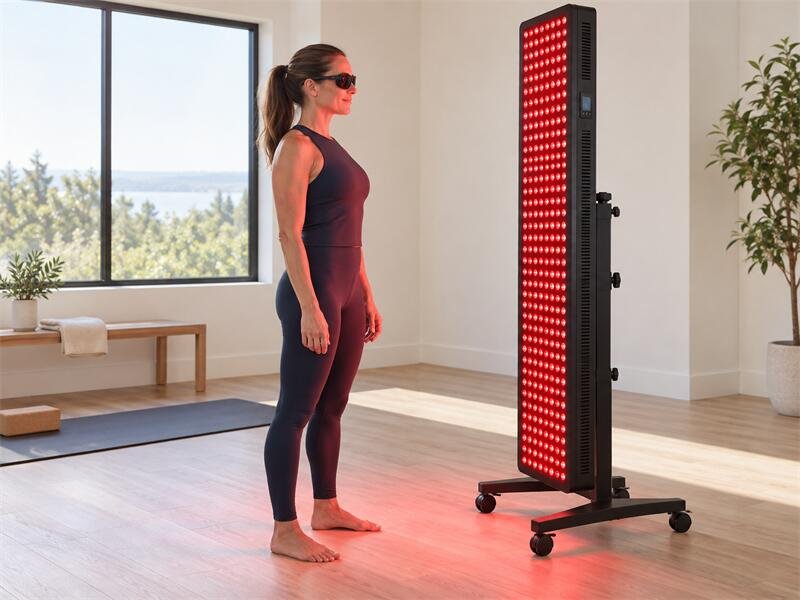
Panels
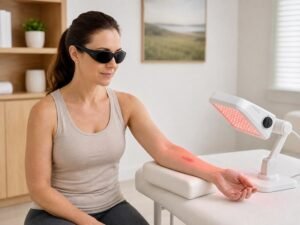
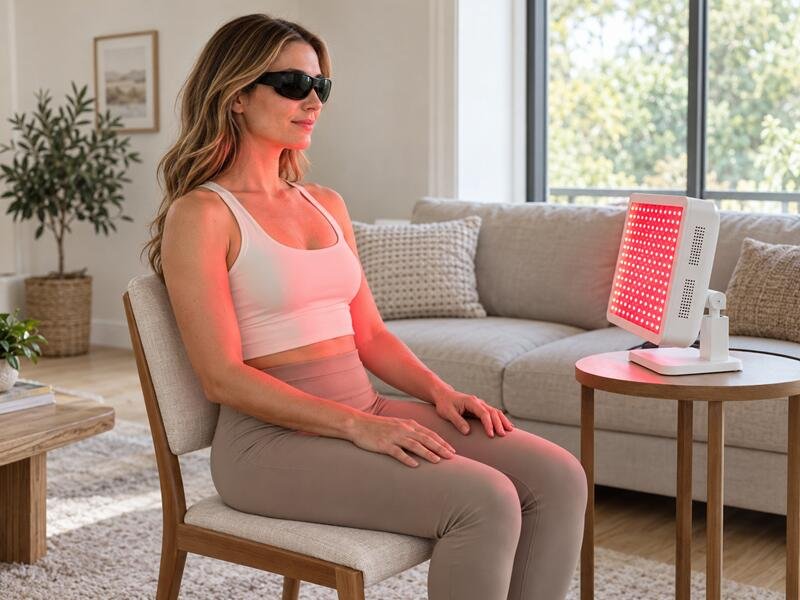
The workhorse of home therapy. Ranges from tabletop units to full-body panels. Delivers the highest irradiance and covers the most area of any consumer form factor.
✓ Highest power output
✓ Versatile — face, body, targeted areas
✓ Closest to clinical-grade performance
△ Needs a mount or stand
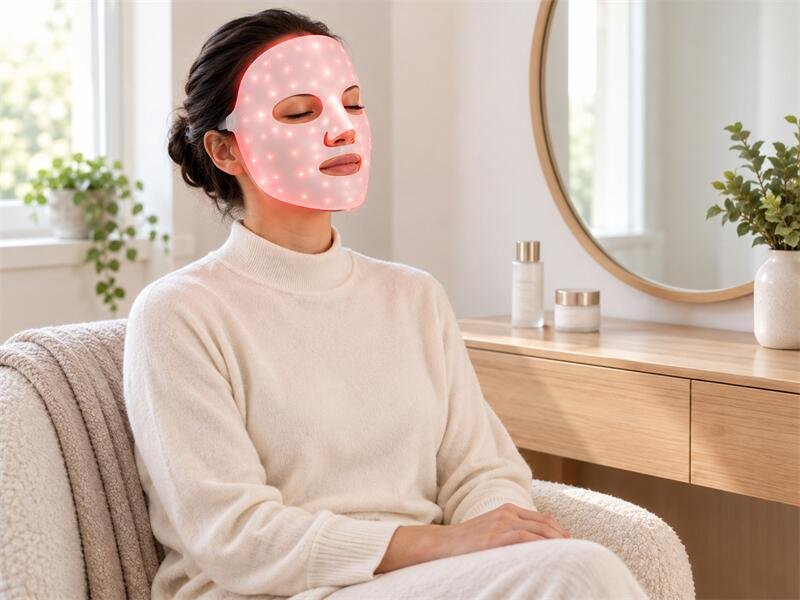
LED Face Masks
Contoured masks that sit right on the face for close-contact light delivery. Available in wired and wireless versions. Huge consumer appeal — these sell themselves on social media.
✓ Hands-free operation
✓ Great for skin rejuvenation
✓ Strong visual appeal for marketing
△ Face-only treatment area
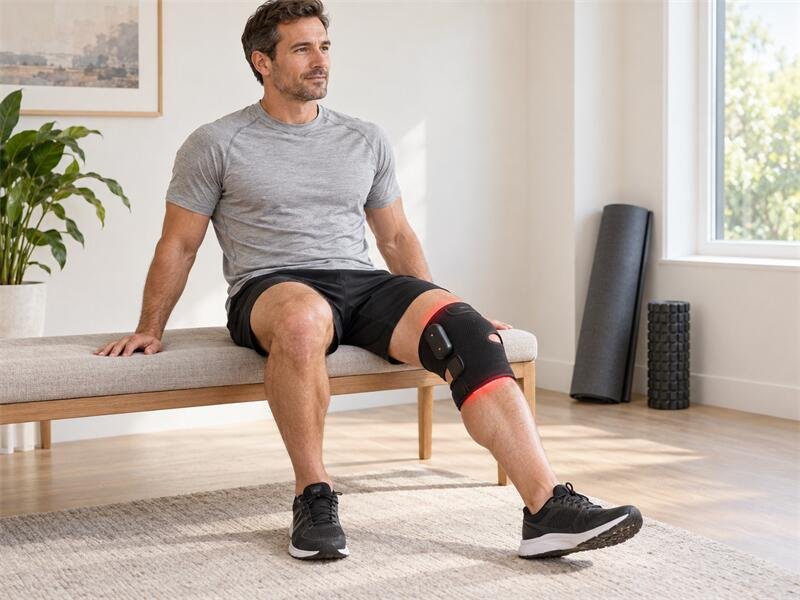
Wearable Wraps & Pads
Flexible, wearable devices for targeted therapy — neck, knees, wrists, ankles, back. These are the go-to for pain relief and recovery customers.
✓ Direct skin contact for maximum delivery
✓ Portable and wearable
✓ Targeted pain relief
△ Smaller treatment area per device
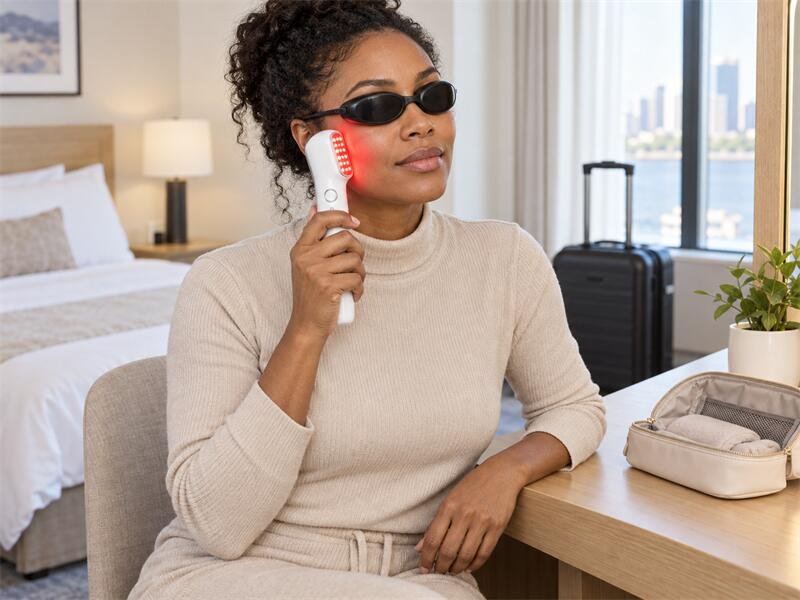
Handheld Devices
Compact and portable for spot treatment. Popular with skincare-focused buyers and people who travel. Also the lowest price point for entry-level customers.
✓ Most affordable entry point
✓ Highly portable
✓ Good for targeted spots
△ Requires manual holding during use
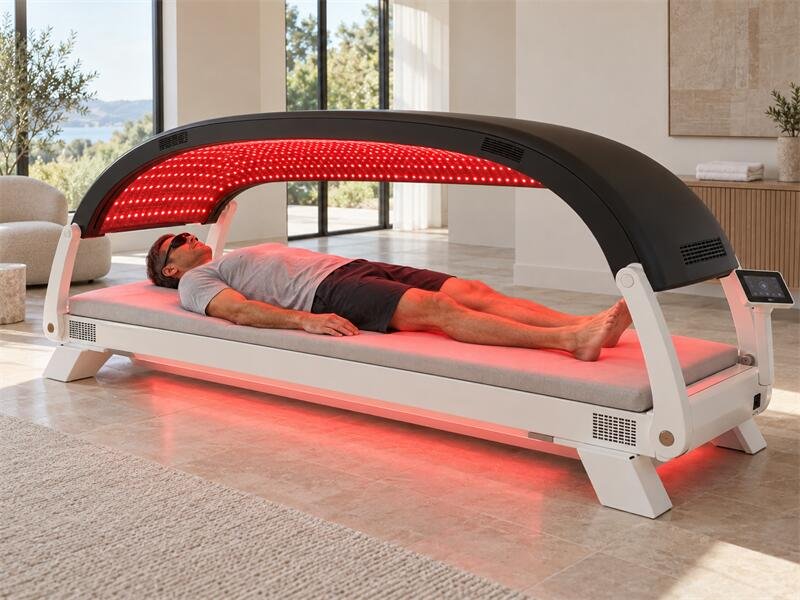
Full-Body Systems
Beds, pods, domes, and sleeping bags for whole-body treatment. The closest thing to a clinical setup you can put in someone’s home. Premium positioning.
✓ Whole-body treatment in one session
✓ Premium market positioning
✓ Highest therapeutic potential
△ Higher price point and space requirements
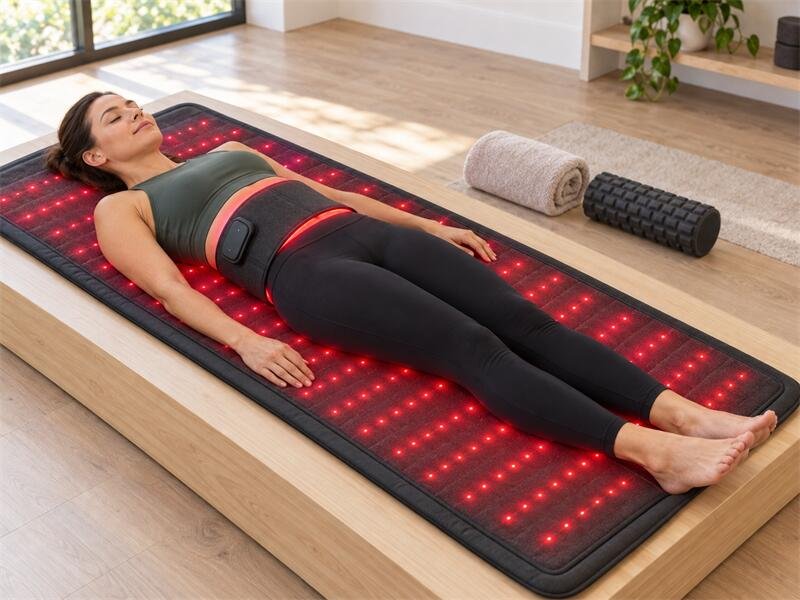
Therapy Mats & Belts
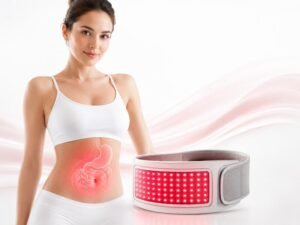
Lay-flat mats for back and body treatment, plus belts for waist, abdomen, and lower back. Good balance of convenience and coverage area.
✓ Hands-free, lie-down treatment
✓ Good for back pain and recovery
✓ Popular in fitness and wellness
△ Moderate irradiance compared to panels
The Specs That Actually Determine Whether a Device Works
This is the section that matters most if you’re evaluating devices or comparing suppliers. Whether a red light therapy product delivers real results comes down to these measurable parameters:
Wavelength (nm)
This is the single most important spec. Only certain wavelengths trigger photobiomodulation. The two with the most research behind them are 660 nm (red) and 850 nm (near-infrared). Some devices also use 630 nm, 810 nm, or 940 nm for specific applications.
What to ask your supplier: Get spectral output reports. Cheap LEDs might be labeled “660 nm” but actually emit a wide band centered at 640 nm or 680 nm — which reduces therapeutic value. A manufacturer worth working with will have spectroradiometer data ready.
Irradiance / Power Density (mW/cm²)
This measures how much light energy actually reaches the treatment surface per square centimeter. It’s also the most commonly inflated spec in this industry. Effective therapeutic irradiance is 30-150+ mW/cm² at the skin surface.
Here’s the catch: irradiance drops fast with distance. A device reading 100 mW/cm² at contact may only deliver 20-30 mW/cm² at 6 inches. Always ask for measurements at the actual treatment distance, not just at the surface of the LEDs.
What to ask your supplier: Request irradiance data at 0″, 6″, 12″, and 24″ using a calibrated meter. Be skeptical of manufacturers who only quote “total power output” in watts — that number alone doesn’t tell you what’s reaching the skin.
Dose / Fluence (J/cm²)
Dose = Irradiance × Time. It’s the total energy delivered per unit area. Research shows a biphasic dose response (called the Arndt-Schulz curve) — too little does nothing, the right dose helps, and too much can actually slow things down at the cellular level.
Typical therapeutic doses fall between 3-60 J/cm² depending on the application. Superficial skin treatments need less (3-15 J/cm²), while deep tissue work may need 20-60 J/cm².
What to ask your supplier: A good manufacturer will provide treatment protocols (time + distance) calculated from the device’s actual measured irradiance — not just a generic “use for 10 minutes” instruction.
LED Quality & Chip Type
The LED chips inside a device affect everything — wavelength accuracy, power stability, lifespan, and heat management. Premium devices use branded chips (Bridgelux, Osram, Samsung, etc.) with tight wavelength bins and high radiant efficiency.
What to ask your supplier: Find out the LED chip brand, bin sorting, and rated lifespan (quality LEDs typically last 50,000+ hours). Cheap generic chips degrade faster and can drift in wavelength over time.
Treatment Area Coverage
How much of the body gets treated per session directly affects user experience. Larger treatment areas mean shorter total sessions and better user compliance — which is why panels and full-body systems are preferred by people who stick with it long-term.
What to ask yourself: Who’s your target customer? A fitness brand probably needs large panels for full-body recovery. A beauty brand might focus on face masks and handhelds. Match the form factor to your market.
EMF Emissions & Safety
Electromagnetic field (EMF) emissions matter to health-conscious buyers — and this segment is growing fast. Quality devices should produce low EMF at the treatment surface (ideally <1 µT at 6 inches). Getting there requires proper electrical design, shielding, and driver circuit engineering.
What to ask your supplier: Request EMF testing data. Low EMF is becoming a real competitive differentiator, especially in the wellness and biohacking segments where buyers read spec sheets carefully.
What End Users Can Realistically Expect
Setting the right expectations is how you build repeat customers instead of processing returns. Here’s what people typically experience with consistent use of a quality device:
| Application | Initial Changes | Noticeable Results | Optimal Results |
|---|---|---|---|
| Skin rejuvenation | 1-2 weeks (improved tone) | 4-8 weeks | 12-24 weeks |
| Pain relief | 1-3 sessions | 1-2 weeks | 4-8 weeks |
| Muscle recovery | Immediate (reduced soreness) | 1-2 weeks | Ongoing with consistent use |
| Wound healing | 3-5 days | 1-3 weeks | Varies by wound severity |
| Hair growth | 4-8 weeks (reduced shedding) | 12-16 weeks | 24-52 weeks |
| Inflammation reduction | 1-3 sessions | 1-4 weeks | 4-12 weeks |
A Note on Managing Expectations
Results depend on the individual — their biology, the severity of what they’re treating, the device quality, how consistently they use it, and whether they’re using it correctly. Red light therapy isn’t a magic fix — it’s a tool that works best as part of a broader routine. Brands that communicate this clearly build stronger customer loyalty and see fewer returns. Overpromising leads to one-star reviews and chargebacks. It’s not worth it.
What Red Light Therapy Can’t Do (and Common Myths)
Knowing the limitations is just as important as knowing the benefits. This is what protects your brand and helps you make smarter sourcing decisions.
“Any red light works”
Not true. Regular red LEDs — like the ones in string lights or indicator bulbs — emit light across a broad, uncontrolled spectrum. They don’t hit therapeutic wavelengths with any precision, and they lack the irradiance needed for photobiomodulation. Only purpose-built therapy LEDs with specific wavelength binning deliver therapeutic doses.
“More power is always better”
Not how it works. There’s an optimal dose range. Go too low and nothing happens. Hit the sweet spot and cells respond. Go too high and you can actually inhibit cellular function — this is the biphasic dose response that shows up repeatedly in the research. A well-designed device with proper protocols beats a brute-force high-wattage device with no dosing guidance.
“You’ll see dramatic results right away”
Rarely. Some things — like reduced inflammation or a sense of relaxation — can show up quickly. But visible skin improvements, hair growth, or chronic pain reduction take weeks to months of consistent use. This is biology, not a filter. Setting that expectation upfront saves you a lot of customer service headaches.
“Red light therapy can replace medical treatment”
It can’t, and you shouldn’t market it that way. RLT is a complementary therapy. Positioning it as a wellness and recovery tool — not a cure — is both more accurate and less risky from a regulatory standpoint.
“All devices on the market work the same”
They absolutely don’t. The market is full of low-quality devices with cheap LEDs, inaccurate wavelengths, and insufficient power. Many budget devices on consumer marketplaces deliver less than 10 mW/cm² — well below therapeutic thresholds. They glow red. That’s about it. This is exactly why who you source from matters.
Real Limitations Worth Knowing
- 1Skin pigmentation affects penetration: Darker skin absorbs more light at the surface, which can mean longer treatment times or higher irradiance to get the same tissue penetration.
- 2Depth has limits: Even 850 nm NIR light can only penetrate so far. Deep-seated conditions may not respond as well to surface-applied therapy.
- 3People respond differently: Genetics, age, health status, and other treatments all influence how much benefit someone gets. Not every user will have the same experience.
- 4Photosensitivity is a real concern: Users on photosensitizing medications or with certain skin conditions need to check with their doctor first. Make sure your product documentation includes clear warnings about this.
What to Check When You’re Evaluating a Supplier
Now that you know the science and what makes a device effective, here’s a practical checklist for vetting manufacturers and their products:
Technical Verification
- Spectral output reports (wavelength accuracy)
- Irradiance measurements at multiple distances
- LED chip brand and specifications
- EMF emission test results
- Thermal management design details
- Beam angle and coverage uniformity data
Certifications & Compliance
- CE marking (European markets)
- FCC certification (US markets)
- FDA registration (if applicable)
- IEC 62471 photobiological safety testing
- RoHS compliance
- ISO quality management certification
Manufacturing Capability
- OEM/ODM capabilities for private labeling
- In-house R&D and engineering team
- Prototyping and sample testing before mass production
- Documented QC processes
- Scalable production capacity
- Custom packaging and branding support
After-Sales & Support
- Warranty terms and defect rate data
- Technical documentation and user manuals
- Marketing materials and educational content
- Responsive communication
- Replacement parts availability
- Ongoing product improvements
🚩 Warning Signs When Talking to Suppliers
Can’t provide spectral or irradiance test data
Makes vague or exaggerated efficacy claims
Has no certifications or won’t pursue them
Pricing so low it doesn’t add up
No in-house engineering or R&D
Won’t send samples for independent testing
No quality control documentation
Only offers generic products with no customization
Where the Market Is Headed
If you’re weighing whether to invest in this category, here’s what the market looks like right now:
$1.1B+
Global red light therapy market (2023)
14%+
Projected annual growth through 2030
#1
Fastest-growing segment in home wellness devices
What’s Driving the Growth
↑
↑
↑
↑
↑
Product Categories With the Most Momentum
Based on current market trends, these are the categories moving fastest:
LED Face Masks
Driven by the beauty and skincare market. Strong social media presence, accessible price points, and high consumer appeal make these easy to move.
Wearable Therapy Devices
Wraps, belts, and pads for targeted pain relief. Growing demand from fitness, rehab, and aging population segments.
Mid-Size Panels
The all-rounder for serious users. Appeals to wellness enthusiasts and biohackers who do their research and are willing to pay for quality.
Pet Therapy Devices
Still early but growing fast. Pet owners are increasingly using light therapy for animal pain management and recovery. Worth watching.
Frequently Asked Questions
Is at-home red light therapy FDA approved?
How long does it take to see results from at-home red light therapy?
Are there any side effects of at-home red light therapy?
What’s the difference between red light and near-infrared light therapy?
How do I verify that a manufacturer’s devices actually deliver therapeutic doses?
What minimum order quantities should I expect for OEM/ODM red light therapy devices?
What is the best type of red light therapy device for at-home use?
How often should you use red light therapy at home for best results?
Can at-home red light therapy be used alongside other skincare treatments or medications?
Is an at-home red light therapy device worth the investment compared to clinic sessions?
Wrapping Up
So — Does At-Home Red Light Therapy Work?
Yes. But only if the device is actually engineered to deliver therapy — not just to glow red.
Photobiomodulation isn’t a wellness trend that popped up on social media and will fade next year. It’s backed by hundreds of peer-reviewed studies, real clinical data, and straightforward biology — your mitochondria absorb the right wavelengths of light and produce more energy. That’s the mechanism. When a device delivers the right wavelengths at proper irradiance with quality LEDs, it works. When it doesn’t? You’ve sold someone an expensive nightlight. And nobody builds a lasting brand on expensive nightlights.
The real question was never “does red light therapy work?” It’s “is the device I’m sourcing actually built to deliver results?” Because the gap between a product that transforms skin and one that just looks nice on a shelf comes down to engineering, component quality, and a manufacturer who knows what they’re doing. Get that right, and your customers — and your margins — will reflect it.
Next Steps
Figure out who you’re selling to
Beauty clinics, fitness facilities, wellness centers, or direct consumers? Each segment has different device preferences and price sensitivity. Get specific before you start sourcing.
Pick the right device categories
Match product form factors to your market. Consider starting with 2-3 complementary products rather than going all-in on a single SKU.
Vet your manufacturer thoroughly
Use the sourcing checklist above. Request samples, test data, and certifications. If you can visit the facility, do it. If they can’t answer your technical questions, move on.
Educate your customers — don’t just sell to them
Brands that help their customers understand proper use, realistic timelines, and the science behind the technology build stronger loyalty and can charge more. It also cuts down on returns.
Find a manufacturing partner who can grow with you
You want more than just a factory — you want engineering support, compliance help, and the capacity to scale as your orders grow. The right partner makes the difference between a product launch and a product line.