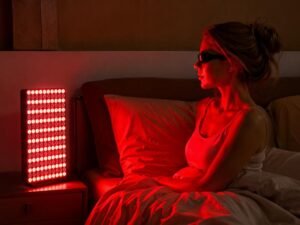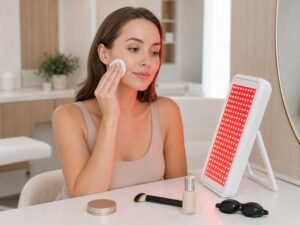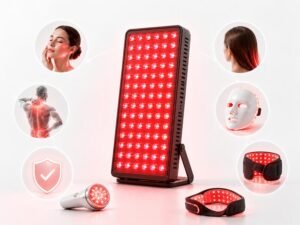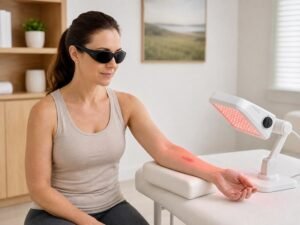
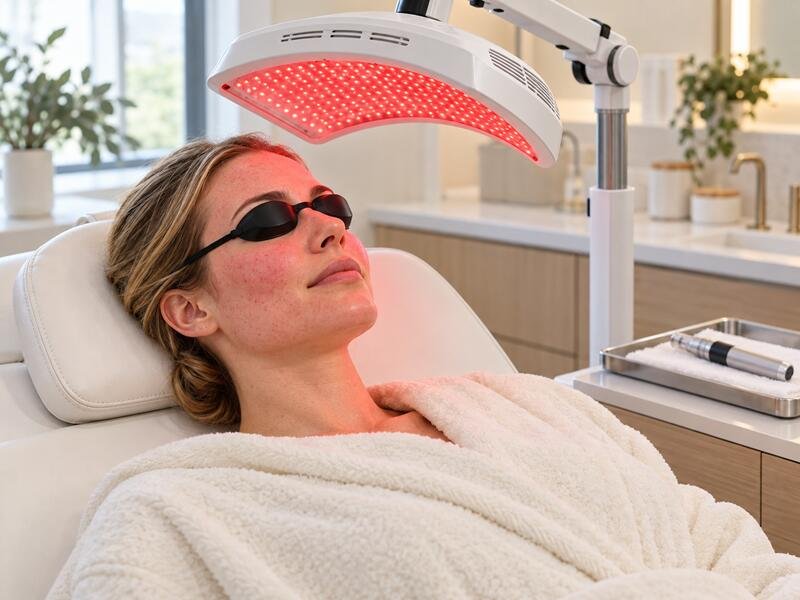
Microneedling leaves the skin full of tiny punctures — that’s the whole point. The body responds by ramping up collagen production and kicking off its natural repair process. So the obvious follow-up question from clinic owners and their patients: can you use red light therapy right after?
The short version: yes, and there’s a growing body of clinical evidence behind it. Red light therapy after microneedling has moved well past the experimental phase. Dermatologists and aestheticians are already building it into their standard protocols, and patients are noticing the difference in recovery time and results.
For those of you on the sourcing and product side — this article covers the clinical reasoning, the timing, the device specs that matter, and what this combination means for your product portfolio. We’ll stick to what’s backed by evidence and what’s actually useful for making purchasing decisions.
The Short Answer
Yes — red light therapy can be used after microneedling, and clinical evidence shows it improves healing outcomes when done properly.
The key factors are timing, device parameters, and following a sensible protocol. When those are in place, the combination speeds up collagen production, brings down inflammation, and shortens recovery — which matters to both the patient in the chair and the clinic booking the next appointment.
Here’s the basic logic. Microneedling — sometimes called collagen induction therapy — creates thousands of tiny, controlled injuries in the skin. That triggers the body’s wound healing response: inflammation first, then tissue rebuilding, then remodeling. Red light therapy uses specific wavelengths (typically 630-660nm red and 810-850nm near-infrared) to give cells more energy by boosting mitochondrial activity and ATP production. More energy means faster, more efficient repair.
Put the two together, and you’re giving the skin’s repair system a head start. The micro-channels from needling also let light penetrate deeper than it normally would, which may increase the effectiveness of both treatments.
From a business standpoint, this matters because clinics and consumers are already asking for combination protocols. The demand for reliable, well-spec’d red light devices designed for post-procedure use is real and growing — not theoretical.
How the Two Treatments Work Together
To see why this pairing makes sense, it helps to look at what each treatment does on its own — and then what happens when you combine them.
What Microneedling Does
- ✦Creates controlled micro-injuries at 0.25mm to 2.5mm depth
- ✦Sets off the wound healing cascade: inflammation, then proliferation, then remodeling
- ✦Activates fibroblasts to produce new collagen and elastin
- ✦Opens temporary micro-channels that can boost topical product absorption by up to 300%
What Red Light Therapy Does
- ✦Gets absorbed by cytochrome c oxidase in the mitochondria, increasing ATP output
- ✦Lowers oxidative stress and pro-inflammatory cytokines
- ✦Turns up collagen gene expression and growth factor release
- ✦Improves blood flow and lymphatic drainage
What Happens When You Combine Them
Several things work in your favor when red light follows microneedling:
- 01
Light gets deeper. The micro-channels act as pathways for red and near-infrared light to reach dermal layers that are normally harder to access. More energy reaches the cells that need it most.
- 02
The inflammatory phase moves along faster. RLT doesn’t shut down inflammation — you actually need that initial response. But it helps the skin transition from the inflammatory phase into the rebuilding phase more efficiently, which means less prolonged redness and swelling.
- 03
Collagen production compounds. Both treatments stimulate collagen on their own. Together, studies show the combined output is noticeably higher than either one alone.
- 04
Recovery time shrinks. Faster cellular repair and better-managed inflammation mean the typical 24-72 hour downtime after microneedling gets shorter. Patients get back to normal sooner.
Worth noting: A 2019 study in the Journal of Cosmetic Dermatology found that microneedling plus photobiomodulation (red/NIR light) produced significantly better improvements in skin texture, fine lines, and overall rejuvenation scores than microneedling on its own. Other clinical trials have reached similar conclusions.
Safety Considerations and Contraindications
The combination is generally safe, but there are things practitioners and anyone writing protocol guides should keep in mind.
Why It’s Generally Safe
- ✓Red light therapy doesn’t generate heat that could harm compromised skin — it’s non-thermal and non-ablative
- ✓Unlike UV, red and NIR wavelengths don’t cause DNA damage or raise photosensitivity risk
- ✓Panel and mask devices are contactless, so there’s minimal infection risk on freshly needled skin
- ✓Multiple peer-reviewed studies have confirmed safety in post-procedure settings
Precautions That Matter
- ⚠Don’t let the device touch the skin.Use panels or masks that keep a gap between the LEDs and the treated area
- ⚠Watch for heat.Cheap LED devices sometimes run hot. Make sure whatever you’re using has proper thermal management — surface temperature at the skin should stay below 40°C
- ⚠Needle depth changes things.Deeper needling (1.5mm and above) creates more significant wounds. You may want to wait a bit longer before applying light, or at least be more careful about device distance and session length
- ⚠Keep it clean.Any mask or wearable device needs to be properly sanitized before going near freshly treated skin
When to Skip It (or Get Medical Clearance First)
The combination should be avoided — or only used under medical supervision — in these situations:
- ✕Active skin infections, open wounds, or herpes simplex outbreaks in the treatment area
- ✕Photosensitizing medications (tetracyclines, retinoids, certain chemotherapy drugs)
- ✕Active skin cancer or suspicious lesions in the treatment area
- ✕Pregnancy (precautionary, especially for facial treatments)
- ✕Epilepsy or seizure disorders (if the device has pulsing or flashing modes)
When to Apply Red Light After Microneedling
This is probably the most common question we hear, and the answer depends on the setting and who’s doing it. Here’s what clinical practice and the research support:
Right After the Session (0-10 minutes) — What Most Clinics Do
This is the most common approach in professional settings. The practitioner finishes microneedling, then positions an LED panel or mask over the treatment area as the final step. The micro-channels are still open at this point, so light penetration is at its best.
Works best for: Clinics with medical-grade LED equipment, where the practitioner controls device distance, duration, and hygiene.
A Few Hours Later (4-6 hours) — The Cautious Route
If someone prefers to play it safe — or if they got microneedling at a clinic and want to use their own device at home — waiting 4-6 hours is perfectly reasonable. The initial inflammation has settled a bit, the micro-channels are starting to close, but the skin is still in early-stage repair where RLT can make a real difference.
Works best for: Home-use situations. Patient gets needled at the clinic, uses their own LED mask or panel later that day.
The Days After (24-72 hours) — Supporting the Rebuild
This is when collagen synthesis really ramps up. Continuing red light sessions over the next few days supports the proliferative phase of healing — the stage where your skin is actively rebuilding. RLT gives cells the extra energy they need to keep that process going strong.
Works best for: Both clinic follow-ups and at-home use. This is the window where consumer-grade devices become especially relevant in the treatment journey.
For product documentation: A phased approach tends to work well in practice — immediate application at the clinic, then daily 10-15 minute home sessions for 5-7 days. This also creates a natural use case for consumer-grade devices, which is worth thinking about when you’re building out a product line.
What the Combination Actually Does
Each treatment does useful things on its own. But the combination produces results that neither delivers alone — and those results are what’s driving demand from both clinics and consumers.
Faster Recovery
Post-microneedling redness and swelling typically drop by 30-50% when RLT is added. That means patients can get back to their routines sooner, which directly translates to higher satisfaction and more repeat bookings for clinics.
More Collagen
Both treatments trigger collagen production independently. Together, the effect compounds — microneedling starts the healing response, and RLT gives cells the energy to sustain and amplify collagen synthesis over a longer period.
Better-Managed Inflammation
RLT dials down inflammatory markers like TNF-α and IL-6 without shutting off the beneficial inflammation that healing requires. The result: less pain, less bruising, and a more comfortable experience for the patient.
More Even Skin Tone and Texture
Clinical results show smoother texture, more even tone, and lower risk of hyperpigmentation when RLT is part of the protocol. This is especially relevant for patients dealing with melasma or post-inflammatory pigmentation issues.
Better Serum Absorption
Open micro-channels plus increased blood flow from RLT means serums applied during and after treatment absorb more effectively. If a clinic is using premium serums as part of the protocol, the ROI on those products goes up.
Better Results for Acne Scars
Acne scar treatment is one of the top reasons people get microneedling. Adding RLT has shown measurable improvements in scar depth reduction and skin remodeling across ice pick, boxcar, and rolling scar types.
Clinical Protocols and Procedures
Here’s a step-by-step framework based on how clinics are actually running these sessions. This is useful whether you’re writing device documentation or advising clinic partners on how to use your products.
Step 1: Pre-Treatment Prep
- ✦Cleanse the skin thoroughly — remove all makeup and sunscreen
- ✦Apply topical numbing cream if needed (20-30 minutes before microneedling)
- ✦Get the red light device ready — sanitized and set to the right parameters
- ✦Protective eyewear for both the patient and the practitioner
Step 2: Microneedling
- ✦Perform microneedling per the established protocol (typical facial depth: 0.5-1.5mm)
- ✦Apply hyaluronic acid or growth factor serum during or right after needling
- ✦Gently clean the treated area without applying pressure
Step 3: Red Light Therapy
- ✦Position the LED panel or mask 4-6 inches from the skin — no direct contact
- ✦Wavelengths: 630-660nm (red) and/or 810-850nm (near-infrared)
- ✦Duration: 10-20 minutes, depending on device irradiance
- ✦Target dose: 4-6 J/cm² for surface healing, 8-12 J/cm² for deeper tissue
Step 4: At-Home Follow-Up
- ✦Days 1-3: 10-15 minute RLT sessions daily with a home device
- ✦Days 4-7: Sessions every other day
- ✦Avoid direct sun, harsh actives (retinol, AHA/BHA), and heavy makeup for 48-72 hours
- ✦Stick to gentle, hydrating products only
| When | How Long | Where | Device |
|---|---|---|---|
| Right after needling | 15-20 min | Clinic | Panel or LED mask |
| That evening | 10-15 min | Home | LED face mask or handheld |
| Days 1-3 | 10-15 min daily | Home | LED face mask or panel |
| Days 4-7 | 10-15 min every other day | Home | LED face mask or panel |
| Ongoing | 3-5x per week, 10-20 min | Home | Any compatible device |
Wavelengths and Device Parameters
Not every red light device on the market is suited for post-microneedling use. If you’re sourcing or spec’ing products for this application, here’s what to pay attention to.
Red Light (630-660nm)
Reaches 1-2mm into the skin — mainly the epidermis and upper dermis.
- ✦Stimulates fibroblast activity
- ✦Boosts collagen and elastin production
- ✦Reduces surface-level redness and inflammation
- ✦Best suited for: skin rejuvenation, fine lines, pigmentation
Near-Infrared (810-850nm)
Goes 3-5mm+ deep — into the lower dermis, subcutaneous tissue, and muscle.
- ✦Deeper anti-inflammatory action
- ✦Supports wound healing at the dermal level
- ✦Improves blood circulation and oxygen delivery
- ✦Best suited for: deep tissue repair, scar remodeling, pain relief
Device Specs to Look For
Wavelengths
Dual-wavelength: 660nm + 850nm (covers both surface and deep tissue)
Irradiance
30-100 mW/cm² at treatment distance
Dosage Range
4-12 J/cm² per session
Treatment Distance
4-6 inches (panels); contact-free (masks)
Thermal Management
Surface temp < 40°C at skin level
Certifications
CE, FCC minimum; FDA registration preferred
A note on evaluating suppliers: Ask for third-party irradiance testing reports. A lot of manufacturers list impressive power numbers on spec sheets, but those figures often don’t account for beam angle dispersion — meaning the actual energy reaching the skin is lower than advertised. A manufacturer worth working with will provide spectral output data and irradiance measurements taken at the actual treatment distance.
Home-Use vs. Professional Devices
Knowing the difference between these two categories matters for how you position products and which segments you go after.
| Feature | Home-Use | Professional |
|---|---|---|
| Power Output | Low to moderate (10-50 mW/cm²) | Moderate to high (50-150+ mW/cm²) |
| Form Factor | LED masks, handheld wands, small panels | Large panels, multi-panel systems, clinical beds |
| Session Length | 10-20 minutes | 10-20 minutes (higher power = same dose, less time) |
| Retail Price | $50-$500 | $1,000-$10,000+ |
| Regulatory | Consumer electronics (CE, FCC) | May need FDA 510(k) or medical device classification |
| Primary Use | Post-treatment recovery at home, daily maintenance | Immediate post-microneedling in clinic, intensive protocols |
How Successful Brands Approach This
The brands doing well in this space tend to offer a tiered lineup:
- ✦
Professional-grade panels or masks sold to clinics and MedSpas for in-office use right after microneedling
- ✦
Consumer-grade LED masks or handheld devices that clinics can sell to patients for at-home recovery and ongoing maintenance
- ✦
Protocol guides and training materials that give clinics a reason to choose your brand over generic alternatives
This two-channel approach — selling to clinics (B2B) and through clinics to patients (B2C) — gets more value out of each relationship and creates repeat demand for consumable-like home devices.
What This Means for Brands and Distributors
The overlap between microneedling and red light therapy is one of the faster-moving segments in medical aesthetics devices right now. Here’s what the numbers look like:
$1.2B+
Projected global RLT device market by 2028. Medical aesthetics is the fastest-growing segment within that.
68%
Of surveyed dermatology clinics say they’re seeing more demand for combination protocols that include LED therapy.
3-5x
Revenue increase when clinics add RLT as an upsell to their existing microneedling menu.
What to Look for in a Manufacturing Partner
If you’re entering this space or expanding your line, the manufacturer you work with will make or break the product. Here’s what matters:
Wavelength Customization
Can they build to your exact wavelength spec (e.g., 660nm + 850nm)? Or are you stuck with whatever they already produce?
Compliance and Certification Support
CE, FCC, and FDA documentation aren’t optional if you’re selling into medical aesthetics channels. Does the manufacturer handle this, or is it on you?
Range of Form Factors
Panels, masks (wired and wireless), handhelds, wearables — having options lets you build out a full product line from one supplier
Private Label and Packaging
Full branding control — from how the device looks to the box it ships in and the manual inside
Consistent Quality at Scale
The prototype looked great — but can they maintain that quality across 5,000 units? End-to-end QC processes matter here
About MedLight: We’re an OEM/ODM manufacturer specializing in red light therapy devices, based in China. Our product range includes LED face masks (wired and wireless), therapy panels, handheld devices, and wearable solutions — built for applications like post-procedure recovery, skin rejuvenation, and pain management. We support CE and FCC certification, offer flexible production scaling, and work with brands from initial concept through to mass production and shipping.
Frequently Asked Questions
How soon after microneedling can I use red light therapy?
You can use it right away — many clinics apply it as the last step of the session while the micro-channels are still open. If you’d rather wait, 4-6 hours is a reasonable window. For home devices, starting the same evening and doing daily sessions for 5-7 days is a common approach.
Is red light therapy safe on freshly microneedled skin?
Yes. It’s non-thermal, non-UV, and doesn’t touch the skin (when using panels or masks). The main things to watch: keep the device off the skin surface, make sure it doesn’t run hot, and sanitize it before use. Panel and mask devices that maintain a gap from the face are ideal for this.
What wavelength works best after microneedling?
A dual-wavelength device with 660nm (red) and 850nm (near-infrared) covers the most ground. The 660nm handles surface healing — collagen, redness reduction. The 850nm goes deeper for tissue repair, inflammation control, and circulation. Together they address the full range of micro-injuries from needling.
How long should each session be?
10-20 minutes for most devices. The actual target is a dose of 4-12 J/cm² per session — higher-powered devices reach that faster. Follow the manufacturer’s guidelines for your specific device, and keep in mind that more isn’t always better. There’s a point of diminishing returns with light therapy dosing.
Can I put an LED mask directly on my face after microneedling?
LED masks are popular for this because they give even, hands-free coverage. The important thing is that the mask shouldn’t press against freshly needled skin. Look for masks with a contoured design that keeps a small gap. Clean it thoroughly before use. Wireless, lightweight masks tend to work well here since there’s less weight pressing down on the face.
Does it actually help with redness and swelling after microneedling?
This is one of the main reasons clinics use the combination. Red light modulates inflammatory pathways, which typically cuts post-needling redness by 30-50% and noticeably reduces swelling and discomfort. Patients consistently report shorter recovery times when RLT is part of the protocol.
Does the combination work for acne scars?
Yes, and this is one of the strongest use cases. Microneedling breaks down scar tissue and kicks off remodeling; RLT gives the cells more energy to carry that remodeling further. Studies show better outcomes for ice pick, boxcar, and rolling scars compared to microneedling alone. A typical protocol is 4-6 combination sessions spaced 4-6 weeks apart.
What should I avoid after the combined treatment?
For 48-72 hours: stay out of direct sun, skip active ingredients (retinol, AHA, BHA, vitamin C), avoid heavy makeup, stay away from hot showers and saunas, don’t do intense exercise that makes you sweat heavily, and stay out of pools and hot tubs. Use gentle, hydrating products — hyaluronic acid serums and barrier repair moisturizers are your best bet.
What is red light therapy and how does it work?
Red light therapy — also called photobiomodulation or low-level light therapy — uses specific wavelengths of red (620-700nm) and near-infrared (700-1100nm) light to boost cellular function. These wavelengths get absorbed by a protein in the mitochondria called cytochrome c oxidase, which increases ATP production — basically giving cells more energy to work with. That extra energy drives collagen production, reduces inflammation, improves blood flow, and speeds up tissue repair. Unlike UV light, these wavelengths don’t damage DNA, making them safe for regular use across skin care, pain management, muscle recovery, and wound healing applications.
Who benefits from red light therapy, and who should be cautious?
It’s used by a wide range of people. Athletes use it for recovery. Skincare-focused users like it for collagen and anti-aging. People with chronic pain, joint issues, or inflammatory conditions often see improvement with regular sessions. Clinically, it’s used for wound healing, hair regrowth, and post-surgical recovery. That said, some people should check with a doctor first: pregnant women, anyone with active cancer in the treatment area, people on photosensitizing medications, and those with epilepsy (if the device pulses). For most healthy adults, it’s well-tolerated with essentially no side effects when used as directed.
Where to Go From Here
Red light therapy after microneedling works. The clinical evidence supports it, clinics are already doing it, and patients notice the difference. It speeds up healing, boosts collagen output, and cuts downtime — all of which matter to the people sitting in those treatment chairs.
From a product standpoint, the demand is there. Clinics want reliable LED devices they can pair with their microneedling protocols. Patients want something they can use at home between appointments. The brands that can serve both sides of that equation — professional and consumer — are the ones building real traction in this space.
The key is working with a manufacturing partner that understands the specs, can deliver consistent quality at volume, and supports you through compliance and certification. Get that right, and you’ve got a product line that meets a real, growing need.