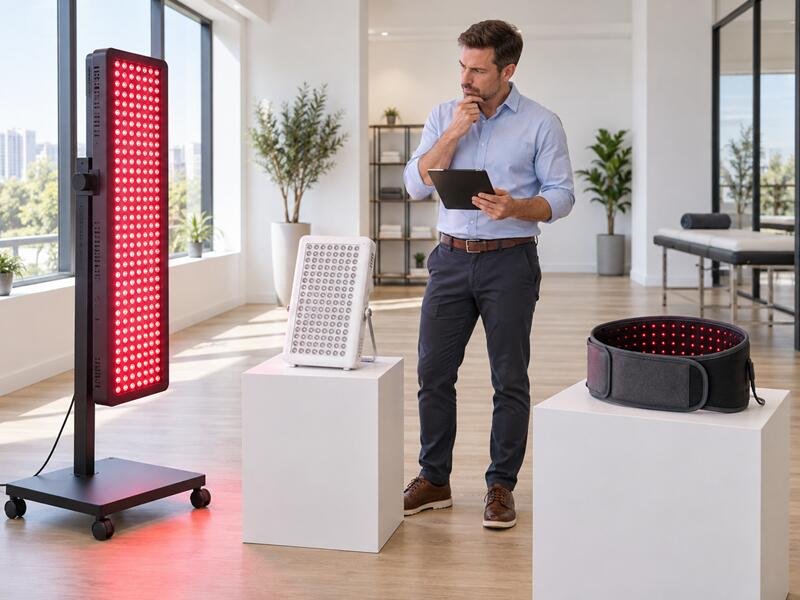
Red light therapy can look simple until I compare two supplier specifications that promise the same wavelengths, power, and irradiance. The numbers often hide different test distances, beam angles, and measurement methods. That confusion creates sourcing risk. I use a device-evaluation framework to separate useful specifications from impressive-looking marketing figures.
Red light therapy uses red and near-infrared light to deliver a measured light dose to a target area. For device buyers, its practical value depends on wavelength, irradiance, treatment distance, exposure time, optical coverage, thermal control, and production consistency—not merely the advertised wattage or number of LEDs.
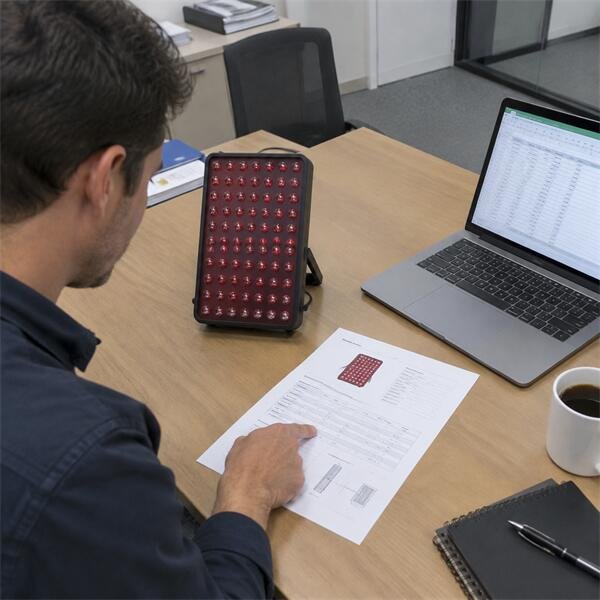
A basic definition does not help a procurement team choose between apparently similar devices. I prefer to ask what light reaches the target, how the supplier measured it, and whether production units repeat the sample’s performance. Those questions quickly reveal differences that a polished specification sheet may conceal.
What Is Red Light Therapy in Device Terms?
Buyers often receive a biology-heavy answer when they ask what red light therapy is. That answer may sound scientific, but it rarely helps them approve a sample or compare quotations. I treat the product as a controlled light-delivery system whose performance must be measurable and repeatable.
Red light therapy, often discussed under the broader term photobiomodulation, uses selected red or near-infrared wavelengths at defined intensities and exposure times.1 A buyer should evaluate whether a device delivers its intended optical dose evenly, safely, and consistently across the treatment area under realistic operating conditions.
Why the biological mechanism still matters
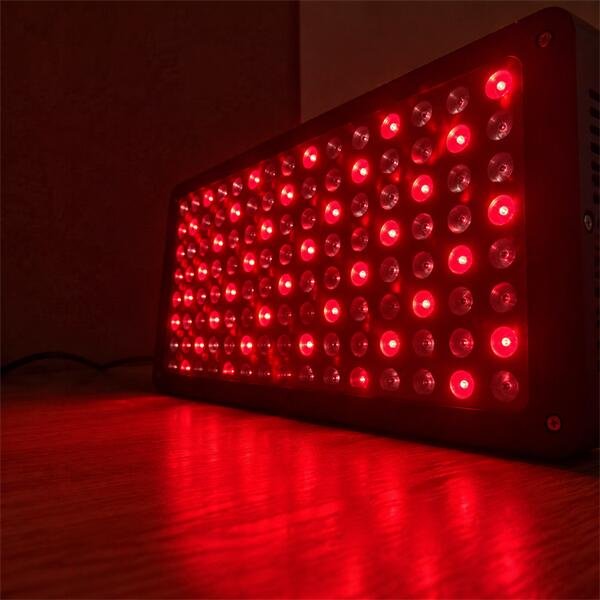
Published research often discusses how certain wavelengths interact with light-sensitive processes in tissue, including proposed interactions involving cytochrome c oxidase.2 I view that literature as supporting context rather than a license to make broad clinical claims. The key procurement point is simpler: light must reach the intended area at a suitable wavelength and dose before any proposed biological response becomes relevant.
Common commercial application areas include skin-focused products, exercise recovery systems, wellness equipment, scalp devices, and local-use wearables. The acceptable claims for these applications depend on product design, test evidence, intended use, and local regulations. A supplier’s marketing brochure does not settle those questions.
I evaluate a complete delivery chain
I break a device into five connected variables:
- Wavelength: Which parts of the optical spectrum does the device emit?
- Irradiance: How much optical power reaches each square centimetre?
- Dose: How much energy reaches that area over the exposure period?
- Coverage: How evenly does the device illuminate the intended area?
- Repeatability: Does the same performance appear across units and batches?
A high figure in one category cannot compensate automatically for weakness in another. For example, a panel may produce a strong centre reading while delivering much lower irradiance near its edges. A wearable may sit close to the body but lose useful output through fabric, padding, or poor LED positioning.
I regard red light therapy equipment as an optical system, not a box full of glowing LEDs.
When clients bring us competitor specification sheets, I sometimes see two panels described with identical wavelengths and “power.” Testing can reveal different centre output, coverage, temperature rise, and electrical consumption. The products look equivalent on paper, yet they behave differently in practical use. That gap is why buyers need test conditions, not just test numbers.
Which Red Light Therapy Wavelength Fits the Use?
Wavelength selection becomes confusing when suppliers present every additional wavelength as an automatic upgrade. More wavelengths can add flexibility, but they can also increase control complexity and dilute output allocation. I start with the intended application instead of counting how many wavelength labels appear on the carton.
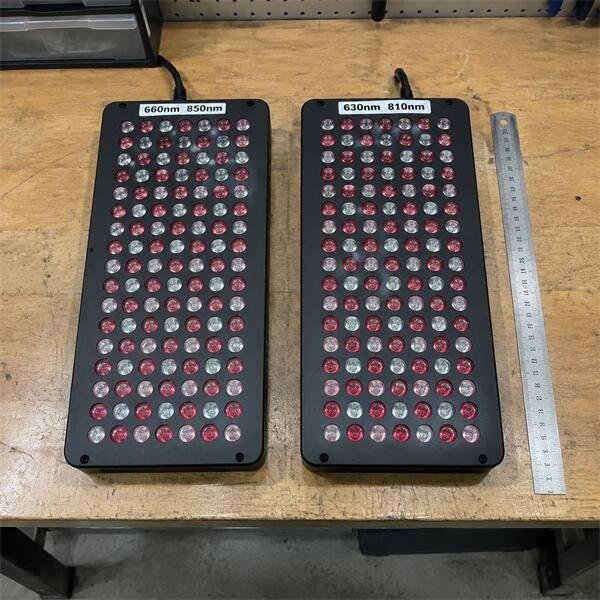
A suitable red light therapy wavelength depends on the target area, device format, optical design, and intended use. Red wavelengths such as 630 or 660 nm are commonly selected for surface-oriented applications, while near-infrared wavelengths such as 810, 830, or 850 nm are often considered when deeper light penetration is desired.3
Wavelength is a design choice
A wavelength is normally stated in nanometres, or nm. Red light falls within the visible range, while near-infrared light is mostly invisible to the human eye. A dim-looking near-infrared LED may still be operating, so visual brightness does not provide a reliable performance test.4
Buyers often encounter these configurations:
| Wavelength | Spectrum | Common design role | Buyer question |
|---|---|---|---|
| 630 nm | Visible red | Surface-focused formats | Why was 630 nm selected instead of 660 nm? |
| 660 nm | Visible red | General red-light configurations | What percentage of total output comes from 660 nm? |
| 810 nm | Near-infrared | Mixed or deeper-target designs | Can the supplier verify spectral output? |
| 830 nm | Near-infrared | Near-infrared product configurations | How is output balanced across wavelengths? |
| 850 nm | Near-infrared | Widely available NIR configurations | Is the stated irradiance combined or wavelength-specific? |
I do not consider 660 nm and 850 nm interchangeable. Their absorption and penetration characteristics differ, and their LEDs can have different output, cost, heat, and supply characteristics. The device geometry also changes their practical performance.
Mixed wavelengths require better questions
A supplier may advertise a “five-wavelength panel,” but that phrase says little about the actual output. The panel might divide its LEDs evenly, or it might allocate most channels to one wavelength. The control system may activate all wavelengths together, or it may permit independent adjustment.
I ask suppliers to provide:
- The nominal wavelength of each LED type
- The permitted wavelength tolerance
- The number or proportion of LEDs assigned to each wavelength
- Spectrometer results from a finished product
- Irradiance data for individual modes and combined modes
- An explanation of whether pulsing changes average output
- Component change-control procedures for production orders
Spectral verification matters because an LED label is not the same as a finished-device measurement. LED output can vary within manufacturing tolerances, and optical covers can alter transmission.
I once reviewed a mixed-wavelength concept that looked stronger because it listed more wavelengths. The allocation left too few LEDs operating in each channel for the intended treatment area. A simpler configuration offered clearer output control and easier validation. That experience reinforced a practical rule: a defensible wavelength strategy is more valuable than a long wavelength list.
Can You Trust Red Light Therapy Irradiance?
Irradiance is one of the most inflated and least comparable figures in this market. A number can be technically measured yet commercially misleading. The problem becomes worse when a supplier omits the distance, instrument, sampling pattern, operating mode, and warm-up period used during testing.
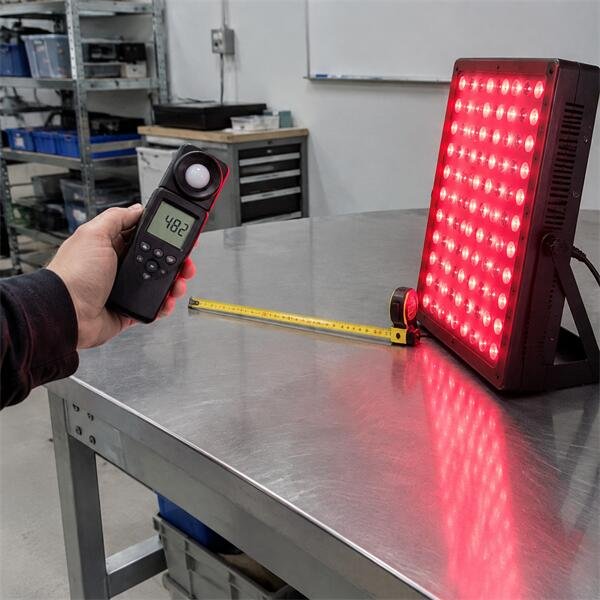
A red light therapy irradiance figure is useful only when the supplier states how and where it was measured. Buyers should request the test distance, meter or detector type, centre and edge readings, operating mode, warm-up time, and whether the value represents a peak point or an area average.
Why identical numbers may not be comparable
Irradiance describes incident optical power per unit area and is commonly expressed in mW/cm². The figure changes with distance, beam angle, LED spacing, lens choice, and measurement position.5
Consider two panels that both claim 120 mW/cm²:
| Test condition | Panel A | Panel B |
|---|---|---|
| Measurement distance | 15 cm | 5 cm |
| Reported position | Centre point | Unstated |
| Centre irradiance | 120 mW/cm² | 120 mW/cm² |
| Edge irradiance | 82 mW/cm² | Not supplied |
| Area average | 96 mW/cm² | Not supplied |
| Warm-up condition | 20 minutes | Immediate reading |
The headline values match, but the evidence does not support an equal comparison. Panel B may perform well, but the buyer cannot confirm that conclusion from the supplied figure.
Advertised wattage is not delivered light
A “1000W panel” may use 200 LEDs described by their theoretical maximum rating. The system may drive those LEDs below that maximum to manage heat and component life. Electrical input power will also differ from optical output power.6
I separate three figures:
- LED nominal rating: A component-level maximum or naming convention
- Electrical consumption: Power drawn by the finished device
- Optical output: Light emitted and delivered over an area
These figures should not be used interchangeably.
I request an irradiance map
A single centre measurement often captures the strongest point. Commercial buyers need to know whether the useful area is uniform. I prefer a grid with nine or more test points at the intended operating distance. Large panels may justify a denser grid.
The supplier should identify:
- The calibrated instrument or detector
- The measurement date
- The distance from the optical surface
- The active wavelength mode
- The warm-up period
- Ambient conditions when relevant
- Centre, corner, and area-average values
Handheld solar power meters can provide directional comparisons, but detector spectral response can affect readings.7 For procurement approval, I recommend qualified optical testing and a documented method that can be repeated during production.
How Do You Calculate Red Light Therapy Dose?
A buyer can approve a strong irradiance figure and still end up with the wrong practical exposure. Time and distance change the delivered energy, while treatment geometry changes coverage. If no one defines the use position, the dose calculation becomes a neat equation attached to an unrealistic scenario.
Red light therapy dose is commonly expressed in joules per square centimetre. Buyers can estimate it with: dose (J/cm²) = irradiance (mW/cm²) × time (seconds) ÷ 1,000.8 Distance is not multiplied directly into the equation; it changes the irradiance that must be measured at the actual use position.

A simple calculation
If a device delivers 50 mW/cm² at the target and operates for 10 minutes:
- Time = 10 × 60 = 600 seconds
- Dose = 50 × 600 ÷ 1,000
- Estimated dose = 30 J/cm²
If the same device delivers only 25 mW/cm² at a greater distance, the same 10-minute session produces an estimated 15 J/cm².
| Irradiance at target | Exposure time | Estimated dose |
|---|---|---|
| 25 mW/cm² | 5 minutes | 7.5 J/cm² |
| 25 mW/cm² | 10 minutes | 15 J/cm² |
| 50 mW/cm² | 10 minutes | 30 J/cm² |
| 100 mW/cm² | 10 minutes | 60 J/cm² |
This arithmetic provides a useful first estimate, but it does not account automatically for pulsing, movement, curved surfaces, reflection, clothing, optical losses, or uneven coverage.
Distance changes more than intensity
I sometimes see buyers write “irradiance × time × distance,” but distance is not a direct dose multiplier. Distance affects beam overlap and measured irradiance. A larger distance may improve uniformity while reducing intensity. A shorter distance may raise centre output but create hot spots or visible striping.9
For that reason, I define these conditions before evaluating dose:
- Expected operating distance
- Intended treatment area
- Session duration range
- Continuous or pulsed mode
- Relevant wavelength channels
- User position and likely movement
- Minimum acceptable edge output
Pulsing needs average-power data
A pulsed mode can show a high peak output while delivering lower average energy. If a device runs at a 50% duty cycle, the average optical output may be roughly half the peak level, depending on the control design.10 A buyer should ask whether the published irradiance is peak, average, or continuous-mode output.
I also avoid treating a higher dose as automatically better. Application-specific exposure decisions should be based on product risk analysis, relevant evidence, intended use, and qualified professional input. My manufacturing role allows me to assess whether the device delivers a defined output. It does not replace clinical or regulatory evaluation.
Why Do Thermal Design and Build Quality Matter?
A short demonstration can hide heat accumulation, fan noise, connector weakness, and output drift. Commercial operation makes those weaknesses visible. Clinics, MedSpas, distributors, and brand owners need a device that performs after repeated sessions, not just during a five-minute video call with the factory.
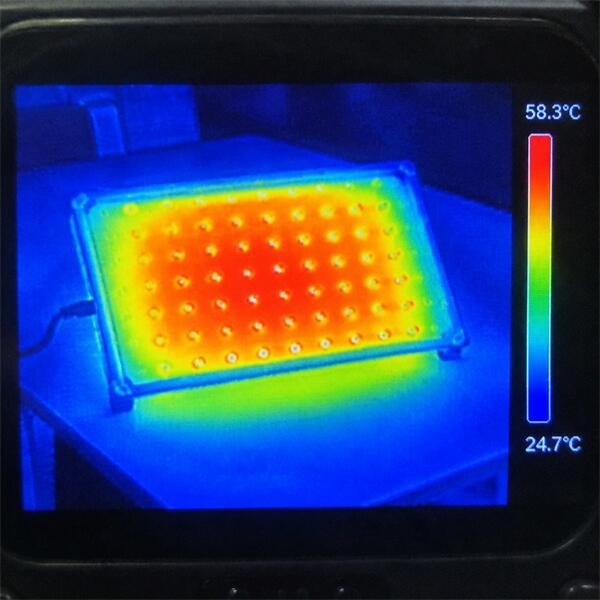
Thermal design and build quality protect red light therapy output, component life, and user experience.11 Buyers should assess temperature rise, heat-sink design, airflow, fan selection, LED drive current, cable security, enclosure materials, and performance after sustained operation rather than relying on appearance alone.
Heat affects the whole system
LEDs convert only part of their electrical input into light. The remaining energy becomes heat. Poor thermal control can affect:
- LED output stability
- Driver and power-supply life
- Enclosure temperature
- Fan noise
- Adhesive and cable durability
- Optical cover ageing
- User comfort
- Long-term colour and output consistency
A supplier can drive LEDs harder to produce a striking initial measurement. That decision may increase heat and reduce operating margin. I prefer to examine irradiance after the device reaches a stable temperature, not only during the first few seconds after startup.
Commercial duty cycles need specific testing
A home-use review usually covers one unit and limited daily operation. A commercial buyer may run equipment repeatedly with short intervals. That pattern changes the validation plan.
I would include these checks in a commercial sample review:
- Operate the device for the maximum intended session.
- Repeat sessions using a realistic rest interval.
- Record surface and internal temperatures at defined locations.
- Measure irradiance before and after thermal stabilization.
- Listen for fan vibration and changing noise.
- Inspect plugs, cables, stands, hinges, and control components.
- Confirm that protective functions operate as designed.
- Repeat the test on more than one sample when possible.
Batch consistency matters more than a perfect sample
One well-built sample does not prove production capability. I ask how the supplier controls LED bins, drivers, optical covers, power supplies, firmware, and assembly procedures. A component substitution can change output or heat even if the product name remains unchanged.
Useful quality documents may include:
- Approved specifications and golden-sample records
- Incoming material inspection criteria
- In-process inspection instructions
- Finished-product functional test records
- Irradiance sampling procedures
- Burn-in or ageing-test requirements
- Traceability labels
- Nonconformance and corrective-action procedures
- Engineering change-control records
I have seen procurement teams spend weeks debating a small irradiance difference while overlooking a weak stand or connector. In commercial use, mechanical failures can create more returns than optical variation. A balanced review should cover optical, electrical, thermal, mechanical, and production risks.
How Should Buyers Compare Red Light Therapy Suppliers?
Supplier comparisons often collapse into price, wattage, and certification logos. Those items matter, but they do not reveal whether a factory controls its measurements or production. I use the RFQ stage to test how clearly a supplier can connect specifications, evidence, quality controls, and the intended market.
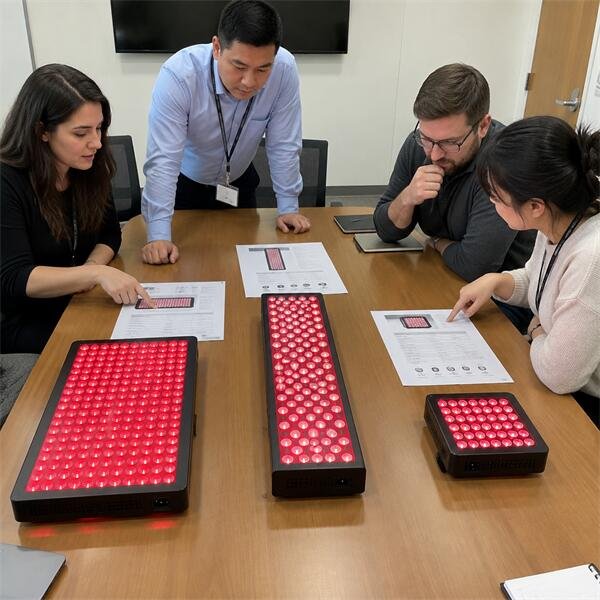
Buyers should compare red light therapy suppliers through a controlled RFQ, sample validation, document review, and production-quality plan. The strongest candidate is not necessarily the supplier with the highest figures. It is the supplier that defines test conditions, answers technical questions consistently, and can reproduce the approved sample.
Build one comparison sheet
I recommend giving every shortlisted supplier the same specification template. Otherwise, each company presents its strongest numbers under its preferred conditions.
| Evaluation area | Evidence to request | Warning sign |
|---|---|---|
| Wavelength | Finished-device spectral report | Only an LED catalogue page |
| Irradiance | Distance, map, meter, and mode | One unexplained centre value |
| Electrical power | Rated and measured consumption | “LED watts” presented as actual power |
| Thermal performance | Sustained-operation data | Cold-start data only |
| Materials | BOM-level material description | Vague “premium material” wording |
| Quality control | Inspection plan and records | Verbal assurances without criteria |
| Compliance | Applicable reports and certificates | Logos without document numbers |
| Production | Lead time and capacity assumptions | Guaranteed dates without a plan |
| Change control | Substitution approval process | Components changed without notice |
Validate claims before approving production
I would divide validation into three stages:
1. Document review
The team should confirm the model number, specifications, intended use, target market, label content, and applicable standards. Certificates and reports should match the actual product and legal manufacturer or applicant where required.
2. Sample testing
The team should test optical output, electrical functions, controls, temperature, dimensions, assembly, noise, accessories, packaging, and operating instructions. Qualified laboratories or engineers should handle tests that require specialist equipment.
3. Production control
The purchase agreement should define approved components, tolerances, inspection criteria, change notification, sampling plans, packaging tests, and remedies for nonconforming units.
Treat compliance as market-specific
CE, FCC, FDA, ISO, and similar terms do not represent one universal approval package.12 The correct path depends on product classification, intended use, claims, electrical design, wireless functions, destination market, and responsible economic operators.
I recommend asking a qualified regulatory professional to determine the applicable requirements. Buyers should verify each document’s issuer, scope, standard, model, validity, and relationship to the supplied product. A logo printed on a quotation provides no meaningful assurance by itself.
In our product development process, we see how wavelength choices are made, how irradiance is tested, and why two matching specification sheets can represent different products. I find that suppliers reveal their real capability when buyers ask for methods, tolerances, and repeatable evidence instead of accepting headline numbers.
Frequently Asked Questions About Red Light Therapy Devices
1. Is red light therapy the same as infrared heat therapy?
No. Red and near-infrared devices use selected light wavelengths, while infrared heat products may be designed mainly to produce thermal energy. Some light devices become warm during operation, but heat alone does not verify wavelength or optical performance. Buyers should review spectral and irradiance data.
2. Is a higher-wattage red light therapy device always better?
No. Advertised wattage may refer to theoretical LED ratings rather than electrical consumption or delivered optical output. I compare measured irradiance, coverage, thermal performance, and power draw under stated conditions. A lower-rated device can provide more useful and uniform output at the target.
3. Are 660 nm and 850 nm the best wavelengths?
They are common choices, but I would not call them universally best. The intended application, product geometry, optical output, operating distance, and supporting evidence should drive wavelength selection. Buyers should also confirm the actual spectral output of the finished device.
4. How far should a user stand from a red light therapy panel?
The suitable distance depends on the panel’s irradiance map, beam angle, treatment area, heat, and intended dose. A supplier should provide measured output at several realistic distances. Application-specific instructions should follow product testing, risk assessment, and qualified professional review where appropriate.
5. What irradiance should a red light therapy device deliver?
No single irradiance suits every format or intended use. Buyers should define the desired dose, exposure time, distance, and coverage first. They should then evaluate average and minimum output across the area rather than selecting a product from one maximum centre reading.
6. How can I verify a supplier’s irradiance claim?
I ask for the instrument model, calibration status, measurement distance, warm-up time, active modes, and a multi-point irradiance map. I then repeat the test on the physical sample with suitable equipment. Independent laboratory testing can reduce risk for major projects.
7. Does pulsed red light therapy deliver the same dose as continuous light?
Not necessarily. Pulsing can change average delivered energy even when peak output remains high. Buyers should request pulse frequency, duty cycle, peak irradiance, and time-averaged irradiance. The dose calculation should use the value that reflects actual energy delivery during the selected mode.
8. How many samples should a B2B buyer test?
One sample can support early screening, but it cannot establish batch consistency. I prefer multiple samples for higher-risk or commercial projects, followed by pre-production and production inspections. The required number depends on order value, customization, product complexity, and acceptable quality risk.
9. Which certifications should a red light therapy device have?
The answer depends on the target country, product classification, claims, power system, wireless features, and sales route. CE or FCC documents may apply in certain markets, while FDA or other requirements may depend on intended use. Buyers should obtain qualified regulatory advice and verify every document.
10. What should I include in a red light therapy RFQ?
I include intended use, target market, wavelength allocation, treatment area, operating distance, irradiance test method, controls, electrical requirements, materials, accessories, packaging, MOQ, forecast volume, compliance needs, sample plan, quality criteria, warranty expectations, and required delivery date.
Conclusion: Buying Red Light Therapy Devices with Better Questions
Red light therapy is easy to define but harder to source well. I look beyond glowing LEDs and heroic wattage claims to examine wavelength allocation, measured irradiance, practical dose, coverage, heat, construction, compliance documents, and batch control. A specification without test conditions is just a number wearing a tie.
If you are comparing suppliers or developing an OEM, ODM, or private-label product, send us your target market, application, and draft specifications. Our team can help you turn those requirements into a sample and validation plan that supports a better purchasing decision.
Footnotes
"What to Look for in Red Light Therapy: A Product Guide ...", https://pmc.ncbi.nlm.nih.gov/articles/PMC13085462/. Peer-reviewed photobiomodulation literature describes the modality as the controlled application of visible red or near-infrared radiation, with biological exposure characterized by wavelength, irradiance, treatment time, and resulting fluence. Evidence role: definition; source type: paper. Supports: A review or consensus paper should define photobiomodulation as the nonthermal application of visible red or near-infrared light and identify wavelength, irradiance, and exposure duration as key treatment parameters.. ↩
"Light, Cytochrome C Oxidase, and Nitric Oxide—Review of the ...", https://pmc.ncbi.nlm.nih.gov/articles/PMC7495914/. Mechanistic reviews identify mitochondrial cytochrome c oxidase as a proposed photoacceptor in photobiomodulation, while also noting that alternative chromophores and signaling pathways may contribute and that the mechanism is not fully resolved. Evidence role: mechanism; source type: paper. Supports: A mechanistic review should document cytochrome c oxidase as one proposed cellular photoacceptor for red and near-infrared light.. Scope note: The literature supports cytochrome c oxidase as a proposed mechanism, not as the sole or conclusively proven mediator of all photobiomodulation effects. ↩
"Near Infrared Light Penetration in Human Tissue", https://epublications.marquette.edu/cgi/viewcontent.cgi?article=1741&context=theses_open. Tissue-optics studies generally report lower attenuation within portions of the red-to-near-infrared optical window, supporting the use of near-infrared wavelengths when greater penetration is sought; actual depth depends on tissue composition, geometry, power, and measurement method rather than wavelength alone. Evidence role: general_support; source type: paper. Supports: Biomedical-optics literature should support the general use of red wavelengths for more superficial exposure and near-infrared wavelengths for potentially greater penetration in tissue.. Scope note: This evidence supports a general design tendency, not a fixed penetration depth or proof that a particular wavelength is optimal for a specific application. ↩
"Any Color You Like: NIST Scientists Create 'Any Wavelength' Lasers ...", https://www.nist.gov/news-events/news/2026/04/any-color-you-nist-scientists-create-any-wavelength-lasers-tiny-circuits. Standard spectral definitions place commonly used 810–850 nm emissions in the near-infrared region, beyond normal photopic sensitivity, so perceived brightness cannot quantify the radiant output of such LEDs. Evidence role: mechanism; source type: institution. Supports: An authoritative optics source should establish the approximate visible spectral range and show that human visual sensitivity declines sharply before the common 810–850 nm near-infrared wavelengths.. ↩
"Designing light-emitting diode arrays for uniform near-field ...", https://www.academia.edu/7093374/Designing_light_emitting_diode_arrays_for_uniform_near_field_irradiance. Radiometric standards define irradiance as incident radiant flux per unit area, ordinarily expressed in W/m² and convertible to mW/cm²; for finite LED arrays, the measured value varies with distance, angular distribution, source spacing, optics, and detector position. Evidence role: definition; source type: government. Supports: A radiometry reference should define irradiance as radiant flux incident on a surface per unit area and explain why source-detector geometry affects the measured value.. ↩
"LED Lighting Efficacy: Status and Directions", https://www.osti.gov/servlets/purl/1421610. Solid-state-lighting research distinguishes electrical input power from radiant optical output because LED and driver efficiencies are below 100 percent and a substantial share of input energy is dissipated as heat. Evidence role: mechanism; source type: government. Supports: An energy or solid-state-lighting source should explain that only a fraction of electrical input becomes emitted optical radiation, with the balance lost through heat and driver inefficiency.. ↩
"Broadband Radiometric LED Measurements - PMC - NIH", https://pmc.ncbi.nlm.nih.gov/articles/PMC5482375/. Radiometric measurement guidance shows that detector responsivity is wavelength dependent, so a broadband meter calibrated for one source spectrum can misestimate power from red or near-infrared LEDs unless spectral-mismatch corrections are applied. Evidence role: mechanism; source type: research. Supports: A radiometry source should establish that detector responsivity varies by wavelength and that mismatch between the source spectrum and calibration conditions can bias broadband power measurements.. Scope note: The existence and magnitude of the error depend on the particular meter, calibration, source spectrum, and any filters used. ↩
"Radiant exposure", https://en.wikipedia.org/wiki/Radiant_exposure. In radiometry, radiant exposure is the time integral of irradiance; for constant output, multiplying irradiance in mW/cm² by time in seconds and dividing by 1,000 yields J/cm². Evidence role: definition; source type: paper. Supports: A dosimetry reference should define radiant exposure as irradiance integrated over time and confirm the stated unit conversion.. Scope note: This calculation estimates incident radiant exposure and does not by itself quantify absorbed energy within tissue. ↩
"Development and application of LED arrays for use in ...", https://pubmed.ncbi.nlm.nih.gov/28164460/. Studies of multi-LED illumination arrays show that working distance changes beam overlap and spatial irradiance distribution, often reducing peak intensity while improving uniformity over part of the target plane; the result depends on array spacing, lenses, and emission angles. Evidence role: mechanism; source type: paper. Supports: Optical-array research should show that increasing working distance can increase overlap among individual LED beams and alter both average irradiance and spatial uniformity.. Scope note: The stated trade-off is contextual and may not occur in the same way for every panel geometry or optical system. ↩
"Comparative Analysis of Pulsed and Continuous Wave Modes ...", https://pmc.ncbi.nlm.nih.gov/articles/PMC12245496/. For ideal rectangular pulses of constant peak amplitude, average optical power equals peak power multiplied by duty cycle, so a 50 percent duty cycle produces approximately half the peak power on a time-averaged basis. Evidence role: mechanism; source type: education. Supports: An optics or electronics source should explain the relationship among peak power, pulse duration, repetition frequency, duty cycle, and average power.. Scope note: Real devices may deviate because of pulse shape, current regulation, thermal effects, rise and fall times, or nonconstant peak output. ↩
"[PDF] LED Luminaire Reliability: Impact of Color Shift - Department of Energy", https://www.energy.gov/sites/prod/files/2017/04/f34/lsrc_colorshift_apr2017.pdf. LED reliability research links elevated junction and component temperatures to changes in radiant output, efficiency, color or spectral stability, and degradation rate, providing engineering support for thermal management in sustained operation. Evidence role: mechanism; source type: research. Supports: Solid-state-lighting research should document the effects of elevated junction and component temperatures on LED output, efficiency, degradation, and electronic-component reliability.. Scope note: General LED reliability findings support the engineering principle but do not establish the lifetime or safety of a particular red-light device without product-specific testing. ↩
"Equipment Authorization | Federal Communications Commission", https://www.fcc.gov/engineering-technology/laboratory-division/general/equipment-authorization. Official regulatory guidance distinguishes EU CE conformity marking, FCC equipment-authorization obligations, FDA oversight based on product classification and intended use, and ISO standards, which are not collectively interchangeable as a universal approval package. Evidence role: general_support; source type: government. Supports: Official EU, FCC, and FDA materials should establish that these frameworks address different jurisdictions, product characteristics, intended uses, and regulatory obligations, while ISO publishes standards rather than issuing a universal market approval.. Scope note: The precise obligations for any device depend on its intended use, claims, technical features, jurisdiction, and role in the supply chain. ↩