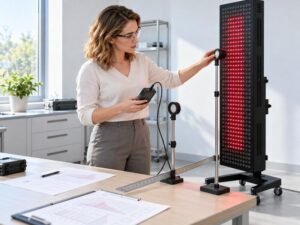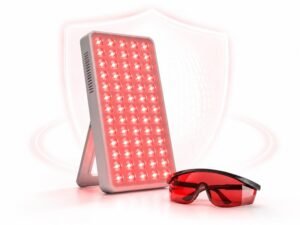
Infrared sauna and red light therapy have been grouped together so often in wellness marketing that many buyers assume they’re variations of the same thing. They’re not. An infrared sauna is fundamentally a heat delivery system. Red light therapy is a precisely controlled light delivery system that targets cells at the mitochondrial level. Treating them as interchangeable is a bit like assuming a heating pad and a surgical laser are the same tool because both involve energy.
This confusion has real commercial consequences. Wrong positioning creates mismatched customer expectations, drives returns, and leads to sourcing decisions that look fine on paper but cause problems after delivery. The distinction between these two technologies is actually straightforward — it just rarely gets explained without the marketing language.
This guide covers how each technology works, where they genuinely overlap, and what all of this means for your sourcing strategy, product portfolio, and compliance obligations. By the end, you’ll have a clear picture of which technology solves which problem — and how to position both effectively.
Quick Answer: Are They the Same?
No — infrared sauna and red light therapy are not the same. They use different wavelengths, different mechanisms, and produce different outcomes. Both technologies use portions of the electromagnetic spectrum that are invisible to the human eye, which is where the confusion starts. But for buyers making sourcing decisions, the distinction is commercially and clinically significant.
Put simply: infrared saunas deliver heat. Red light therapy delivers photons into cellular tissue. One works through thermal effects; the other works through photobiomodulation. Both have real wellness applications — but they serve different customer needs, sit in different price categories, and require different product development paths.
What Is Infrared Sauna?
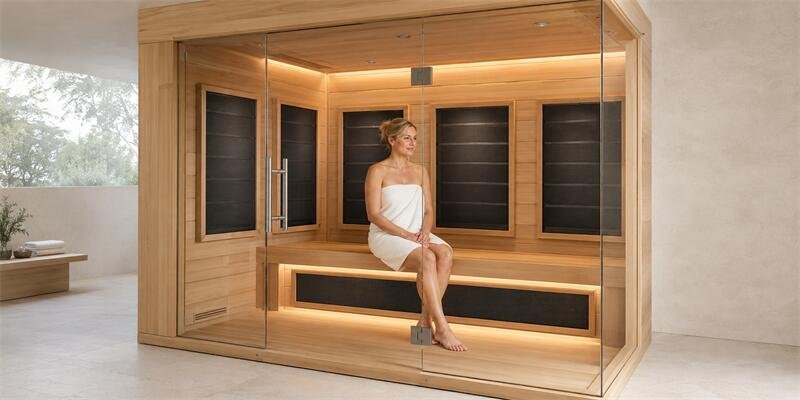
An infrared sauna is an enclosed cabin or room fitted with infrared heating elements — typically ceramic, carbon, or carbon-ceramic hybrid emitters — that produce far-infrared radiation (FIR) in the wavelength range of approximately 3,000-10,000 nm. Unlike traditional Finnish saunas that heat the air to 80-100°C, infrared saunas operate at lower ambient temperatures (45-65°C) while directly warming body tissue.
How Infrared Saunas Work
Far-infrared energy is absorbed by water molecules in body tissue, generating heat from within rather than simply warming the surrounding air. This induces sweating, raises core temperature, and triggers cardiovascular responses similar to mild aerobic exercise. The mechanism is thermal — full stop.
Infrared Spectrum Breakdown
| Type | Wavelength Range | Penetration Depth | Primary Use |
|---|---|---|---|
| Near-Infrared (NIR) | 700-1,400 nm | Up to several cm | Tissue repair, anti-aging |
| Mid-Infrared (MIR) | 1,400-3,000 nm | Moderate | Circulation, pain |
| Far-Infrared (FIR) | 3,000-10,000 nm | Superficial tissue | Heat, detox, relaxation |
Some premium infrared saunas include near-infrared (NIR) emitters as an add-on — and this is where the line between infrared sauna and red light therapy starts to blur for buyers. NIR panels built into a sauna cabin can technically deliver some photobiomodulation benefit, but the sauna is still primarily a heat delivery system. The NIR component is supplementary, not the core mechanism.
What Is Red Light Therapy?
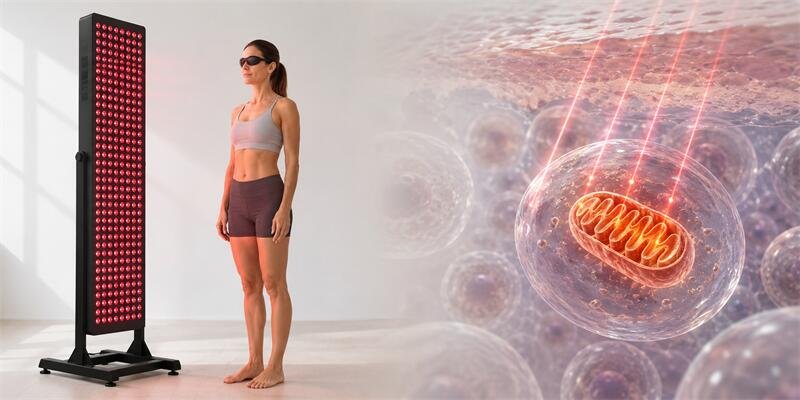
Red light therapy (RLT) — also referred to as photobiomodulation (PBM) or low-level light therapy (LLLT) — uses specific wavelengths of visible red light (630-700 nm) and near-infrared light (800-1,100 nm) delivered by LED panels or laser devices. The goal is not to generate heat. It is to deliver photons into cellular tissue and trigger biological responses at the mitochondrial level.
How Red Light Therapy Works
Photons from red and near-infrared wavelengths are absorbed by cytochrome c oxidase (CCO), a key enzyme in the mitochondrial respiratory chain. This stimulates ATP production, reduces oxidative stress, modulates inflammation, and activates cellular repair processes. This is a photochemical mechanism — not thermal. The distinction matters when you’re specifying devices, training end-users, or writing marketing claims.
Key Therapeutic Wavelengths
Absorbed in the superficial dermal layers. Primary applications include skin rejuvenation, collagen stimulation, wound healing, and acne treatment.
Penetrates deeper into muscle, joint, and nerve tissue. Effective for pain relief, muscle recovery, inflammation reduction, and fat metabolism.
Reaches bone and joint level. Used in physiotherapy and rehabilitation devices targeting deeper structural tissue.
Applied in specialized fat loss and body contouring devices. Requires precise engineering and robust safety controls.
Red light therapy devices do not meaningfully raise core body temperature. A session with a clinical-grade LED panel may produce mild warmth at the skin surface, but the ambient experience is nothing like an infrared sauna. Users typically remain clothed or lightly dressed in a normal room environment.
Key Differences at a Glance
| Factor | Infrared Sauna | Red Light Therapy |
|---|---|---|
| Primary Wavelengths | Far-infrared: 3,000-10,000 nm | Red: 630-700 nm; NIR: 800-1,100 nm |
| Primary Mechanism | Thermal (heat generation) | Photobiomodulation (cellular energy) |
| Visible Light? | No (invisible radiation) | Yes (red visible + invisible NIR) |
| Heat Output | High (45-65°C ambient) | Minimal (near room temperature) |
| Session Duration | 20-45 minutes | 10-20 minutes per area |
| Penetration Depth | Surface to shallow tissue | Skin to deep muscle/joint |
| Device Format | Cabin, room, pod, blanket | Panel, mask, belt, handheld, full-body |
| Power Density | Measured in temperature | Measured in mW/cm² (irradiance) |
| Key Contraindications | Cardiovascular conditions, pregnancy | Photosensitizing medications, eye safety |
| Typical CapEx | High (room/cabin infrastructure) | Moderate to high (scalable by format) |
| Operating Cost | High (power, ventilation, maintenance) | Low (LED longevity, low power draw) |
| Regulatory Path | Building/electrical codes + CE/FCC | CE, FCC, FDA (Class II in clinical use) |
Clinical and Wellness Applications
Knowing where each technology performs best helps you match products to specific market segments and customer use cases — and avoid putting the wrong device in front of the wrong buyer.
Infrared Sauna: Primary Applications
-
Detoxification: Heavy sweating marketed as a method for toxin elimination. High demand in wellness spas and biohacking facilities.
-
Cardiovascular Conditioning: Simulates mild aerobic stress; studied for blood pressure and heart rate benefits.
-
Relaxation and Stress Relief: Primary use in spa, hotel, and resort settings. Carries high perceived luxury value and strong repeat demand.
-
Weight Management Support: Elevated metabolic rate and fluid loss during sessions. Frequently positioned alongside fitness programs.
-
Muscle Relaxation: Heat-induced relaxation of muscle tension. Common in sports recovery and rehabilitation facilities.
-
Skin Health (secondary): Improved circulation and sweating may support skin tone, though the evidence base is thinner here than it is for RLT in dermal applications.
Red Light Therapy: Primary Applications
-
Skin Rejuvenation: Stimulates collagen and elastin production; reduces fine lines, wrinkles, and age spots. Core application in medical aesthetics and MedSpas.
-
Acne Treatment: 630-660 nm red light reduces sebaceous gland activity and P. acnes bacteria. Widely used in dermatology clinics.
-
Hair Growth: 650-670 nm stimulates hair follicle proliferation. High-demand segment for clinics and direct-to-consumer brands.
-
Pain Relief: Deep NIR wavelengths reduce inflammation and nerve pain. Applied in physiotherapy and pain management clinics.
-
Muscle Recovery: Reduces exercise-induced muscle damage, accelerates recovery time. A core product category for athletic and fitness markets.
-
Fat Loss / Body Contouring: NIR targets adipocytes in non-surgical slimming protocols. A growing segment for aesthetic clinics.
-
Pet Therapy: Emerging application for veterinary pain management and wound care. Niche but growing faster than most buyers expect.
Sourcing Considerations for Brand Owners and Distributors
Whether you’re sourcing one technology or building a portfolio that includes both, the decision involves more than product specs. Here’s what matters operationally and commercially.
Capital Investment and Space Requirements
Infrared saunas require dedicated physical infrastructure: cabin units or purpose-built rooms, electrical upgrades (typically 240V), ventilation systems, and meaningful floor space. For end-user businesses — spas, wellness centers — the entry cost is high, and the ROI horizon is longer.
Red light therapy panels, by contrast, can be installed in a standard treatment room with minimal infrastructure changes. Full-body floor-standing panels require roughly 2-3 sqm. Masks and handheld units need almost no additional space at all. This makes RLT a lower-barrier entry point for buyers supplying small clinics, retail channels, or DTC brands.
Operating Costs and Longevity
Infrared sauna heaters draw significant electricity per session and require regular maintenance of heating elements, wood surfaces, and ventilation systems. Operating costs per session are a real consideration for facility-based businesses running multiple sessions daily.
Quality LED-based red light therapy panels typically draw 200-500W for a full-body system, with LED lifespans exceeding 50,000 hours and minimal output degradation over time. Operating costs are substantially lower, which makes RLT favorable in high-session-volume environments where per-session margin matters.
OEM and Private Label Flexibility
Infrared sauna OEM involves more manufacturing complexity: cabin construction, wood selection, heating element specification, control systems, and final assembly. Minimum order quantities tend to be higher, and lead times are longer.
Red light therapy products — particularly LED panels, masks, and wearable belts — offer significantly more OEM and private label flexibility. Wavelength combinations, irradiance levels, form factors, control interfaces (app control, timers, intensity settings), and enclosure branding can all be configured to your market specifications. For brand owners looking to differentiate, RLT hardware is generally the more configurable category.
Market Access and Distribution Channels
Infrared sauna products are primarily sold B2B — to facility operators. Consumer sauna units exist (blankets, compact portable cabins) but remain a relatively niche segment with higher logistics complexity.
Red light therapy products span both B2B (clinical, spa, gym) and B2C (DTC e-commerce, retail) channels. This dual-channel reach gives RLT brands more distribution options — an important factor for distributors building diversified product lines or brand owners targeting online retail alongside professional sales.
After-Sales Risk and Product Liability
Both technologies require attention to safety, but their risk profiles are different. Infrared saunas carry thermal injury risk and require robust electrical safety certifications. Red light therapy devices carry optical safety requirements — particularly around eye protection and wavelength accuracy. For buyers, supplier quality control, complete certification documentation, and clear end-user safety protocols are non-negotiable selection criteria regardless of which technology you’re sourcing.
Building a Product Portfolio: How They Fit Together
Rather than treating infrared sauna and red light therapy as competing categories, experienced buyers position them as complementary — particularly when building product portfolios for wellness or recovery-focused clients. The question is rarely “which one?” but “which combination works for this customer segment?”
Portfolio Strategy by Customer Segment
Core equipment: Red light therapy panels and masks for skin rejuvenation, acne, and anti-aging. High-margin, repeatable treatment protocols with strong client retention.
Where infrared sauna fits: Optional add-on for relaxation and body treatment menus. Positions the clinic as a full-spectrum wellness destination rather than a single-service facility.
Core equipment: Infrared sauna cabins for relaxation, detox, and premium experiential services. Drives session bookings and membership retention.
Where RLT fits: Facial or body add-on treatment. Increasingly expected as a premium amenity. Low operating cost per session makes it easy to price profitably.
Core equipment: Full-body red light therapy panels for muscle recovery, performance support, and reduced DOMS. Directly addresses what athletes and members are paying for.
Where infrared sauna fits: Complementary thermal recovery option. Sauna + cold plunge + RLT recovery circuits are trending in high-performance fitness markets and drive premium membership tiers.
Core equipment: Targeted red light therapy — wearable belts, handheld devices — for localized pain management and tissue repair. Treatment-specific and easy to integrate into existing protocols.
Where infrared sauna fits: Whole-body warming pre-treatment to improve tissue flexibility before hands-on therapy sessions. Used as a preparation tool rather than a standalone service.
The Hybrid Product Opportunity
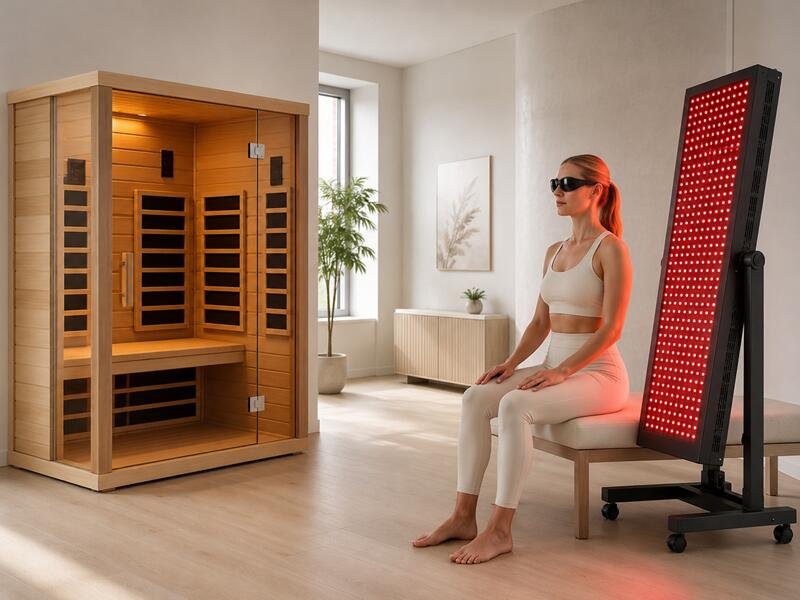
An emerging product category combines infrared sauna cabins with integrated red and near-infrared LED panels on the interior walls or ceiling. These hybrid systems let users receive both thermal and photobiomodulation benefits in a single session — and command a meaningful price premium in the market. For buyers targeting high-revenue wellness facilities or premium brand positioning, hybrid systems are a differentiated sourcing opportunity worth evaluating seriously.
Regulatory and Compliance Notes
The regulatory requirements for infrared sauna and red light therapy products differ meaningfully by market and intended use. Getting this wrong can delay your market entry or create liability exposure after launch.
Infrared Sauna
- –Primarily regulated as consumer or commercial electrical appliances
- –CE marking required for EU market (LVD, EMC directives)
- –ETL/UL listing for North American market
- –FCC compliance for control electronics
- –Wood treatment and off-gassing standards vary by market
- –Generally not classified as a medical device unless therapeutic claims are made
Red Light Therapy Devices
- –Classification depends on the claims made: wellness device vs. medical device
- –FDA Class II medical device if making clinical therapeutic claims (US)
- –CE Class IIa or IIb under EU MDR 2017/745 for medical-grade devices
- –IEC 60601-1 for medical electrical equipment safety
- –FCC Part 15 for devices with wireless connectivity
- –ISO 13485 quality management for medical-grade manufacturing
Important: The regulatory pathway depends heavily on the claims you or your customers intend to make. Wellness claims (“supports relaxation”) carry different requirements than therapeutic claims (“treats chronic pain”). Get clarity on intended claims before selecting a manufacturer, and always work with suppliers who can provide complete, verifiable certification documentation.
Frequently Asked Questions
Is infrared sauna the same as red light therapy?
No. Infrared saunas primarily use far-infrared wavelengths (3,000-10,000 nm) to generate heat and induce sweating. Red light therapy uses specific red (630-700 nm) and near-infrared (800-1,100 nm) wavelengths to trigger photobiomodulation at the cellular level — a photochemical process, not a thermal one. Both use portions of the infrared spectrum, which is the source of the confusion. But their mechanisms, device formats, clinical applications, and commercial positioning are meaningfully different.
What wavelengths are used in red light therapy, and why do they matter?
The most clinically studied wavelengths are 630-660 nm (visible red) and 810-850 nm (near-infrared). Red wavelengths target superficial dermal layers and are most effective for skin rejuvenation, acne treatment, and wound healing. Near-infrared wavelengths penetrate deeper into muscles, joints, and nerves — making them effective for pain relief, inflammation, and muscle recovery. Wavelength precision matters because the photobiomodulation effect is dose- and wavelength-dependent. Devices that do not accurately emit the claimed wavelengths will produce inconsistent results, which translates directly into customer complaints and returns.
How often should someone use an infrared sauna for health benefits?
Most wellness protocols recommend 3-4 infrared sauna sessions per week for general health maintenance, with sessions lasting 20-45 minutes at 45-65°C. For specific goals such as cardiovascular conditioning or muscle relaxation, daily use may be appropriate for short periods. Frequency should be adjusted based on individual tolerance, hydration, and pre-existing health conditions. For facility operators, understanding typical usage patterns is also relevant when calculating session throughput and ROI on the equipment investment.
Can red light therapy be used daily? Is there a risk of overexposure?
Red light therapy can generally be used daily, and many protocols call for daily sessions during an initial treatment phase (typically 4-8 weeks), followed by 2-3 sessions per week for maintenance. Unlike UV light, red and near-infrared wavelengths do not damage DNA or cause sunburn. That said, excessive irradiance or session duration beyond recommended parameters can produce a biphasic inhibitory response — where cellular stimulation reverses and results diminish. Proper dosing, measured in J/cm², is critical. Manufacturers should provide evidence-based dosing guidelines for each application, and buyers should verify this documentation before sourcing.
What are the contraindications for infrared sauna use?
Key contraindications include active cardiovascular conditions (unstable angina, recent heart attack, severe hypertension), pregnancy, fever or acute illness, implanted electronic devices such as pacemakers, and alcohol or drug intoxication. Individuals with multiple sclerosis or conditions affecting heat regulation should also use caution. For buyers and facility operators, ensuring that end-user documentation includes clear contraindication warnings is both a safety requirement and a liability consideration. Your manufacturer should supply compliant user manuals and appropriate safety labeling as part of the standard product package.
Does red light therapy actually help with skin rejuvenation and anti-aging?
Yes — red light therapy is one of the better-evidenced non-invasive modalities for skin rejuvenation. Peer-reviewed studies show that 630-660 nm red light stimulates fibroblast activity, increasing collagen and elastin production and reducing the appearance of fine lines, wrinkles, and skin laxity. Additional documented benefits include improved skin tone, reduction of hyperpigmentation, and accelerated wound healing. Results typically become visible after 4-8 weeks of consistent use. For medical aesthetics buyers, skin rejuvenation is the highest-demand and highest-margin application category for red light therapy devices.
Can infrared sauna and red light therapy be used together in the same session?
Yes, and this is an emerging product category. Hybrid sauna cabins integrate red and near-infrared LED panels into the interior walls or ceiling, allowing users to receive both far-infrared thermal benefits and photobiomodulation simultaneously. Some practitioners also sequence the two modalities — using red light therapy immediately after a sauna session to capitalize on increased circulation and vasodilation. Hybrid systems command a premium price point and are well-positioned for high-end wellness facilities and recovery-focused fitness centers looking for a differentiated offering.
What is irradiance (mW/cm²) and why does it matter when evaluating red light therapy devices?
Irradiance — measured in milliwatts per square centimeter (mW/cm²) — is the power density of light delivered to the treatment surface. It is the primary metric for evaluating a red light therapy device’s clinical effectiveness. Higher irradiance means more photons delivered per unit area per unit time, which reduces the session duration needed to reach a therapeutic dose (measured in J/cm²). Clinical-grade panels typically deliver 50-200 mW/cm² at the intended treatment distance. Buyers should request third-party irradiance measurements rather than relying solely on manufacturer specs — stated values are frequently measured at unrealistically close distances. Irradiance drops significantly as distance from the panel increases.
Are infrared saunas effective for weight loss?
Infrared saunas are frequently marketed for weight loss, but the evidence needs careful framing. Immediate weight reduction after a session is primarily water loss from sweating, which is recovered quickly upon rehydration. The cardiovascular stress from infrared sauna sessions does increase metabolic rate and caloric expenditure — estimates range from 200-600 calories per session depending on duration and individual response — but this is a support mechanism, not a standalone treatment. Buyers should position infrared sauna as a weight management support tool rather than a weight loss device, both to stay compliant with advertising regulations and to set realistic expectations for end users.
What certifications should I require from a red light therapy or infrared sauna manufacturer?
The minimum certifications depend on your target market and intended product claims. For red light therapy devices sold as wellness products: CE marking (EU), FCC Part 15 (US), and RoHS compliance. For medical-grade devices making therapeutic claims: add FDA 510(k) clearance or EU MDR CE Class IIa/IIb, IEC 60601-1 electrical safety certification, and ISO 13485 quality management from the manufacturer. For infrared saunas: CE (LVD and EMC directives), ETL or UL listing (North America), and FCC for any wireless control systems. Always request original certificate copies, verify authenticity with the issuing body, and confirm that the certified model number matches the exact product you are sourcing — not a similar variant.
What This Means for Your Business
Infrared sauna and red light therapy are not the same technology. They differ in wavelength, mechanism, depth of action, clinical application, equipment format, and commercial positioning. Conflating the two — or letting your customers do it — leads to misaligned expectations, positioning errors, and after-sales problems that are entirely avoidable.
The key points to take away are:
-
Red light therapy offers greater format flexibility — panels, masks, belts, handhelds — making it more adaptable across multi-channel distribution strategies and a wider range of customer types.
-
Infrared sauna holds a premium experiential position but requires higher capital investment and more physical space from the end buyer — factors that narrow the viable customer base.
-
The two technologies complement each other rather than compete. Carrying both under a private label program strengthens your total product line and improves your position with facility-based buyers.
-
OEM and customization potential is higher with RLT devices — wavelength configuration, irradiance calibration, form factor design, and control system branding all create real product differentiation opportunities.
-
Regulatory clarity is essential before market entry. Work with manufacturers who actively support certification processes and can provide complete technical documentation — not just product samples.