Red light therapy is not scary. It is not a laser sword, and it will not turn you into a tomato after one session.
But it is still a light-based technology. That means safe use matters.
Red light therapy is widely used in skin care, wellness, sports recovery, rehabilitation, hair care, and home-use routines. In most normal situations, it is considered low-risk when the device is reliable and the user follows proper guidance. The real problems usually come from the same old human habits: too much, too close, too often, or “I watched one short video and now I am an expert.”
This article explains whether red light therapy is safe, what side effects may happen, who should be careful, how to use it properly, and how to choose safer devices.
This is educational information only. It is not medical advice. Anyone with a medical condition, pregnancy, cancer history, photosensitivity, implanted electronic devices, or medication concerns should speak with a qualified healthcare professional before using red light therapy.
Is Red Light Therapy Safe?
Red light therapy, also called photobiomodulation or low-level light therapy, uses specific wavelengths of red and near-infrared light. These wavelengths are commonly used to support skin care, tissue recovery, muscle and joint routines, hair care, and general wellness applications.
Most red light therapy devices use two main light ranges:
| Light Type | Common Wavelengths | Typical Focus |
|---|---|---|
| Red light | 630–660nm | Skin, surface tissue, facial care |
| Near-infrared light | 810–850nm | Deeper tissue, muscles, joints, recovery routines |
Red light is visible. Near-infrared light is usually invisible to the human eye. That is one reason users should not judge safety only by brightness. A near-infrared device may look less intense than it actually is.
When used correctly, red light therapy is generally considered safe because it is non-invasive and does not use UV light. It is not designed to cut, burn, freeze, or remove tissue. This is why red and near-infrared light therapy devices are commonly used in home-use products, wellness centers, spas, clinics, gyms, and recovery rooms.
However, “safe” does not mean “use it however you want.”
A safe session depends on several things:
• The right wavelength
• Suitable irradiance
• Correct treatment distance
• Reasonable session time
• Proper eye protection
• A reliable device
• A user who does not fall into a contraindicated group
So the better question is not only “Is red light therapy safe?”
The better question is:
Is the device well made, and is the user following the right protocol?
If the answer is yes, red light therapy is usually a practical and low-risk technology. If the answer is no, even a good technology can cause avoidable problems.
Known Dangers & Side Effects
Most side effects from red light therapy are mild and temporary. They usually happen when the session is too long, the device is too close, the intensity is too high, or the user has a condition that makes light exposure unsuitable.
Here are the main risks to understand.
- Skin Irritation and Redness
Temporary redness, warmth, or mild irritation can happen after use, especially with high-powered panels or long sessions. This usually fades within a few hours.
It is more likely to happen when:
• The panel is too close to the skin
• The session is too long
• The device has strong irradiance
• The user has sensitive skin
• The same area is treated too often
A little warmth is not always a problem. But discomfort, burning, strong redness, or irritation means the session should be stopped or adjusted.
- Eye Strain and Retinal Risk
Eye safety is one of the most important points in red light therapy.
Strong red and near-infrared light should not be stared at directly. Closed eyes are not always enough, especially with high-output panels, full-body systems, or facial devices.
Possible eye-related issues include:
• Eye strain
• Temporary visual discomfort
• Headache
• Sensitivity after exposure
• Possible retinal risk with direct, prolonged exposure
Near-infrared light deserves special care because it is not visible. Users may not realize how strong the output is. That is why proper protective goggles are important.
- Overexposure and Heat Buildup
Red light therapy is often described as non-thermal when used properly. But high-powered devices can still produce warmth. If the device is used too close or for too long, heat buildup may cause discomfort, irritation, or in rare cases superficial burns.
This is where the “more is better” mindset becomes a problem.
Photobiomodulation does not work like filling a bucket. More light does not always mean better results. Too little may do very little. Too much may become counterproductive.
A sensible protocol beats an extreme one.
- Photosensitivity Reactions
Some people are more sensitive to light because of medication, skincare ingredients, or health conditions.
Photosensitizing medications may include certain antibiotics, retinoids, antifungals, diuretics, and other drugs. Some strong skincare products can also make the skin more reactive.
Possible reactions include:
• Redness
• Rash
• Burning feeling
• Unusual irritation
• Increased skin sensitivity
Anyone taking medication that increases light sensitivity should ask a healthcare professional before using red light therapy.
- Headache and Fatigue
Some first-time users report mild headache or temporary fatigue, especially after full-body sessions. This may happen when sessions are too long, intensity is too high, or the user starts too aggressively.
A better approach is simple:
• Start with shorter sessions
• Use lower intensity when available
• Leave rest days between sessions
• Drink water before and after full-body use
• Increase gradually only if the body tolerates it well
Your body does not need a dramatic light ceremony on day one.
- Potential Tumor Concerns
Red light therapy may stimulate cellular activity. For normal wellness and recovery routines, this is part of its appeal. But around active cancer or suspected malignant tissue, this becomes a concern.
Users should not apply red light therapy directly over known or suspected tumors unless a physician gives clear approval. People with cancer history should speak with their doctor before use.
This is not about creating fear. It is about being careful where caution is clearly needed.
Contraindications
Some people should avoid red light therapy or use it only under medical supervision. This is especially important for clinics, wellness centers, spas, gyms, and brands that provide user guidance.
Contraindications can be divided into two groups: absolute contraindications and relative contraindications.
Absolute Contraindications
These users should not use red light therapy unless a qualified physician clearly approves it.
| Condition | Why Caution Is Needed |
|---|---|
| Active cancer or malignancy | Avoid use over known or suspected tumor areas |
| Pregnancy | Safety data is limited, so avoidance is commonly recommended as a precaution |
| Epilepsy or photosensitive seizure disorders | Pulsed light may trigger seizures in sensitive users |
| Implanted electronic devices | Avoid direct use over pacemakers, neurostimulators, or drug pumps |
Pregnancy deserves a practical note. The concern is not that every light exposure is dangerous. The issue is that there is not enough reliable safety data for pregnancy, especially over the abdomen or lower back. When data is limited, caution is the better choice.
Relative Contraindications
These users may need medical advice, lower dosing, or special supervision before use.
| Situation | Safety Note |
|---|---|
| Autoimmune conditions | Conditions such as lupus may be affected by light exposure |
| Hyperthyroidism | Avoid direct exposure over the thyroid area |
| Children and minors | Use only with supervision and conservative dosing |
| Photosensitizing medications | Increased risk of skin reactions |
| Recent surgery or open wounds | Medical guidance is recommended |
| Tattoos and permanent makeup | Some pigments may absorb light and heat up |
| Very sensitive skin | Start with shorter sessions and lower intensity |
| Eye conditions | Ask a healthcare professional before use near the face |
For professional settings, a simple intake form is very useful. It should ask about pregnancy, cancer history, epilepsy, photosensitive conditions, medication use, implanted devices, recent surgery, eye conditions, and unusual skin sensitivity.
This is not complicated paperwork for the sake of paperwork. It helps prevent avoidable problems.
Safe Usage Guidelines
Red light therapy safety is mostly common sense plus a good user manual.
Different devices have different power levels, beam angles, distances, wavelengths, and intended applications. A mask is not a full-body panel. A wearable belt is not a clinic-grade tower system. A small handheld device is not the same as a high-output recovery panel.
So the first rule is simple:
Follow the device manual.
Below are the most important safe-use habits.
- Wear Protective Eyewear
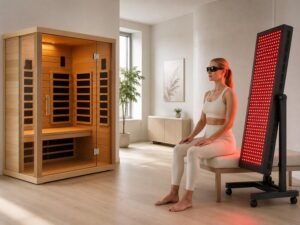
For high-output panels, full-body systems, facial devices, and any session near the head, protective eyewear should be used.
Do not stare directly into the LEDs. Do not rely only on closed eyelids when using powerful devices. The stronger and closer the device, the more important eye protection becomes.
For professional use, both the user and the operator should understand the eye safety rules.
- Follow the Recommended Session Time
Typical session times often range from 5 to 20 minutes, depending on device power, treatment area, and distance.
A good beginner approach is:
| User Level | Suggested Starting Point |
|---|---|
| First-time users | 5–10 minutes |
| Regular users | Follow the device protocol |
| Sensitive users | Shorter sessions, lower intensity |
| Professional protocols | Based on application and device output |
Do not double the time just because you feel impatient. Skin, muscles, and cells do not become more impressed because the timer keeps running.
- Keep the Correct Distance
Distance affects irradiance. The closer the device is to the body, the stronger the light exposure becomes.
Many panels are used somewhere around 6 to 24 inches from the body, depending on the model. The correct distance should always come from the product instructions.
Too close may increase the risk of warmth, redness, or irritation. Too far may reduce the dose and make the session less useful.
- Start Low and Increase Slowly
New users should not begin with the longest session at the highest intensity.
A safer routine is:
• Start with short sessions
• Treat one area first
• Watch how the body responds
• Increase slowly over several weeks
• Stop if unusual discomfort appears
This is especially important for facial use, full-body sessions, sensitive skin, and professional devices.
- Screen Users Before Treatment
For clinics, spas, gyms, wellness rooms, and recovery centers, screening should be part of the process.
Ask about:
• Pregnancy
• Cancer history
• Epilepsy
• Photosensitive conditions
• Photosensitizing medications
• Implanted electronic devices
• Recent surgery
• Skin sensitivity
• Eye conditions
• Current treatments or procedures
This protects users and gives operators a more professional process.
- Avoid Sensitive Areas Without Guidance
Be careful around the eyes, thyroid area, reproductive organs, open wounds, fresh surgery sites, and areas with abnormal skin lesions.
If the device is not designed for a specific area, do not improvise.
- Stop When Something Feels Wrong
Red light therapy should not feel painful. If the user feels burning, strong heat, dizziness, eye discomfort, unusual headache, or skin irritation, stop the session and review the protocol.
Safe use is not about pushing through discomfort. It is about adjusting intelligently.
How to Choose Safer Devices
A safer red light therapy experience starts with the device.
Two products can look similar in photos but perform very differently. One may have verified wavelengths, stable irradiance, proper cooling, low flicker, clear documentation, and recognized certifications. Another may only have bright LEDs and a confident product description.
That difference matters.
Here is what to check before choosing or sourcing a red light therapy device.
| Safety Factor | What to Look For |
|---|---|
| Wavelength accuracy | Clear wavelength data such as 630nm, 660nm, 810nm, 830nm, 850nm |
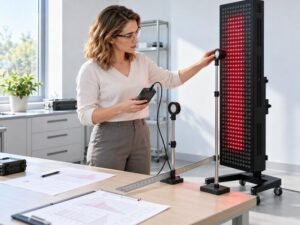
| Irradiance data | Output measured at practical treatment distances |
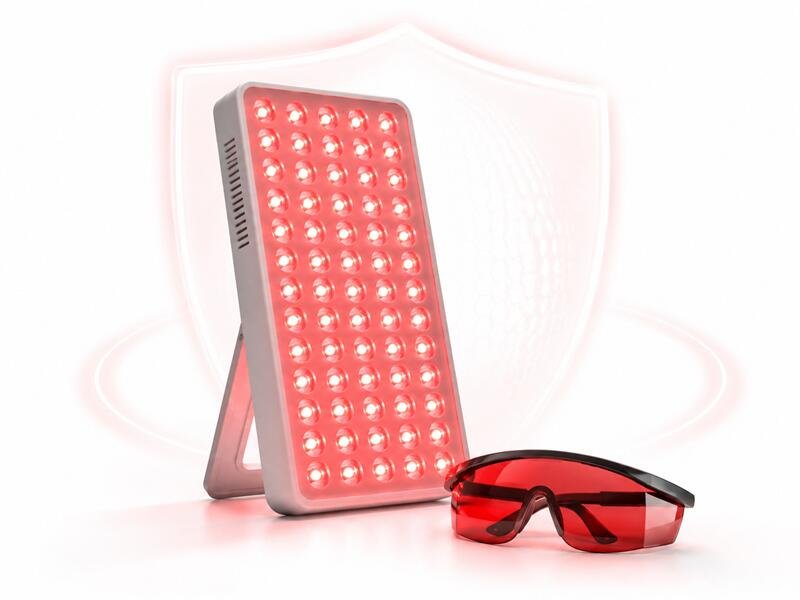
| Eye protection | Goggles included or clearly recommended |
| Timer control | Helps prevent accidental overuse |
| Intensity control | Useful for different users and body areas |
| Low flicker design | Improves comfort, especially for sensitive users |
| EMF information | Clear data at treatment distance |
| Thermal management | Good cooling, heat dissipation, and stable housing |
| Certifications | CE, FCC, RoHS, or market-specific compliance |
| User documentation | Manual, contraindications, warnings, and protocol guidance |
Do not judge a device only by wattage or LED count.
Wattage tells you power consumption. It does not automatically tell you usable light output. LED count can suggest coverage, but it does not prove wavelength accuracy, irradiance, safety, or long-term stability.
For product development, safety should be built into the design from the beginning. This includes electrical safety, housing structure, LED layout, heat control, user interface, warning labels, manuals, packaging, and testing.
For brands and distributors, proper documentation is also part of safety. Users need clear instructions, realistic claims, contraindication warnings, and session guidance.
MedLight’s safety-related support includes CE and FCC certification support, wavelength and irradiance specification support, user manuals, contraindication guidance, safety warnings, and technical documentation for OEM and ODM projects.
A device should not only look good in a product photo. It should be something you can stand behind after it reaches the user.
FAQ
- Can red light therapy cause burns?
Burns are rare when a certified device is used correctly. The risk increases when a high-powered device is used too close to the skin or for too long. Follow the recommended distance and session time.
- Is red light therapy safe for daily use?
Daily use may be suitable for some devices and routines, but it is not always necessary. Many general protocols use 3–5 sessions per week. More exposure does not always mean better results.
- Do I need eye protection?
Yes, especially with panels, full-body systems, and facial treatments. Do not stare directly into the LEDs, and do not rely only on closed eyelids for powerful devices.
- Is near-infrared light more dangerous because it is invisible?
Not exactly, but it requires more care. Near-infrared light is invisible, so users may underestimate its strength. Proper goggles and correct distance are important.
- Can pregnant users use red light therapy?
Red light therapy is generally not recommended during pregnancy as a precaution, especially over the abdomen or lower back. A healthcare professional should be consulted first.
- Can people with cancer use red light therapy?
People with active cancer or suspected malignancy should avoid red light therapy over affected areas unless approved by a physician. Anyone with cancer history should ask their doctor first.
- What if I take medication?
Some medications can increase light sensitivity. These include certain antibiotics, retinoids, antifungals, diuretics, and other photosensitizing drugs. Medical advice is recommended before use.
- Is red light therapy safe for children?
Children and minors should only use red light therapy with adult supervision and conservative dosing. Medical guidance is recommended for therapeutic use.
- Can red light therapy be used over tattoos?
Caution is needed. Some tattoo pigments and permanent makeup may absorb light and create heat or irritation. Start carefully and avoid long exposure over tattooed areas.
- How can I tell if a device is safer?
Look for clear wavelength data, irradiance reports, proper eye protection guidance, timer control, low flicker design, EMF information, thermal management, safety certifications, and complete user documentation.
Red light therapy does not need to feel like rocket science. It is light, not a magic button, and definitely not something that should be used with the confidence of someone who skipped the manual.
Used properly, it can be a practical and low-risk technology for skin care, recovery, wellness, and professional device programs. The key is simple: choose the right wavelength, respect the dose, protect the eyes, check contraindications, and use a device that has been designed with safety in mind.
For brands, distributors, and wellness product teams, safety should not be an afterthought. It should be built into the device from the beginning — from wavelength selection and irradiance testing to eye protection, user manuals, warning labels, and compliance documents.
If you are developing a red light therapy device line and want safer, more reliable products for your market, MedLight can help with device design, OEM/ODM customization, technical specifications, packaging, and production support.
Your users deserve more than “just turn it on and hope for the best.” Let’s build something better.