Buying a red light therapy device sounds easy at first.
You see a panel. It glows red. The product page says “660 nm + 850 nm,” “high power,” “low EMF,” and “professional grade.” Wonderful. Case closed.
Then the real questions begin.
How far should users stand from the device? Is 660 nm better than 850 nm? Does wattage really matter? Can it be used every day? Is it safe for the eyes? What about pregnancy, acne, joint pain, hair loss, EMF, flicker, and laser treatments?
In the red light therapy market, good products need good answers. A clear FAQ does more than educate users. It helps brands reduce confusion, build trust, and show that the product is supported by real technical understanding—not just red LEDs and loud marketing.
Below are 50 common questions about choosing and using red light therapy devices, answered in a practical and professional way.
The goal is not to make red light therapy sound magical. It is to make it understandable.
THE BASICS
1. What Is Red Light Therapy, and How Does It Work?
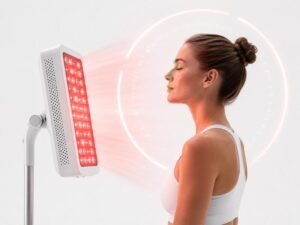
Red light therapy (RLT), also called photobiomodulation or PBM, uses selected low-level wavelengths of red and near-infrared light to interact with the body’s tissues.
Research suggests that absorbed light can influence mitochondrial activity, cellular signaling, circulation, and inflammatory processes. Cytochrome c oxidase is often discussed as one possible light-sensitive target, although the biological mechanism is broader than a simple “ATP switch.”
A useful comparison is charging a battery—but cells are more complicated than phones, and sadly, they do not come with a percentage icon.
2. Is Red Light Therapy Backed by Science, or Is It Just Hype?
Red light therapy is not a simple internet trend. Photobiomodulation has been studied for decades in areas such as skin health, wound healing, pain management, muscle recovery, and hair growth. Many clinical and laboratory studies support its potential benefits when the correct wavelength, dose, and device quality are used.
That said, not every claim on the market is equally reliable. The device matters. The protocol matters. The user’s condition also matters. A high-quality device with transparent specifications is very different from a low-cost light with unclear output data.
The sensible position sits between two extremes: red light therapy is neither an overnight miracle cure nor simply an expensive red lamp. Results depend heavily on using a suitable device with an appropriate protocol.
3. What Is the Difference Between Red Light and Near-Infrared Light?
Red light is visible and commonly falls within approximately 620–700 nm. It is frequently used in products intended for skin-facing applications.
Near-infrared light begins beyond the visible red spectrum. Common PBM devices often use wavelengths between approximately 800 and 900 nm. Because tissue absorption and scattering vary by wavelength, near-infrared light is generally selected when deeper tissue exposure is desired.
Red Light Therapy
620 – 700 nm
- ✦
Penetration Depth~1-2 mm — targets skin surface, epidermis, and dermis
- ✦
Primary TargetsSkin cells, fibroblasts, collagen synthesis, surface inflammation
- ✦
VisibilityVisible to the naked eye — appears as a red glow
- ✦
Best ForSkin rejuvenation, anti-aging, wound healing, acne reduction, hair growth
- ✦
Common DevicesLED face masks, handheld wands, panel systems
Near-Infrared Therapy
700 – 1100 nm
- ✦
Penetration Depth~3-5 cm — reaches muscles, joints, and deeper tissue
- ✦
Primary TargetsMuscle fibers, tendons, joints, nerves, and circulatory tissue
- ✦
VisibilityInvisible to the naked eye — felt as gentle warmth
- ✦
Best ForPain relief, muscle recovery, inflammation reduction, joint health
- ✦
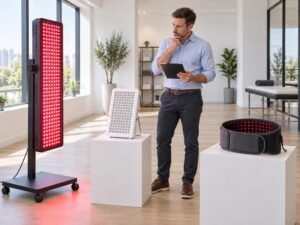
Common DevicesFull-body panels, wearable belts, rehabilitation systems
Tissue Penetration Depth Comparison
The two ranges stimulate cytochrome c oxidase in the mitochondria (the cell’s powerhouse), increasing ATP (cellular energy) production. This shared pathway is what makes them clinically complementary rather than competing roles — and why many professional devices combine both.
4. What Do 660 nm and 850 nm Do, and Which One Do I Need?
660 nm red light is one of the most commonly used wavelengths for skin-focused applications. It is often selected for facial care, collagen support, skin renewal, fine lines, uneven tone, and superficial recovery. For beauty devices and daily skin maintenance, 660 nm is usually the most relevant wavelength.
850 nm near-infrared light reaches deeper than 660 nm and is commonly used for muscles, joints, exercise recovery, circulation support, and temporary soreness or stiffness. It is especially useful for fitness, recovery, and rehabilitation-style product applications.
If the main goal is skin appearance, 660 nm is a strong choice. If the goal is deeper tissue exposure, 850 nm is more suitable.
For most brands and users, a 660 nm + 850 nm dual-wavelength device is the best market choice. It delivers red and near-infrared light in one session, supporting both surface-level and deeper applications without requiring two separate devices.
5. How Is Red Light Therapy Different from Laser Therapy?
Although both treatments use light energy, they work differently. Laser treatments, including fractional and CO₂ lasers, use a focused, high-intensity beam to create controlled heat or micro-injuries that trigger skin remodeling. They are invasive or minimally invasive, usually require 3–7 days of downtime, and may cause burns or pigmentation, so they should be performed by trained professionals.
Red light therapy uses lower-intensity, non-focused light over a wider area. When used correctly, it does not damage the skin or require downtime, making it suitable for home or wellness use. Lasers work through controlled damage and rebuilding, while red light therapy supports cellular repair more gently. They can also complement each other, with red light often used after laser treatment to support recovery.
| Area | RLT | Laser Treatment |
|---|---|---|
| Light source | LED (non-coherent) | Focused beam of light (coherent) |
| Power | Low power (50–500 mW) | High power (1,000–15,000 mW) |
| Depth | Superficial (skin) | Deep tissue (muscles/joints) |
| Use Case | Skincare, anti-inflammation, wellness | Pain relief, injury recovery, physical rehab |
| Treatment Location | Home panels, spa beds | Clinical/medical settings |
Neither technology is automatically “better.” They are designed for different applications.
6. Is Red Light Therapy Equipment Always a Medical Device?
No. Classification depends on the product’s intended use, claims, market, and regulatory pathway.
A device marketed for general wellness may be treated differently from one claiming to diagnose, treat, or prevent a medical condition. In the United States, some PBM devices are cleared through the FDA 510(k) process. “FDA registered” is not the same as “FDA cleared” or “FDA approved.”
In Europe, CE marking indicates conformity with applicable requirements. Whether the Medical Device Regulation applies depends on the product’s intended purpose and classification.
FCC and RoHS mainly cover electrical and environmental compliance; they do not prove therapeutic effectiveness.
For buyers, the key is to check whether the device has the right documents for the intended market and product claims. A serious supplier should explain certification clearly, not hide behind vague labels.
USING THE DEVICE
7. How Long Is A Red Light Therapy Session?
The ideal session time depends on the device output, treatment distance, and target area. Based on Arndt-Schulz Law in photobiomodulation, more time does not always mean better results. For most users, 10–20 minutes per area is a practical range, with a typical energy dose target of around 10–40 J/cm².
For skin-focused use, 10–15 minutes is usually enough. For muscle or joint recovery, 15–20 minutes may be more suitable. Full-body panels can be used by treating different areas for 10–15 minutes each.
First-time users should start with 5–10 minutes and increase gradually. Higher-output devices may need shorter sessions, so actual irradiance in mW/cm² matters more than session time alone.
8. How Often Should Red Light Therapy Be Used?
For most healthy adults, red light therapy is typically used once a day, 5–7 times per week. Visible results usually require consistent use for 4–12 weeks, depending on the treatment goal, device output, and individual response. In general, steady low-dose use works better than occasional overuse.
For acute muscle recovery or post-treatment support, some protocols may allow two sessions per day, with at least 6 hours between sessions, but this should not become a long-term routine unless professionally advised.
For skin-focused goals, such as smoother texture or a more even-looking complexion, 8–12 weeks of regular use is often a realistic timeline. The key is simple: make it part of your routine, like brushing your teeth, and stay consistent.
9. How Far Should You Stand from the Device?
Distance directly affects irradiance, which means how much light energy reaches the skin. The closer the user is to the device, the stronger the exposure usually becomes. The farther away the user stands, the lower the intensity and the wider the coverage area.
As a practical reference, 5–15 cm is often used for targeted areas such as the face, knee, or shoulder. A range of 15–30 cm is common for larger panel sessions because it balances coverage and intensity. Beyond 30 cm, intensity may drop significantly depending on the device.
The best answer should come from the product’s irradiance data. If a device does not provide mW/cm² measurements at stated distances, the specification is not transparent enough.
10. Is Morning or Evening Use Better?
Both can work. The best timing depends on the user’s goal and routine.
Morning use may suit people who want to support energy, mood, and daily skincare routines. It can feel similar to building a healthy morning light habit. Evening use may be better for muscle recovery, joint support, or relaxation after exercise or work.
One caution: using a very bright panel immediately before bed may disturb some users, especially if they are sensitive to light. For evening use, finishing the session at least one to two hours before sleep is often more comfortable.
The best time is the time users can keep consistently. A perfect schedule that nobody follows is not very useful.
11. Do I Need to Use It Every Day, or Can I Take Rest Days?
Rest days are perfectly acceptable. Many effective routines use red light therapy around 3–5 times per week, while some users prefer daily sessions. Missing one or two days does not erase progress.
Red light therapy is a cumulative practice. It works best through steady use over time, not through short bursts of panic treatment. If a user forgets a session or feels tired, there is no need to worry.
For many people, the easiest approach is to connect the session with an existing habit: after showering, after exercise, or during evening relaxation. A sustainable routine is better than a strict plan that creates stress.
12. Does Clothing Block Red and Near-Infrared Light?
Yes. Clothing can block, absorb, or scatter red and near-infrared light. For the light to reach the intended tissue, the target area should be directly exposed.
This does not mean the user must be fully undressed. Only the treatment area needs to be uncovered. For facial use, the face should be clean and free from makeup or heavy products. For body areas such as the back, knees, abdomen, or legs, exposing the specific area is enough.
Thick, dark, or tight clothing blocks more light, but even thin fabric can reduce effective exposure. If the light does not reach the skin, the treatment becomes much less meaningful.
13. Should I Clean My Skin or Remove Makeup Before Use?
Yes, especially for facial treatment. Makeup, sunscreen, foundation, and heavy skincare products may reflect or absorb part of the light. Some active ingredients may also increase sensitivity during light exposure.
For facial use, a simple routine works well:
- Remove makeup and sunscreen.
- Clean and dry the skin.
- Complete the light session.
- Apply suitable skincare products afterward.
or body use, the skin does not need complicated preparation, but it should be clean and free from thick creams or oils if possible.
Clean skin gives the light a clearer path. It is a small step, but it helps improve the practical value of each session.
14. Can I Apply Skincare Products Immediately After a Session?
Yes. After a red light session, many users apply serum, moisturizer, or other gentle skincare products. This can fit well into a normal skincare routine, especially for facial devices or beauty panels.
A good sequence is: cleanse, use red light therapy, then apply skincare. Hydrating ingredients such as hyaluronic acid, niacinamide, or a simple moisturizer are often suitable after the session.
It is better to avoid strong exfoliating acids or irritating actives immediately after use, especially for sensitive skin. If a user is already using retinoids, acids, or prescription skincare, they should follow professional guidance.
Red light should make the routine easier, not turn the bathroom shelf into a chemistry exam.
15. Can I Watch TV or Use My Phone During a Session?
Yes, in many cases. One advantage of red light therapy is that it can fit into daily life. Users can watch TV, listen to music, meditate, stretch gently, or relax during a session.
The main caution is eye exposure. If the device is used near the face, users should avoid staring directly into strong red or near-infrared LEDs. Eye protection is recommended for facial sessions or high-output panels.
For body areas such as the back, abdomen, thighs, or knees, there is usually more flexibility. Red light therapy is easier to follow when it feels simple and comfortable.
A session can be productive or relaxing. Just remember that answering twenty emails during “relaxation time” may cancel the relaxing part.
16. Is Pulsed Mode Better Than Continuous Mode? What Is the Difference?
Continuous mode means the light stays on steadily during the session. It is the most common and well-established mode for daily red light therapy use.
Pulse mode turns the light on and off at specific frequencies, usually shown in Hz. Some studies explore pulsed light for special applications, such as nerve-related recovery or deeper tissue support, but the evidence is still more limited than for continuous mode.
For most new users, continuous mode is the safest and simplest starting point. Pulse mode can be useful as an advanced feature, but it should not be treated as magic.
A good product should explain pulse settings clearly. A mysterious frequency menu may look impressive, but users still need practical guidance.
SAFETY AND SENSITIVITY
17. Is Red Light Therapy Safe, and Does It Have Harmful Radiation?
Red light therapy uses non-ionizing light, meaning it does not have the same DNA-damaging energy as X-rays or gamma rays. Red and near-infrared light are part of the broader light spectrum and are very different from harmful ionizing radiation.
When used properly, red light therapy is generally considered safe and well tolerated. It does not contain UV light when the device is properly designed, and it should not burn the skin under normal recommended use.
PBM is generally well tolerated when appropriate devices and protocols are used. Safety still depends on exposure level, eye protection, electrical design, product quality, and following the instructions.
18. Can Red Light Therapy Burn the Skin or Cause Cancer Like UV?
Red light and near-infrared light do not work like ultraviolet light. UV light has shorter wavelengths (100-400 nm) and higher energy, which can damage DNA and increase the risk of sunburn and skin cancer. Red light (620-700 nm) and near-infrared light (>700 nm) have longer wavelengths and lower photon energy.
A properly designed red light therapy device should not include UV wavelengths and should not cause tanning or UV-style skin damage.
However, very high-output devices used too close or for too long may create uncomfortable warmth or irritation. That is why users should follow the recommended time and distance.
The key is simple: choose a pure red/NIR device, avoid UV-containing lamps, and use the product as instructed.
19. Do I Need Eye Protection During Red Light Therapy?
Eye protection is strongly recommended for facial sessions, especially when using high-output panels. Red light can be very bright, and near-infrared light is mostly invisible, which makes it easier to underestimate the actual exposure.
Users should not stare directly into the LEDs. For face treatment, it is best to close the eyes and wear suitable protective goggles if recommended by the manufacturer. Many devices include eye protection in the package.
For body treatment where the light is not directed toward the eyes, protection may be less critical, but users should still avoid looking into the light source.
Eye protection is a small accessory, but it is not a small detail. People with eye conditions, previous eye surgery, or light sensitivity should seek professional advice before exposing the eye area.
20. Is Skin Redness or Warmth After Use Normal?
Mild warmth or temporary redness after a session can be normal. It is usually related to increased local circulation and should fade within a short period, often within 15–30 minutes.
Normal reactions are mild, even, and comfortable. Warning signs include strong burning, sharp pain, blistering, swelling, or redness that lasts too long. These may indicate excessive exposure, too short a distance, too long a session, or skin sensitivity.
In that situation:
- Stop the session.
- Increase the distance next time.
- Reduce the duration or intensity.
- Allow the skin to recover.
- Seek medical advice if symptoms are significant or persistent.
Discomfort is feedback, not proof that the device is “working harder.” Red light therapy should feel supportive. If it feels like a punishment, something is wrong.
21. Can Red Light Therapy Be Overused?
Yes. Red light therapy follows a biphasic dose response, which means an appropriate amount may support beneficial effects, while too much exposure may reduce results or cause irritation.
Possible signs of overuse include increased fatigue, skin sensitivity, headache, warmth, or a feeling that the session is making things worse instead of better. These reactions are usually temporary and improve after stopping or reducing exposure.
A practical rule is to avoid excessive session time and avoid treating the same area too many times per day. More light is not always better. Consistency is more important than intensity.
If the body keeps saying “too much,” it is wise to listen.
22. Are There Side Effects Such as Headache, Nausea, or Fatigue?
Most users tolerate red light therapy well, but mild reactions can occur, especially during first use or when the session is too long. Some people may experience fatigue, mild headache, eye strain, dizziness, or skin sensitivity.
These effects are usually related to brightness, heat, overexposure, lack of eye protection, or individual sensitivity. They are not usually severe, but they should not be ignored.
The best approach is to start with a shorter session, keep a proper distance, and increase gradually. If discomfort continues, stop using the device and consult a professional if needed.
The first session should be a gentle introduction, not a bravery test.
23. Can Pregnant Women Use Red Light Therapy?
There is not enough high-quality human research to confirm that red light therapy is completely safe during pregnancy, especially for direct abdominal or pelvic exposure. For this reason, a cautious approach is recommended.
Pregnant users should avoid direct treatment over the abdomen, lower abdomen, and lower back unless advised by a qualified healthcare professional. If red light therapy is considered for general discomfort, it should be discussed with a doctor first.
This caution does not mean red light therapy is known to be harmful during pregnancy. It simply means that safety data are limited, and unnecessary exposure should be avoided.
For pregnancy-related use, professional advice should come before product enthusiasm.
24. Can I Use It While Taking Photosensitizing Medication?
Extra caution is necessary.
Users taking photosensitizing medications should be careful. Some drugs can make the skin more sensitive to light and may increase the risk of redness, burning, rash, or irritation.
Examples may include certain antibiotics, antifungal drugs, diuretics, acne medications, anti-inflammatory drugs, antidepressant-related compounds, and photodynamic therapy agents. The exact risk depends on the medication and the person.
Users should check with their prescribing doctor or pharmacist before using red light therapy if they are taking any photosensitive medication.
This is one of those situations where guessing is not professional. A quick medical check can prevent unnecessary problems.
25. Does RLT Produce EMF? Is It Dangerous?
Yes, red light therapy devices do produce a certain level of EMF, or electromagnetic field. This is normal for almost all electrical devices, including lamps, hair dryers, phone chargers, and home appliances. The real question is not whether EMF exists, but how strong it is and how far the user is from the device.
Most home-use red light therapy devices produce extremely low-frequency EMF. At a normal treatment distance of 15–30 cm or more, the EMF level is usually far below international safety limits and is generally considered not to pose a significant health risk. In daily life, holding a mobile phone close to the face often creates higher exposure than using a red light panel at the recommended distance.
To reduce EMF exposure, keep a proper treatment distance, choose devices with good shielding design, and avoid pressing the panel directly against the body. Under normal use, EMF is not a major safety concern.
26. Does LED Flicker Matter?
LED devices can have flicker depending on the driver design. In many cases, high-frequency flicker is not noticeable, but low-frequency or high-depth flicker may cause discomfort for sensitive users.
Possible symptoms include eye strain, headache, or visual fatigue. People with strong light sensitivity or photosensitive epilepsy should be especially cautious.
High-quality devices usually use better drivers to reduce unwanted flicker. Some products may also provide flicker-free design claims or test reports.
It is also important to distinguish between intentional pulse mode and unwanted flicker. Pulse mode is a feature; unstable flicker is usually a design issue.
For professional products, driver quality matters more than many people realize.
27. Can Long-Term Use Cause Dependence or Damage?
Red light therapy is not known to cause drug-like dependence. It does not replace a natural body function in the way some medications can. Instead, it supports cellular activity through light exposure.
When used within recommended time and frequency, long-term use is generally considered low risk for healthy users. However, extreme use, excessive session time, or ignoring discomfort is not recommended.
Users should follow product instructions, protect their eyes, and adjust use if irritation or fatigue occurs. People with medical conditions should seek professional advice.
A good routine should feel sustainable. Red light therapy is meant to be a supportive habit, not another thing to overdo.
RESULTS AND APPLICATIONS
28. How Long Does It Take to See Results?
The timeline depends on the goal. For skin appearance, visible changes often require 4–8 weeks, while a more complete evaluation may take around 90 days. For muscle recovery, some users may notice benefits sooner, sometimes after only a few sessions. Hair growth usually takes longer, often 3–6 months.
Joint comfort or chronic soreness may improve over several weeks, but results vary by individual and protocol.
Results are influenced by:
- The condition being addressed
- Wavelength and dose
- Treatment distance
- Frequency and consistency
- Device quality
- Individual biology
Red light therapy is cumulative. One session can feel helpful, but lasting results require consistency. It is not instant coffee. It is more like watering a plant.
29. Can Red Light Therapy Reduce Wrinkles or Support Anti-Aging?
Red light therapy may support healthier-looking skin by encouraging cellular activity related to collagen, circulation, and tissue repair. 660 nm red light is commonly used in skincare devices because it works closer to the surface and is suitable for facial applications.
With regular use, users may notice smoother texture, improved tone, and softer-looking fine lines. However, results are usually gradual and should not be compared with surgery, fillers, or aggressive cosmetic procedures.
For skin-focused products, the key factors are suitable wavelength, proper irradiance, safe eye protection, and consistent use over several weeks.
Red light therapy is not a time machine, but it can be a useful long-term skin maintenance tool.
30. Can Red Light Therapy Help with Acne?
Red light therapy may help support acne-prone skin, especially by calming visible redness and supporting recovery after breakouts. Red light is often used for inflammation-related skin concerns, while blue light is commonly used to target acne-related bacteria.
For acne-focused devices, red and blue light are often combined. Blue light helps address bacteria, while red light supports calming and repair.
Red light should not be presented as the only solution for severe, cystic, or persistent acne. Users with serious acne should consult a dermatologist.
For daily care, red light can be a helpful supporting tool, especially for reducing the appearance of post-acne redness and improving skin recovery.
Users taking photosensitizing acne medication should seek professional advice before light treatment.
31. Can Red Light Therapy Help with Weight Loss or Fat Reduction?
Red light therapy may support body-contouring or weight-management programs, but it should not be promoted as a “lie down and lose fat” solution. That would be nice, but real life is less generous.
Some studies suggest red light may help temporarily influence fat cells and improve local circulation, especially when combined with exercise and healthy eating. The strongest results usually depend on lifestyle support, not light alone.
For product positioning, it is safer to say red light therapy may support body contouring, circulation, and recovery as part of a broader wellness plan.
It should not replace diet, movement, sleep, or medical weight-management advice.
A panel may glow red. It does not negotiate with dessert.
32. Can Red Light Therapy Help with Hair Loss?
Red light therapy has meaningful evidence in some hair-growth applications, especially androgenetic hair loss when hair follicles are still active. Specific red or near-infrared wavelengths may help stimulate follicle activity and support the growth phase of the hair cycle.
Results take time. Most users need consistent use for at least 3–6 months before evaluating changes in hair density or thickness.
It is important to understand the cause of hair loss. Red light may help when follicles remain functional, but it cannot revive areas where follicles are no longer active. Hair loss caused by medical conditions, hormones, medications, or nutrient deficiencies should be properly assessed.
Consistency is essential. Hair does not respond to wishful thinking alone.
33. Can Red Light Therapy Help with Joint or Muscle Pain?
Red light therapy, especially near-infrared light such as 850 nm, is widely used for muscle recovery and joint support. NIR can reach deeper tissue than visible red light, making it suitable for knees, shoulders, back, neck, and other areas where deeper exposure is needed.
It may help reduce temporary soreness, stiffness, and inflammation-related discomfort when used consistently and correctly.
However, persistent or severe pain should be diagnosed professionally. A red light device can support recovery, but it cannot tell whether pain comes from arthritis, injury, nerve compression, or something more serious.
For joint or muscle applications, session time, distance, irradiance, and repeat use all matter.
Pain relief is useful. Knowing why something hurts is even more useful.
34. Does Red Light Therapy Support Post-Workout Muscle Recovery?
Yes, red light therapy is commonly used for sports recovery and post-exercise soreness. Near-infrared light may support mitochondrial activity, circulation, and muscle repair after intense exercise.
Many users apply red light therapy within a few hours after training, focusing on major muscle groups. Typical sessions may last around 10–15 minutes per area, depending on device output and distance.
For product design, large coverage, stable irradiance, and easy positioning are important. A recovery device should not be difficult to use when the user is already tired.
Red light therapy will not do the workout for you. Sadly, no panel has agreed to lift the weights yet. But it may help the body recover better after the work is done.
35. Can Red Light Therapy Improve Sleep?
Red light therapy may support better sleep indirectly, especially when it helps reduce discomfort, muscle tension, or stress. Red light is also very different from blue light, which is more strongly associated with melatonin suppression.
Some users prefer using red light in the evening as part of a relaxation routine. Others find bright light too stimulating before bed. Response varies.
For sleep-related positioning, it is better to avoid promising that red light therapy “treats insomnia.” A more responsible claim is that it may support relaxation and recovery, which can contribute to better sleep quality.
For best comfort, avoid strong panel exposure immediately before going to bed. Sometimes the best sleep technology remains remarkably traditional: a dark room and a phone placed somewhere else.
36. Does Red Light Therapy Affect the Thyroid? Should the Neck Be Covered?
S
Some early research has explored red and near-infrared light exposure around the thyroid area, especially in autoimmune thyroid conditions. However, the evidence is still limited and should not be used as a basis for self-treatment.
For healthy users without thyroid concerns, incidental neck exposure during normal panel use is usually not treated as a major issue. However, users with hyperthyroidism, thyroid nodules, thyroid disease, or thyroid medication should be cautious and ask a healthcare professional before direct neck exposure.
Red light therapy should never replace thyroid medication or medical monitoring.
When the thyroid is involved, caution is more valuable than curiosity.
37. Can Red Light Therapy Increase Testosterone?
This is a popular claim online, but strong human clinical evidence is not currently sufficient to support red light therapy as a proven testosterone-boosting method.
Some animal studies and small human observations have raised interest, but they are not enough for confident product claims. Red light may support general mitochondrial function and oxidative balance, but that is different from proving a clear hormone-boosting effect.
Users concerned about testosterone levels should get proper lab testing and consult a qualified medical professional.
This is a good example of an industry rule worth remembering: a claim can become popular much faster than it becomes proven.
38. Can Red Light Therapy Support Wound Healing or Scar Recovery?
Red light therapy has a long research history in tissue repair and wound-healing applications. It may support cellular repair processes, local circulation, collagen organization, and inflammation control.
For scars, red light may help improve the look and feel of tissue over time, especially when used during the remodeling phase. It should not be presented as a method to completely remove scars.
Open wounds, surgical incisions, burns, infections, and serious skin injuries require medical guidance. Users should not apply a general wellness panel to an open wound unless the device is specifically designed and instructed for that use.
For scar care, patience matters. Tissue remodeling is slow, even when light therapy may support appearance or tissue quality, but it cannot promise complete scar removal.
DEVICES AND PRODUCT SELECTION
39. What Is the Difference Between Home-Use and Professional Devices?
The primary difference between professional and home-use red light therapy (RLT) devices comes down to power (irradiance), coverage, and treatment time. Professional systems emit stronger energy across a larger area, delivering faster results, while home devices require consistent, frequent use for more gradual improvements..
Key differences at a glance:
| Feature | Professional (Clinic/Spa) | Home-Use (Consumer) |
|---|---|---|
| Power Output (Irradiance) | High (100 to 500+ mW/cm²) | Lower (30 to 100 mW/cm²) |
| Treatment Area | Large (full-body beds or large professional panels) | Smaller (handheld wands, face masks, or desktop panels) |
| Session Length | 5 to 15 minutes per session | 10 to 20 minutes, 3 to 5 times a week |
| Skin Penetration | Reaches deep into the dermis and subdermal layers | Mostly targets epidermis and superficial dermis |
| Results Timeline | Noticeable in fewer sessions (4-6 weeks) | Gradual; requires months of consistent use |
| Cost | High per session, or expensive packages | One-time purchase ($150 – $1,200+) |
A high-quality home panel can still perform very well for daily use. A professional device is not always necessary for every user.
The right choice depends on application. A salon, recovery studio, or wellness center may need stronger durability and easier operation for multiple users. A home user may prefer compact size and simple controls.
40. Is Higher Wattage Always Better?
No. Wattage usually refers to electrical power consumption or rated input, not the actual light energy delivered to the body.
A high-wattage device may consume more electricity and generate more heat, but that does not automatically mean better therapeutic performance. The more important metric is irradiance, measured in mW/cm², at a specific distance.
Buyers should ask:
- What is the irradiance at 15 cm or 30 cm?
- Was it tested independently?
- How even is the light distribution?
- Does the output stay stable after the device warms up?
A big wattage number can look exciting on paper. But in real use, verified optical output matters more.
41. How Much Irradiance (mW/cm²) Is Effective?
For most red light therapy applications, an effective irradiance (power density) ranges between 50 to 150 mW/cm² at the treatment distance 6in (15cm). Devices above 200 mW/cm² are considered high-output and may require shorter sessions. If the irradiance is below 20 mW/cm², the effect may be limited. Since irradiance drops quickly as distance increases, users should follow the recommended treatment distance instead of placing the device randomly.
Calculating your total dose:
Irradiance (mW/cm²) only measures the power of the light; you must also factor in treatment duration to get your total dose (Fluence), measured in Joules (J/cm²).
Dose (J/cm²) = Irradiance (mW/cm²) × Time (seconds) ÷ 1,000
For example, the same dose can be delivered through lower irradiance over a longer time or higher irradiance over a shorter time. If a device provides 50mW/cm² of irradiance, a 10-minute (600s) session can deliver about 30J/cm², which falls within a useful treatment window.
Most studies suggest an optimal therapeutic dose is between 10 and 40 J/cm² per session.
Buyers should ask for measurements at practical distances, preferably with information about the meter, test method, warm-up period, and measurement positions. One center-point reading does not describe the uniformity of the whole panel.
42. Is a Full-Body Panel Better Than a Small Handheld Device?
Neither is automatically better. They serve different needs.
A full-body or large panel covers more area and saves time. It is suitable for users who want broad exposure for skin, recovery, wellness, or full-body routines. It usually requires more space, stronger mounting, and a higher budget.
A handheld or small device is more affordable, portable, and useful for targeted areas such as knees, shoulders, neck, scalp, or local pain points. It is also easier for travel.
It depends on the intended application.
| Device Type | Best Suited For |
|---|---|
| Handheld device | Small, targeted areas and travel |
| Compact panel | Face, shoulder, knee, or desktop use |
| Half-body panel | Torso, legs, and broader recovery routines |
| Full-body system | Efficient large-area sessions |
| Wearable device | Close-contact treatment of a shaped body area |
For serious routine use, a larger panel is often more efficient. For one or two target areas, a handheld device may be enough.
The best product is the one users can position correctly and use consistently.
43. Do I Need Both 660 nm and 850 nm? Is One Wavelength Enough?
One wavelength can be enough if the product has a very specific purpose. For example, 660 nm red light is suitable for skin-focused applications such as facial care, fine lines, and surface repair. 850 nm near-infrared light is more suitable for deeper tissue applications such as muscle and joint support.
However, many users have mixed needs. They want skin support, recovery, and general wellness from one device. In that case, a dual-wavelength 660 nm + 850 nm design is more practical.
The combination covers both surface-level and deeper applications in one session. That is why it has become one of the most common and market-friendly configurations in red light therapy devices.
44. Are Cheap RLT Devices Much Worse Than Expensive Ones?
Cheap Red Light Therapy (RLT) devices can be significantly worse than expensive ones. While they use similar foundational light concepts, budget options frequently suffer from weak LEDs, inaccurate wavelengths, and inflated power specs. Premium devices offer reliable dosing and better build quality, which are crucial for getting actual, visible results.
| Feature | Cheap Devices ($30 – $100) | Expensive Devices ($300 – $2,000+) |
|---|---|---|
| Light Penetration (Power) | Weak LEDs; requires you to sit right on top of the device, increasing heat stress risk. | Stronger, laboratory-verified output; delivers the right dose consistently. |
| Wavelength Accuracy | Often off the therapeutic mark, doing little for tissue repair. | Clinically proven wavelengths (typically 630nm–660nm for red, 810nm–850nm for near-infrared). |
| Treatment Area | Small surface area or poorly distributed, meaning long spot-treatment sessions. | Larger panels (or optimized masks) provide even, time-efficient, full-body/face coverage. |
| Safety & Testing | Often lack vital certifications (e.g., FDA clearance) and can overheat or flicker. | Usually FDA-cleared and built with advanced cooling systems and medical-grade materials. |
A cheap device can become expensive if it causes complaints, returns, or brand damage.
Good sourcing is not about finding the lowest price. It is about finding a product that performs consistently.
45. How Should I Compare LED Count and 3 W vs. 5 W Chips?
LED count and chip rating are useful, but they do not tell the full story.
A 5W chip may have higher potential output than a 3W chip, but actual performance depends on driving current, heat management, lens angle, PCB design, and power supply stability. A poorly cooled 5W system may perform worse over time than a well-designed 3W system.
Similarly, more LEDs do not automatically mean better irradiance. The layout, beam angle, and actual measurement data matter more.
LED count also needs context. Buyers should examine:
- Actual driving current
- Optical output
- Wavelength tolerance
- Lens angle
- LED spacing
- Thermal design
- Irradiance uniformity
LED count is easy to advertise. Stable light output is harder to build.
46. How Should I Choose the Right Panel Size for My Height and Body Type?
When choosing a red light therapy panel, the key factor is not only your height, but the target area you want to treat in one session.
- Small Panel: around 30 × 20 cm
Suitable for targeted areas such as the face, neck, shoulder, or one knee. It is a good choice for users under 165 cm or those who only need local treatment. - Medium Half-Body Panel: around 60 × 30 cm
Suitable for most users between 165–185 cm. It can cover the upper body or lower body in one session and is a practical starting point for general home use. - Large Full-Body Panel: 90 cm or above, or modular systems
Suitable for users over 180 cm, full-body wellness routines, recovery applications, or anyone who wants to reduce total treatment time.
If the budget is limited, a medium panel is usually the best starting choice. If the goal is full-body recovery, anti-aging, or higher treatment efficiency, a large panel or expandable modular system is worth considering.
47. How Should I Compare Red Light Therapy Brands?
Instead of only asking which brand is “best,” compare the details that affect real product performance.
Important points include wavelength configuration, verified irradiance, low EMF data, flicker control, heat dissipation, LED quality, driver design, certification documents, warranty terms, packaging strength, and after-sales support.
Well-known brands may have stronger marketing and product systems, but newer suppliers can also offer good quality if they provide transparent specifications and stable production.
For brands, distributors, and product teams, the best partner is not simply the most famous name. It is the supplier that can explain the product clearly, support customization responsibly, and repeat the approved quality in bulk production.
Good answers are part of good manufacturing.
48. Are There Low-EMF Red Light Panels?
Yes, many red light therapy panels are designed with low EMF performance in mind. Since these are electrical devices, some electromagnetic field is expected, but good design can keep exposure low at normal treatment distances.
When evaluating low-EMF claims, ask for actual test reports. A useful report should state the distance, measurement units, operating mode, and testing method.
Normal use distance matters. EMF readings directly against the device may be very different from readings at 15–30 cm away.
A low-EMF design can be valuable, especially for health-conscious users. But the claim should be supported by data.
“Low EMF” is a technical feature, not a decorative phrase.
49. Can I Use Red Light Therapy If I Am Also Doing Laser Hair Removal?
Red light therapy and laser hair removal usually do not directly conflict, but timing matters.
Laser hair removal uses high-energy light to target hair follicles and may leave the skin temporarily sensitive. Red light therapy may support recovery after skin procedures, but it should not be applied immediately over irritated or overheated skin without professional guidance.
It is usually safer to wait 48–72 hours after laser hair removal, or follow the clinic’s instructions. Users should also avoid long-term intensive red light use over areas where they are trying to reduce hair growth, because some red light protocols are associated with hair-growth support.
When in doubt, ask the laser treatment provider.
50. Can Children or Older Adults Use Red Light Therapy?
Older adults can often use red light therapy safely when sessions are properly controlled. It may be suitable for joint comfort, skin recovery, circulation support, and general wellness routines. However, medication use, eye conditions, reduced heat sensitivity, and existing health problems should be considered.
Children require more caution. They should only use red light therapy under adult supervision, with shorter sessions, lower intensity, and proper eye protection. High-output panels should not be used casually by children.
There is no universal age rule for every device. Product instructions should clearly define intended users, precautions, and supervision requirements.
For very young children or babies, red light therapy is usually unnecessary unless specifically recommended by a healthcare professional.
ONE LAST QUESTION
After 50 questions, one thing becomes clear: red light therapy is simple to use, but not simple to manufacture, position, or explain.
A good device is not just a red glow in a metal box. It needs the right wavelengths, stable irradiance, safe electrical design, good heat control, low EMF where required, clear instructions, reliable packaging, and consistent production quality.
For product buyers, the smartest question is not only “How much is it?”
Better questions are:
- What wavelengths does it use?
- What is the irradiance at real treatment distance?
- How is heat managed?
- Does it use stable driving circuitry?
- Are EMF and flicker tested?
- What certifications are available?
- Can the same quality be repeated in bulk orders?
- Will customers understand how to use it safely?
The red light therapy market is growing quickly. That is good news. It also means customers are asking better questions. A reliable product should be ready with better answers.
If you are planning to develop, source, or customize red light therapy devices for your market, start with the questions above. They will help you filter out weak products, avoid unclear claims, and build a product line that customers can trust.
And if a supplier answers all 50 questions with “yes, no problem,” it may be time to ask the 51st question:
“Can you please show me the test report?”
This article is provided for general educational purposes and does not constitute medical advice. Users with medical conditions, pregnancy, photosensitivity, eye concerns, or prescription medications should consult an appropriately qualified healthcare professional.