
Red Light Therapy:
Effectiveness, Treatment & Risks
Red light therapy is generally low-risk when used with the right dose, timing, and eye protection. This page explains the key safety points, including overuse, eye exposure, contraindications, and device quality.
The Interconnected Framework
Effectiveness, treatment protocols, and risk management are not independent topics -- they form a tightly coupled system. Understanding cellular mechanisms determines optimal dosing; dosing parameters define treatment protocols; and protocol adherence directly governs safety outcomes.
Effectiveness
Photobiomodulation activates cytochrome c oxidase in mitochondria, triggering ATP synthesis, reducing oxidative stress, and modulating inflammatory cytokines. This cellular cascade is the biological foundation for all downstream benefits.
Treatment Methods
Protocols translate biological knowledge into practice: wavelength selection (630-850 nm), irradiance (10-100 mW/cm²), session duration, and treatment frequency must align with the target tissue depth and therapeutic goal.
Risks & Safety
Risk is dose-dependent and context-sensitive. Overdosing disrupts the biphasic dose-response curve, while contraindicated populations require protocol modifications. Safety is an output of evidence-informed treatment design.
What the Science Says About Light-Tissue Interaction
Red light therapy (RLT), also known as photobiomodulation (PBM), operates through a well-documented primary mechanism: photons at specific wavelengths are absorbed by chromophores in the mitochondrial respiratory chain -- primarily cytochrome c oxidase (Complex IV). This absorption dissociates inhibitory nitric oxide from the enzyme, restoring electron transport chain efficiency and elevating ATP production.
The increase in intracellular ATP initiates a cascade of secondary effects: upregulation of reactive oxygen species (ROS) signaling at sub-harmful levels, activation of transcription factors including NF-κB, and modulation of inflammatory mediators such as IL-6, TNF-α, and PGE2. The net result is accelerated tissue repair, reduced chronic inflammation, and enhanced cellular metabolism.
Critically, this is a biphasic dose-response: too little energy yields no effect; the optimal range produces the therapeutic response; excessive doses can paradoxically inhibit cellular activity. This principle directly governs how treatment protocols must be designed.
Clinically Studied Applications
Skin Rejuvenation
Stimulates collagen synthesis; reduces fine lines and photoaging markers.
Pain Relief
Reduces musculoskeletal pain via anti-inflammatory and neurological pathways.
Muscle Recovery
Pre/post-exercise application reduces DOMS and accelerates repair.
Hair Growth
Activates follicle stem cells; FDA-cleared devices available for androgenic alopecia.
Wound Healing
Accelerates fibroblast proliferation and angiogenesis in chronic wounds.
Fat Reduction
Promotes transient adipocyte pore formation and lipid release.
Wavelength Penetration & Target Tissue
Epidermis, dermis -- skin rejuvenation, wound healing, superficial fat
Subcutaneous tissue, muscle, joint -- pain, recovery, deep inflammation
Bone, deep muscle, neural tissue -- rehabilitation, systemic effects
The Biphasic Dose-Response: The Bridge Between All Three Topics
The Arndt-Schulz principle applied to photobiomodulation means that effectiveness, treatment design, and risk are mathematically linked through energy dose (J/cm²). Under-dosing wastes therapeutic potential. The optimal window (typically 1-10 J/cm² for superficial tissue) delivers maximal benefit. Over-dosing -- often from excessive session duration or irradiance -- can suppress the same cellular processes the therapy aims to activate. This single concept explains why protocol precision is inseparable from both clinical outcomes and patient safety.
Designing Protocols That Translate Evidence Into Outcomes
Effective treatment is not simply exposure to light. It is the deliberate engineering of four interdependent parameters -- wavelength, irradiance, dose, and frequency -- calibrated to the target tissue and therapeutic goal. Each parameter has a direct relationship to both effectiveness and risk.
Wavelength
Determines chromophore targets and penetration depth. Dual-wavelength devices (660 + 850 nm) address multiple tissue layers simultaneously.
Irradiance
Power density at the tissue surface (mW/cm²). Higher irradiance shortens session time but requires careful distance calibration to avoid thermal effects.
Session Duration
Directly controls energy dose delivered. Duration × Irradiance = J/cm². Typical sessions range from 5-20 minutes depending on device output and indication.
Treatment Frequency
Cells require recovery time between sessions. Daily treatment is common for acute conditions; 3-5×/week is typical for chronic applications. Cumulative dose matters.
Device Form Factors & Clinical Applications
Panel Devices
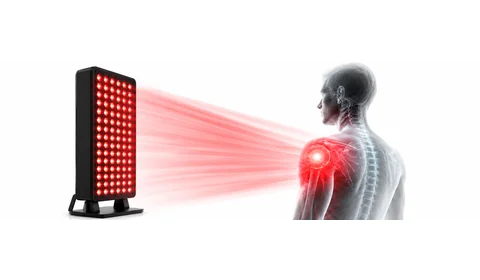
Large-area treatment for full-body or regional exposure. Ideal for wellness centers, spas, and rehabilitation. Consistent irradiance across a defined treatment zone.
Facial Masks
Contoured LED arrays for skin rejuvenation, acne, and anti-aging. Ensures consistent contact distance and uniform coverage across facial topography.
Wearable Belts & Wraps
Flexible, body-conforming devices for targeted pain, fat reduction, and muscle recovery. Enable hands-free treatment during activity or rest.
Handheld Devices
Precision spot treatment for localized pain, wound care, or acupuncture-point stimulation. Suitable for clinical and home-use markets.
Protocol Reference by Indication
| Indication | Wavelength | Dose | Frequency |
|---|---|---|---|
| Skin Rejuvenation | 630-660 nm | 2-4 J/cm² | 5×/week |
| Muscle Recovery | 810-850 nm | 4-10 J/cm² | Daily |
| Pain Management | 660 + 850 nm | 4-8 J/cm² | 3-5×/week |
| Hair Growth | 650-670 nm | 1-3 J/cm² | 3×/week |
| Wound Healing | 630-660 nm | 1-4 J/cm² | Daily |
| Fat Reduction | 635-660 nm | 3-6 J/cm² | 3×/week |
Note: These are reference ranges based on published literature. Actual protocols should be validated per device output specifications and adjusted for individual patient factors.
Understanding Risk as a Function of Protocol Design
Red light therapy has an excellent safety profile compared to UV-based therapies -- it does not cause DNA damage or ionizing radiation effects. However, risk is not zero. The majority of adverse outcomes are protocol-related, not inherent to the modality, making them preventable through informed device design and user education.
Overdose & Inhibitory Effects
Protocol RiskExceeding the optimal energy dose (biphasic response ceiling) can inhibit mitochondrial activity rather than stimulate it. This is the most clinically significant risk in self-administered home-use devices where session duration is uncontrolled. Symptoms include transient fatigue or paradoxical inflammation increase.
Mitigation: Device-level timer controls, preset dose programs, and user education on session limits integrated into product design.
Ocular Hazard
Safety-CriticalHigh-irradiance devices pose a retinal risk from direct or reflected light exposure. The retina lacks pain receptors, meaning damage can occur without immediate sensation. This is particularly relevant for panel devices and facial masks operating above 50 mW/cm².
Mitigation: Protective goggles included with devices; facial mask designs with eye-area shielding; CE/FCC compliance testing for optical safety (IEC 62471).
Contraindicated Populations
Clinical RiskCertain populations require protocol modification or exclusion. The same cellular stimulation that benefits healthy tissue can be contraindicated in specific conditions.
Active malignancies -- photobiomodulation may stimulate tumor cell metabolism
Photosensitizing medications (e.g., tetracyclines, NSAIDs, certain antifungals)
Pregnancy -- insufficient safety data for direct fetal exposure
Epilepsy -- pulsed light modes may trigger photosensitive seizures
Mitigation: Clear contraindication labeling in device IFU; clinical screening protocols for professional-use equipment.
Thermal Effects at High Irradiance
Device RiskWhile RLT is non-thermal by design, devices operating at very high irradiance (>200 mW/cm²) or in direct contact with skin can generate sufficient heat for superficial thermal injury. This is a device engineering issue, not an inherent property of the wavelength.
Mitigation: Thermal management in device design; recommended treatment distance specifications; temperature monitoring in high-power systems.
Safety Profile Summary
Compared to UV phototherapy, laser treatments, and pharmaceutical interventions, RLT has a favorable safety profile. The key distinction: it is a dose-dependent modality.
No ionizing radiation
No DNA damage at therapeutic doses
Non-invasive, no systemic absorption
Risks are protocol-preventable
Regulatory & Compliance Context
Risk management is codified in regulatory frameworks. Compliance is not a bureaucratic requirement -- it is a structured risk mitigation system.
FDA (USA)
Class II medical device clearance for specific indications. 510(k) pathway for clinical claims.
CE (Europe)
MDR 2017/745 compliance; IEC 60601-1 electrical safety; IEC 62471 photobiological safety.
ISO 13485
Quality management system standard for medical device manufacturing consistency.
Why Effectiveness, Treatment, and Risk Cannot Be Separated
These three dimensions form a closed loop. Ignoring any one undermines the others. The most effective therapy is the one correctly dosed. The safest protocol is the one grounded in evidence. And the most reliable treatment outcome is achieved through devices designed with all three in mind.
Evidence Defines Possibility
Clinical research establishes which wavelengths activate which chromophores, what dose ranges produce biological responses, and which indications have sufficient evidence for therapeutic claims. This knowledge sets the ceiling and floor for all protocol design.
Protocol Operationalizes Evidence
A treatment protocol converts scientific parameters into actionable device settings and user instructions. Device engineering -- LED selection, driver design, thermal management, timer controls -- is the physical implementation of the protocol. Poor engineering makes good protocols impossible to execute.
Risk Management Closes the Loop
Risk analysis feeds back into both protocol refinement and product design. Adverse event data from clinical use updates dosing guidelines. Compliance testing validates that manufactured devices deliver the intended dose accurately and consistently. Safety is the quality check on the entire system.
Implications for Device Design & Manufacturing
For brand owners, distributors, and procurement managers, this interconnected framework has direct product development implications. A device that cannot accurately deliver its specified dose is simultaneously less effective and less safe. Manufacturing consistency -- LED binning, driver stability, thermal performance -- is not a secondary concern. It is the physical embodiment of the therapy's evidence base.
This is why OEM/ODM partners with deep engineering capability and compliance infrastructure are not just supply chain decisions -- they are clinical quality decisions.
Build Products That Deliver on the Science
MedLight's OEM and ODM capabilities are engineered around the same principles described on this page -- dose accuracy, protocol alignment, and compliance-ready manufacturing. Let's discuss how your product concept maps to these requirements.