
Red Light Therapy:
Pros & Cons
A comprehensive, evidence-informed overview of red and near-infrared light therapy -- its clinical benefits, known limitations, and what brand owners and procurement managers should understand before commercializing a device.
What Is Red Light Therapy?
Red light therapy (RLT), also known as photobiomodulation (PBM) or low-level laser/light therapy (LLLT), uses specific wavelengths of red and near-infrared (NIR) light to stimulate biological processes at the cellular level.
The most clinically studied wavelengths fall within two windows: 630-680 nm (visible red) and 800-880 nm (near-infrared). These wavelengths penetrate skin and soft tissue, where they are absorbed by mitochondrial chromophores -- primarily cytochrome c oxidase -- triggering a cascade of cellular responses.
Unlike UV light or laser ablation, red and NIR light are non-ionizing and non-thermal at therapeutic doses, meaning they do not damage tissue. This fundamental safety profile is one of the key reasons for the technology's rapid adoption across medical aesthetics, wellness, and rehabilitation markets.
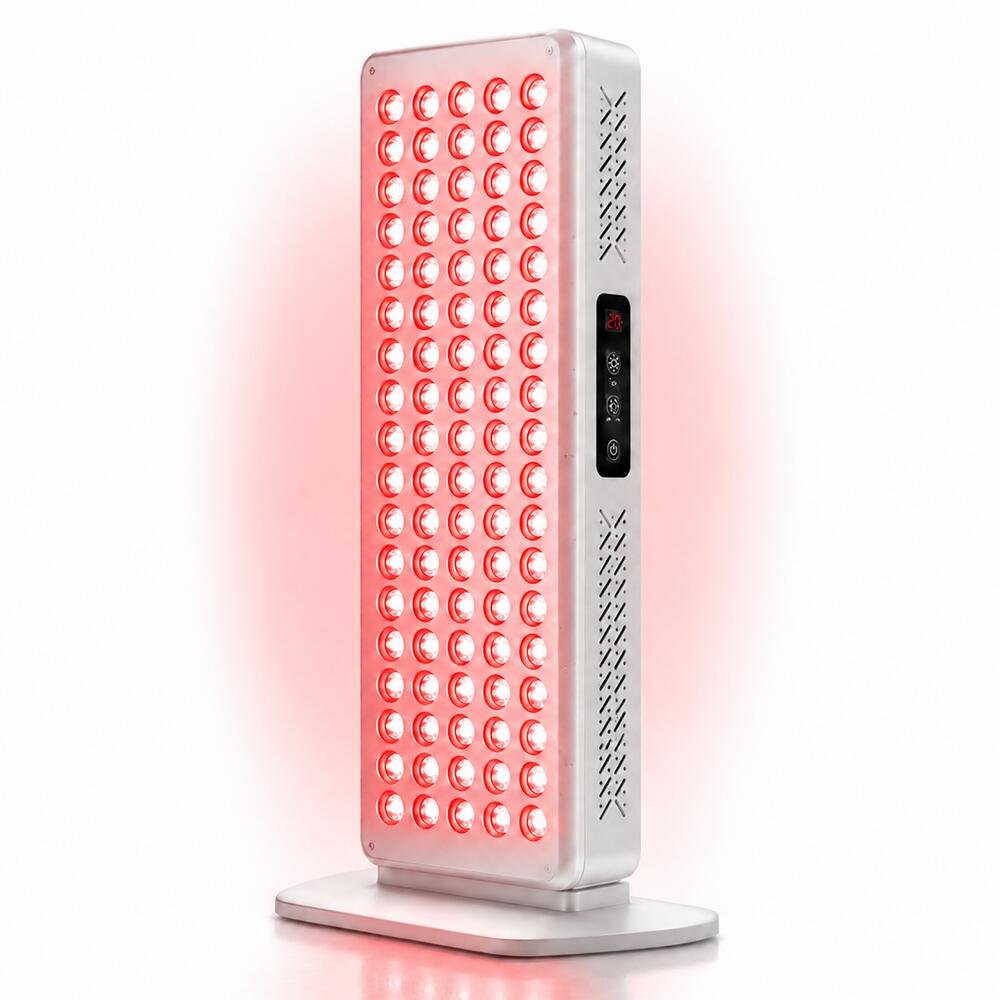
630-680 nm
Visible Red
800-880 nm
Near-Infrared
Both windows target mitochondrial chromophores for cellular activation.
How Red Light Therapy Works
Understanding the mechanism helps buyers communicate product value accurately to end users and avoid misleading claims.
Photon Absorption
Photons from red/NIR LEDs penetrate the skin and are absorbed by cytochrome c oxidase in the mitochondrial electron transport chain.
ATP Production
Absorption increases mitochondrial membrane potential and stimulates ATP synthesis, providing more energy for cellular repair and function.
Signaling Cascade
Increased ATP triggers downstream signaling: reduced oxidative stress, modulation of reactive oxygen species (ROS), and activation of transcription factors.
Tissue Response
Downstream effects include collagen synthesis, anti-inflammatory cytokine modulation, accelerated tissue repair, and improved circulation.
Proven Benefits of Red Light Therapy
These benefits are supported by peer-reviewed research and validated by clinical application across multiple therapeutic areas.
Skin Rejuvenation
Red light at 630-660 nm stimulates fibroblasts to increase collagen and elastin production, improving skin texture, tone, and reducing fine lines.
- ✓Increased collagen type I and III synthesis
- ✓Reduction in wrinkle depth and skin roughness
- ✓Improved skin elasticity and hydration
- ✓Accelerated healing of acne and blemishes
Primary application: Facial masks, targeted panels, MedSpa devices
Pain Relief
NIR wavelengths (800-880 nm) penetrate deeper tissue, modulating pain signaling pathways and reducing pro-inflammatory mediators in joints and muscles.
- ✓Reduction in chronic musculoskeletal pain
- ✓Decreased joint stiffness and inflammation
- ✓Relief from arthritis and neuropathic pain
- ✓Non-pharmacological pain management option
Primary application: Wearable belts, panels, rehabilitation clinic devices
Muscle Recovery
Pre- and post-exercise RLT has demonstrated measurable improvements in muscle performance, reduced DOMS, and faster recovery in athletic populations.
- ✓Reduced delayed onset muscle soreness (DOMS)
- ✓Improved muscle strength and endurance
- ✓Faster lactate clearance post-exercise
- ✓Reduced creatine kinase (muscle damage marker)
Primary application: Full-body panels, gym/fitness recovery systems
Hair Growth
Low-level laser/light therapy (LLLT) is FDA-cleared for androgenetic alopecia. Red light stimulates follicular stem cells and prolongs the anagen growth phase.
- ✓FDA-cleared indication for hair loss
- ✓Increased hair density and shaft diameter
- ✓Suitable for both male and female pattern hair loss
- ✓Non-invasive alternative to topical treatments
Primary application: Helmet/cap devices, scalp-focused panels
Fat Loss & Body Contouring
Specific wavelengths create transient pores in adipocyte membranes, enabling lipid release. Used in lipo-laser and body contouring protocols in MedSpa settings.
- ✓Measurable reduction in waist/hip circumference
- ✓Non-invasive alternative to surgical liposuction
- ✓Adjunct to exercise and dietary programs
- ✓No downtime required post-treatment
Primary application: Wearable pads, full-body systems, MedSpa devices
Strong Safety Profile
Non-ionizing, non-thermal at therapeutic doses. Decades of clinical use with minimal adverse event reporting across thousands of peer-reviewed studies.
Known Limitations & Countermeasures
Transparency about limitations -- and how they are addressed -- is critical for responsible commercialization and building long-term customer trust.
Dose-Dependent Efficacy (Biphasic Response)
Red light therapy follows a biphasic dose-response curve (Arndt-Schulz law): too little light produces no effect, while too much can inhibit cellular response. Optimal dosing (mW/cm² × time) varies by tissue type, condition, and skin phototype.
Precision Irradiance & Programmable Dosing
MedLight devices are calibrated to verified irradiance outputs (mW/cm²) with programmable timer and intensity controls. Each device is tested to ensure consistent delivery within therapeutic windows, and protocol guides are provided per application.
Requires Consistent, Long-Term Use
Clinical results typically require multiple sessions over weeks or months. Most protocols recommend 3-5 sessions per week for 4-12 weeks. Single or infrequent use is unlikely to produce lasting results, challenging user compliance.
Ergonomic Design & Compliance-Driven UX
Devices are engineered for ease of use -- lightweight form factors, built-in session timers, and comfortable wearable configurations reduce friction. OEM clients can co-develop companion protocols and onboarding materials to improve adherence and satisfaction outcomes.
Limited Tissue Penetration Depth
Visible red light (630-680 nm) penetrates approximately 5-10 mm. NIR (800-880 nm) reaches up to 20-30 mm. Deep-seated conditions such as deep joint pathology may not respond adequately to surface-applied light therapy alone.
Application-Matched Wavelength Engineering
MedLight configures wavelength combinations (dual-band red + NIR) and power density per target application. For deeper tissue indications, high-irradiance NIR configurations are specified. Application briefs guide buyers in selecting the correct device type for their intended use case.
Variable Evidence Quality Across Indications
While evidence for skin rejuvenation, hair growth, and musculoskeletal pain is robust, some emerging indications (e.g., cognitive enhancement, systemic fat loss) remain preliminary. Over-claiming risks regulatory action and consumer backlash.
Evidence-Calibrated Marketing Support
MedLight provides application-specific documentation that aligns claims with current evidence tiers. OEM clients receive guidance on compliant claim language for CE and FDA markets, reducing regulatory exposure while still communicating meaningful product benefits to end users.
Contraindications & Precautions
Certain populations require caution or are contraindicated: active malignancy (over tumor sites), photosensitizing medications, pregnancy (limited data), epilepsy (flicker-sensitive), and direct eye exposure without protective eyewear.
Compliance-Ready Safety Documentation
All MedLight OEM products ship with standardized contraindication labeling, IFU (Instructions for Use) templates, and safety warning inserts aligned to CE and FDA requirements. Eye protection accessories and flicker-free driver options are available as standard configurations.
Significant Variance in Device Quality
The consumer market contains many devices with inaccurate wavelength specifications, insufficient irradiance, or poor LED longevity. Underpowered or mislabeled devices produce no clinical effect, eroding consumer confidence in the category.
Third-Party Verified Spectral & Irradiance Testing
MedLight subjects all production batches to third-party irradiance measurement and spectral analysis. Verified test reports are provided to OEM clients for brand protection and buyer confidence. LED binning standards ensure consistent output across units and over product lifetime.
Pros vs. Cons at a Glance
A structured overview for procurement decision-making and product positioning.
Therapeutic Applications by Market Segment
Understanding which benefits map to which buyer segment enables more precise product positioning and OEM specification.
Medical Aesthetics & MedSpas
- Facial rejuvenation & anti-aging
- Acne treatment & post-procedure healing
- Body contouring & fat reduction
- Cellulite improvement
Sports & Fitness Recovery
- Pre-workout performance enhancement
- Post-workout muscle recovery
- Delayed onset muscle soreness (DOMS) reduction
- Sports injury rehabilitation
Physical Therapy & Rehabilitation
- Chronic pain management
- Joint and tendon healing
- Neuropathic pain modulation
- Post-surgical tissue repair
Wellness Centers & Spas
- Full-body wellness sessions
- Stress and mood support
- Sleep quality improvement
- Complementary therapy protocols
Dermatology Clinics
- Acne and rosacea management
- Psoriasis adjunct therapy
- Wound healing acceleration
- Scar and pigmentation reduction
Pet Care & Veterinary
- Arthritis and joint pain relief
- Wound and post-surgical healing
- Coat and skin health improvement
- Muscle recovery in working animals
What to Evaluate When Sourcing a Device
The clinical benefits of red light therapy are only realized when the device delivers accurate, consistent, and appropriately dosed light. These are the technical and compliance criteria that separate effective products from ineffective ones.
Verified Wavelength Accuracy
Ensure LED peak wavelengths are independently verified via spectroradiometer testing. Stated wavelengths should fall within ±10 nm of target therapeutic windows.
Irradiance (Power Density) Measurement
Effective therapeutic irradiance is typically 20-200 mW/cm² at treatment distance. Request third-party irradiance maps at specified distances (e.g., 0 cm, 6 cm, 12 cm).
Regulatory Compliance Documentation
Confirm CE, FCC, and relevant ISO certifications are current and product-specific. For FDA-regulated markets, understand 510(k) clearance requirements for your intended indication.
LED Longevity & Consistency
Medical-grade LEDs should maintain ≥70% initial irradiance (L70) at 50,000+ hours. Request LED brand specification sheets and thermal management design details.
Flicker Rate (EMF & Flicker Safety)
High flicker rates (>3,000 Hz or <0.3% flicker percent) are essential for photosensitive users and extended clinical sessions. Request flicker measurement data.
Market Context
Key data points for brand owners evaluating market entry or product expansion.
Device Form Factors & Typical Applications
Ready to Bring a Red Light
Therapy Device to Market?
Not all red light therapy devices are built equal. Understanding how spectral output, penetration depth, and power density interact is essential for selecting or manufacturing a device that delivers consistent clinical results.