
Red Light Therapy:
660 nm and 850 nm
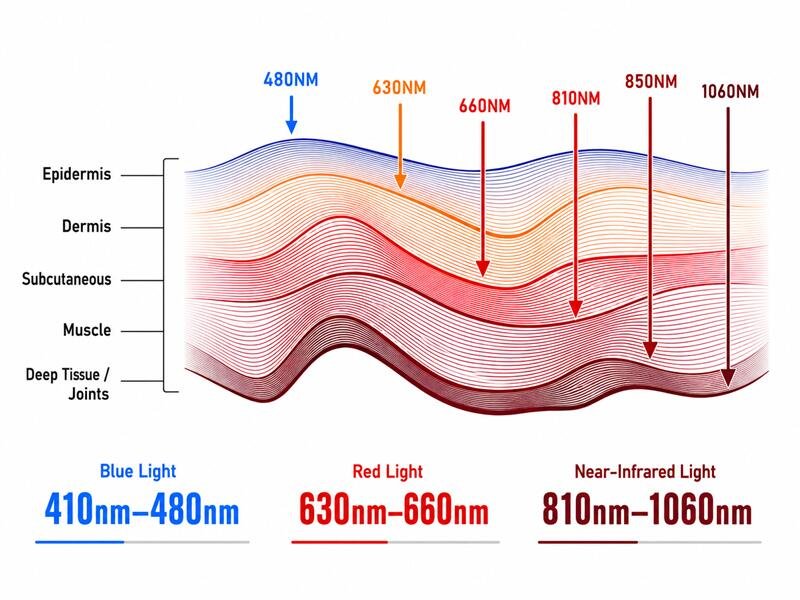
The main difference between 660nm and 850nm red light therapy is penetration depth. The 660nm is a visible red light that targets the skin's surface, whereas the 850nm is an invisible near-infrared (NIR) light that penetrates deeply into muscles and joints.
How Light Heals at the Cellular Level
Photobiomodulation (PBM) is the process by which specific wavelengths of light interact with cellular chromophores to trigger biological responses without heat or damage.
Cytochrome c Oxidase Activation
The primary photoacceptor in mitochondria, cytochrome c oxidase, absorbs red and near-infrared light, accelerating the electron transport chain and boosting ATP production -- the cell's primary energy currency.
Nitric Oxide Release
Light therapy displaces inhibitory nitric oxide from cytochrome c oxidase, restoring normal cellular respiration and improving local blood circulation through vasodilation.
Reactive Oxygen Species Modulation
Controlled ROS signaling triggered by PBM activates downstream gene transcription factors, promoting cell survival, proliferation, and anti-inflammatory cascades.
The Optical Window
Wavelengths between 600-1100 nm form the "therapeutic window" -- long enough to penetrate tissue, yet short enough to be absorbed by target chromophores rather than water molecules.
Visible Red Light:
Surface & Skin Layer Action
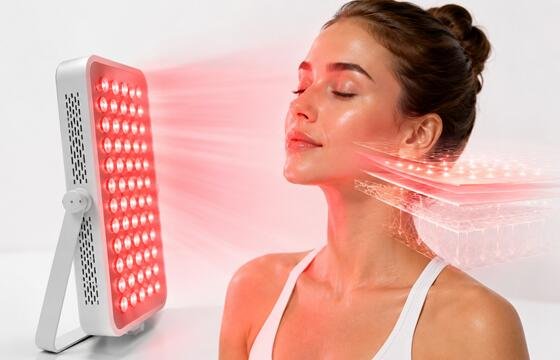
At 660 nm, red light sits in the visible spectrum and is primarily absorbed in the upper layers of skin and tissue. It is the workhorse wavelength for aesthetic and dermatological applications.
Key Biological Effects
Collagen & Elastin Stimulation
Activates fibroblasts to increase collagen type I and III synthesis, improving skin elasticity, firmness, and reducing the appearance of fine lines and wrinkles.
Wound Healing Acceleration
Promotes keratinocyte migration and proliferation, accelerating re-epithelialization of wounds, post-procedure recovery, and reducing scar formation.
Sebum Regulation & Acne Reduction
Reduces sebaceous gland activity and modulates inflammatory cytokines (IL-1β, TNF-α), making it effective for acne vulgaris and oily skin conditions.
Melanin & Pigmentation Modulation
Influences melanocyte activity and reduces hyperpigmentation, supporting more even skin tone and post-inflammatory erythema resolution.
Tissue Penetration Depth
660 nm penetrates approximately 5-10 mm into tissue, optimally targeting the skin's dermal layer and superficial vasculature.
Primary Clinical Applications
Ideal Device Form Factors
Primary Clinical Applications
Ideal Device Form Factors
Near-Infrared Light:
Deep Tissue Penetration
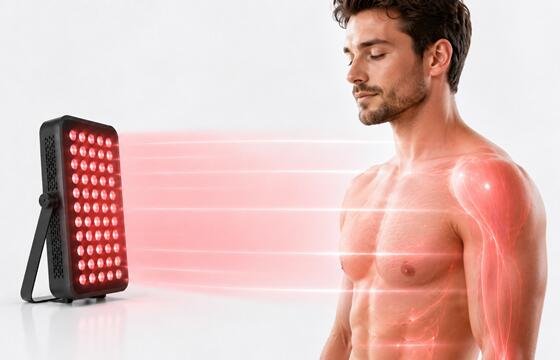
At 850 nm, near-infrared light is invisible to the naked eye but penetrates significantly deeper into tissue, reaching muscles, joints, bones, and even neural tissue.
Key Biological Effects
Mitochondrial ATP Enhancement at Depth
NIR light at 850 nm penetrates to reach mitochondria in muscle fibers and connective tissue, significantly boosting ATP synthesis and accelerating cellular energy recovery.
Anti-Inflammatory Cascade Modulation
Downregulates pro-inflammatory cytokines (NF-κB pathway) in deep tissue, making it effective for chronic inflammation, arthritis, and post-injury swelling reduction.
Nerve Regeneration & Neuroprotection
Stimulates Schwann cell activity and axonal regeneration. Transcranial NIR therapy shows promise in cognitive enhancement and neuroprotective applications.
Adipocyte Permeabilization
Creates temporary pores in fat cell membranes, releasing lipid content for metabolic processing -- the mechanism behind NIR-assisted body contouring treatments.
Tissue Penetration Depth
850 nm penetrates 2-4× deeper than 660 nm, reaching muscle, bone, and neural structures that red light cannot effectively access.
660 nm vs 850 nm: At a Glance
Understanding the key differences helps select the right wavelength -- or combination -- for a given application or product category.
| Parameter |
660 nm
|
850 nm
|
|---|---|---|
| Spectrum | Visible red light | Near-infrared (invisible) |
| Penetration Depth | ~5-10 mm | ~30-40 mm |
| Primary Target Tissue | Epidermis, dermis, hair follicles | Muscle, bone, nerves, fat |
| Main Chromophore | Cytochrome c oxidase (Band IV) | Cytochrome c oxidase (Band II) |
| Collagen Stimulation | ●●● ●● | ●● ●●● |
| Muscle Recovery | ● ●●●● | ●●●● ● |
| Anti-Inflammatory | ●● ●●● | ●●●● ● |
| Skin Rejuvenation | ●●●●● | ●● ●●● |
| Pain Relief | ●● ●●● | ●●●●● |
| Hair Growth | ●●●● ● | ●●● ●● |
| Typical Irradiance | 20-100 mW/cm² | 30-150 mW/cm² |
| Recommended Dose | 3-10 J/cm² | 10-30 J/cm² |
| Best Suited For | MedSpas, dermatology, facial care, hair clinics | Sports recovery, rehab, pain clinics, body contouring |
Why Most Devices Combine Both Wavelengths
The most clinically effective and commercially successful light therapy devices combine 660 nm and 850 nm in a single unit. This dual-wavelength approach addresses both surface and deep tissue simultaneously, broadening clinical indication and increasing perceived value for end users.
Applications Across Markets
Understanding which wavelength fits which market segment helps brand owners and distributors build more targeted, effective product portfolios.
Medical Aesthetics & MedSpas
Facial rejuvenation, post-procedure recovery, acne treatment, and hyperpigmentation correction. 660 nm dominates but dual-wavelength panels add body contouring capability.
Sports & Fitness Recovery
Muscle recovery, delayed onset muscle soreness (DOMS) reduction, and pre-workout performance enhancement. 850 nm is the primary wavelength; combined panels are standard.
Physical Therapy & Rehab
Joint pain, tendon and ligament repair, post-surgical recovery. 850 nm reaches the target tissue depth; 660 nm supports surface wound healing.
Wellness Centers & Spas
Holistic wellness, stress reduction, sleep quality improvement, and general vitality. Dual-wavelength full-body systems are the premium offering in this segment.
Hair Growth Clinics
Androgenetic alopecia treatment and hair follicle stimulation. 660 nm directly targets follicles at the dermal papilla depth; 850 nm improves scalp circulation.
Veterinary & Pet Care
Joint pain in aging pets, wound healing, coat health, and post-surgical recovery. A growing niche with strong consumer demand and limited competition.
Treatment Parameters & Safety Considerations
Effective light therapy requires correct dosing. Under-dosing produces minimal results; over-dosing can inhibit cellular response through biphasic dose-response.
660 nm Treatment Parameters
850 nm Treatment Parameters
The Biphasic Dose-Response (Arndt-Schulz Law)
Light therapy follows a biphasic dose-response: low doses stimulate, optimal doses maximize benefit, and excessive doses inhibit cellular response. This is why accurate irradiance measurement and dosing protocols are critical for device design and clinical effectiveness. MedLight devices are engineered with consistent, calibrated LED output to ensure therapeutic doses are reliably delivered.
Frequently Asked Questions
Answers to the most common questions from brand owners, distributors, and procurement managers evaluating light therapy products.
What is the difference between 660 nm and 850 nm in practical terms?
Can 660 nm and 850 nm be used simultaneously?
Which wavelength should I choose for a skincare or aesthetic device?
Which wavelength is better for pain relief and muscle recovery?
How do I specify the correct wavelength when ordering OEM devices?
Are there safety concerns specific to 850 nm since it is invisible?
What LED ratio (660 nm to 850 nm) is standard in professional panels?
Ready to Build Your
Light Therapy Product?
Since both wavelengths provide excellent cellular benefits but at different depths, many leading devices use a 1:1 ratio of both 660nm and 850nm. Combining these wavelengths allows you to treat surface-level skin and deeper muscle tissue in the exact same session.